
Filter
3228
Text search:
civil
emergency
Featured
255
1054
Language
3091
67
66
35
29
29
12
8
6
5
4
4
4
4
3
3
3
3
3
3
3
3
3
3
2
2
2
2
2
1
1
1
1
1
1
1
1
1
1
1
1
1
1
1
1
1
Document type
1930
539
283
173
170
56
35
29
4
3
3
2
1
Countries
138
128
96
94
93
91
86
76
68
67
66
62
60
54
52
48
46
45
41
40
39
35
33
33
31
31
30
28
27
26
25
25
24
23
21
20
18
18
18
16
16
16
16
15
15
15
14
12
12
11
11
10
10
10
10
9
8
7
7
7
7
7
6
6
6
6
6
6
6
5
5
5
5
5
4
4
4
4
4
4
4
4
4
4
3
3
3
3
3
3
3
3
3
3
3
2
2
2
2
2
2
2
2
2
2
2
2
2
2
2
2
2
2
1
1
1
1
1
1
1
1
1
1
1
1
1
1
1
1
1
1
1
Authors & Publishers
312
157
112
98
87
85
76
48
46
35
25
24
24
22
22
21
21
20
19
18
18
18
17
16
16
16
16
15
15
14
14
14
13
13
13
12
12
12
12
11
11
11
11
11
10
10
10
9
9
9
9
9
9
8
8
8
8
8
8
8
8
8
8
8
8
8
7
7
7
7
7
7
7
7
7
7
6
6
6
6
6
6
6
6
6
6
5
5
5
5
5
5
5
5
5
5
5
5
5
5
5
5
4
4
4
4
4
4
4
4
4
4
4
4
4
4
4
4
4
4
4
4
4
4
4
4
4
4
4
4
4
4
4
4
4
4
4
4
4
4
4
4
4
4
4
4
4
4
4
4
3
3
3
3
3
3
3
3
3
3
3
3
3
3
3
3
3
3
3
3
3
3
3
3
3
3
3
3
3
3
3
3
3
3
3
3
3
3
3
3
3
3
3
3
3
3
3
3
3
3
3
3
3
3
3
3
3
3
3
3
3
3
3
3
3
3
3
3
3
3
3
3
3
3
3
2
2
2
2
2
2
2
2
2
2
2
2
2
2
2
2
2
2
2
2
2
2
2
2
2
2
2
2
2
2
2
2
2
2
2
2
2
2
2
2
2
2
2
2
2
2
2
2
2
2
2
2
2
2
2
2
2
2
2
2
2
2
2
2
2
2
2
2
2
2
2
2
2
2
2
2
2
2
2
2
2
2
2
2
2
2
2
2
2
2
2
2
2
2
2
2
2
2
2
2
2
2
2
2
2
2
2
2
2
2
2
2
2
2
2
2
2
2
2
2
2
2
2
2
2
2
2
2
2
2
2
2
2
2
2
2
2
2
2
2
2
2
2
2
2
2
2
2
2
2
2
2
2
2
2
2
2
2
2
2
2
2
2
2
2
2
2
2
2
2
2
2
2
2
2
2
2
2
2
2
2
2
2
2
2
2
2
2
2
2
2
2
2
2
2
2
2
2
2
1
1
1
1
1
1
1
1
1
1
1
1
1
1
1
1
1
1
1
1
1
1
1
1
1
1
1
1
1
1
1
1
1
1
1
1
1
1
1
1
1
1
1
1
1
1
1
1
1
1
1
1
1
1
1
1
1
1
1
1
1
1
1
1
1
1
1
1
1
1
1
1
1
1
1
1
1
1
1
1
1
1
1
1
1
1
1
1
1
1
1
1
1
1
1
1
1
1
1
1
1
1
1
1
1
1
1
1
1
1
1
1
1
1
1
1
1
1
1
1
1
1
1
1
1
1
1
1
1
1
1
1
1
1
1
1
1
1
1
1
1
1
1
1
1
1
1
1
1
1
1
1
1
1
1
1
1
1
1
1
1
1
1
1
1
1
1
1
1
1
1
1
1
1
1
1
1
1
1
1
1
1
1
1
1
1
1
1
1
1
1
1
1
1
1
1
1
1
1
1
1
1
1
1
1
1
1
1
1
1
1
1
1
1
1
1
1
1
1
1
1
1
1
1
1
1
1
1
1
1
1
1
1
1
1
1
1
1
1
1
1
1
1
1
1
1
1
1
1
1
1
1
1
1
1
1
1
1
1
1
1
1
1
1
1
1
1
1
1
1
1
1
1
1
1
1
1
1
1
1
1
1
1
1
1
1
1
1
1
1
1
1
1
1
1
1
1
1
1
1
1
1
1
1
1
1
1
1
1
1
1
1
1
1
1
1
1
1
1
1
1
1
1
1
1
1
1
1
1
1
1
1
1
1
1
1
1
1
1
1
1
1
1
1
1
1
1
1
1
1
1
1
1
1
1
1
1
1
1
1
1
1
1
1
1
1
1
1
1
1
1
1
1
1
1
1
1
1
1
1
1
1
1
1
1
1
1
1
1
1
1
1
1
1
1
1
1
1
1
1
1
1
1
1
1
1
1
1
1
1
1
1
1
1
1
1
1
1
1
1
1
1
1
1
1
1
1
1
1
1
1
1
1
1
1
1
1
1
1
1
1
1
1
1
1
1
1
1
1
1
1
1
1
1
1
1
1
1
1
1
1
1
1
1
1
1
1
1
1
1
1
1
1
1
1
1
1
1
1
1
1
1
1
1
1
1
1
1
1
1
1
1
1
1
1
1
1
1
1
1
1
1
1
1
1
1
1
1
1
1
1
1
1
1
1
1
1
1
1
1
1
1
1
1
1
1
1
1
1
1
1
1
1
1
1
1
1
1
1
1
1
1
1
1
1
1
1
1
1
1
1
1
1
1
1
1
1
1
1
1
1
1
1
1
1
1
1
1
1
1
1
1
1
1
1
1
1
1
1
1
1
1
1
1
1
1
1
1
1
1
1
1
1
1
1
1
1
1
1
1
1
1
1
1
1
1
1
1
1
1
1
1
1
1
1
1
1
1
1
1
1
1
1
1
1
1
1
1
1
1
1
1
1
1
1
1
1
1
1
1
1
1
1
1
1
1
1
1
1
1
1
1
1
1
1
1
1
1
1
1
1
1
1
1
1
1
1
1
1
1
1
1
1
1
1
1
1
1
1
1
1
1
1
1
1
1
1
1
1
1
1
1
1
1
1
1
1
1
1
1
1
1
1
1
1
1
1
1
1
1
1
1
1
1
1
1
1
1
1
1
1
1
1
1
1
1
1
1
1
1
1
1
1
1
1
1
1
1
1
1
1
1
1
1
1
1
1
1
1
1
1
1
1
1
1
1
1
1
1
1
1
1
1
1
1
1
1
1
1
1
1
1
1
1
1
1
1
1
1
1
1
1
1
1
1
1
1
1
1
1
1
1
1
1
1
1
1
1
1
1
1
1
1
1
1
1
1
1
1
1
1
1
1
1
1
1
1
1
1
1
1
1
1
1
1
1
1
1
1
1
1
1
1
1
1
1
1
1
1
1
1
1
1
1
1
1
1
1
1
1
1
1
1
1
1
1
1
1
1
1
1
1
1
1
1
1
1
1
1
1
1
1
1
1
1
1
1
1
1
1
1
1
1
1
1
1
1
1
1
1
1
1
1
1
1
1
1
1
1
1
1
1
1
1
1
1
1
1
1
1
1
1
1
1
1
1
1
1
1
1
1
1
1
1
1
1
1
1
1
1
1
1
1
1
1
1
1
1
1
1
1
1
1
1
1
1
1
1
1
1
1
1
1
1
1
1
1
1
1
1
1
1
1
1
1
1
1
1
1
1
1
1
1
1
1
1
1
1
1
1
1
1
1
1
1
1
1
1
1
1
1
1
1
1
1
1
1
1
1
1
1
1
1
1
1
1
1
1
1
1
1
1
1
1
1
1
1
1
1
1
1
1
1
1
1
1
1
1
1
1
1
1
1
1
1
1
1
1
1
1
1
1
1
1
1
1
1
1
1
1
1
1
1
1
1
1
1
1
1
1
1
1
1
1
1
1
1
1
1
1
1
1
1
1
1
1
1
1
1
1
1
1
1
1
1
1
1
1
1
1
1
1
1
1
1
1
1
1
1
1
1
1
1
1
1
1
1
1
1
1
1
1
1
1
1
1
1
1
1
1
1
1
1
1
1
1
1
1
1
1
1
1
1
1
1
1
1
1
1
1
1
1
1
1
1
1
1
1
1
1
1
1
1
1
1
1
1
1
1
1
1
1
1
1
1
1
1
1
1
1
1
1
1
1
1
1
1
1
1
1
1
1
1
1
1
1
1
1
1
1
1
1
1
1
1
1
1
1
1
1
1
1
1
1
1
1
1
1
1
1
1
1
1
1
1
1
1
1
1
1
1
1
1
1
1
1
1
1
1
1
1
1
1
1
1
1
1
1
1
1
1
1
1
1
1
1
1
1
1
1
1
1
1
1
1
1
1
1
1
1
1
1
1
1
1
1
1
1
1
1
1
1
1
1
1
1
1
1
1
1
1
1
1
1
1
1
1
1
1
1
1
1
1
1
1
1
1
1
1
1
1
1
1
1
1
1
1
1
1
1
1
1
1
1
1
1
1
1
1
1
1
1
1
1
1
1
1
1
1
1
1
1
1
1
1
1
1
1
1
1
1
1
1
1
1
1
1
1
1
1
1
1
1
1
1
1
1
1
1
1
1
1
1
1
1
1
1
1
1
1
1
1
1
1
1
1
1
1
1
1
1
1
1
1
1
1
1
1
1
1
1
1
1
1
1
1
1
1
1
1
1
1
1
1
1
1
1
1
1
1
1
1
1
1
1
1
1
1
1
1
1
1
1
1
1
1
1
1
1
1
1
1
1
1
1
1
1
1
1
1
1
1
1
1
1
1
1
1
1
1
1
1
1
1
1
1
1
1
1
1
1
1
1
1
1
1
1
1
1
1
1
1
1
1
1
1
1
1
1
1
1
1
1
1
1
1
1
1
1
1
1
1
1
1
1
1
1
1
1
1
1
1
1
1
1
1
1
1
1
1
1
1
1
1
1
1
1
1
1
1
1
1
1
1
1
1
1
1
1
1
1
1
1
1
1
1
1
1
1
1
1
1
1
1
1
1
1
1
1
1
1
1
1
1
1
1
1
1
1
1
1
1
1
1
1
1
1
1
1
1
1
1
1
1
1
1
1
1
1
1
1
1
1
1
1
1
1
1
1
1
1
1
1
1
1
1
1
1
1
1
1
1
1
1
1
1
1
1
1
1
1
1
1
1
1
1
1
1
1
1
1
1
1
1
1
1
1
1
1
1
1
1
1
1
1
1
1
1
1
1
1
1
1
1
1
1
1
1
1
1
1
1
1
1
1
1
1
1
1
1
1
1
1
1
1
1
1
1
1
1
1
1
1
1
1
1
1
1
1
1
1
1
1
1
1
1
1
1
1
1
1
1
1
1
1
1
1
1
1
1
1
1
1
1
1
1
1
1
1
1
1
1
1
1
1
1
1
1
1
1
1
1
1
1
1
1
1
1
1
1
1
1
1
1
1
1
1
1
1
1
1
1
1
1
1
1
1
1
1
1
1
1
1
1
1
1
1
1
1
1
1
1
1
1
1
1
1
1
1
1
1
1
1
1
1
1
1
1
1
1
1
1
1
1
1
1
1
1
1
1
1
1
1
1
1
1
1
1
1
1
1
1
1
1
1
1
1
1
1
1
1
1
1
1
1
1
1
1
1
1
1
1
1
1
1
1
1
1
1
1
1
1
1
1
1
1
1
1
1
1
1
1
1
1
1
1
1
1
1
1
1
1
1
1
1
1
1
1
1
1
1
1
1
1
1
1
1
1
1
1
1
1
1
1
1
1
1
1
1
1
1
1
1
1
1
1
1
1
1
1
1
1
1
1
1
1
1
1
1
1
1
1
1
1
1
1
1
1
1
1
1
1
1
1
1
1
1
1
1
1
1
1
1
1
1
1
1
1
1
1
1
1
1
1
1
1
1
1
1
1
1
1
1
1
1
1
1
1
1
1
1
1
1
1
1
1
1
1
1
1
1
1
1
1
1
1
1
1
1
1
1
1
1
1
1
1
1
1
1
1
1
1
1
1
1
1
1
1
1
1
1
1
1
1
1
1
1
1
1
1
1
1
1
1
1
1
1
1
1
1
1
1
1
1
1
1
1
1
1
1
1
1
1
1
1
1
1
1
1
1
1
1
1
1
1
1
1
1
1
1
1
1
1
1
1
1
1
1
1
1
1
1
1
1
1
1
1
1
1
1
1
1
1
1
1
1
1
1
1
1
1
1
1
1
1
1
1
1
1
1
1
1
1
1
1
1
1
1
1
1
1
1
1
1
1
1
1
1
1
1
1
1
1
1
1
1
1
1
1
1
1
1
1
1
1
1
1
1
1
1
Publication Years
926
2032
258
11
1
Category
1281
165
162
158
112
40
10
7
4
1
Toolboxes
294
246
228
170
139
124
118
113
113
94
92
62
51
45
40
30
24
21
21
16
15
12
9
6
1
1

National Strategic Plan for Newborn and Child Health Development (2015-2018)
The Republic of the Union of Myanmar, Ministry of Health, Department of Health, Child Health Division
World Health Organization (WHO), Country Office for Myanmar
(2015)
C_WHO
No publication year indicated
The specific objectives of the plan are to:
- Scale up evidence-based, cost effective interventions through effective strategies within a HSS approach and provide equitable coverage with quality.
- Reduce neonatal mortality by improved home-based newborn ... care, early identification of sick newborns and improved access to institutional newborn care of adequate quality.
- Reduce common childhood illness related mortality (due to pneumonia and diarrhoea in all areas and malaria in endemic areas) by improving key family and community practices, community-based early diagnosis and management and referral care for complicated cases. more
The specific objectives of the plan are to:
- Scale up evidence-based, cost effective interventions through effective strategies within a HSS approach and provide equitable coverage with quality.
- Reduce neonatal mortality by improved home-based newborn ... care, early identification of sick newborns and improved access to institutional newborn care of adequate quality.
- Reduce common childhood illness related mortality (due to pneumonia and diarrhoea in all areas and malaria in endemic areas) by improving key family and community practices, community-based early diagnosis and management and referral care for complicated cases. more

Vision Statement
From birth to 8 years of age, all children of the Republic of the Union of Myanmar will receive holistic, high-quality and developmentally-appropriate care from their parents, caregivers and service providers to ensure they will be happy, healthy, well nourished, socially adept ... , emotionally balanced and well protected in conditions of freedom, equity and dignity in order to contribute positively to their families, communities and the nation. more
From birth to 8 years of age, all children of the Republic of the Union of Myanmar will receive holistic, high-quality and developmentally-appropriate care from their parents, caregivers and service providers to ensure they will be happy, healthy, well nourished, socially adept ... , emotionally balanced and well protected in conditions of freedom, equity and dignity in order to contribute positively to their families, communities and the nation. more

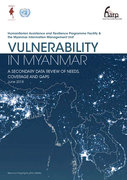
Based on the Vulnerability Index developed in this review, an estimated 22.7 million persons in Myanmar, or 44% of the population, were found to have some form of vulnerability related to human development and/or exposure to active conflict/violence. These people experience varying combinations of p
...
oor housing, lack of education, poor educational attainment, lack of access to safe sanitation and improved drinking water, and direct exposure to conflict.
Shan and Ayeyarwady have the largest populations of vulnerable persons, a function of both their size and relative vulnerability in comparison to other States and Regions. Yangon and Shan show the widest variation in vulnerability across townships (in terms of the number of vulnerable persons and their level of vulnerability), followed by Mandalay, Chin and Rakhine.
Original file: 15 MB more
Shan and Ayeyarwady have the largest populations of vulnerable persons, a function of both their size and relative vulnerability in comparison to other States and Regions. Yangon and Shan show the widest variation in vulnerability across townships (in terms of the number of vulnerable persons and their level of vulnerability), followed by Mandalay, Chin and Rakhine.
Original file: 15 MB more

This study aims to analyze national and international stakeholders and their initiatives in Early Warning Systems in Myanmar, to identify priority gaps that need to be addressed by all stakeholders. It is presented as a first step towards supporting GoUM in information-gathering under the Myanmar Ac
...
tion Plan for Disaster Risk Reduction (MAPDRR), in particular under Components (2) Risk Assessment, (3) Multi-hazard Early Warning System and (4) Preparedness at all levels, and especially in implementing Sub-Component (3.4) Enhanced Flood Monitoring and Forecasting Capacities at Township Levels.
more
more
No publication year indicated.
No publication year indicated.
Original file: 21,5 MB
Original file: 21,5 MB
No publication year indicated.

Humanitarian emergencies and crises (Humanitarian emergencies and crises) are large-scale events that may result in the breakdown of health care systems and society, forced displacement, death, and physical, psychological, social and spiritual suffering on a massive scale. Current responses to Human
...
itarian emergencies and crises rightfully focus on saving lives, but for both ethical and medical reasons, the prevention and relief of pain, as well as other physical and psychological symptoms, social and spiritual distress, also are imperative. Therefore, palliative care, should be integrated into responses to Humanitarian emergencies and crises. The principles of humanitarianism and impartiality require that all patients receive care and should never be abandoned for any reason, even if they are dying. Thus, there is significant overlap in the principles and mission of palliative care and humanitarianism: relief of suffering; respect for the dignity of all people; support for basic needs; and accompaniment during the most difficult of times
more
In disaster preparedness, the participation of women, children, older people, persons with disabilities (PWDs), and other minority groups and sectors is important because they are the most vulnerable against disasters. Inclusive disaster preparedness provides technical and logical frameworks that as
...
similate the most vulnerable sectors in a community and enhances their capacity against future disasters.
more
This handbook has been compiled as a source of ideas and experiences that can be used for CLTS orientation workshops, advocacy to stakeholders, training facilitators and natural leaders and implementing CLTS activities. It is a resource book especially for field staff, facilitators and trainers for
...
planning, implementation and follow-up for CLTS.
more
The 2016-2017 Biennial report presents an overview of WHO Namibia's main achievements and challenges and highlights its vision for the next five years.

Towards a Core Set of Clinical Skills for Health-Related Community Based Rehabilitation in Low and Middle Income Countries
Jessica O'Dowd, Malcolm MacLachlan, Chapel Khasnabis, Priscille Geiser
Disability, CBR & Inclusive Development Journal (DCIDJ)
(2015)
CC
This research aims to identify a core set of clinical skills for working in
a Community Based Rehabilitation (CBR) setting, and to discuss whether they are appropriate for task shifting to a new or an alternative cadre of rehabilitation workers.
The Ministry of Health and Family Welfare is committed to ensuring the effective implementation of this strategy, which will contribute to the overall wellbeing and health of all adolescent boys and girls of Bangladesh
In its resolution 34/16, the Human Rights Council decided to focus its next full-day meeting on “Protecting the rights of the child in humanitarian situations” and invited the Office of the High Commissioner to prepare a report on that issue, in close collaboration with relevant stakeholders. Th
...
e report is to be presented to the Human Rights Council at its thirty-seventh session to inform the annual day of discussion on children’s rights.
more
This document contains a series of desk reviews for the eight ENGAGE-TB priority countries supported by the Global Fund (DRC, Kenya, Indonesia, Mozambique, Myanmar, Nigeria, Pakistan and Tanzania). The document provides a situation assessment and gap analysis about the state of community based TB ac
...
tivities in these countries. The focus on these eight countries was justified by the high prevalence of TB and the very high number of missed/unreported cases.
more
PLoS Med 10(1): e1001366. https://doi.org/10.1371/journal.pmed.1001366
Published: January 8, 2013
Global Happiness Policy Report 2018
Sachs, J. D.; Dr. Bin Bishr, A; De Neve. J.-E.; et al.
World Government Summit, Sustainable Development Solutions Network
(2018)
C2
Global Happiness Council
