Filter
1279
Text search:
workplace
policy
Featured
108
322
Language
Document type
797
183
145
58
42
24
14
7
3
3
2
1
Countries
52
46
44
39
34
28
27
26
24
24
24
22
21
19
18
17
17
17
14
14
13
13
12
11
10
10
9
9
8
7
7
7
7
6
5
5
5
4
4
4
4
4
3
3
3
3
3
3
3
3
3
3
2
2
2
2
2
2
2
2
2
2
2
2
2
2
2
2
2
2
2
1
1
1
1
1
1
1
1
1
1
1
1
1
1
1
1
1
1
1
1
1
1
Authors & Publishers
Publication Years
Category
500
89
56
48
41
15
12
1
Toolboxes
154
132
107
86
70
53
36
24
22
21
21
17
13
11
10
9
8
6
5
5
4
2
2
1
1
Biennial Report. SUBMITTED TO THE UNITED NATIONS GENERAL ASSEMBLY SPECIAL SESSION ON HIV AND AIDS
Reporting period: January 2012 – December 2013
Follow up to the Maseru Declaration. ZIMBABWE COUNTRY REPORT
Reporting Period: January 2013 - December 2013

The WHO guidelines provide recommended steps for safe phlebotomy and reiterate accepted principles for drawing, collecting blood and transporting blood to laboratories/blood banks.
An international field study by African and German theologicans and health workers.
An international field study by African and German Theologicans and health workers
Towards the Elimination of Mother-to-Child Transmission of HIV and keeping mothers Alive. 2012-2015
2nd edition
The ‘Toolkit’ is targeted at practitioners responsible for implementing recovery programmes, their objective to provide a ‘how to’ guide on development, implementing and managing complex post-disaster recovery programmes.
Disaster Recovery Toolkit
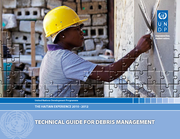
The building damage assessment, conducted between March 2010 and February 2011 by the Government of Haiti and the United Nations system, showed that more than 400,000 buildings were damaged or destroyed, of which approximately 218,000 could be occupied without repairs (green category), 105,000 were
...
GFDRR Knowledge Notes
Examining the needs of at‐risk youth in the Middle East and North Africa: A multi‐method landscape analysis and systematic literature review
The study analyses the intersection of gender with disability issues by combining economic and social analysis across four states in India by using both quantitative and qualitative methods including gender analysis of disability budgets.