
Filter
1885
Text search:
response
to
epidemics
Featured
192
473
Language
1797
60
41
40
33
19
14
6
6
4
4
3
3
3
3
3
3
3
3
2
2
2
2
2
2
2
2
2
2
1
1
1
1
1
1
1
1
1
1
1
1
1
1
1
1
1
1
1
1
1
Document type
1089
311
216
100
84
34
19
17
9
1
Countries
110
66
60
48
41
40
36
35
34
32
32
31
30
28
27
25
25
23
23
18
18
18
18
17
14
14
14
14
14
14
13
12
12
11
11
11
10
9
9
8
7
7
7
7
6
6
6
6
5
5
5
5
4
4
4
4
4
4
4
3
3
3
3
3
3
3
3
3
3
3
3
3
3
3
2
2
2
2
2
2
2
2
2
2
2
2
2
2
2
2
2
1
1
1
1
1
1
1
1
1
1
1
1
1
1
1
1
1
1
1
Authors & Publishers
268
152
112
95
74
54
34
31
24
23
17
16
15
14
13
12
12
12
11
11
10
10
10
9
9
9
9
9
8
8
8
8
7
7
7
7
6
6
6
6
6
6
6
5
5
5
5
5
5
5
4
4
4
4
4
4
4
4
4
4
4
4
4
4
4
4
4
4
4
4
4
4
4
4
4
4
4
4
4
4
4
4
4
3
3
3
3
3
3
3
3
3
3
3
3
3
3
3
3
3
3
3
3
3
3
3
3
3
3
3
3
3
3
3
3
3
3
3
3
3
3
3
3
3
3
3
3
2
2
2
2
2
2
2
2
2
2
2
2
2
2
2
2
2
2
2
2
2
2
2
2
2
2
2
2
2
2
2
2
2
2
2
2
2
2
2
2
2
2
2
2
2
2
2
2
2
2
2
2
2
2
2
2
2
2
2
2
2
2
2
2
2
2
2
2
2
2
2
2
2
2
2
2
2
2
2
2
2
2
2
2
2
2
2
2
2
2
2
2
2
2
2
2
2
2
2
2
2
2
2
2
2
2
2
2
2
2
2
2
2
2
2
2
2
2
2
2
2
2
2
2
2
2
2
2
2
2
2
2
2
2
2
2
2
2
2
2
2
2
2
2
2
2
2
2
1
1
1
1
1
1
1
1
1
1
1
1
1
1
1
1
1
1
1
1
1
1
1
1
1
1
1
1
1
1
1
1
1
1
1
1
1
1
1
1
1
1
1
1
1
1
1
1
1
1
1
1
1
1
1
1
1
1
1
1
1
1
1
1
1
1
1
1
1
1
1
1
1
1
1
1
1
1
1
1
1
1
1
1
1
1
1
1
1
1
1
1
1
1
1
1
1
1
1
1
1
1
1
1
1
1
1
1
1
1
1
1
1
1
1
1
1
1
1
1
1
1
1
1
1
1
1
1
1
1
1
1
1
1
1
1
1
1
1
1
1
1
1
1
1
1
1
1
1
1
1
1
1
1
1
1
1
1
1
1
1
1
1
1
1
1
1
1
1
1
1
1
1
1
1
1
1
1
1
1
1
1
1
1
1
1
1
1
1
1
1
1
1
1
1
1
1
1
1
1
1
1
1
1
1
1
1
1
1
1
1
1
1
1
1
1
1
1
1
1
1
1
1
1
1
1
1
1
1
1
1
1
1
1
1
1
1
1
1
1
1
1
1
1
1
1
1
1
1
1
1
1
1
1
1
1
1
1
1
1
1
1
1
1
1
1
1
1
1
1
1
1
1
1
1
1
1
1
1
1
1
1
1
1
1
1
1
1
1
1
1
1
1
1
1
1
1
1
1
1
1
1
1
1
1
1
1
1
1
1
1
1
1
1
1
1
1
1
1
1
1
1
1
1
1
1
1
1
1
1
1
1
1
1
1
1
1
1
1
1
1
1
1
1
1
1
1
1
1
1
1
1
1
1
1
1
1
1
1
1
1
1
1
1
1
1
1
1
1
1
1
1
1
1
1
1
1
1
1
1
1
1
1
1
1
1
1
1
1
1
1
1
1
1
1
1
1
1
1
1
1
1
1
1
1
1
1
1
1
1
1
1
1
1
1
1
1
1
1
1
1
1
1
1
1
1
1
1
1
1
1
1
1
1
1
1
1
1
1
1
1
1
1
1
1
1
1
1
1
1
1
1
1
1
1
1
1
1
1
1
1
1
1
1
1
1
1
1
1
1
1
1
1
1
1
1
1
1
1
1
1
1
1
1
1
1
1
1
1
1
1
1
1
1
1
1
1
1
1
1
1
1
1
1
1
1
1
1
1
1
1
1
1
1
1
1
1
1
1
1
1
1
1
1
1
1
1
1
1
1
1
1
1
1
1
1
1
1
1
1
1
1
1
1
1
1
1
1
1
1
1
1
1
1
1
1
1
1
1
1
1
1
1
1
1
1
1
1
1
1
1
1
1
1
1
1
1
1
1
1
1
1
1
1
1
1
1
1
1
1
1
1
1
1
1
1
1
1
1
1
1
1
1
1
1
1
1
1
1
1
1
1
1
1
1
1
1
1
1
1
1
1
1
1
1
1
1
1
1
1
1
1
1
1
1
1
1
1
1
1
1
1
1
1
1
1
1
1
1
1
1
1
1
1
1
1
1
1
1
1
1
1
1
1
1
1
1
1
1
1
1
1
1
1
1
1
1
1
1
1
1
1
1
1
1
1
1
1
1
1
1
1
1
1
1
1
1
1
1
1
1
1
1
1
1
1
1
1
1
1
1
1
1
1
1
1
1
1
1
1
1
1
1
1
1
1
1
1
1
1
1
1
1
1
1
1
1
1
1
1
1
1
1
1
1
1
1
1
1
1
1
1
1
1
1
1
1
1
1
1
1
1
1
1
1
1
1
1
1
1
1
1
1
1
1
1
1
1
1
1
1
1
1
1
1
1
1
1
1
1
1
1
1
1
1
1
1
1
1
1
1
1
1
1
1
1
1
1
1
1
1
1
1
1
1
1
1
1
1
1
1
1
1
1
1
1
1
1
1
1
1
1
1
1
1
1
1
1
1
1
1
1
1
1
1
1
1
1
1
1
1
1
1
1
1
1
1
1
1
1
1
1
1
1
1
1
1
1
1
1
1
1
1
1
1
1
1
1
1
1
1
1
1
1
1
1
1
1
1
1
1
1
1
1
1
1
1
1
1
1
1
1
1
1
1
1
1
1
1
1
1
1
1
1
1
1
1
1
1
1
1
1
1
1
1
1
1
1
1
1
1
1
1
1
1
1
1
1
1
1
1
1
1
1
1
1
1
1
1
1
1
1
1
1
1
1
1
1
1
1
1
1
1
1
1
1
1
1
1
1
1
1
1
1
1
1
1
1
1
1
1
1
1
1
1
1
1
1
1
1
1
1
1
1
1
1
1
1
1
1
1
1
1
1
1
1
1
1
1
1
1
1
1
1
1
1
1
1
1
1
1
1
1
1
1
1
1
1
1
1
1
1
1
1
1
1
1
1
1
1
1
1
1
1
1
1
1
1
1
1
1
1
1
1
1
1
1
1
1
1
1
1
1
1
1
1
1
1
1
1
1
1
1
1
1
1
1
1
1
1
1
1
1
1
1
1
1
1
1
1
1
1
1
1
1
1
1
1
1
1
1
1
1
1
1
1
1
1
1
1
1
1
1
1
1
1
1
1
1
1
1
1
1
1
1
1
1
1
1
1
1
1
1
1
1
1
1
1
1
1
1
1
1
1
1
1
1
1
1
1
1
1
1
1
1
1
1
1
1
1
1
1
1
1
1
1
1
1
1
1
1
1
1
1
1
1
1
1
1
1
1
1
1
1
1
1
1
1
1
1
1
1
1
1
1
1
1
1
1
1
1
1
1
1
1
1
1
1
1
1
1
1
1
1
1
1
1
1
1
1
1
1
1
1
1
1
1
1
1
1
1
1
1
1
1
1
1
1
1
1
1
1
1
1
1
1
1
1
1
1
1
1
1
1
1
1
1
1
1
1
1
1
1
1
1
1
1
1
1
1
1
1
1
1
1
1
1
1
1
1
1
1
1
1
1
1
1
1
1
1
1
1
1
1
1
1
1
1
1
1
1
1
1
1
1
1
1
1
1
1
1
1
1
1
1
1
1
1
1
1
1
1
1
1
1
1
1
1
1
1
1
1
1
1
1
1
1
1
1
1
1
1
1
1
1
1
1
1
1
1
1
1
1
1
1
1
1
1
1
1
1
1
1
1
1
1
1
1
1
1
1
1
1
Publication Years
1
553
1128
184
18
1
Category
555
160
117
75
51
27
15
5
Toolboxes
302
214
161
134
114
73
56
51
43
41
33
30
26
23
19
19
18
15
15
14
8
5
1
1

State of Health in the WHO African Region
recommended
This report is not a country scorecard. Rather, its purpose is to act as a compass to guide progress towards health in the SDGs.
There has been a significant improvement in the state of health in
...
the region with healthy life expectancy - time spent in full health - in the region increasing from 50.9 years to 53.8 between 2012 and 2015 - the most marked increase of any region in the world.
What is making Africans sick is changing. The top killers are still lower respiratory infections, HIV and diarrhoeal disease and countries have routinely focused on preventing and treating this trio, often through specialized programmes. The payoff has been significant declines in deaths due to these diseases. There has been a 50% reduction in the burden of disease caused by what have been the top 10 killers since 2000 and death rates have dropped from 87.7 to 51.1 deaths per 100,000 persons between 2000 and 2015...
Chronic diseases like heart disease and cancer are now claiming more lives with a person aged 30 to 70 in the region having a one in five chance of dying from a noncommunicable disease (NCDs).
Countries are specifically failing to provide essential services to two critical age groups – adolescents and the elderly...
more

2016-2018 Early implementation,
This report presents 2015 data on the consumption of systemic antibiotics from 65 countries and areas, contributing to our understanding of how antibiotics are used in these countries. In addition, the report documen
...
ts early efforts of the World Health Organization (WHO) and participating countries to monitor antimicrobial consumption, describes the WHO global methodology for data collection, and highlights the challenges and future steps in monitoring antimicrobial consumption.
more

2nd edition. The 2018 Roadmap incorporates an additional critical population: adolescents. Despite making up 1 in 6 of the world’s people, adolescents have been largely overlooked as global momentum to address TB has grown. Spanning the ages of 10
...
–19 years, adolescents are both at risk of TB and represent an important population for TB control. They often present with infectious TB and frequently have multiple contacts in congregate settings, such as schools and other educational institutions. Nevertheless, few countries capture TB data in suitably age-disaggregated ways to allow full understanding of its impact in this group and even fewer provide the adolescent-friendly services our young people need to access diagnosis and care.
more
Mental disorders impose an enormous burden on society, accounting for almost one in three years lived with disability globally. •In addition to their health impact, mental disorders cause a significant economic burden due
...
to lost economic output and the link between mental disorders and costly, potentially fatal conditions including cancer, cardiovascular disease, diabetes, HIV, and obesity.•80% of the people likely to experience an episode of a mental disorder in their lifetime come from low- and middle-income countries.• Two of the most common forms of mental disorders, anxiety and depression, are prevalent, disabling, and respond to a range of treatments that are safe and effective. Yet, owing to stigma and inadequate funding, these disorders are not being treated in most primary care and community settings.
more

The attainment of Zambia’s goal of being a prosperous and middle-income country by 2030 as stipulated in its Vision 2030 is dependent on among others, a healthy and productive population. Therefore, the Government of the Republic of Zambia (GRZ) has prioritized health as a key socio-economic inves
...
tment in the Seventh National Development Plan 2017-2021. The government is also committed to achieving the targets under the health goal number three and other health related targets under other goals of the 2030 Sustainable Development agenda. Despite progress which has been made in improving the health of Zambians, the country still faces a high burden of communicable diseases and a growing burden of non-communicable diseases. Structural and social deprivation including poverty, inequalities and marginalisation also remain major threats to health. In order to effectively address all the social determinants of health, all sectors should take into account health and well-being as a key element of policy development.
more
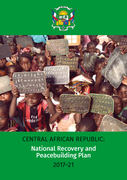
The Central African Republic is at a major turning point in its history. The country
is just emerging from a very violent conflict, during which thousands of human lives were lost and one-third of the population was displaced. After
a three-year transition, and with the support of the internationa
...
l community, authorities successfully created the conditions required to conduct credible presidential and legislative
elections. Central African citizens mobilized to express their desire for peace and to break
with the cycle of past violence. Their exemplary democratic maturity ensured the electoral
process was peaceful, despite palpable tensions. The welcome given Pope Francis in Bangui in
November 2015 and visible reconciliation efforts demonstrate the population wishes to turn
the page on this conflict.
more
Policy Analysis and Advocacy Decision Model for HIV-Related Services
B. Pick; D. Wolfe; D. Burrows; F. Hariga; et al.
USAID (From the American People); REPFAR; EURASIAN Harm Reduction Network; Health Policy Project
(2012)
C2
People Who Inject Drugs
In addition, the following individuals of our external expert advisory committee made instrumental contributions to the initial design and content of the document: Billy Pick, USAID; Daniel Wolfe, Open Society Foundations;
...
Dave Burrows, AIDS Projects Management Group; Fabienne Hariga, United Nations Office on Drugs and Crime; Mauro Guarinieri, the Global Fund to Fight AIDS, Tuberculosis and Malaria; Richard Needle, Office of the U.S. Global AIDS Coordinator; and Sergey Votyagov, EHRN.
more
Antimicrobial resistance (AMR) is an important public health concern shared by developed and developing countries. In developing countries the burden of infectious diseases is greater and exacerbated by limited access to, and availability and afford
...
ability of, antimicrobials required to treat infections caused by AMR organisms. With drugs not listed on the essential drugs list (EDL), problems of increased morbidity, costs of extended hospitalisation and mortality are extremely serious. The problem of susceptibility to and spread of infections caused by multidrug-resistant (MDR) infectious agents is fuelled by factors such as limited access to clean water and sanitation to ensure personal hygiene, malnutrition, and the HIV/TB epidemic.
more
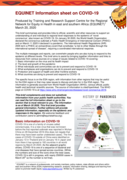
Produced by Training and Research Support Centre for the Regional Network for Equity in Health in east and southern Africa (EQUINET), March 20, 2020.
This brief summarises and provides links to official, scientific and other resources
...
to support an understanding of and individual to regional level responses to the epidemic of ‘novel coronavirus’, also known as COVID-19.
more
Zoonotic tuberculosis (TB) is a form of TB in people predominantly caused by the bacterial species, Mycobacterium bovis, which belongs to the M. tuberculosis complex. The implications of zoonotic TB go beyond human health. The organism
...
is host-adapted to cattle, where it is referred to as bovine TB, and it also causes TB in other animal species including wildlife. Bovine TB has an important economic impact and threatenslivelihoods.
more

COVID-19 has heavily emphasized how contact tracing is crucial for managing outbreaks, and as part of the strategy for adjusting, and eventually lifting, lockdowns and other stringent public health and social measures. As the pandemic develops further, it will be a core measure
...
to manage further waves of infection. In early June 2020, the World Health Organization (WHO) convened an online global consultation on contact tracing in the context of COVID-19, looking at the lessons of the pandemic to date; known and emerging best practices; and the measures necessary for urgent implementation, scale-up, maintenance and enhancement of contact tracing activities.
more
Malaria Operational Plan FY 2018 Ethiopia
United States Agency for International Development
United States Agency for International Development
(2018)
C1
This FY 2018 Malaria Operational Plan (MOP) presents a detailed implementation plan for Ethiopia, based on the strategies of PMI and the National Malaria Control Program (NMCP). It was developed in consultation with the Federal Ministry of Health (FMOH), NMCP, Ethiopian Public Health Institute (EP
...
HI), and regional health bureaus, and with the participation of national and international partners involved in malaria prevention and control in the country. The activities that PMI is proposing to support align with the National Malaria Strategic Plan (NMSP 2014-2020) and build on investments made by PMI and other partners to improve and expand malaria-related services, including the Global Fund to Fight AIDS, Tuberculosis, and Malaria (Global Fund) malaria grants. This document briefly reviews the current status of malaria control policies and interventions in Ethiopia, describes progress to date, identifies challenges and unmet needs to achieving the targets of the NMCP and PMI, and provides a description of activities that are planned with FY 2018 funding.
more
These guidelines provide new and updated recommendations on the use of point-of-care testing in children under 18 months of age and point-of-care tests to monitor treatment in people living with HIV; the treatment monitoring algorithm; and timing of
...
antiretroviral therapy (ART) among people living with HIV who are being treated for tuberculosis.
New recommendations launched today outline key new actions that countries can take to improve the delivery of HIV testing, treatment and care services by providing greater options for differentiated approaches such as, supporting HIV treatment start in the community, ensuring that children are diagnosed and treated early, and that viral load treatment monitoring is more accessible, focused and triggers clinical action
more
The document is structured into five sections. The first presents the key experiences and challenges that justify a renewal of the EPHFs. The second section updates the groundwork for the exercise of public health and provides a framework to inform
...
the exercise of the new essential functions. The third section proposes a new integrated approach for implementing the EPHFs. The fourth section presents a new list of 11 EPHFs related to each stage of this integrated approach. Finally, in the last section, considerations are put forth to guide EPHF implementation as a means of strengthening the health sector.
more

Recently, a renewed interest in large-scale community health worker (CHW) programs has been seen globally. This renewal provides an opportune moment to take stock of issues and challenges such programs face and what can be done
...
to make them as effective as possible. With this in mind, this manual is intended to be used a practical guide for policymakers and program
managers wishing to develop or strengthen a CHW program, drawing lessons from other countries that have implemented CHW programs at-scale. Throughout, we discuss major policy and programmatic issues that decision-makers and planners need to consider when designing, implementing, scaling up or strengthening a national-level CHW program. We offer an overview
of specific challenges CHW programs face, country lessons, tools, and other resources that may be helpful, while incorporating relevant programmatic examples as much as possible.
more
Since the start of the pandemic, the region has been hit by multiple natural and biological disasters. At the same time, climate change has continued to warm the world, exacerbating the impacts of many of these disasters. The *Asia-Pacific Disaster
...
Report 2021, *also launched today, shows that the pandemic, combined with the persistent reality of climate change, has reshaped and expanded the disaster “riskscape” in Asia and the Pacific.
more
Development of one or more vaccines for Neisseria gonorrhoeae is an important objective for sexual and reproductive health worldwide, and for the fight against antimicrobial resistance.
WHO preferred product characteristics (PPCs) provide strategic guidance as
...
to WHO’s preferences for new vaccines in priority disease areas. PPCs are intended to encourage innovation and development of vaccines for use in settings most relevant to the global unmet public health need.
Gonococcal vaccine PPCs describe global public health goals for gonococcal vaccines and preferred parameters pertaining to vaccine indications and target populations, safety and efficacy considerations, and immunization strategies.
more
RESULTS: Between 76 and 97% of the PHCS offered RMCAH services before the lockdown. Except in antenatal, delivery and adolescent care, there was a decline of between 2 and 6% in all the services during the lockdown and up to 10% decline after the lo
...
ckdown with variation across and within States. During the lockdown. Full-service delivery was reported by 75.2% whereas 24.8% delivered partial services. There was a significant reduction in clients' utilization of the services during the lockdown, and the difference between States before the pandemic, during, and after the lockdown. Reported difficulties during the lockdown included stock-out of drugs (25.7%), stock-out of contraceptives (25.1%), harassment by the law enforcement agents (76.9%), and transportation difficulties (55.8%). Only 2% of the PHCs reported the availability of gowns, 18% had gloves, 90.1% had hand sanitizers, and a temperature checker was available in 94.1%. Slightly above 10% identified clients with symptoms of COVID-19.
CONCLUSIONS: The large proportion of PHCs who provided RMCAH services despite the lockdown demonstrates resilience. Considering the several difficulties reported, and the limited provision of primary protective equipment more effort by the government and non-governmental agencies is recommended to strengthen delivery of sexual and reproductive health in primary health centres in Nigeria during the pandemic.
more
There is a broad consensus nowadays that the Earth is warming up as a result of greenhouse gas emissions caused by anthropogenic activities. It is also clear that current trends in the fields of energy, development and population growth will lead to
...
continuous and ever more dramatic climate change. This is bound to affect the fundamental prerequisites for maintaining good health: clean air and water, sufficient food and adequate housing. The planet will warm up gradually, but the consequences of the extreme weather conditions such as frequent
storms, floods, droughts and heat-waves will have sudden onset and acute repercussions. It is widely accepted that climate change will have an impact on the spread of infectious diseases in Europe, which is likely to bring about new public health risks in the majority of cases. Transmission of infectious diseases depends on a number of factors, including climate and environmental elements. Foodborne and waterborne diseases, for instance, are associated with high temperatures. Disease-transmitting vectors (e.g. mosquitoes, sandflies and ticks) are highly sensitive to climate conditions, including temperature and humidity; their geographical distribution will widen as climate conditions change, potentially allowing them to spread into regions where they are not currently able to live.
The primary purpose of this manual on climate change and infectious diseases is to raise the awareness and the level of knowledge of health workers at national, regional and local levels in the former Yugoslav Republic of Macedonia on the health risks associated with climate change and infectious diseases. This manual was devel-
oped as part of the WHO Regional Office for Europe project, Protecting health from climate change: a seven–country initiative, implemented with financial support from the German Federal Ministry for the Environment, Nature Conservation and Nuclear Safety.
more
The health and socioeconomic crisis triggered by the COVID-19 pandemic has hit the countries of Latin America hard and laid bare the profound inequities about which numerous international, regional and national reports have sounded warnings in recent decades. In this context, the historical politica
...
l and economic exclusion and marginalization of the more than 800 indigenous peoples in the region has been accentuated as a result of insufficient State responses to the crisis, which have not adequately considered the collective rights of these peoples and have had little cultural relevance.
This document provides an overview of the situation of indigenous peoples in the region in the face of the COVID-19 pandemic. It analyses both the State’s and indigenous peoples’ own responses to the crisis, as well as offering a set of recommendations to rectify the neglect of these peoples in the management of the pandemic, centring on their collective rights.
more
