
Filter
1652
Text search:
radio
programme
Featured
138
549
Language
Document type
1084
206
140
73
72
27
27
13
2
2
2
1
Countries
67
66
54
53
53
52
51
44
43
42
37
34
34
31
31
30
28
28
27
27
25
24
22
22
19
19
18
17
17
14
14
12
12
12
11
11
10
10
10
9
9
8
8
7
7
7
6
6
5
5
5
5
5
4
4
4
4
4
4
4
3
3
3
3
3
3
3
3
3
3
3
2
2
2
2
1
1
1
1
1
1
1
1
1
1
1
1
1
1
1
1
1
1
1
1
1
1
1
1
1
1
1
1
1
Authors & Publishers
Publication Years
Category
844
78
62
58
57
21
2
1
Toolboxes
157
105
93
76
69
69
65
39
36
33
24
22
22
21
18
13
13
12
11
11
10
5
4
2
1
Response strategy for South Sudan to Covid-19 pandemic
The COVID-19 pandemic has created challenges for forcibly displaced persons and the humanitarian organizations working to support them. With restrictions on movement and limited access to refugees, asylum-seekers, internally displaced persons (IDPs) and stateless persons across the globe, UNHCR is s
...

This document provides guidance to Member States in the WHO European Region that wish to conduct behavioural insights studies related to COVID-19. Studies can be used to monitor public knowledge, risk perceptions, behaviours and trust with the overall aim to inform national COVID-19 outbreak respons
...
13 July 2021. Eid al Adha is a festival during which Muslim families and friends unite to pray together and give alms, especially in the form of sacrificed animal meat. In light of the COVID-19 pandemic, this document highlights public health advice for social gatherings and religious practices that
...
This Guidance Note aims to provide an overview of entry points and means for monitoring the attendance and re-enrolment of students in the context of COVID-19 related school closures and re-openings. It is intended for UNICEF education staff, and education policy makers, planners and practitioners.
Les fermetures d’écoles et les impacts socio-économiques plus larges du COVID-19 sur les communautés et la société perturbent également les systèmes de soutien normaux des enfants et des jeunes, les rendant plus vulnérables aux maladies et aux risques de protection de l’enfance tels que
...
Practical considerations
It provides more detailed and practical guidance for continuing services for each life stage across the life-course continuum. As such, both documents should be read and used together. The countries in South-East Asia and the Pacific regions would like to adapt the guidance
...
Key Considerations
This brief focuses on cross-border movement in Eastern and Southern Africa (ESA) and its implications for development of risk communication and community engagement (RCCE) strategies aimed at preventing transmission of COVID-19 in the ESA region. Given the extensive risk of cross
...
2020 was a year like no other. Amidst on-going humanitarian crises, largely fuelled by conflict and violence but also driven by the effects of climate change – such as the largest locust infestation in a generation – the world had to contend with a global pandemic. In less than one year (March-D
...
This report presents examples from different agencies on how they approached community engagement in their Covid-19 responses, the tools and methodologies used, as well as the challenges they encountered and how they attempted to overcome these. It discusses what community engagement means to the va
...
In 2016, the risk of premature mortality1 from noncommunicable diseases (NCDs) in Ethiopia was 18.3%. The economic costs of NCDs are significant and are due principally to their impact on the non-health sector (reduced workforce and productivity). In this study, it is estimated that NCDs cost Ethiop
...
This document provides guidance on how to implement contact screening and chemoprophylaxis with single-dose rifampicin. The contents are logically ordered: counselling and obtaining consent, identification and listing of index case, listing of contacts, tracing of contacts, screening of contacts, ad
...
UNICEF Annual Report 2017 - Burkina Faso
- Healthcare policy for children
- Food insecurity
- Community health strategy
- National child protection system
etc.
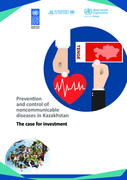
Noncommunicable diseases (NCDs) such as cancer, cardiovascular disease, diabetes and chronic respiratory diseases and their risk factors are an increasing public health and development challenge in Kazakhstan. This report provides evidence through three analyses that NCDs reduce economic output and
...
Noncommunicable diseases (NCDs) such as cancer, cardiovascular diseases, diabetes and chronic respiratory diseases and their risk factors are an increasing public health and development challenge in Turkey. This report provides evidence through three analyses that NCDs reduce economic output, and di
...
Updated 28 December 2020
