
Filter
1758
Text search:
host
communities
Featured
161
500
Language
Document type
934
346
159
111
98
42
34
24
5
3
1
1
Countries
87
82
53
48
48
44
42
41
40
39
39
37
33
31
28
25
23
23
22
22
20
20
19
19
18
17
16
16
15
15
14
13
13
13
13
13
13
12
11
11
11
10
9
9
9
9
9
8
8
7
7
7
7
7
6
6
5
5
5
5
4
4
4
4
4
4
4
4
4
3
3
3
3
3
3
3
3
3
3
3
3
2
2
2
2
2
2
2
2
2
2
2
2
2
2
2
2
2
2
2
2
2
2
2
2
1
1
1
1
1
1
1
1
1
1
1
1
1
1
1
1
1
1
1
1
1
1
1
1
1
1
Authors & Publishers
Publication Years
Category
605
104
101
90
77
21
7
6
1
Toolboxes
183
181
115
104
92
80
67
58
55
54
53
51
27
26
23
13
13
12
10
10
9
8
3
2
2
1
The Global Antibiotic Resistance Partnership (GARP)-Mozambique team, in partnership with the Center for Disease Dynamics, Economics & Policy (CDDEP), has produced this report as part of a solid com-mitment to develop actionable policy proposals to tackle antibiotic resistance and improve appropriate
...
This guidance document is based on research of social media activity related to antibiotic use at EU level, as well as on a survey of the social media activities of EAAD partner organisations, mostly EU umbrella organisations of patients and health professionals. The research showed that there is al
...
Antimicrobial resistance is one of the most important threats to the health worldwide. Antimicrobial resistance or drug resistance is the reduction of the pharmaceutical effects of a drug against a disease or reduction of its effectiveness in improving the clinical signs of a disease. Antimicrobial
...
On 31st December 2019, the World Health Organization (WHO) China Country Office was informed of cases of pneumonia of unknown etiology (unknown cause) detected in Wuhan City, Hubei Province of China. On 7th January 2020, Chinese authorities identified a new strain of Coronavirus as the causative age
...
A Students' Toolkit.
How does the digital transformation of health care change the daily routine of a healthcare professional? Which knowledge and skills will healthcare professionals need? Are universities in Europe preparing their students well enough to work within a digitised health system?
Th
...
Interium guidance, 25 June 2021Timely and accurate diagnostic testing is an essential tool in preventing and controlling the spread of COVID-19. This document describes recommendations for national testing strategies and the use of PCR and rapid antigen tests in different transmission scenarios of t
...
March – June 2020
This update: 3 April 2020
A comprehensive briefing by Half of Syria
April 2020
A comprehensive briefing on the critical challenges of the COVID-19 pandemic to Syrians, as reported by Syrian civil society organisations. These challenges have been collated following extensive interviews with the teams of member and partner
...
Education is UNESCO’s top priority because
it is a basic human right and the foundation
on which to build peace and drive sustainable
development. UNESCO is the United Nations’
specialized agency for education and the
Education Sector provides global and
regional leadership in education, s
...
Internally displaced persons (IDPs), refugees, migrants and returnees constitute a sizeable population in the WHO Eastern Mediterranean Region. There were 12 million refugees (half are Palestinians) and 13 million IDPs in the Region as of 2018. These populations are often vul
...
Reusing a legacy interactive audio instruction (IAI) program to provide education in a humanitarian crisis is a quick solution and a smart use of previous investments (“Learning in the Time of Ebola”). This article highlights and advises on the issues that relate to adapting and updating previou
...
This document is developed using technical input from the Interim Guidance on Scaling-up COVID-19 Outbreak in Readiness and Response Operations in Camps and Camp-like Settings and Key Considerations for Selecting Health Infrastructure for the Response to COVID 19 in addition to other tec
...
Coronavirus Disease-19 (COVID-19) was declared a global pandemic on 11 March 2020, and Malawi declared its first case on 2 April. As of 30 April, there were 36 confirmed positive cases of COVID-19 and 3 deaths. A State of Disaster was declared by President Arthur Peter Mutharika on 20 March and a 21
...
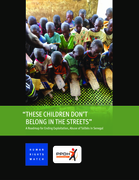
For over a decade, Senegalese and international journalists, human rights advocates, and child protection experts have documented and denounced the ongoing exploitation, abuse and neglect of children living in many of Senegal’s traditional Quranic schools, or daaras. Thousands of these children, k
...
Subsidiarity guides people to establish relationships where they can make decisions, accomplish good work, and live their lives in a manner that respects human dignity
HTS Teologiese Studies/Theological Studies ISSN: (Online) 2072-8050, (Print) 0259-9422
Street Child & Child Protection AoR: Accelerating localised response to COVID-19: Practical pathways
The COVID-19 pandemic presents a rare and immediate opportunity for a norm shift towards localisation in the humanitarian architecture. Whils tinternational humanitarian actors are facing constraints in funding and restrictions on movement and travel, national and local level
...
Masangane Case Study
The Vesper Society commissioned ARHAP to do research on the integrated Masangane HIV/AIDS programme affiliated with the Moravian Church in Eastern Cape, South Africa. Completed in 2006, this study aimed to understand the role of the religious health assets of the Masangane ART
...
