
Filter
910
Text search:
World
Health
Organization
WHO,
Western
Pacific
Region
Featured
Recommendations
94
New Publications
224
Language
Document type
No document type
432
Studies & Reports
239
Guidelines
116
Manuals
44
Strategic & Response Plan
35
Fact sheets
10
Training Material
9
Situation Updates
9
Resource Platforms
9
Infographics
6
Online Courses
1
Countries / Regions
Global
78
Philippines
32
Western Pacific Region
28
South–East Asia Region
25
India
17
Myanmar / Burma
17
Western and Central Europe
17
Asia
17
Africa
17
Cambodia
16
Nepal
15
Bangladesh
10
Latin America and the Carribbean
10
Kenya
9
Liberia
7
Nigeria
7
Ethiopia
6
Afghanistan
6
Syria
6
China
6
Indonesia
6
Russia
6
Thailand
5
South Africa
5
Eastern Europe
5
Somalia
4
Pakistan
4
Papua New Guinea
4
Ukraine
4
Yemen
4
West and Central Africa
4
Sierra Leone
3
Congo, Democratic Republic of
3
Ghana
3
South Sudan
3
Tanzania
3
Rwanda
3
East and Southern Africa
3
Middle East and North Africa
3
Eastern Europe and Central Asia
3
Guinea
2
Uganda
2
Zimbabwe
2
Zambia
2
Malawi
2
Mozambique
2
Madagascar
2
Sri Lanka
2
Fiji
2
Venezuela
2
Mongolia
2
Vietnam
2
Burkina Faso
1
Senegal
1
USA
1
Cameroon
1
Haiti
1
Iraq
1
Jordan
1
Egypt
1
Sudan
1
Benin
1
Central African Republic
1
Vanuatu
1
Namibia
1
Eswatini/ Swaziland
1
Serbia
1
Colombia
1
Ecuador
1
Botswana
1
Mexico
1
Solomon Islands
1
Bhutan
1
Palestine
1
North Korea
1
Laos
1
Timor Leste/ East Timor
1
Iran
1
North America
1
Japan
1
Authors & Publishers
Publication Years
Category
Countries
170
Clinical Guidelines
118
Public Health
77
Women & Child Health
59
Key Resources
27
Capacity Building
15
Pharmacy & Technologies
15
General Guidelines
1
Toolboxes
HIV
102
Mental Health
84
COVID-19
64
Planetary Health
54
Rapid Response
50
TB
43
Global Health Education
39
NTDs
37
AMR
35
Disability
32
Caregiver
28
NCDs
22
Pharmacy
21
Natural Hazards
17
Refugee
15
Zika
13
Conflict
12
Polio
9
Ebola
8
Health Financing Toolbox
6
Cholera
3
Typhoon
2
Specific Hazards
2
Social Ethics
1
Global AIDS Update 2017
Global AIDS Update 2018
Closing Gaps
Breaking Barriers
Righting injustices
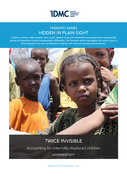
Internally displaced children are twice invisible in global and national data. First, because internally displaced people (IDPs) of all ages are often unaccounted for. Second, because age-disaggregation of any kind of data is limited, and even more so for IDPs.
Planning adequate responses to meet
...

To better adapt current case management practices and address excess mortality in otherwise treatable
cases will require better knowledge of the demographic characteristics of the patients and comorbidities
which can make severe dehydration harder to tolerate physiologically. With this in mind, a
...
PLOS ONE | DOI:10.1371/journal.pone.0133869 July 28, 2015, p.1-16
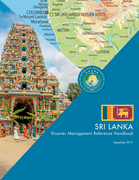
Recently, Sri Lanka has been impacted by multiple natural disasters. Sri Lanka experienced a landslide in October 2014, and flooding in December 2014.8 Sri Lanka withstood the worst drought conditions witnessed in four decades in 2016; the extreme drought conditions extended into 2017 and produced s
...

UNAIDS Joint United Nations Programme on HIV/AIDS
This report presents the most current data on four specific forms of violence – violent discipline and exposure to domestic abuse during early childhood; violence at school; violent deaths among adolescents; and sexual violence in childhood and adolescence. The statistics reveal that children expe
...
These guidelines are informed by evidence of ‘what works’ and lessons learned in the field. They are designed to accelerate UNICEF regional and country offices’ programming on social service workforce strengthening, and support work to better plan, develop and support the social services workf
...

Agenda item 5, UNAIDS/PCB (43)/18.
11-13 December 2018 | Geneva, Switzerland
UNAIDS Programme Coordinating Board
Issue date: 23 November 2018

Non-communicable diseases (NCDs) are of increasing concern for society and national governments, as well as globally due to their high mortality rate. The main risk factors of NCDs can be classified into the categories of self-management, genetic factors, environmental factors, factors of medical co
...
What at first glance appears to be simple causality – climate change leading to more and more migration – has triggered intense academic debate over the past ten years because the circumstances are complex. There is need for a thorough analysis in the ground between denying the problem and asser
...
