Filter
1255
Text search:
participation
restrictions
Featured
97
283
Language
Document type
681
256
141
77
60
15
14
9
1
1
Countries
55
45
37
32
32
29
26
26
24
24
22
19
19
19
18
17
14
14
13
12
12
12
12
11
10
10
10
10
9
9
9
9
9
8
8
8
8
7
7
7
7
7
7
6
6
5
5
5
5
5
5
5
5
5
5
5
4
4
4
4
4
4
4
4
4
4
3
3
3
3
2
2
2
2
2
2
2
2
2
2
2
2
2
1
1
1
1
1
1
1
1
1
1
1
1
1
1
1
1
1
1
1
1
1
1
1
1
1
1
1
1
Authors & Publishers
Publication Years
Category
407
74
74
61
48
20
1
1
Toolboxes
181
123
102
77
76
53
38
36
33
32
25
24
24
23
23
15
10
9
9
9
4
3
1
1
Bull World Health Organ 2013;91:773–783 | doi: http://dx.doi.org/10.2471/BLT.13.118422
(Submitted: 15 February 2013 – Revised version received: 21 June 2013 – Accepted: 22 June 2013 – Published online: 20 August 2013)
Neurological, Psychiatric, and Developmental Disorders: Meeting the Challenge in the Developing World
Institute of Medicine (US) Committee on Nervous System Disorders in Developing Countries.
Washington (DC): National Academies Press (US); 2001.
WHO Western Pacific Regional Strategy to Reduce Alcohol-Related Harm
Adolescent alcohol-related behaviours: trends and inequalities in the WHO European Region, 2002–2014
Observations from the Health Behaviour in School-aged Children (HBSC) WHO collaborative cross-national study
Alcohol contributes significantly to the disease and mortality burden in the WHO European Region, and primary health care systems play an important role in reducing the impact of harmful alcohol use. Screening and brief interventions (SBIs) for alcohol are an evidence-informed approach to addressing
...
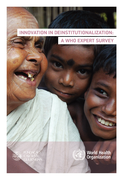
Based on the survey, five principles for deinstitutionalization were identified: community-based services must be in place; the health workforce must be committed to change; political support at the highest and broadest levels is crucial; timing is key; and additional financial resources are needed.
...
Position Statement
Diabetes Care2018;42(Suppl. 1):S1–S194.
New criteria for classifying and diagnosing hyperglycaemia first detected during pregnancy have been accepted by a group of experts convened by WHO. These new criteria are an update of recommendations published by WHO in 1999
In this report, potential reasons for this apparent
contradiction between cherished human values
and observed social actions are explored with a
view to better formulating concrete steps that
governments and other stakeholders can take to
reshape social attitudes and public policy.
Assessment of the quality of institutional care for adults with psychosocial and intellectual disabilities in the WHO European Region.
The specific objectives of the project were to address gaps in knowledge about the number and characteristics of such long-term institutions and to identify deficie
...
Health, Rights and Drugs
recommended
Harm Reducation, Decriminalization and Zero Discrimination for People who use Drugs
The report depicts the reality of forced displacement as a developing world crisis with implications for sustainable growth: 95 percent of the displaced live in developing countries and over half are in displacement for more than four years. To help the displaced, the report suggests ways to rebuild
...
This publication seeks to describe the best treatments and practices based on the scientific evidence available at the time of writing as evaluated by the authors and may change as a result of new research. Readers need to apply this knowledge to patients in accordance with the guidelines and laws o
...
The figures and findings reflected in the 2019 Humanitarian Needs Overview (HNO) represent the independent analysis
of the United Nations (UN) and its humanitarian partners based on information available to them. While the HNO aims
to provide consolidated humanitarian analysis and data to help inf
...
Epilepsia, 55(4):475–482, 2014
doi: 10.1111/epi.12550