
Filter
1943
Text search:
alert
Featured
239
548
Language
Document type
1102
269
204
132
78
57
39
37
11
7
4
2
1
Countries
73
70
69
50
48
43
42
39
38
36
31
31
28
28
27
27
25
25
24
24
21
21
15
15
15
14
13
13
13
13
13
12
12
12
12
11
11
11
11
11
10
10
8
8
8
7
7
7
6
6
6
5
5
5
5
5
5
5
4
4
4
4
4
3
3
3
3
2
2
2
2
2
2
2
2
2
2
2
2
2
2
1
1
1
1
1
1
1
1
1
1
1
1
1
1
1
1
1
1
1
1
1
1
1
1
1
1
1
1
1
1
Authors & Publishers
Publication Years
Category
672
164
111
90
80
63
15
7
1
Toolboxes
256
188
163
116
65
58
56
54
52
51
45
41
36
35
35
34
32
24
20
15
12
11
6
4
Epidemiologisches Bulletin Nr.2 /2016, S.16
The strategy focuses on mobilizing and coordinating partners, experts and resources to help countries enhance surveillance of the Zika virus and disorders that could be linked to it, improve vector control, effectively communicate risks, guidance and protection measures, provide medical care to thos
...
Bulletin of the World Health Organization 2016. doi: http://dx.doi.org/10.2471/BLT.16.171082
Objective: To describe the temporal and geographical distribution of Zika virus infection, and associated neurological disorders, from 1947 to February 2016.
This document provides interim guidance for effective risk communication around Zika virus transmission and potential complications. A causal relationship between Zika virus infection and these potential complications has not yet been proven. In this uncertainty, effective communication strategies s
...
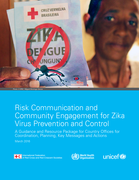
A Guidance and Resource Package for Country Offices for Coordination, Planning, Key Messages and Actions
En el presente documento se brinda una orientación provisional sobre los criterios de medición del perímetro cefálico, los patrones de crecimiento que se deben utilizar como referencia, la evaluación clínica y las pruebas y exploraciones necesarias para diagnosticar la microcefalia y las alter
...
The aim of this handbook is to provide network members and other laboratories involved in the diagnosis of tuberculosis, with an agreed list of key diagnostic methods and their protocols in various areas of TB diagnosis, ranging from microbiological diagnosis of active TB to the diagnosis of latent
...
Zika and dengue viruses remain significant public health threats. These viruses share the same Aedes (Stegomyia) mosquito vectors and geographic distributions but infections cannot be readily distinguished clinically and need to be differentiated from each other, and from other circulating arboviral
...
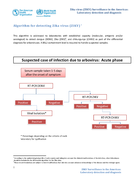
This algorithm is addressed to laboratories
with established capacity(molecular, antigenic and/orserological) to detect dengue (DENV), Zika (ZIKV), and chikungunya(CHIKV) as part of the differential diagnosis for arborviruses. A BSL2 containment level is required to handle suspected samples.
Skin and mucosal conditions are extremely common in all children and adults in particular in HIV-infected adults and children and are one of the commonest daily management problems faced by health care workers caring for patients with HIV infection
This implementation guide has been developed to help birth attendants and health-care leaders successfully launch and sustain use of the WHO Safe Childbirth Checklist. Development, use and implementation of the Checklist are described in this guide.
It covers how to introduce and ensure continuous
...
Versão 2. Última atualização 10 Março 2016
O protocolo contém orientações sobre definição de casos suspeitos, como identificação de alterações do Sistema Nervoso Central (SNC) durante a gestação, critérios para confirmação ou descarte de casos, sistema de notificação e investig
...
WHO Information Note on Revised Cholera Kit
recommended
This document serves as an introductory presentation of the revised cholera kits 2015.
From Individual to Collective healing: A trainer’s manual
This document provides interim recommendations for the surveillance of Zika virus infection, microcephaly and Guillain-Barré syndrome, in four different contexts and describes reporting requirements to WHO. Transmission refers to vector-borne transmission, unless specified differently. Autochthonou
...
The threat posed by Zika virus infection highlights the need to reinforce preparedness arrangements for mosquito-borne diseases in EU/EEA countries, especially for pathogens transmitted by Aedes aegypti and Aedes albopictus.
The aim of this document is to highlight measures that can effectively red
...
O recente aumento dos casos de microcefalia e outras patologias neurológicas potencialmente associadas à infecção pelo vírus Zika provocou um aumento da procura de testes laboratoriais para detectar a infecção. Os grupos prioritários para os testes de diagnóstico devem ser
indivíduos sin
...
