
Filter
1277
Text search:
Глобальный
Featured
51
45
Language
Document type
425
206
128
115
102
70
67
52
38
19
17
14
13
10
1
Countries
1270
25
16
16
13
11
10
10
9
9
8
8
7
6
6
5
5
4
4
4
4
4
4
3
3
3
3
3
2
2
2
2
2
2
2
2
2
2
2
2
2
1
1
1
1
1
1
1
1
1
1
1
1
1
1
1
1
1
1
1
1
1
1
1
1
1
1
1
1
1
1
1
1
Authors & Publishers
Publication Years
Category
414
193
84
41
36
20
9
Toolboxes
391
226
148
115
79
67
38
32
22
22
21
18
14
11
10
10
9
4
3
3
2
1

Benchmarking is a strategic process often used by businesses and institutes to standardize performance in relation to the best practices of their sector. The World Health Organization (WHO) and partners have developed a tool with a list of benchmarks and corresponding suggested actions that can be a
...
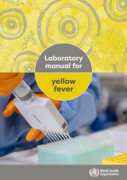
Laboratory manual for yellow fever
recommended
This WHO laboratory manual provides the most up to date methods and procedures for the laboratory identification of yellow fever virus infection in humans. It provides guidance on the establishment and maintenance of an effective laboratory providing routine surveillance testing for yellow fever, wh
...
This report covers basic concepts, such as universal health coverage, and emphasises how vital it is to incorporate mental health into the UHC framework. It explains the pivotal commitments made by governments at the recent UN high-level meeting on UHC in 2023, outlining a roadmap for meaningful act
...
The ERF provides WHO staff with essential guidance on how the Organization manages the assessment, grading and response to public health events and emergencies with health consequences, in support of Member States and affected communities. The ERF adopts an all-hazards approach and it is therefore a
...
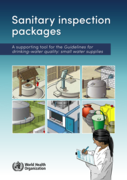
A sanitary inspection is a simple, on-site evaluation (traditionally using a checklist) to help identify and support the management of priority risk factors that may lead to contamination of a drinking-water supply. Sanitary inspections are a well-established and widely-applied practice. They can su
...

Diphtheria is caused by Corynebacterium species, mostly by toxin-producing Corynebacterium diphtheriae and rarely by toxin-producing strains of C. ulcerans and C. pseudotuberculosis. The most common type of diphtheria is classic respiratory diphtheria, whereby the exotoxin produced characteristicall
...

Non-communicable diseases (NCDs) are of increasing concern for society and national governments, as well as globally due to their high mortality rate. The main risk factors of NCDs can be classified into the categories of self-management, genetic factors, environmental factors, factors of medical co
...
A collection of 8 infographics on Household Air Pollution.
The atlas is a rich repository of annotated photographs and illustrations covering almost all aspects of common and rare colposcopic abnormalities. It is a useful addition to the training tools and hands-on training in colposcopy in structured training courses or under the tutorship of experienced a
...

Website last accessed on 16.03.2024
GO developed our Cancer Education Materials (CEM) tool to improve the patient diagnosis and treatment experience in resource-limited settings, reduce stigma, help facilitate dialogue between patients and providers, and ensure that no patient stops treatment beca
...
Volume 3, Cancer, presents the complex patterns of cancer incidence and death around the world and evidence on effective and cost-effective ways to control cancers. The DCP3 evaluation of cancer will indicate where cancer treatment is ineffective and wasteful, and offer alternative cancer care packa
...
Website last accessed on 16.03.2024 : CANSA’s Fact Sheets & Position Statements are provided for general information purposes only, and to state our stance on particular matters. We do not specialise in treatment of cancer. It is therefore important to discuss any questions which may arise with th
...
Website last accessed on 16.03.2024
Inform your patients about cancer, treatment, side effects, and more with these easy-to-read materials.
Website last accessed on 20.03.2024: The Global Cancer Observatory (GCO) is an interactive web-based platform presenting global cancer statistics to inform cancer control and research.

Website last accessed on 20.03.2024
The International Cancer Control Partnership (ICCP) is a group of international organisations engaged in cancer control planning efforts. The Partners are seeking to create synergies to maximize collective resources and efforts to support the development, impl
...
Website last accessed on 20.03.2024
The IARC Learning portal provides a single access point to a wide variety of learning and training resources, organized into different learning platforms that are developed and maintained in collaboration with IARC research groups and key collaborators.
The t
...
Protection from a Single Dose of HPV Vaccine A major public health impact from IARC studies of vaccine efficacy.

Information on the causes of cancer at specific sites is important to cancer control planners, cancer researchers, cancer patients, and the general public. The International Agency for Research on Cancer (IARC) Monograph series, which has classified human carcinogens for more than 40 years, recently
...
Prevention offers the greatest public health potential and the most cost-effective long-term cancer control strategy. However, with today’s multiple media streams, the general public is often overwhelmed by an abundance of confusing or ambiguous messages and misinformation on disease prevention. T
...

Progress in reducing tobacco use is a key indicator for measuring countries’ efforts to implement the WHO Framework Convention on Tobacco Control – target 3.a under the Sustainable Development Goals agenda. Countries have adopted this indicator to report progress also towards the tobacco reducti
...
