
Filter
2472
Text search:
weekly
Featured
261
675
Language
Document type
1438
330
328
128
91
59
35
34
17
6
3
2
1
Countries
132
77
74
61
56
55
53
52
47
47
43
38
37
35
33
33
32
31
29
27
27
26
25
23
23
22
19
18
18
18
16
16
16
15
15
14
13
13
13
12
12
12
11
11
11
10
10
10
9
9
8
7
7
7
7
7
6
6
5
5
5
5
4
4
4
4
4
4
4
4
4
4
3
3
3
3
3
3
3
3
3
3
3
3
3
2
2
2
2
2
2
2
2
2
2
2
2
2
1
1
1
1
1
1
1
1
1
1
1
1
1
1
1
1
1
1
1
1
1
1
1
Authors & Publishers
Publication Years
Category
937
230
117
96
88
45
18
2
1
Toolboxes
319
174
164
161
130
128
71
62
55
53
45
44
42
37
36
33
32
30
30
15
8
7
3
1
Downloaded from https://aidsinfo.nih.gov/guidelines on 11/27/2019
Visit the AIDSinfo website to access the most up-to-date guideline.
Register for e-mail notification of guideline updates at https://aidsinfo.nih.gov/e-news.
National HIV curriculum
You can always find the most up to date version of this document at
https://www.hiv.uw.edu/go/co-occurring-conditions/opportunistic-infections-prevention/coreconcept/all
To date, Samoa, Tonga, Fiji and American Samoa have reported measles cases. The outbreaks in Samoa and Tonga are caused by the D8 strain (genotype) of measles virus. Measles vaccine coverage varies in Pacific island countries and areas, ranging from 31% in Samoa to 99% in the Cook Islands, Nauru and
...


Standard Treatment Guidelines

The microbiology laboratory database software.
WHONET is a desktop Windows application for the management and analysis of microbiology laboratory data with a particular focus on antimicrobial resistance surveillance. WHONET, available in 28 languages, supports local, national, regional, and global
...
This interim guidance is for LTCF managers and corresponding infection prevention and control (IPC) focal persons in LTCF and updates the guidance published in March 2020. The objective of this document is to provide guidance on IPC in LTCFs in the context of COVID-19 to 1) prevent COVID-19-virus fr
...
Временные рекомендации
13 марта 2020 г.
Настоящий документ является вторым изданием руководства (версия 1.2), которое первоначально представляло собой адаптированн
...
As countries like the United States pass temporary legislation to cushion the massive blow that is on the horizon that is about to hit many of their citizens – poor and not poor – it is important to think about the tools available to governments of low-income countries, what kind of preparations
...

This “living paper” contributes to the global knowledge on how countries are responding to the pandemic by documenting real-time actions in a key area of response – that is, social protection measures planned or implemented by governments.

This second edition of the “living paper” contributes to the global knowledge on how countries are responding to the pandemic by documenting real-time actions in a key area of response – that is, social protection measures planned or implemented by governments.
For the purpose of this revie
...
23 December 2020 This document summarizes WHO recommendations for the rational use of personal protective equipment (PPE) in health care settings and temporary strategies during acute supply shortages. This document also contains 2 Annex sections describing updated PPE use recommendations for health
...
Women, the elderly, adolescents, youth, and children,
persons with disabilities, indigenous populations, refugees,
migrants, and minorities experience the highest degree
of socio-economic marginalization. Marginalized people
become even more vulnerable in emergencies.1 This is due
to factors su
...
Thematic Report– 3 April 2020
ACAPS Risk Analysis: COVID19
info@acaps.org
Водоснабжение, санитария, гигиена и обращение сотходами в контексте коронавирусной инфекции COVID-19
Временные рекомендации23апреля 2020г.
The following checklist can help hospitals assess and improve their preparedness for responding to a community-wide outbreak of COVID-19. Each hospital will need to adapt this checklist to meet its unique needs and circumstances. This checklist should be used as one of several tools for evaluating c
...
Unlike foot and mouth disease, the avian flu, e-coli or listeria, the COVID-19 pandemic has not spread directly through livestock or agriculture commodities, and has therefore not directly disrupted on-farm production. However, the crisis is undermining the ability of farms and agri-enterprises to e
...
COVID-19 has turned the world upside down. Everything has been impacted. How we live and interact with each other, how we work and communicate, how we move around and travel. Every aspect of our lives has been affected.
Public health criteria to adjust public health and social measures in the context of COVID-19
recommended
In response to COVID-19, countries around the globe have implemented several public health and social measures (PHSM), including large scale measures such as movement restrictions, closure of schools and businesses, geographical area quarantine, and international travel restrictions.
Effective response to an outbreak of COVID-19 requires detection in the very earliest stages of the outbreak when the number of cases is small, and the geographical extent of spread is limited. In order to achieve this, a sensitive surveillance system capable of detecting small scale, unusual events
...
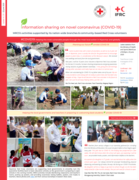
Also available in a Myanmar language version
Infection prevention and control practices need to be implemented to guarantee the safety of healthcare workers and patients in healthcare settings, it is fundamental to prevent cross contamination and containment of spread of COVID 19. As of the day of this publication, the following precautions ar
...

High levels of storage iron may increase malaria susceptibility. This risk has not been investigated in semi-immune adolescents. We investigated whether baseline iron status of nonpregnant adolescent girls living in a high malaria transmission area in Burkina Faso affected malaria risk during the fo
...
Aligned to the Lancet Migration Global Statementto include migrants and refugees incountries’response toCOVID-192, this brief focuses onGreece’s challenges and opportunities to build an inclusive response. Asylum seekers and refugees in Greece are currently placed by the Greek governments in Rec
...
In Israel, as in other countries, the COVID-19 outbreak highlights existing structural inequities,which compromise the health of some migrant groups. The Israeli case also demonstrate show strong NGOs successfully advocate for the protection of migrants‘health amidst the crisis, madepossible bya c
...
Clinical care for severe acute respiratory infection: toolkit: COVID-19 adaptation
Clinical care for severe acute respiratory infection: toolkit: COVID-19 adaptation
22 July 2022. This document summarizes current WHO guidance for public health surveillance of coronavirus disease 2019 (COVID-19) in humans caused by infection with severe acute respiratory syndrome coronavirus 2 (SARS-CoV-2).
Community-Based Management of Acute Malnutrition (CMAM) is a decentralised community-based approach to treating acute malnutrition. Treatment is matched to the nutritional and clinical needs of the child, with the majority children receiving treatment at home using ready-to-use foods. In-patient car
...
The purpose of this guide is to offer recommendations for improving the implementation of non‑pharmacological public health measures during the COVID-19 response and compliance with these measures by population groups in situations of vulnerability. This requires determining the main barriers to i
...
Инструмент ВОЗ для прогнозирования запасов основных материалов для работы с COVID-19 (COVID-19-ESFT)
В этом документе представлены технические подробности и методологические пояснения по структуре инструмента ВОЗ
для прогнозирования запасов основных материало
...
Цель данной аналитической записки – предоставить краткое изложение информации и соображений,
касающихся принятия оптимальных мер в отношении гриппа во время паÐ
...
This report alerts responders to the importance of language in building trust and effective communication with people facing Ebola and other epidemics.
19 February 2021
The overall objective of this prospective meta-analyses (PMA) is to estimate the effect of anti-IL-6 therapy compared with usual care in hospitalized patients with suspected or confirmed COVID-19. The primary comparison is of the class effect of anti-IL-6 therapies. It will also es
...
On this page we provide an overview of excess mortality along with charts to explore the data. You can learn in more depth about different measures of excess mortality, their strengths and limitations, and their comparability across countries
21 августа 2020 г.
В этом документе представлены рекомендации для лиц, принимающих решения, работников общественного
здравоохранения и специалистов в области педиаÑ
...
21 August 2020
This guidance provides specific considerations for the use of non-medical masks, also known as fabric masks, by children as a means for source control in the context of the current COVID-19 pandemic. It also advises on the use of medical masks for children under certain conditions.
This document provides interim guidance on the prevention, identification and management of health worker infection in the context of COVID-19. It is intended for occupational health departments, infection prevention and control departments or focal points, health facility administrators and public
...
29 Dec 2021. Comprehensive slideset updated regularly to include the latest data and guidance on best practices for COVID-19 diagnosis and prevention of COVID-19 transmission.
O objetivo deste documento é definir o papel dos serviços de APS/ESF no manejo e controle da infecção COVID-19, bem como disponibilizar os instrumentos de orientação clínica para os profissionais que atuam na porta de entrada do SUS a partir da transmissão comunitária de COVID-19 no Brasil.
...
خطة النقاط الست للاستجابة والتعافي ووضع رؤية جديدة لعالم ما بعد الجائحة لكل طفل
This protocol establishes the principles and definitions of a surveillance system devised by the WHO Health in Prisons Programme (HIPP) to monitor the evolution of COVID-19-related epidemiological data in prisons and other places of detention and to report the main measures adopted to prevent,
...
Обновленная версия. В этой версии приведены обновленные рекомендации относительно стратегии диагностического тестирования в контексте обновлённой классификаци
...
Временные рекомендации
9 августа 2021 г.
Цель данного документа - описать минимальный набор мероприятий по эпиднадзору, рекомендуемых на национальном уровне для выÑ
...
Coronavirus Clinical Management Protocol (COVID-19) in Primary Health Care (Version 7)

Drug Distribution and Control: Preparation and Handling
This Technical Assistance Bulletin is intended to assist pharmacists in the extemporaneous compounding of non-sterile drug products for individual patients. Included in this document is information on facilities and equipment, ingredient
...
Dispõe sobre orientações para identificação, investigação e manejo do evento adverso pós vacinação de miocardite/pericardite no contexto da vacinação contra a COVID-19 no Brasil
For humanitarian organisations to respond effectively to complex crises, they require access to up-to-date evidence-based guidance. The COVID-19 crisis has highlighted the importance of updating global guidance to context-specific and evolving needs in humanitarian settings. Our study aimed to under
...
This guideline covers identifying, assessing and managing the long-term effects of COVID-19, often described as ‘long COVID’. It makes recommendations about care in all healthcare settings for adults, children and young people who have new or ongoing symptoms 4 weeks or more after the start of a
...
3rd edition. In 2001, Uganda adapted the Integrated Disease Surveillance and Response (IDSR) developed by World Health Organization (WHO) for member states in African region. The Ministry of Health has been implementing the IDSR strategy since then with success across the country. This strategy prov
...
The early prevention project “Strong together!” supports refugee parents and their young children (0–4 years) in Berlin, Germany. It aims to mitigate the transmission of trauma to the generation born in exile. For refugee families who have only recently arrived in Germany, the COVID‐19 pande
...
The “Right Start Initiative” is a comprehensive program reaching nine countries in Asia and Africa, designed and run by the Nutrition International with the goal of improving the quality of nutrition for 100 million adolescent girls and women of reproductive age.
(Last Update: July 2022)
WHO issued an updated appeal (May 2022) detailing its resource needs for Ukraine and refugee-receiving and hosting countries for March-August for Ukraine and March-December 2022 for other countries.
The needs are an estimated US$ 147.5 million: US$ 80 million for health response in Ukraine and ano
...
Lancet Planet Health 2021; 5: e654–58
Cardiovascular disease, diabetes, chronic obstructive pulmonary disease, cancers, and other non-communicable diseases are among the leading causes of morbidity and mortality in low-income, middle-income, and high-income countries, and The Lancet Taskforce recently made the case for investing in non-
...

Caregiver Part 1: Key Resources
recommended
May 17,2022 MEDBOX Issue Brief no.21
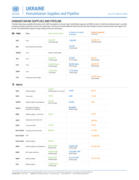
This routine assessment supports the targeting and provision of humanitarian assistance to the affected population and serves as a preliminary source to identify oblasts and hromadas hosting high numbers of IDPs.
The Guidelines for the Prevention, Surveillance and Management of COVID-19 Infection amongst Health Care Workers (HCW) in Zimbabwe were developed to prevent, detect and manage HCW COVID-19 infection, an emerging pandemic affecting the whole world. The HCW is at the fore front of this pandemic, thus
...
This document aims to provide interim guidance for microbiology and virology experts, other laboratory professionals, laboratory managers, infectious disease programme managers, public health professionals and other stakeholders that provide primary, confirmatory or advanced testing for SARS-CoV-2,
...
Tools and practical guidance for achieving high uptake
The World Health Organization Regional Office for Africa (WHO AFRO), in accordance with recommendations from various WHO committees, has developed three flagship programmes to support Member States in the African region to prepare for, detect and respond to public health emergencies. They are the re
...

The World Health Organization (WHO) and the global community of countries, partners, donors, technical experts, scientists and field implementation teams continue to work towards the ultimate goal of a world free of the burden of neglected tropical diseases (NTDs).
The Onchocerciasis Control Programme in West Africa (OCP) undertook regional and large scale frght against onchocerciasis in West Africa in 1974 using a vector control strategy. By 2002 OCP had succeeded in eliminating the disease as a public health, socio-economic and development problem in 10 out
...
WASH in schools during a cholera response is important due to the strong correlation between WASH and IPC. Not only can it impact the health and well-being of students and staff but also facilitate the potential spread of the disease via the congregation of children and adults from multiple househol
...

Since the beginning of the Ukraine crisis on 24 February 2022, WHO has supported Government-led efforts and initiatives alongside key partners on the ground. Building on efforts to date, and working alongside Bulgaria’s health authorities to bring added value to existing mechanisms, the WHO Countr
...
Physical activity plays an important role in the care of people living type 2 diabetes. Regular physical
activity can help reduce some of the harmful effects and slow or even reverse disease progression.
Being active can also reduce symptoms of depression and anxiety, and enhance thinking, learnin
...
Conformément aux recommandations de divers comités de l’Organisation mondiale de la Santé (OMS), le Bureau régional de l’OMS pour l’Afrique a mis en place trois initiatives phares afin de permettre aux États Membres de la Région africaine de se préparer aux urgences de santé publique,
...
The World Health Organization Regional Office for Africa (WHO AFRO), in accordance with recommendations from various WHO committees, has developed three flagship initiatives to support Member States in the African region to prepare for, detect and respond to public health emergencies. They are the r
...
A lot has happened this year. While we continued to tackle the COVID-19 pandemic, we were hit by disease outbreaks and
humanitarian crises. Yet, despite these challenges, we marched on, resolute in resolving critical health systems issues to increase
access to quality healthcare services. To furth
...
South Sudan continues to struggle with a severe health crisis affecting 8.9 million people, primarily in flood- and conflict-affected regions with population movements (displacement and returns), and disease outbreaks. The nation's health system, heavily reliant on international aid, faces staffing
...
i. A person who is a contact of a probable or confirmed mpox case in the 21 days before the onset of signs or symptoms, and who presents with any of the following: acute onset of fever (>38.5°C), headache, myalgia (muscle pain/body aches), back pain, profound weakness or fatigue.
OR
ii. A per
...
About one fourth of the world’s population is estimated to have been infected with the tuberculosis (TB) bacilli, and about 5–10% of those infected develop TB disease in their lifetime. The risk for TB disease after infection depends on several factors, the most important being the person’s im
...
This report on global leishmaniasis surveillance follows those published in 2016–2023.2–6 Six indicators of leishmaniasis are publicly available from the Global Health Observatory (GHO).7 In addition to the GHO, country profiles with up to 30 indicators are published, with detailed data received
...
Malawi Internationally recommended key policies uptake
On 16 February 2022, Malawi received confirmation of Wild Poliovirus Type 1 (WPV1) from an acute flaccid paralysis (AFP) case in Lilongwe.
