Filter
4069
Text search:
training
aids
Featured
330
1297
Language
Document type
2966
367
328
174
95
78
18
16
7
6
6
3
1
1
Countries
230
162
118
117
105
104
102
100
96
94
78
72
69
68
67
67
59
58
56
54
50
48
37
34
34
34
32
31
27
22
22
20
19
18
17
17
16
16
15
15
12
12
11
9
8
8
7
7
7
7
6
6
6
6
6
5
5
5
5
5
4
4
4
4
4
3
3
3
3
3
3
2
2
2
2
2
2
2
2
2
2
2
2
2
2
2
2
2
2
2
2
2
1
1
1
1
1
1
1
1
1
1
1
1
1
1
1
1
1
1
1
1
1
1
1
1
1
1
1
1
1
1
1
Authors & Publishers
Publication Years
Category
1827
263
226
201
150
96
40
5
2
Toolboxes
589
296
243
207
113
104
68
68
55
53
51
50
48
38
33
32
29
25
22
17
13
12
8
1
1
Policy
June 2015
Training Menus, Facilitation Tips, and Participatory Training Modules
UNAIDS report on the global AIDS epidemic shows that 2020 targets will not be met because of deeply unequal success; COVID-19 risks blowing HIV progress way off course. Missed targets have resulted in 3.5 million more HIV infections and 820 000 more
...
For IST to be effective there is need for utilization of multiple techniques that will lead to transfer of competences (Bluestone et al. 2013). Learning settings should be selected to support relevant and realistic practice so as to increase the efficiency of IST. Alternatives to hotels such as
...
Five years after a global commitment to Fast-Track the HIV response and end AIDS by 2030, the world is off track. A promise to build on the momentum created in the first decade of the twenty-first century by front-loading investment and accelerating
...
To help trainers to create awareness,attitude and skills in waste handlers in day to day management of medical waste in health care settings.
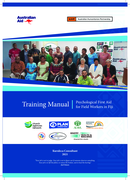
This Fiji contextualized manual was initially drafted for CANDO partners as a result of the work done by the humanitarian arms of the various Christian denominations. However as the work progressed it became evidently clear that the training was nee
...
Why bold action against inequalities is needed to en AIDS, stop COVID-19 and prepare for future pandemics
23 February 2022
A summary of the commitments and targets within the United Nations General Assembly’s 2021 Political Declaration on HIV and AIDS.The United Nations General Assembly’s 2021 Political Declaration on
...
The WHO estimates that 19 million children aged 15 years or younger are visually impaired. Of these, 1.4 million are irreversibly blind and need visual rehabilitation interventions for full psychological and personal development. The remainder have visual problems that could be prevented or treated.
...
This training guide is designed to enable participants to understand the human rights perspective on migration, and how human rights laws and standards can be operationalized to make migration safer and an empowering experience for all. It provides
...
1.1 Why this course is needed
The first few hours and days of a newborn baby’s life are a critical window for establishing breastfeeding and for providing mothers with the support they need to breastfeed successfully. Since 1991, the Baby-friendly Hospital Initiative (BFHI) has helped to motivate
...

This study, although not generalizable, builds up the literature on worker training needs in developing countries, and would be of benefit for speech-language pathologists and worker trainers. This paper aimed to investigate the
...
This publication by UNAIDS, UNDP and the International Organisation for Migration examines various dimensions related to migration and HIV and AIDS.
The training focuses on building the capacity of health care workers at the primary and secondary level to address and manage TB in children.
The Government of Botswana’s SRH Policy Guidelines and Service Standards document provides the framework for developing a responsive strategy and an implementation plan for SRHR and HIV&AIDS Linkages and Integration. The global call on governments
...
First Edition, July 2009
Trainers’ Manual
WHO published and launched the third part of the Wheelchair Service Training Package (WSTP) series consisting of two sub-packages: the Wheelchair Service Training Package for Managers (WSTPm) and th
...
The WHO Training Resource on Primary Ear and Hearing Care is a new set of four training manuals aimed at equipping primary health care workers in
developing countries with simple and effective meth
...
As part of the Mental Health Gap Action Programme, WHO has developed training manuals (Training of trainers and supervisors training manual and
...
Overview
Learning objectives
• Understand the mental health treatment gap in low-, middle- and high-income countries.
• Understand the principles and aims of the Mental Health Gap Action Programme.
• Acquire an introduction to mhGAP Intervention Guide (mhGAP-IG).
• Learn about mhGAP ToH
...
Reporting Period 2010-2011
Handbook World Aids Day 2014
This revised trainer's guide contains a prototype training schedule for four days. Teaching and learning strategies are highly interactive, using participatory and experiential approach. Training ou
...
This training and guidance has been developed to provide an in-depth understanding on what it means to respect legal capacity in mental health and related areas as well as concrete strategies to ensure that people are able to exercise their right to
...
NATIONAL HIV/AIDS/STI/TB COUNCIL DEVOLUTION PLAN
This Training Manual is developed based on the Child Protection Working Group Interagency Guidelines for Case Management. The Facilitator’s Guide provides guidance on the key steps to take before, during and after
...
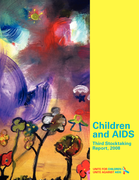
Third Stocktaking Report, 2008
Unite for Children, Unite against AIDS
Rediscovering Biology
Molecular to Global Perspectives
Accessed: 03.09.2019
UNAIDS/99.31E (English original, June 1999)
1st revision, April 2000

Republic of Armenia
Reporting period: January-December 2015
Accessed: 29.09.2019
Accessed: 26.09.2019
Journal of Social Aspects of HIV/AIDS VOL. 14 NO. 1 2017
SAHARA J. 2017; 14(1): 77–84.
Published online 2017 Sep 21. doi: 10.1080/17290376.2017.1374878
PMCID: PMC5639614
PMID: 28934916

Editorial Review
AIDS 2019, 33:1411–1420
A practical guide to meaningfully engage adolescents in the AIDS response
UNAIDS 2016 reference
A progress report
Vision 2030
Accessed: 17.11.2019
Employees, Coworkers, and Supervisors
Accessed: 20.11.2019

Agenda item 5, UNAIDS/PCB (43)/18.
11-13 December 2018 | Geneva, Switzerland
UNAIDS Programme Coordinating Board
Issue date: 23 November 2018

Participant Manual September 2012
Surveillance of Populations at High Risk for HIV Transmission
a) the background to the development of the Church social teaching on migration
b) some of the additional resources that lie within the wider social tradition that might help us think theologically about migration in the current context
c) brief concluding note on Islam, migration and dialogue.
The UNAIDS 2020 global report is a call to action. It highlights the scale of the HIV epidemic and how it runs along the fault lines of inequalities.
There is a crucial need to initiate and sustain fistula programs that increase access and strengthen the capacity of the health care system to provide high quality services for repair and care of women living with female genital fistula. Therefore, it is important to pay particular attention to the
...
The Federal Ministry of Health (FMOH) has been coordinating sector wide reforms that aim to improve equity and quality of health services. It is widely known that; the sector is growing in line the overall growth and transformation plan of the country and the sector is bein
...
The National AIDS Control Council (NACC) continues to strengthen partnerships with all stakeholders in the response to HIV and AIDS in Kenya. While recognizing that there is no single prev
...

This report makes the case for a major new initiative—to rapidly recruit, train and deploy 2 million community health workers in Africa. Drawing on a vast body of evidence and substantial regional experience, the report shows how community health workers save lives and improve quality of life and
...
This training guide applies a participatory approach, reflecting the considerable evidence that adults learn best by practicing and reflecting on their experiences. It thus emphasizes exercises to improve skills in counseling that support clients to
...
This Teaching Short describes a woman’s monthly cycle and shows and tells how pregnancy happens.
The videos present up-to-date standards on these important topics: contraceptive methods; family planning learning aids; contraceptive method skills
...
This UNAIDS 2024 report brings together new data and case studies which demonstrate that the decisions and policy choices taken by world leaders this year will decide the fate of millions of lives and whether the world’s deadliest pandemic is overcome.
The goal of this course is to provide participants with the foundational skills needed to begin the development, implementation and ongoing improvement of a congenital anomalies surveillance programme, in particular for countries with limited resources. It focuses on the methodology needed to devel
...
The 2010-2011 National Annual Report on HIV program presents the progress in implementing the strategies and activities articulated in the National Strategic Plan on HIV and AIDS 2009-2012 commonly referred to as the HIV NSP. The report presents con
...
Summary Report on the Comprehensive Study
This study is made possible by the generous support of the American people through the United States Agency for International Development (USAID). The contents are the responsibility of their authors and do not necessarily reflect the views of USAID or th
...
The main purpose of the training package is to develop the minimum skills and knowledge required by personnel involved in wheelchair service delivery. An important aim of the training package is to
...
Designed for trainers of health workers, this manual offers skills-building sessions on developing more “male-friendly” health services. Utilizing participatory and experiential activities, the manual examines attitudinal and structural barriers that inhibit men from seeking HIV and
...
Drugs and medical supplies are dispensed at the cutting edge level of the interface between the public health system and the people. Availability or lack of it brings either credit or discredit to the public health system. The primary reason for holding stocks of medicines and medical supplies in a
...
Disaster Preparedness Training Programme
Curriculum reform efforts to enhance training on rational medicine use (RMU) and AMR should pay particular attention to ensuring that the right topics are integrated and the right teaching-learning methodologies are adopted.