
Filter
3214
Text search:
skin
Featured
434
854
Language
Document type
1857
504
317
194
116
89
66
20
19
9
7
7
6
3
Countries
239
104
88
79
71
70
66
61
57
49
48
45
41
40
40
38
36
36
33
31
29
27
23
22
20
15
15
15
15
14
14
13
13
13
13
13
12
12
12
12
11
10
10
10
8
7
7
7
7
6
6
6
5
5
5
5
5
4
4
4
4
4
4
3
3
3
3
3
3
3
3
3
3
3
3
2
2
2
2
2
2
2
2
2
2
2
2
2
2
2
2
2
2
1
1
1
1
1
1
1
1
1
1
1
1
1
1
1
1
1
1
1
1
1
1
1
1
1
1
1
Authors & Publishers
Publication Years
Category
1068
461
226
151
130
119
42
Toolboxes
235
218
181
164
162
149
133
118
94
93
84
71
68
61
60
52
49
44
33
23
15
4
2
The information provided here can be used to understand the current situation, increase attention to preterm births in Rwanda and to inform dialogue and action among stakeholders. Data can be used to identify the most important risk factors to target and gaps in care in order to identify and impleme
...
The information provided here can be used to understand the current situation, increase attention to preterm births in Rwanda and to inform dialogue and action among stakeholders. Data can be used to identify the most important risk factors to target and gaps in care in order to identify and impleme
...
National Tuberculosis Programme and Senior Paediatricians
This guideline was first developed in 2007 but further updated in 2012 and 2016 to ensure the use of the latest evidence-based international recommendations on childhood TB. The guidelines will fill the gaps in a systematic approach to T ...
This guideline was first developed in 2007 but further updated in 2012 and 2016 to ensure the use of the latest evidence-based international recommendations on childhood TB. The guidelines will fill the gaps in a systematic approach to T ...

The 2012 NDRMP lays out the Disaster Risk Management (DRM) architecture of the country and provides guidance for DRM intervention at all levels. However, implementation has been slow and resource challenges exist throughout the government.
The PNG government’s policy and institutional framework ...
The PNG government’s policy and institutional framework ...
The objective of this paper is to summarise and critically review the available data about onchocerciasis in Mozambique, in order to report epidemiological and clinical aspects related to the disease and identify gaps in knowledge. The paper is intended to raise awareness of the existence and import
...
Cervical Cancer Control in India
recommended
A new e-learning course has just been released, aimed at healthcare professionals working with patients in India exploring HPV screening and vaccination, assessment and diagnosis of cervical cancer, and palliative care for patients with advanced cervical cancer. The course was developed by ecancer i
...
Всемирная организация здравоохранения (ВОЗ) описывает наркотическую зависимость как сильное желание потреблять психоактивные вещества, трудно контролируемое по
...
WHO published interim guidelines on the prevention of sexual transmission of Zika virus in September 2016 (1), based on a limited amount of evidence under an emergency process during a public health emergency of international concern. The body of evidence has grown considerably since then and WHO e
...

Emerging Infectious Diseases • www.cdc.gov/eid • Vol. 19, No. 9, September 2013
Frontiers in Pediatrics | www.frontiersin.org
1 April 2019 | Volume 7 | Article 159
Operational Guideline
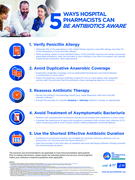
5 Ways Hospital Pharmacists Can Be Antibiotics Aware - Poster
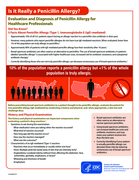
Evaluation and Diagnosis of Penicillin Allergy for Healthcare Professionals

The international community sits at the tipping pointof a post-‐antibiotic era, where common bacterial infections are no longer treatable with the antibiotic armamentarium that exists. In South Africa, t
...
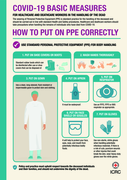
The wearing of Personal Protective Equipment (PPE) is standard practice for the handling of the deceased and should be carried out in line with standard Health and Safety procedures.
Healthcare and deathcare workers should take precautions when handling the remains of individuals who have died fr
...
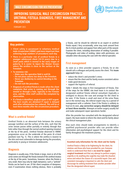

Based on communication with the Ukrainian Ministry of Health WHO will continuously revise and publish a list of critical needs against which we are requesting support
Monkeypox outbreak toolbox
recommended
Where are the outbreaks? What is monkeypox? Recongnizing monkeypox and more. An update on the monkeypox outbreak including protection, diagnosis, treatment.
Interim rapid response guidance, 10 June 2022.
It includes considerations for certain populations such as patients with mild disease with considerations for community care, patients with moderate to severe disease, sexually active persons, pregnant or breastfeeding women, children and young persons
...
14 June 2022.
The aim of this document is to provide concise advice to public health authorities and guide their prevention, awareness-raising and behaviour change interventions before, during and after upcoming summer events.
The Interim Guidance for Risk Communication and Community Engagement (RCCE) outlines recommendations, considerations and methods to raise awareness, manage risk perception, maintain trust and proactively support people at risk to make informed decisions to protect themselves and others from monkeypo
...
technical specification
Infographic
protocol if child has severe acute malnutrition (SAM), otherwise use standard protocols.
SAM criteria: Mid-upper arm circumference <11.5 cm (only for 6-59 months) OR weight for height z score < -3 OR bilteral pitting oedema
Understanding and addressing violence against women

Schistosomiasis, also known as bilharzia, is a disease caused by parasitic worms that require two hosts: humans and certain species of snails. There are two forms of the disease, namely, intestinal schistosomiasis, caused by Schistosoma mansoni and S. japonicum, and urogenital schistosomiasis, cause
...
Global efforts to eradicate dracunculiasis have continued to progress, with only 542 cases reported in 2012, as compared with 1058 in 2011. It is a long thread-like worm. It is transmitted exclusively when people drink water contaminated with parasite-infected water fl eas. It is now found in some o
...
Leptospirosis is an infectious disease caused by bacteria. It can lead to potentially fatal infections of the kidney, liver, brain, lung or heart.
• Leptospirosis is a disease that is caused by
spirochete bacteria in the genus Leptospira.
There are 10 pathogenic species, and more
than 250 pathogenic serovars.
• While leptospirosis occurs worldwide, it is
more common in tropical or sub-tropical
climates.
The new WHO recommendations for rabies immunization supersede the 2010 WHO position
on pre-exposure prophylaxis (PrEP) and post-exposure prophylaxis (PEP) for rabies. These updated
recommendations are based on new evidence and directed by public health needs that are cost-,
dose- and time-sparing
...

Rabies is a zoonotic, vaccine-preventable viral disease that causes damage to the brain and spinal
cord in infected animals and humans. A zoonotic disease is a disease that can be transmitted
between animals and humans. Rabies is nearly 100% fatal once symptoms appear.
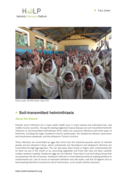
Accessed on 22.04.2023
To target helminth elimination, a new consortium of research institutes, universities, not-for-profit organizations, and pharmaceutical companies have joined forces and expertise to establish a research and development pipeline for the development of anthelminthics targeti
...
Issue Brief Marburg virus disease (MVD)
recommended
Issue Brief No. 40 provides healthcare professionals with the most relevant treatment guidelines, prevention measures and training material on MVD
The safety of children is a top concern for parents and school authorities in the current mpox outbreak, as those
under 15 face elevated risks, particularly in the hardesthit Northwestern and Eastern regions of the Democratic Republic of the Congo.
The Practical Approach to Emergencies in the Pregnant Mother, Newborn infant and Child. Provder Manual
Pocket book of hospital care for children
recommended
Guidelines for the Management of common childhood Illness. 2nd edition
These guidelines focus on the management of the major causes of childhood mortality in most developing countries, such as newborn problems, pneumonia, diarrhoea, malaria, meningitis, septicaemia, measles and related conditions,
...
The Manual for Participants is primarily meant for the participants of a 3 and a half day training course in Emergency Triage, Assessment and Treatment.
Chapter 21 from "Where there is no doctor"
First Global Patient Safety Challenge Clean Care is Safer Care
The WHO Guidelines on Hand Hygiene in Health Care provide health-care workers (HCWs), hospital administrators and health authorities with a thorough review of evidence on hand hygiene in health care and specific recommendations to impro
...
With its expert practical advice on security in situations of armed conflict, this updated set of guidelines will prove invaluable to humanitarian personnel working at the operational level. Following on from the success of the first edition, published in 1999, it addresses new and developing threat
...
Tuberculosis. Practical guide for clinicians, nurses, laboratory technicians and medical auxiliaries
This Tuberculosis guide has been developed jointly by Médecins Sans Frontières and Partners In Health. It aims at providing useful information to the clinicians and health staff for the comprehensive management of tuberculosis. Forms of susceptible and resistant tuberculosis, tuberculosis in child
...

These guidelines have been extracted from the WHO manual Surgical Care at the District
Hospital (SCDH), which is a part of the WHO Integrated Management Package on Emergency
and Essential Surgical Care (IMPEESC).
Refer for details on anaesthesia, head, gunshot and landmine injuries in chapters
HIV & AIDS Treatment in Practice No. 198
Important Guideline for Ebola prevention and control
It is designed for the following uses:
- for prevention through preparedness--to help African health facilities make advance preparations for responding with appropriate precautions when a VHF (including Ebola) case is suspected.
- for pl
...
A Guide for Low Resource Situations
How to Recognise and Manage Leprosy Reactions
recommended
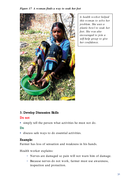
This book is for all health workers who may have to help people who have nerve damage to their eyes, hands and feet. It will help them to encourage patients to develop a lifetime habit of caring for nerve-damaged parts.
This booklet is recommended for all health workers who diagnose and treat leprosy, especially those at the first referral level such as a health centre. It contains more detail than the WHO Guide to Eliminate Leprosy as a Public Health Problem. The Guide gives practical advice on how to diagnose lep
...
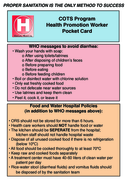
COTS (Cholera Outbreak Training and Shigellosis) Program Health Promotion Worker Pocket Card
recommended
Proper Sanitation is the only method to success
A guide for field health workers
Dermatological Preparations For The Tropics
recommended
A formulary of dermatological preparations and background information on therapeutic choices, production and dispensing. 2nd edition
Environmental Health in Emergencies and Disasters
Chapter 10

communicable Disease Toolkit
Guidance for health workers
Guide; revised 15 June 2010
Evidence for technical update of pocket book recommendations. Newborn conditions, dysentery, pneumonia, oxygen use and delivery, common causes of fever, severe acute malnutrition and supportive care
A handy desk reference tool for primary level health workers. The Adolescent Job Aid is a handy desk reference tool for health workers (trained and registered doctors, nurses and clinical officers) who provide services to children, adolescents and adults. It aims to help these health workers respond
...
This publication is an updated version of the Management of Tuberculosis and HIV Coinfection clinical protocol released in 2007 by the WHO Regional Office for Europe. It is intended for all health care workers involved in preventing, diagnosing, treating and caring for people living with TB and HIV
...

Working with limited resources in armed conflict and other situations of violence. Vol.2
War Surgery. Vol.1
recommended
Working with limited resources in armed conflict and other situations of violence. Vol.1
The principles and practice of the surgical lmanagment of wounds produced by missiles or explosions
This publication addresses the management of war wounds by non-specialist surgeons in situations where resources and expertise are limited. It is intended to be a pratical guide whether or not the surgeon has a special training in orthopaedic trauma.
Building the competence and confidence of nurse and midwife educators
ICAP Nurse Capacity Initiative offers its Campus to Clinic Curriculum to empower nursing educators and mentors with a new area of expertise. It opens the door to teach in new ways with confidence. It can be adapted to different c
...
2nd edition.
Like the original, this second edition of the guidance aims to inform the revision of existing national guidelines and standards for managing Tuberculosis (TB), many of which include guidance on children. It includes recommendations, based on the best available evidence, for improving
...
A Guide for low income countries
5th edition.
A paper presented at the 10th International Congress on Infectious Disease, Singapore
Travelers planning to conduct humanitarian work in areas where outbreaks of Ebola hemorrhagic fever and Marburg hemorrhagic fever are known to occur need to be familiar with how Ebola virus and Marburg virus are transmitted
