
Filter
2540
Text search:
restrictions
Featured
204
526
Language
Document type
1157
604
355
139
126
66
54
24
5
5
4
1
Countries
134
80
72
69
67
59
56
52
48
46
46
46
40
37
34
33
31
31
31
27
26
25
25
24
23
22
22
21
21
21
21
20
20
19
19
18
17
16
16
16
16
16
14
14
14
14
13
13
13
13
10
10
10
10
10
10
10
9
8
8
8
8
8
7
7
7
7
7
6
6
6
6
6
6
5
5
5
5
5
5
5
5
5
4
4
4
4
4
3
3
3
3
3
3
3
3
3
3
3
2
2
2
2
2
2
2
2
2
2
2
2
2
2
2
2
2
1
1
1
1
1
1
1
1
1
1
1
1
1
1
1
1
1
1
1
1
1
1
1
1
Authors & Publishers
Publication Years
Category
855
125
117
108
97
30
10
1
1
1
Toolboxes
576
184
151
151
130
130
110
81
70
69
54
41
40
39
39
38
28
27
25
12
9
9
6
1
he WHO global disability action plan 2014-2021 is a significant step towards achieving health and well-being and human rights for people with disabilities. The action plan was endorsed by WHO Member States in 2014 and calls for them to remove barriers and improve access to health services and progra
...
AN ANALYSIS OF UNICEF MICS 3 SURVEY DATA FROM BANGLADESH, LAO PDR, MONGOLIA AND THAILAND
Un meilleur état de santé pour toutes les personnes handicapées
This first in a series of Washington Group Implementation Documents covers the tools developed by the Washington Group to collect
internationally comparable disability data on censuses and surveys. WG Implementation guideline Tool 1
Webinar.
The purpose of this booklet is to help readers understand why data on children with disabilities are currently inadequate, the difficulties that surround the gathering of high-quality data on disabled children, and why there is a real need to improve the collection, analysis, dissemination
...
This document provides information to assist countries in developing exit screening plans and Standard Operating Procedures (SOP). This includes the method, tools, and sequence of screening; determining resource needs; communication messages; and the legal considerations of screening.

Commissioned by Plan International the report draws on data from research conducted in Bangladesh in April 2018. It explores how adolescent girls within two age brackets (10-14 and 15-19) understand the unique impact the crisis has upon them, and how they have responded to the challenges they face.
...
...
C’est en agissant prestement sur le front économique que l’on a pu surmonter cette crise sanitaire
L’Afrique de l’Ouest et la communauté internationale ont dû faire face à une crise sanitaire sans précédent lorsqu’a éclaté, en mars 2014, la plus grande épidémie de la maladie ...
L’Afrique de l’Ouest et la communauté internationale ont dû faire face à une crise sanitaire sans précédent lorsqu’a éclaté, en mars 2014, la plus grande épidémie de la maladie ...

Assessment of physical disability at the community level is essential for rehabilitation and supply of services. This study aimed to assess the prevalence of physical disability among adults in an urban community in Sri Lanka.

In the present study, the Office of the United Nations High Commissioner for Human Rights sets forth the standards on equality and non discrimination of persons with disabilities under article 5 of the Convention on the Rights of Persons with Disabilities. It aims at providing guidance for implement
...

Infectious disease outbreaks are periods of
great uncertainty. Events unfold, resources
and capacities that are often limited
are stretched yet further, and decisions
for a public health response must be
made quickly, even though the evidence
for decision-making may be scant. In
such a
...
The country snapshot provides information on the HIV epidemic and response in Myanmar country .
Policy Brief, Updated in March 2017
Key messages
• Meaningful involvement of sex workers in the HIV response through peer-based education and outreach and consultation in policy making and programme planning is vital to reduce their vulnerability to HIV and other sexually transmitted inf ...
Key messages
• Meaningful involvement of sex workers in the HIV response through peer-based education and outreach and consultation in policy making and programme planning is vital to reduce their vulnerability to HIV and other sexually transmitted inf ...

Lancet Glob Health 2018, Published Online September 12, 2018 http://dx.doi.org/10.1016/S2214-109X(18)30387-5
Lancet Glob Health 2018 Published Online September 12, 2018 http://dx.doi.org/10.1016/S2214-109X(18)30407-8

Lancet Oncol 2018 Published Online September 12, 2018 http://dx.doi.org/10.1016/S1470-2045(18)30447-9
Lancet Glob Health 2018 Published Online September 12, 2018 http://dx.doi.org/10.1016/S2214-109X(18)30409-1
Lancet Public Health 2018 Published Online September 12, 2018 http://dx.doi.org/10.1016/ S2468-2667(18)30138-5
BMC Medicine201210:107
https://doi.org/10.1186/1741-7015-10-107© Katchanov and Birbeck; licensee BioMed Central Ltd. 2012
Received: 10 July 2012Accepted: 24 September 2012Published: 24 September 2012
In 2011, the World Health Organization’s (WHO) mental health Gap Action Programme (mhGAP) r
...
La flambée de maladie à virus Ebola (MVE) se poursuit avec une intensité modérée. Katwa et Butembo demeurent les principales zones sanitaires inquiétantes, tandis que de petites grappes continuent d’apparaître dans diverses zones géographiquement dispersées. Au cours des 21 derniers jours
...
In its resolution 34/16, the Human Rights Council decided to focus its next full-day meeting on “Protecting the rights of the child in humanitarian situations” and invited the Office of the High Commissioner to prepare a report on that issue, in close collaboration with relevant stakeholders. Th
...
Schizophr Bull. 2014 Jan;40(1):192-213. doi: 10.1093/schbul/sbs150. Epub 2012 Dec 17.
Women and girls are paying the price of the war in Yemen – Humanitarian actors must increase the priority given to women and girls’ needs, with specific attention to GBV prevention and response, and reproductive health services
Print version ISSN 1809-9823On-line version ISSN 1981-2256
Rev. bras. geriatr. gerontol. vol.19 no.2 Rio de Janeiro Mar./Apr. 2016
http://dx.doi.org/10.1590/1809-98232016019.150040
A FACT SHEET FROM THE OFFICE ON WOMEN’S HEALTH
www.womenshealth.gov | 1-800-994-9662
The objective of this guideline is to present the complete set of all WHO recommendations and best practice statements relating to abortion. While legal, regulatory, policy and service-delivery contexts may vary from country to country, the recommendations and best practices described in this docume
...
Perspectives sur sur les drogues
Perspective on drugs
Les femmes aborigènes ouvrent la voie
Mars 2014
Menthol in tobacco products

Adopted by the Twenty-sixth Ordinary Session of the Assembly of Heads of State and Government of the OAU, Addis Ababa, Ethiopia - July 1990
Adoptée par la Vingt-Sixième Conférence de Chefs d’Etat et de Gouvernement de l’OUA,Addis Abéba (Ethiopie) - Juillet 1990
Integrating trauma healing for partner staff into recovery programming.
This assessment shares testimonies from CRS and partner staff who participated in a trauma healing program in Central Africa Republic.
CRS's trauma-healing methodology uses small groups—of all genders, ages and faiths—focu
...
Fighting continues to displace people in Rakhine and Shan States causing displacement of 3,700 people bringing the total displacement in the first two months of the year to approximately 7,500 people.
UNICEF is restarting soap distributions in northern Rakhine State for approximately 100,000 peo
...
Other disorders
Chapter H.3
(New 2015)
Scoping question: In school students aged 14-‐‑15 years, are school-‐‑based interventions effective in reducing deaths from suicide and suicide attempts compared to care-‐‑as-‐‑usual?
Autres troubles
Chapitre H.1
Edition en français
Traduction : Priscille Gérardin et Malaïka Lasfar Sous la direction de : Priscille Gérardin Avec le soutien de la SFPEADA

New assessment guidelines for measuring the overall impact of mental health problems in Latin America have served as a catalyst for countries to review their mental health policies. Latin American countries have taken various steps to address long-standing problems such as structural difficulties, s
...
The chain-free initiative evolved in response to an urgent need to: provide technical and financial support for hospital reform, improve domestic conditions for people with mental illness, develop community care programmes, raise mental health literacy in the community and among health workers, and
...
UNAIDS Report 2013
Child Survival Working Group
Accessed: 18.10.2019
Rationale for including this intervention in the proposal
Medical Journal of Zambia, Volume 36 Number 4 (2009)
Accessed: 17.11.2019
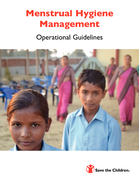
Menstrual Hygiene Management
recommended
Operational Guidelines.
Guidelines for the development of educational programmes for MHM, including tips on the topics to address and methods to assess girls’ practices in a respectful way with practical tools
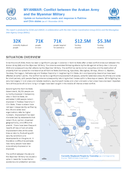
Since the end of 2018, there has been a significant upsurge in violence in Rakhine State after armed conflict broke out between the Arakan Army (AA) and the Myanmar Military. The violence escalated following attacks by the AA against military sites in January 2019 and subsequent counter-attacks by t
...
A guide for civil society
Accessed: 30.01.2020
BMJ is offering a range of free online resources to support researchers, doctors, nurses, and other healthcare professionals to understand and respond to the global health emergency caused by the novel coronavirus (2019-nCoV).
The free online resources are aimed at healthcare professionals locate
...
The extensive use of antimicrobials in human and veterinary medicine in recent years has accelerated the emergence and spread of resistant microorganisms. This situation has been worsened by the lack of investment in developing new effective antibiotics. The severity of the consequences is clear to
...
Developed by the HHS Panel on Treatment of Pregnant Women with HIV Infection and Prevention of Perinatal Transmission—
A Working Group of the Office of AIDS Research Advisory Council (OARAC)
Accessed: 12.02.2020
Recent increases in family planning (FP) use have been reported among women of reproductive age in union (WRAU) in Senegal. However, trends have not been monitored among harder-to-reach groups (including adolescents, unmarried and rural poor women), key to understanding whether FP progress is equita
...
3 August 2021- Gatherings are events characterized by the concentration of people at a specific location for a specific purpose over a set period of time.
The aim of this policy brief is to present WHO’s position on, and guidance in relation to, holding gatherings during the COVID-19 pandemic. It
...
ECDC Technical Report, Fourth Update 3 July 2020
WHO and public health authorities around the world are taking action to contain the COVID-19 outbreak. However, long term success cannot be taken for granted. All sections of our society – including businesses and employers – must play a role if we are to stop the spread of this disease.
This document provides guidance on the application of non-pharmaceutical countermeasures to minimise the spread of the 2019 novel coronavirus (2019-nCoV) in the population. Some of the measures proposed refer specifically to certain phases of the epidemic (containment or mitigation phases), and can
...
Accessed on 03.03.2020
Relever le Taux de Prévalence Contraceptive (TPC) au Sénégal à 45% et réduire les Besoins Non satisfaits (BNS) à 10% selon une approche inclusive, holistique au sein d’une instance de coordination multisectorielle fonctionnelle chargée des questions de dividende dÃ
...
Over the reporting period, THP-Burkina Faso (THP-Burkina) maintained a continuous focus on ensuring the selfreliance of the health program in each of its epicenters. Building upon its exclusive use of government-run health clinics at its epicenters, THP-Burkina developed a firstever partnership agre
...
Over the reporting period, economic actors continued to carry out their activities with little regard for their impacts on the livelihoods of the communities living in the surrounding areas. In Doo Tha Htoo (Thaton) District, cold dust from a Tatmadaw-run cement factory contaminated nearby waterways
...
1. What is COVID-19?
2. Who is at most risk for COVID-19?
3. What is the risk of COVID-19 infection in humans in South Africa?
4. How is COVID-19 transmitted?
5. What are the signs and symptoms of COVID-19 infection in humans?
6. How is COVID-19 diagnosed?
7. How is COVID-19 infection
...
This interim guidance has been updated with advice on safe and appropriate home care for patients with coronavirus disease 2019 (COVID-19) and on the public health measures related to the management of their contacts.
Improving the quality of hospital antibiotic use is a major goal of WHO’s global action plan to combat antimicrobial resistance. The WHO Essential Medicines List Access, Watch, and Reserve (AWaRe) classification could facilitate simple stewardship interventions that are widely applicable globally.
...
In May 2015, the Sixty-eighth World Health Assembly recognized the importance of the public health problem posed by antimicrobial resistance by adopting the global action plan on antimicrobial resistance (“global action plan”). The global action plan proposes interve
...
En mai 2015, en adoptant le Plan d’action mondial pour combattre la résistance aux antimicrobiens (« Plan d’action mondial »), la Soixante-Huitième Assemblée mondiale de la Santé a reconnu l’importance de cette résistance en tant que problème majeur de santé publi
...
The primary focus of the plan continues to be prevention, preparedness and treatment of the the Novel Coronavirus (COVID-19) outbreak. Central to the plan are the following overall objectives:
To prevent further transmission of COVID-19 in the oPt;
To provide adequate care for patients aff
...
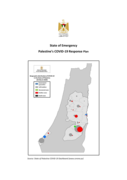
The purpose of this plan is to:
Present the GoP’s strategy and actions;
Propose an aid coordination approach;
Identify the critical support needs, including for: public health response to COVID-19; budget support to maintain government services; and diplomatic engagement with region
...

Infectious diseases like COVID-19 can disrupt the environments in which children grow and develop. Disruptions to families, friendships, daily routines and the wider community can have negative consequences for children’s well-being, development and protection. In addition, measures used to preven
...
March 2020
This document provides a high-level mapping of outbreak stages with guidance on how to time the minimum uptake of different interventions that have been recommended by Africa CDC, driven by evidence and science.
Accessed: 02.04.2020
March – June 2020
This update: 3 April 2020
This edition of UNICEF’s annual Humanitarian Action for Children highlights UNICEF’s funding appeal, which sets out an ambitious agenda to address the major challenges facing children and young people living through conflict and crisis. It presents the investments needed in 2021 to save their li
...
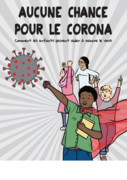
Comment les enfants peuvent aider à vaincre le virus - La bande dessinée informe les enfants et les jeunes de 10 à 14 ans sur le virus corona.
Human rights must be at the centre of all prevention, preparedness, containment and treatment efforts from the start, in order to best protect public health and support the groups and people who are most at risk. States have an obligation to protect and guarantee everyone the right to the highest at
...
FAO’s component of the Global COVID-19 Humanitarian Response Plan
18.5.2020
This document, produced by IFRC, UNICEF and WHO, suggests key actions on how people and communities can stay safe and slow down the spread of COVID-19, particularly for contexts where you might have been asked by your local authorities to maintain physical distance or stay home.
Available in: Arabi
...
Guidance for Asia Pacific National Societies.
This document provides guidance for Asia Pacific National Societies on how to include migrants and displaced people in COVID-19 preparedness and response activities.
Considerations for implementing and adjusting public health and social measures in the context of COVID-19
recommended
interim guidance, 14 June 2021
This document is intended for national authorities and decision makers in countries that have introduced large scale public health and social measures. It offers guidance for adjusting public health and social measures, while managing the risk of a resurgence of cases
...
Many migrants find themselves with limited access, if any, to information about risks, prevention measures, health care and other essential services. Migrants in transit, those in need of international protection or without legal status are likely to be particularly vulnerable, as well as those who
...
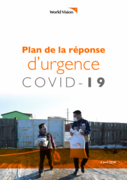
Ce document met en évidence nos objectifs stratégiques, nos pays prioritaires et nos besoins de financement pour les six premiers mois.
COVID-19 est une crise sans précédents. L’impact sur les filles et les garçons que nous soutenons est potentiellement dévastateur, car ceux qui protègen
...
