
Filter
552
Text search:
repository
Featured
52
156
Language
Document type
243
155
54
37
29
16
9
4
3
1
1
Countries
37
20
20
18
16
15
14
13
12
12
11
11
9
8
8
7
7
7
6
6
5
5
5
5
5
5
4
4
4
3
3
3
3
3
3
3
3
3
3
2
2
2
2
2
2
2
2
2
2
2
2
1
1
1
1
1
1
1
1
1
1
1
1
1
1
1
1
1
1
1
1
1
1
1
1
1
1
Authors & Publishers
Publication Years
Category
218
35
35
26
19
6
3
2
1
Toolboxes
72
43
31
31
26
25
21
16
16
15
15
13
12
10
6
6
4
4
3
2
2
1

Haiti, one of the poorest countries in the world, was devastated by an earthquake in 2010. The disaster uncovered the realities of a non-existent mental health care system with only ten psychiatrists nationwide. Attempts were made to assess the increased prevalence of mental illness, likely due to t
...
Introduction
Capter A.1
Ethics and international child and adolescent psychiatry
Olashore et al.
Child Adolesc Psychiatry Ment Health (2017) 11:8 DOI 10.1186/s13034-017-0144-9
This literature review summarizes the link between psychological well-being and entrepreneurial outcomes for small and medium-size enterprises in fragile, conflict, and violence–affected contexts. It identifies potentially promising, scalable psychosocial training interventions, based on cognitive
...
The National Action Plan (NAP) has been developed based on the model recommended in the global Action Plan. Local data on on-going interventions were collected from technical informants in the various areas of work. These were analysed using the policy framework provided by the AMR policy document.
...
UN, international agencies and experts released a groundbreaking report demanding immediate, coordinated and ambitious action to avert a potentially disastrous drug-resistance crisis.
If no action is taken - warns the UN Ad hoc Interagency Coordinating Group on Antimicrobial Resistance who release
...

Available in English, French, Spanish, Russian, Chinese, Arabic and Portugues
The core of the strategy is the goal for all patients to have better overall care, so that the numbers of deaths and cases of disability are reduced by 50% before 2030. For this to be achieved, four strategic aims will be pursued.
Empower and engage communities,
Ensure safe, effective tre
...
The Committee examined the clinical development of Ebola virus vaccines and conducted an inventory of available data on their safety. It also reviewed 3 generic issues: updating a global strategy on vaccine safety, use of a network of distributed data
...
Zambia has about 1.2 physicians, nurses, and midwives per 1000 population while the minimum acceptable density threshold is 2.3 per 1000 population. The estimated shortage of doctors, nurses and midwives in Zambia is about 14,960. However, with the projected population growth the deficit more than d
...
Zambia Report for 2017
Ethiopia Antimicrobial Resistance Surveillance Plan
Amsterdam, the Netherlands, 23 July 2018
Meeting Report
At present at least 2.2 billion people around the world have a vision impairment, of whom at least 1 billion have a vision impairment that could have been prevented or is yet to be addressed. The world faces considerable challenges in terms of eye care, including inequalities in the coverage and qua
...
Overcoming HIV-related stigma and discrimination in health- care settings and beyond
UNAIDS 2017 | REFERENCE
J Acquir Immune Defic Syndr Volume 78, Supplement 1, August 15, 2018
A Report on the Application of the HIV Stigma index in the Western highlands and Chimbu provinces
Global Tuberculosis Report 2021
recommended
Each year, the WHO Global TB Report provides a comprehensive and up-to-date assessment of the TB epidemic, and of progress in prevention, diagnosis and treatment of the disease, at global, regional and country levels. This is done in the context of global TB commitments, strategies and targets.
The
...

A Guideline for Healthcare Professionals From the American Heart Association/American Stroke Association
AHA/ASA Guideline
DOI: 10.1161/STR.0000000000000158
Gender-based Violence Area of Responsibility Working Group July 2010
HIV drug resistance , Users Manual
December 2017
12-13 December 2016
Global Action Plan on HIV Drug Resistance - Webinars 12-13 December 2016
UNAIDS/WHO 2015 | Reference
It's time to deliver differently.
Accessed: 13.11.2019
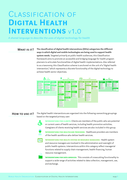
The classification of digital health interventions (DHIs) categorizes the different ways in which digital and mobile technologies are being used to support health system needs. Historically, the diverse communities working in digital health—including government stakeholders, technologists, clinic
...
Progress in reducing tobacco use is a key indicator for measuring countries’ efforts to implement the WHO Framework Convention on Tobacco Control – target 3.a under the Sustainable Development Goals agenda. Countries have adopted this indicator to report progress also towards the tobacco reducti
...
A role for nuclear techniques
Antimicrobials play a critical role in the treatment of human and animal (aquatic and terrestrial) diseases, which has led to their widespread application and use. Antimicrobial resistance (AMR) is the ability of microorganisms to stop an antibiotic, such as an antimic
...
Despite Pakistan's progress in reducing the number of wild poliovirus type 1 (WPV1) cases to 8 in 2017 and 12 in 2018, 2019 has seen a significant rise in the number of WPV1 cases (41 cases as of July 8 2019). One of the most intractable challenges the Pakistan Polio Eradication Initiative (PEI) is
...
UNAIDS/WHO Working group
HIV/AIDS and STI surveillance 2015 / Reference
Antimicrobial resistance is a global crisis that threatens a century of progress in health and achievement of the Sustainable Development Goals. There is no time to wait. Unless the world acts urgently, antimicrobial resistance will have disastrous impact within a generation.
South African Health Review 2019
recommended
22nd edition
The purpose of the SAHR has always been to analyse and assess progress and challenges in key areas of the health system, and to propose recommendations for improvement. We are pleased to continue this tradition in the 2019 edition, which presents a unique collection of perspectives on
...
Malar J (2017) 16:174 DOI 10.1186/s12936-017-1808-x
Background: Since 2004, artemisinin-based combination therapy (ACT) has been the first-line treatment for uncomplicated malaria in Benin. In 2016, a medicine outlet survey was implemented to investigate the availability, price, and market share of
...
UNAIDS / 2019 Guidance
La violencia contra las mujeres y las niñas es generalizada en la Región de las Américas, y tiene enormes consecuencias para su salud y bienestar, así como el de sus familias y sus comunidades. Se trata de un costo inaceptable que puede ser prevenido mediante acciones basadas en la evidencia, pr
...
To understand the national situation, Ethiopia did a situation assessment, launched its first strategy in 2011, and took action to contain AMR, as detailed in the blue boxes found throughout this strategy. This updated version of the strategy was in response to the revised health and medicines polic
...

This is the first NAP on the Prevention and Containment of AMR in Kenya. It has been developed based on the National Policy on Prevention and Containment of AMR and the recommendations of the situation analysis on AMR conducted in 2011 and updated in 2016. This strategy provides a regulatory and imp
...
This National Action Plan addresses actions needed to be taken in order to combat antimicrobial resistance (AMR) in the country. It is obligatory to raise awareness of antimicrobial resistance and promote behavioral change through public communication
programmes that targets human, animal and plant
...
Supporting the food and agriculture sectors in implementing the Global Action Plan on Antimicrobial Resistance to minimize the impact of antimicrobial resistance
The global emergence of antimicrobial resistance (AMR) is posing a threat to human health. Putting resources into the containment of AMR – including surveillance – is one of the highest-yield investments a country can make to mitigate its impact. In 2015, WHO launched the Global Antimicrobial Re
...
Using the WHO model list of essential medicines to update a national essential medicines list
Since 1977, WHO has been working with countries to design the package of essential medicines as an integral component of treatment within the continuum of care, developing and disseminating the Model List
...
Antimicrobials have been a critical public health tool since the discovery of penicillin in 1928, saving the lives of millions of people around the world. Today, however, the emergence of drug resistance is reversing the miracles of the past eighty years, with drug choices for the treatment of many
...
The National Department of Health and Department of Agriculture, Forestry and Fisheries have collectively engaged to determine the key interventions that will form the basis for this strategy taking into account the recommendations from the WHO and OIE.
The development and implementation of a Natio
...
Updated on 6 APRIL 2020
There are serious concerns that the situation might escalate in the next weeks modelling the epi curve of other regions. The interlinkages between human mobility and the current pandemic of COVID-19 are well established, and while international flights have been suspended i
...
While the COVID-19 pandemic threatens all members of society, persons with disabilities are disproportionately impacted due to attitudinal, environmental and institutional barriers that are reproduced in the COVID-19 response.
Migrants in Central Asia and the Russian Federation, have been among the most severely impacted by the COVID-19 pandemic.
In the short term, IOM aims at providing support to migrants who are stranded in countries of destination. In addition, IOM will focus its efforts on addressing data gaps, enhan
...
This document updates the earlier version published in April 2020. In recent weeks, information on the potential use of chloroquine or hydroxychloroquine for the treatment of people with COVID-19 has been disseminated in academic journals and public media. Although there are now ongoing clinical tri
...
The first case of COVID-19 was reported in Mozambique on 22 March 2020. As of 26 May, Mozambique had 194 confirmed cases of COVID-19, of which 168 were locally transmitted. The country’s capital, Maputo, and the province of Cabo Delgado are currently the epicentres of the outbreak in Mozambique, w
...
How to respond to Covid19 pandemic in West and Central Africa
Immunization is one of the most cost-effective public health interventions to date, saving an estimated 2 to 3 million lives each year. As a direct result of immunization, the world is closer than ever to eradicating polio, and deaths from measles – a major child killer – have declined by 73 per
...
Practical actions in cities to strengthen preparedness for the COVID-19 pandemic and beyond
recommended
This document accompanies the interim guidance on “Strengthening Preparedness for COVID-19 in cities and urban settings”. It provides local authorities, leaders and policy-makers in cities with a checklist tool to ensure that key areas have been covered. An excel version that local authorities m
...

This document provides guidance to Member States in the WHO European Region that wish to conduct behavioural insights studies related to COVID-19. Studies can be used to monitor public knowledge, risk perceptions, behaviours and trust with the overall aim to inform national COVID-19 outbreak respons
...
A statement by the Catholic Bishops' Conference of England and Wales
1996
Masangane Case Study
The Vesper Society commissioned ARHAP to do research on the integrated Masangane HIV/AIDS programme affiliated with the Moravian Church in Eastern Cape, South Africa. Completed in 2006, this study aimed to understand the role of the religious health assets of the Masangane ART
...
It highlights how proven digital innovation can be replicated to curb the spread of COVID-19 in Africa. It also estimates investment required to implement such high impact solutions.
DOI:https://doi.org/10.1016/S2213-2600(20)30316-7
The Lancet Respiratory Medicine
India is experiencing rapid demographic and epidemiological transitions with NCDs causing significant disability, morbidity and mortality both in urban and rural populations and across all socioeconomic strata. According to the ICMR State Level Disease Burden Initiative, in 2016, NCDs accounted to a
...
In India, in response to the above and guided by our counterparts in the government of India, the UN agencies have developed the Novel Coronavirus Disease Joint Health Response Plan by UN Agencies and Partners, led by WHO-India, in close collaboration with the Ministry of Health and Family Welfare,
...
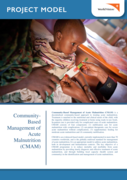
Community-Based Management of Acute Malnutrition (CMAM) is a decentralised community-based approach to treating acute malnutrition. Treatment is matched to the nutritional and clinical needs of the child, with the majority children receiving treatment at home using ready-to-use foods. In-patient car
...
Whole-genome sequencing (WGS) provides a vast amount of information and the highest possible resolution for pathogen subtyping. The application of WGS for global surveillance can provide information on the early emergence and spread of AMR and further inform timely policy development on AMR control.
...
This document aims to provide guidance to healthcare facilities and healthcare providers in the European Union/European Economic Area (EU/EEA) and the United Kingdom (UK) on preparedness and infection prevention and control (IPC) measures for the management of possible and confirmed cases of COVID-1
...

nContraception and Reproductive Medicine (2017) 2:26 DOI 10.1186/s40834-017-0053-6
Young women in Burkina Faso and Mali are increasingly using modern contraceptives for family planning; however, the LAPM contraceptive prevalence rate remains low. Our analysis indicates that social norms around idea
...
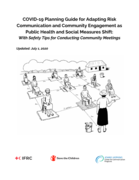
With Safety Tips for Conducting Community Meetings
Updated July 2020
This document includes key Risk Communication and Community Engagement (RCCE) considerations during shifting lockdown measures, safety measures for conducting in-person community meetings, and a template that brings both of these
...
Interim guidance. 12 May 2021. The Continuity of essential health services: Facility Assessment Tool can be used by countries to rapidly assess the capacity of health facilities to maintain the provision of essential health services during the COVID-19 pandemic. It can help to alert the authorities
...
WHO Guidance for Climate Resilient and Environmentally Sustainable Health Care Facilities
recommended
The aim of this guidance is to enhance the capacity of health care facilities to protect and improve the health of their target communities in an unstable and changing climate; and to empower health care facilities to be environmentally sustainable, by optimizing the use of resources and minimizing
...
Thefirst report on Latin America and the Carribean presents key indicators on health and health systems in 33 Latin America and the Caribbean countries. . Analysis is based on the latest comparable data across almost 100 indicators including equity, health status, determinants of health, health car
...
Under the theme Equity at the Heart of Health, this Plan seeks to catalyze efforts in Member States to reduce inequities in health within and between countries and territories in order to improve health outcomes. The Plan identifies specific actions to tackle health inequality, including those recom
...
Bajo el tema La equidad, el corazón de la salud, este plan procura catalizar los esfuerzos en los Estados Miembros para reducir las inequidades en materia de salud entre los países y los territorios y dentro de ellos, a fin de mejorar los resultados en materia de salud. En el plan se señalan medi
...
Com o tema A equidade, o coração da saúde, este Plano busca catalisar esforços nos Estados Membros para reduzir as iniquidades em saúde dentro dos países e territórios e entre eles, a fim de melhorar os resultados em termos de saúde. O Plano identifica ações específicas para enfrentar a d
...
As of 31 October 2020 This is the tenth edition of this summary of rapid systematic reviews, which includes the results of a rapid systematic review of currently available literature. More than 200 therapeutic options or their combinations are being investigated in more than 1,700 clinical trials. I
...
The Zambia Population Based HIV impact assessment of 2016, reported the prevalence of viral hepatitis in Zambia as ranging between 5.6% among adults aged 15 to 59% in the general population, and 7.1% among HIV infected individuals. It is estimated that the majority of persons with chronic hepatitis
...
In 2016, the risk of premature mortality1 from noncommunicable diseases (NCDs) in Ethiopia was 18.3%. The economic costs of NCDs are significant and are due principally to their impact on the non-health sector (reduced workforce and productivity). In this study, it is estimated that NCDs cost Ethiop
...
Measuring progress towards universal health coverage.
This sixth edition of Health at a Glance Asia/Pacific presents a set of key indicators of health status, the determinants of health, health care resources and utilisation, health care expenditure and financing and quality of care across 27 Asia-
...
Se espera que el Panorama 2020 ayude a visibilizar los desafíos de los territorios con peores indicadores en términos de alimentación y nutrición, y que sirva para movilizar el compromiso político y la atención pública en los lugares que sufren mayores rezagos respecto a los promedios naciona
...
Every year, nearly 250 million people move across borders temporarily or permanently for a job opportunity, studying, to flee a crisis back home, or for other reasons. Another 750 million move for similar reasons within the borders of their countries. With the understanding that human mobility affec
...
English Analysis on World about Disaster Management and Protection and Human Rights; published on 12 Jan 2021 by IFRC
Noncommunicable diseases (NCDs) such as cancer, cardiovascular disease, diabetes and chronic respiratory diseases and their risk factors are an increasing public health and development challenge in Kazakhstan. This report provides evidence through three analyses that NCDs reduce economic output and
...
Working Document Nov. 2020
The COVAX Supply and Logistics workstream lead by UNICEF, Gavi and WHO have released a working copy of the COVID-19 Vaccination, Country Readiness & Delivery: Supply and Logistics Guidance. Countries might find this Guide useful when developing and strengthening their sup
...
18 Janaury 2021
EU/EEA Member States and the UK have increased their laboratory capacity tremendously over the past 11 months as the majority of the Member States reported sufficient testing capacity until March 2021.
Many countries are adding rapid antigen detection tests (RADT) to their
...
Quality Assurance Framework for SARS-CoV-2 Antigen Rapid Testing for Diagnosis of COVID-19
recommended
ASLM in collaboration with the Africa Centres for Disease Control and Prevention, and in partnership with the Clinton Health Access Initiative, Amref and Last Mile Health present the Quality Assurance Framework for SARS-CoV-2 Antigen Rapid Testing for Diagnosis of COVID-19. This framework aims to pr
...
28 Dec 2020. The main objective of these guidelines is to provide tools for staff working in the field of immunization to support effective communication between health personnel and the general population, with the aim of strengthening, maintaining or recovering trust in vaccines and the immunizati
...
Technical Meeting Report, 14-15 July 2020, Geneva
Weekly epidemiological update on COVID-19, 28 September 2022
