Filter
903
Text search:
regional
refugee
response
plan
Featured
93
268
Language
Document type
466
185
80
60
59
25
17
8
1
1
1
Countries
65
38
36
32
28
28
26
24
24
20
20
19
17
17
14
13
12
11
11
11
10
10
10
10
9
9
8
7
7
7
7
7
6
6
6
6
6
6
6
5
5
5
5
5
5
5
5
5
5
4
4
4
4
4
4
3
3
3
3
2
2
2
2
2
2
2
2
2
2
2
2
2
2
2
2
2
2
1
1
1
1
1
1
1
1
1
1
1
1
1
1
1
1
1
1
1
1
1
1
1
1
1
1
1
1
1
1
1
Authors & Publishers
Publication Years
Category
294
58
58
35
34
24
2
2
1
Toolboxes
145
110
91
63
46
40
38
30
25
20
18
14
11
11
10
6
4
3
2
2
1
1
1

Monitoring and evaluation framework
recommended
COVID‑19 strategic preparedness and response
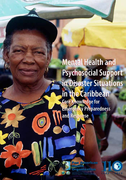
Core Knowledge for Emergency Preparedness and Response

This case study examines the humanitarian response to the conflict-related crisis in the North-East of Nigeria, focusing primarily on the period from 2015 to the end of 2016. The aim is test the central hypotheses of the Emergency Gap project: that
...

This document outlines PAHO’s regional priorities for the year 2023 to sustain and scale up health emergency and humanitarian assistance in the Americas, with a focus on five priority countries currently facing a prolonged humanitarian crisis and
...
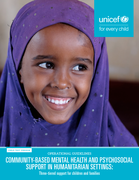
The CB MHPSS operational guidelines were developed in response to emerging evidence on the determinants of children’s resilience, lessons learned from the evaluation of existing approaches, and the unique challenges that today’s crises pose for
...
Ahead of World Malaria Day, the WHO Global Malaria Programme published a new operational strategy outlining its priorities and key activities up to 2030 to help change the trajectory of malaria trends, with a view to achieving the global malaria targets. The strategy outlines 4 strategic objectives
...
In the past ten years, the number of forcibly displaced people has nearly doubled. In 2019, the number of people forced to flee (inside and beyond the borders) grew to 79.5 million – the highest ever recorded. Refugee situations continue to increa
...
The steps reassert the sequence of the HPC, with needs analysis directly informing decisions about the response and monitoring, whether for the preparation of new plans or adjustments to existing ones. The steps of the HPC have a rationale and canno
...
The Camp Managment Toolkit
recommended
Applicable to both IDP and refugee scenarios, the Toolkit incorporates a wide range of relevant information on managing displaced populations living in communal settings (collective centres, spontaneous sites, established camps, etc.). Large scale d
...
The present book deals not only with emergency response, but also with measures designed to reduce the impact of disasters on environmental health infrastructure, such as water supply and sanitation facilities. It also aims to strengthen the ability
...

The attainment of Zambia’s goal of being a prosperous and middle-income country by 2030 as stipulated in its Vision 2030 is dependent on among others, a healthy and productive population. Therefore, the Government of the Republic of Zambia (GRZ) has prioritized health as a key socio-economic inves
...
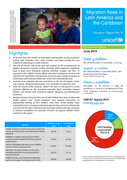
As of June 2019, the number of Venezuelans leaving their country reached 4 million, with Colombia, Peru, Chile, Ecuador and Brazil hosting the vast majority of Venezuelans in Latin America. The end of the first half of the year was marked by the announcement of tighter immigration measures in Peru
...
Research results of sexual and gender-based violence (SGBV) prevention and response before, during and after disasters in Indonesia, Lao PDR and the Philippines
This report contributes new evidence on why and how sexual and gender-based violence ...
This report contributes new evidence on why and how sexual and gender-based violence ...
Aligned to the Lancet Migration Global Statementto include migrants and refugees incountries’response toCOVID-192, this brief focuses onGreece’s challenges and opportunities to build an inclusive respo
...
Measles outbreak guide
recommended
This guide also draws on the standard operating procedures (SOPs) to apply for measles outbreak response
support from the Measles & Rubella Initiative Outbreak Response Fund (17) and includes a sec
...
This report presents the findings from a ‘deep dive’ undertaken by UNICEF East Asia and the Pacific Regional Office to consider the experiences in Cambodia, Indonesia, the Lao People’s Democratic Republic, Malaysia, Myanmar, the Philippines an
...
Anywhere But Syria: How 10 Years of Conflict Left Syria’s Displaced Children Without a Sense of Home
After ten years of war, the vast majority of Syria’s children cannot imagine a future in their country, according to a new report by Save the Children. On average, 86% of Syrian refugee children surveyed in Jordan, Lebanon, Turkey and the Netherla
...
This resource presents "the minimum level of educational quality and access in emergencies through to recovery. The aim of the handbook is to enhance the quality of educational preparedness, response and recovery; to increase access to safe and rele
...
The 2010-2011 National Annual Report on HIV program presents the progress in implementing the strategies and activities articulated in the National Strategic Plan on HIV and AIDS 2009-2012 commonly referred to as the HIV NSP. The report presents con
...
This paper aims to contribute to the reflection on effective practices to address protracted displacement, in support of the GP20 Plan of Action roll-out. It expands on the research conducted by Walter Kälin and Hannah Entwisle Chapuisat for the 20
...
States have committed and assumed obligations to address multiple and intersecting forms of discrimination against refugees, internally displaced persons, asylum seekers, returnees and stateless persons. The Global Compact on Refugees places ending discrimination of any kind based on the grounds of
...
In early 2015, the Americas region began to experience a surge in migration flows due in large part to the rise of people emigrating from Venezuela in response to the country’s faltering economy. This swell in migration continued in the years foll
...
The main objectives of the SOPs are to: (i) establish standards and timelines for response activities; and (ii) guide national governments and GPEI partners in key support functions.
This new version of the SOPs presents overall
...
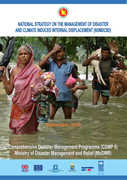
National strategy on the management of disaster and climate induced internal displacement (NSMDCIID)
This strategy has been developed with a view to managing climate-induced internal displacement (CIID) in a comprehensive and rights-based manner. It is part of the action plan for the Government of Bangladesh (GoB) to implement the Sendai Framework.
...

Guidelines.
The guidelines set out essential actions that humanitarian actors must take in order to effectively identify and respond to the needs and rights of persons with disabilities who are most at risk of being left behind in humanitarian settings.
The recommended actions in each chapter pl
...

Aligned to the Lancet Migration Global Statement to include migrants and refugees incountries’response to COVID-19, this update focuses on Mexico’s challenges and opportunities to build an inclusive re
...

In Control: A Practical Handbook for Professionals Working in Health Emergencies Internationally RKI
The greatest risk to persons engaging in international medical emergency response is poor preparation.
The In Control handbook hopes to provide a remedy.
At the time of writing, we are living through the Coronavirus (COVID-19) pandemic, a heal
...
The intended purpose of this compendium is to provide program managers, organizations, and policy makers with a menu of indicators to better “know their HIV epidemic/know their response” from a gender perspective. The indicators in the compendiu
...
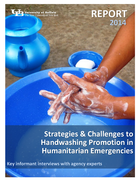
Summary of key informant interviews with representatives of organizations providing, funding, or supporting WASH services to refugee populations
This technical guidance outlines current evidence, knowledge and best practice relating to incidences of violence and injuries among refugees and migrants in the WHO European Region. It highlights key principles, summarizes priority actions and challenges, maps existing international commitments and
...
28 May 2021
Contact tracing is a key component of a public health response to infectious disease outbreaks. The purpose of this guidance is to reinforce the place of community engagement and participation in the contact tracing process. The guidanc
...
After the earthquake in Türkiye-Syria in February 2023 an emergency response was provided to the affected population. Young persons with disabilities were one of the social groups most affected by the crisis. These were either young persons who acq
...
The Handbook is primarily addressed to child protection coordination teams, which may include coordinators, co-leads and information managers, the guidance is equally valid for all members of the child protection coordination group, including national and international nongovernmental organizations
...
Emergency in Ukraine: external situation report
recommended
Here you can download the latest Situation Reports
Weekly updates on the current situation in Ukraine and refugee-receiving countries, priority public health concerns and WHO’s actions to rapidly respond to the health emergency triggered by the c
...
This document is to support local authorities, leaders and policy-makers in cities and other urban settlements in identifying effective approaches and implementing recommended actions that enhance the prevention, preparedness and readiness for COVID-19 in urban settings, to ensure a robust
...
This document is the third iteration of the Flash Appeal for Ukraine, which was originally published on 1 March 2022 and revised once in mid-April. This updated Flash Appeal covers the period of 10 months following the onset of the war in Ukraine that started on 24 February 2022 (i.e., from March to
...
A consolidated set of reproductive health kits for use by humanitarian agencies. These kits are intended to speed up the provision of appropriate reproductive health services in emergency and refugee situations.
The Healthy Living Toolkit is developed to educate refugees, immigrants, resettlement agencies, clinics, community based organizations, and other service providers on refugee health issues. The toolkit presents material in a culturally appropriate m
...
The Minimum Standards for Protection Mainstreaming are a set of international standards designed to provide practical assistance to humanitarian actors to mainstream protection in the assessment, design, implementation, monitoring and evaluation of humanitarian programmes, projects and activities.
...
Learning from the Use of Data, Information, and Digital Technologies in the West Africa Ebola Outbreak Response
Internally displaced children are twice invisible in global and national data. First, because internally displaced people (IDPs) of all ages are often unaccounted for. Second, because age-disaggregation of any kind of data is limited, and even more so for IDPs.
Planning adequate responses to meet
...
The document at hand presents key findings from a project undertaken globally between July 2014 and May 2015 to assess progress made by UNHCR country and regional operations to effectively protect lesbian, gay, bisexual, and transgender, and interse
...
The INEE Minimum Standards Handbook is the only global tool that articulates the minimum level of educational quality and access in emergencies through to recovery. The Minimum Standards express a commitment that all individuals—children, youth and adults—have a right to education. The aim of th
...
UNHCR’s Public Health Strategy 2021-2025 is based on the lessons learnt, and builds on the achievements, of the Global Strategy for Public Health 2014-2018.
Progress was made on policies favouring inclusion and integration into national systems3 with 92% of 48 operations surveyed reporting refuge
...
24 Nov. 2021
Action against gender-based violence being pushed to the outlying margins of the global COVID-19 response
A new Oxfam report shows an undeniable increase in gender-based violence (GBV) during the COVID-19 pandemic around the world t
...

OECD Development Policy Tools
Recognising that donor policies and responses constantly evolve, this guidance recommends that donors operating in situations of forced displacement prioritise three broad areas of work, where they can best contribute to existing capacities at the national, ...
Recognising that donor policies and responses constantly evolve, this guidance recommends that donors operating in situations of forced displacement prioritise three broad areas of work, where they can best contribute to existing capacities at the national, ...
Guiding framework for development cooperation, Working paper 2017.
This document was drawn up on the basis of expert publications and inputs from partners in the
GIZ regional programme Psychosocial Support for Syrian and Iraqi Refugees and Interna
...
9 April 2020
The COVID-19 pandemic is presenting States in Europe with an extraordinary and unprecedented public health emergency. In response, States are taking necessary and legitimate measures to prevent the spread of the virus and to protect
...
This Framework offers a coherent approach for eliminating tuberculosis (TB) in low-incidence countries. It is designed to guide national policy-makers and those responsible for technical aspects of the national TB response in accelerating efforts to
...
Camps is intended to help address the absence of public and standardized training resources for those seeking to use high resolution satellite imagery in support of refugee/IDP assistance operations. Students, general audiences, and volunteers study
...
A Provisional Document. The purpose of this manual is to provide guidance to public health professionals tasked with managing a response to viral hepatitis. As every country’s needs are different with respect to its epidemiology and the current le
...
The aim of this paper is to map and critically analyse evidence of good practice in prevention and response to gender-based violence (GBV) in humanitarian contexts which can support humanitarian practitioners and policy makers to improve the quality
...
This document is written for local and international staff running nutrition programmes in emergencies, and for local, regional and national authorities and donors involved in such programmes.
The note explains why nutrition programmes need to inc
...
In the following you can find 51 Planning tools for Mental Health and Psychosocial support in disasters, that have been derived from an anylsis of 282 Psychosocial Mental Health guidelines and 678 Tools. The single planning tools are structured according to the most relevant topics and can be used i
...
This Rapid Gender Analysis provides preliminary information and observations on the different needs, capacities and coping strategies of Venezuelan migrant and refugee women, men, boys, and girls in Colombia. It seeks to understand how gender roles
...
The magnitude and complexity of these mental health conditions caused by prolonged and extensive trauma requires a diagnosis fitting the unique context of the Syrian conflict. Over half a million people have been killed since the beginning of the conflict in 2011, and more than 6.4 million are inter
...
South Africa reported it fist case of COVID-19 on 5 March 2020. While the first cases were imported, local transmission has led to a rapid increase in the number of cases. As of 21 April 2020, more than 3,400 cases and 58 deaths had been confirmed. On 15 March, President Cyril Ramaphosa declared a n
...
How should humanitarian organisations prepare and respond to COVID-19 in humanitarian settings in low- and middle-income countries?
This Rapid Learning Review outlines 14 actions, insights and ideas for humanitarian actors to consider in their COVID-19 responses. It summarises and synthesises the
...
39 examples of field practices, and learnings from 20 countries, for all phases of humanitarian response. The report shows that deliberate and proactive action is required to ensure that persons with disabilities from all constituencies are systemat
...

The Indonesian government has reformed its laws, policies, and institutions to better manage disaster risk since the significant 2004 Indian Ocean Tsunami. The Government of Indonesia now has contingency plans for every disaster-prone city which identifies its vulnerabilities, outlines the relief
...
This Guide provides practical guidance for governments regarding how to effectively communicate with communities during the recovery phase following an emergency. It explains how to identify communication needs, and presents “best fit” communication methods and strategies to deploy to support Di
...
Event-based surveillance (EBS) is defined as the organized collection, monitoring, assessment and interpretation of mainly unstructured ad hoc information regarding health events or risks, which may represent an acute risk to health. Both indicator-based and event-based surveillance components serve
...
It is too early to know the full impact of COVID-19 on Africa. To date the experience has been varied. There are causes for concern, but also reasons for hope. Early estimates were pessimistic regarding the pandemic’s impact on the continent. But the relatively low numbers of COVID-19 cases report
...
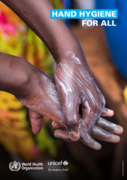
Three billion people – 40 per cent of the world’s population – do not have a place in their homes to wash their hands with water and soap. Three quarters of those who lack access to water and soap live in the world’s poorest countries and are amongst the most vulnerable: children and familie
...
Recognizing the extent to which the COVID-19 outbreaks affects women and men differently is hugely important. Some preliminary data suggested that more men than women are dying, potentially due to sex-based immunological differences, higher rates of cardiovascular disease for men and lifestyle choic
...
7 June 2020 Version 1
Women in Myanmar have traditionally been underrepresented in public decision-making processes, a trend which is continuing in structures established to respond to COVID-19. This means that even as women are disproportionately affected by the crisis, they have less say in how t
...
Event-based surveillance (EBS) is defined as the organized collection, monitoring, assessment and interpretation of mainly unstructured ad hoc information regarding health events or risks, which may represent an acute risk to health. Both indicator-based and event-based surveillance components serve
...
Europe and Central Asia Economic Update.
The Russian Federation’s war with Ukraine has triggered a catastrophic humanitarian crisis and threatened the stability of geopolitical relations. Economic output in the Europe and Central Asia region is forecast to contract by more than 4.1% in 2022—the
...
The overall objective of the framework is to support WHO and Members States in meaningful engagement of people living with NCDs, and mental health and neurological conditions to co-create and enhance related policies, programmes and services. This framework will contribute to advancing understanding
...
The 2022 Financing for Sustainable Development Report identifies a “great finance divide” as a main driver of the divergent recovery. Developed countries were able to borrow record sums at ultra-low interest rates to support their people and economies, but the pandemic
...
Interium guidance, 25 June 2021Timely and accurate diagnostic testing is an essential tool in preventing and controlling the spread of COVID-19. This document describes recommendations for national testing strategies and the use of PCR and rapid antigen tests in different transmission scenarios of t
...
Every year, nearly 250 million people move across borders temporarily or permanently for a job opportunity, studying, to flee a crisis back home, or for other reasons. Another 750 million move for similar reasons within the borders of their countries. With the understanding that human mobility affec
...
For humanitarian organisations to respond effectively to complex crises, they require access to up-to-date evidence-based guidance. The COVID-19 crisis has highlighted the importance of updating global guidance to context-specific and evolving needs in humanitarian settings. Our study aimed to under
...
For the estimated 20 million refugees and 25 million internally displaced people worldwide, well-planned settlements can help to maximise their protection and security, and support them to minimise the spread of disease, manage natural resources sustainably, and maintain good relations with their ho
...
The Government of Liberia (GoL) reports three additional EVD cases linked to the Margibi County cluster, including one in Liberia’s Montserrado County; new confirmed case total reaches six
Recently extended Operation Northern Push strengthens contact tracing and EVD prevention activities
...

Overcoming barriers in low- and middle-income countries
For the first time, this year’s report includes information on hepatitis C diagnostics. With a focus on selected countries with diverse HCV epidemics, the report provides updates on the various dimensions of access to HCV diagnostics and pha
...
This paper was commissioned by the German Federal Ministry for Economic Cooperation and Development (BMZ) in 2015, and produced by the Deutsche Gesellschaft für Internationale Zusammenarbeit (GIZ) GmbH, in cooperation with German civil society actors and freelance psychologists working in the field
...
Women, the elderly, adolescents, youth, and children,
persons with disabilities, indigenous populations, refugees,
migrants, and minorities experience the highest degree
of socio-economic marginalization. Marginalized people
become even more vulnerable in emergencies.1 This is due
to factors su
...
UNAIDS report on the global AIDS epidemic shows that 2020 targets will not be met because of deeply unequal success; COVID-19 risks blowing HIV progress way off course. Missed targets have resulted in 3.5 million more HIV infections and 820 000 more AIDS-related deaths since 2015 than if the world w
...
he pandemic has produced an unprecedented economic and social crisis, and it could generate a food, humanitarian, and political crisis if urgent measures are not taken. The policy options for addressing the pandemic entail consolidating national plans and achieving intersectoral consensus. The
...

Humanitarian crises exacerbate nutritional risks and often lead to an increase in acute malnutrition. Emergencies include both manmade (conflict) and natural disasters (floods, drought, cyclones, typhoons, earthquakes, volcanic eruptions, etc.). Complex emergencies are combinations of both manmade a
...
Cascading risks from rising prices and supply disruptions, April 2022.
Global resource markets are still reeling from the impacts of Russia’s invasion of Ukraine; the two countries are major suppliers of energy, food and fertilizers. Supply disruption and the sudden imposition, in
...
To test for ethnic discrimination in access to outpatient health care services, we carry out
an email-correspondence study in Germany. We approach 3,224 physician offices in the 79
largest cities in Germany with fictitious appointment requests and randomized patients’
characteristics. We find t
...

The United Nations Children's Fund (UNICEF), the International Organization for Migration (IOM), Georgetown University, and the United Nations University have today launched new guidelines to provide the first-ever global policy framework that will help protect, include, and empower children on the
...
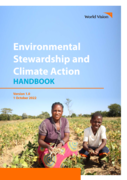
Climate change presents the single biggest threat to human development, and its widespread impacts disproportionately burden the poorest and most vulnerable households in fragile and rural developing contexts – particularly women and children.
According to the Intergovernmental Panel on Climate C
...
It is widely understood that the food insecurity crisis in the Sahel and the Horn of Africa is one of the world’s fastest growing and most neglected crises. It lacks sufficient global focus, resources and urgency. As in so many crises, women and girls are disproportionately affected and shoulder t
...
Cholera is a transmissible diarrhoeal infection caused by Vibrio cholerae. Endemic and/or epidemic in over 40 countries (mainly in Africa and Asia), cholera continues to be a major global public health issue.
The World Health Organization (WHO) estimates that the number of cases reported worldwid
...
Global Trends: Forced Displacement in 2023
recommended
At the end of 2023, an estimated 117.3 million people worldwide were forcibly displaced due to persecution, conflict, violence, human rights violations and events seriously disturbing the public order. The latest Global Trends report, published in June 2024, provides key statistical trends on forc
...
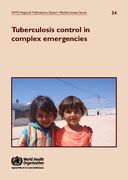
Recommended actions and international and national level
The package provides practical, concise yet crucial information about the impact of COVID-19 on daily teaching practices as well as tips and suggestions to improve safety, well-being and learning, with students in face-to-face or remote settings.
The package speaks directly to the teachers. It ca
...
This mapping of community experiences for the defense of the right to adequate housing in situations of risk of eviction or eviction in progress brings together practices and strategies used by families, collectives and community organizations that have different origins and interests in the region,
...
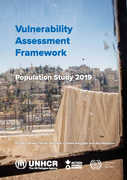
This study provides information about vulnerabilities within the targeted population and contributes to reflection within UNHCR on how to interpret their multisectorial Home Visit assessments. By exploring relationships between vulnerability indicators and other data collected, the report outlines k
...
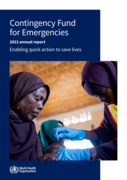
The Contingency Fund for Emergencies (CFE) provides WHO with rapid and flexible resources to respond to disease outbreaks and other health emergencies. The annual report provides an overview of the use and impact of the Fund over the previous year.