
Filter
811
Text search:
public-private
partnership
Featured
61
333
Language
Document type
587
93
44
41
23
18
3
2
Countries
57
51
39
38
34
26
25
25
24
24
23
22
17
16
16
13
13
12
10
10
10
9
8
8
8
7
7
6
6
5
5
5
5
4
4
4
4
4
4
3
3
3
2
2
2
2
2
2
2
2
1
1
1
1
1
1
1
1
1
1
1
1
1
1
1
1
1
1
1
1
1
1
1
Authors & Publishers
Publication Years
Category
495
37
21
18
17
3
2
Toolboxes
71
40
33
30
23
22
20
19
19
14
10
9
9
8
7
7
6
4
4
3
1
1
The aim of the framework is to provide guidance to Member States and partners on region-specific priority actions towards the goals, targets and milestones of the GTS. The central pillar of the framework is the adoption of programme phasing and transitioning, aimed at facilitating a tailored approac
...
This is an update of a seven-year TB and Leprosy national strategic plan (TBL-NSP), which extends from 2013 to 2020. The update focuses on the plan covering from 2017-20 and is based on the 2017 external mid-term programme review key findings and recommendations; the global and national End TB strat
...
NGO Social Contracting
Sustainable Financing of National HIV Responses
Examen du rôle de la société civile dans le plaidoyer et le lobbying en faveur de l'application de la politique de santé au Kenya
African Population Studies Vol 25, 1 (Supplement) 2011
http://aps.journals.ac.za
Policy brief.
HIV self-testing (HIVST) is a convenient and confidential option for HIV testing. In 2016 WHO recommended HIVST as a safe, accurate and effective way to reach people who may not test otherwise, including people from key populations, men and young people. Lay users can perform HIVST r
...

Antimicrobials are precious agents for combating infectious diseases and had saved millions of lives throughout the world. However, the current trend of increasing antimicrobial resistance (AMR) has become a global health problem with increased morbidity and mortality in infectious diseases. Sri La
...

The COVID-19 pandemic is having far reaching impacts, well beyond the health crisis and needs, with the most severe impacts experienced in the poorest countries and those most vulnerable to humanitarian crises including natural disasters, such as Nepal.
Responding to COVID-19: Highlights of a Survey in ETHIOPIASummary•Almost all Ethiopiansknow about COVID-19 and basic understanding about transmission and the importance of regular hand washing is high. However, a sizeable minority seek more information, which may help address some misconceptions o
...
This report presents the key findings of the end-of-project assessment of households and
community health volunteers, conducted in 2017 in the Kamukunji and Embakasi sub-counties
of Nairobi, Kenya, for a Community Health Volunteers’ Decision Support System (CHV DSS)
intervention project. The re
...
The health sector In Ukraine is beginning to change in recent years. The sector, based on a system of health care (Semashko) originating from the Soviet Union, had been stagnant for many years. Remarkably little had changed since Independence and the health care system is as of today still character
...
CATALYST DIALOGUE ON HEALTH FINANCING
Insights from a debate on how to increase funding for health and spend existing funds more effectively.
Catalyst Dialogue participants:
Christoph Benn, Director for Global Health Diplomacy, Joep Lange Institute • Jayati Ghosh, Professor of Economics, Univer
...
PEPFAR Malawi’s Country Operational Plan (COP) 2021 reflects a culmination of strong interagency collaboration between the PEPFAR Malawi team, Government of Malawi (GoM), and civil society organizations (CSOs) to mitigate the devastating impacts of COVID-19 and sustain progress achieved over the l
...
Strengthening resilient agricultural livelihoods
Level 3 responses are activated in the most complex and challenging humanitarian emergencies, when the highest level of mobilization is required across the humanitarian system. Even before the conflict escalated, the country suffered high levels of p
...
This document contains a series of desk reviews for the eight ENGAGE-TB priority countries supported by the Global Fund (DRC, Kenya, Indonesia, Mozambique, Myanmar, Nigeria, Pakistan and Tanzania). The document provides a situation assessment and gap analysis about the state of community based TB ac
...

The Early Childhood Development Policy and its Strategic Plan seek to provide a framework to ensure such a holistic and integrated approach to the development of young children. International research has demonstrated the high economic returns on ECD investment and its positive impact on health and
...
The integrated Global Action Plan for Pneumonia and Diarrhoea (GAPPD)
The TB section of the toolkit presents selected (a) programmatic output and (b) outcome and impact indicators for TB. In addition to recommended monitoring programs and measuring the outcomes and impact of TB programs, indicators for the strengthening of health systems, strengthening of community sy
...
Desk Review and Recommendations for Private Sector Engagement
The Primary Care Innovator’s Handbook
recommended
Voices from Leaders in the Field

The Vienna Declaration was signed at the end of the Fifth High-level Meeting on Transport, Health and Environment. The virtual meeting, hosted by the Federal Government of Austria, brought together 46 ministers and representatives of 56 countries in the pan-European region.
The group discussed ho
...

Health Systems in Transition. Vol. 5 No.3 2015
Good practice guide
Supporting community action on HIV, health and rights to end AIDS
Migration Health Division Information Sheet Series
Migration Health Assistance for Crisis-Affected Populations
HIV/AIDS, TB, Malaria, Cholera, Re/Emerging Diseases and Mobility
Improving the management of childhood tuberculosis within national tuberculosis programmes: research priorities based on a literature review
WHO/HTM/TB/2007.381, 07.02
Regional Tuberculosis Program, Pan American Health Organization (PAHO/WHO)
54th directing council; 67th session of the regional Committee of WHO for the Americas
CD54/11, Rev. 1, 2 October 2015, Original: Spanish

The report explores strategies for sustaining the country’s responses to the three diseases and eventually transitioning away from external funding and programmatic support. It takes stock of Kenya’s health financing landscape and identifies opportunities and challenges for sustaining effective
...

This publication provides guidance to governments, civil society organizations (nongovernmental organizations and community-based organizations) and other partners implementing HIV prevention, care and treatment programs with key populations. This guide is designed to assist these programs in the de
...

(Health Systems in Transition, Vol. 4, No. 3, 2014)
The Sendai Framework for Disaster Risk Reduction 2015-2030 outlines seven clear targets and four priorities for action to prevent new and reduce existing disaster risks: (i) Understanding disaster risk; (ii) Strengthening disaster risk governance to manage disaster risk; (iii) Investing in disaster
...
Policy Guidance Brief 2
• The potential health risks from climate change include: increase of waterborne and vector-borne diseases, heat-related illnesses, injuries and deaths, food insecurity and increased malnutrition. The poor, women, children and the elderly, as well as communities living ...
• The potential health risks from climate change include: increase of waterborne and vector-borne diseases, heat-related illnesses, injuries and deaths, food insecurity and increased malnutrition. The poor, women, children and the elderly, as well as communities living ...
This briefing paper provides an overview of the approach underlying EA, how and by whom it is applied and its problems and consequences. It concludes that policy makers, rather than be guided by its assumptions and conclusions, must instead concentrate on understand-i
...

A Guidebook for Medical and Professional Schools, Second Edition.
This book represents a significant step to engage health professions schools in addressing global health challenges
“Effective Altruism” — What it is, how philanthropic foundations use it and what are its risks and side-effects

Accessed: 24.09.2019
Washington, D.C., USA, 23-27 September 2018
Provisional Agenda Item 4.6
CD56/10, Rev. 1 31 August 2018
Original: Spanish
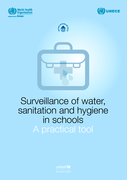
This publication provides a practical tool to support countries in strengthening surveillance of WASH in schools. The findings will inform the development of supportive regulations and improvement planning to safeguard children’s health, well-being, dignity and cognitive performance. The tool also
...
Maldives has made significant strides in the area of infectious disease prevention and control. This is exemplified by elimination of malaria from Maldives in 2015 and successes in TB control. In addition, Maldives is a front runner in infectious disease prevention through successful water, sanitati
...
The issue of Antimicrobial resistance has become one of the most substantial health issues, prompting the World Health Assembly (WHA) to urge Member States to finalise tailor made national action plans by May 2017, aligning them with objectives of the Global Action Plan (GAP). These cover awareness,
...
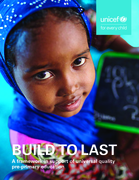
Today, the world is facing a learning crisis: While millions of children have entered education systems for the first time, many of them cannot read, write or do basic mathematics, even after several years of primary school.1 This global learning crisis has its roots in children’s earliest years,
...
The two-year impact report for the Access to COVID-19 Tools (ACT) Accelerator details impact, case studies and timelines of key milestones for the Diagnostics, Therapeutics and Vaccines pillars, as well as the Health Systems and Response Connector.

Namibia is no exception to the growingglobal concern on the increasing burden of NCDs. Namibia is an upper middle income country with fast economic growth since independence in 1990. The country is bearing the double burden of communicable and noncommunicable diseases and rapid urbanizat
...
The brief concludes that sustaining the continuity of EHS requires policies that ensure a whole-society and systems strengthening approach. This involves increased health care investment, community engagement, disease control regulations, and multisector approaches to improve resilience, EHS quality
...
Globally, approximately 56.8 million people are in need of palliative care
services; 78% of them living in low and middle-income country yet only
about 12% have their needs being met causing great suffering for many.

Uganda hosts approximately 1.1 million refugees making it Africa’s largest refugee hosting country and one of the five largest refugee hosting countries in the world. Most recently, throughout 2016- 2018, Uganda was impacted by three parallel emergencies from South Sudan, the Democratic Republic o
...
This report provides a review and analysis of the research landscape for three diseases – Chagas disease, human African trypanosomiasis and leishmaniasis – that disproportionately afflict poor and remote populations with limited access to health services. It represents the work of the disease re
...

The Commission on Macroeconomics and Health (CMH) was established by World Health Organization Director-General Gro Harlem Brundtland in January 2000 to assess the place of health in global economic development. Although health is widely understood to be both a central goal and an important outcome
...
Antimicrobial resistance (AMR) has emerged as a leading cause of death in the African region, surpassing fatalities from malaria, HIV, and TB. In response to this critical threat, the region has adopted the AMR Global Action Plan and the African Union Framework for Antimicrobial Resistance Control 2
...
Antimicrobials are medicines, including antibiotics, antivirals, antifungals, and antiparasitics, that are used to prevent and treat infections in humans, animals, and plants. Antimicrobial Resistance (AMR) arises when bacteria, viruses, fungi, and parasites no longer respond to these medicines, ren
...
