Filter
2163
Text search:
operational
update
Featured
225
682
Language
Document type
1156
327
297
142
112
55
36
21
7
3
2
1
Countries
81
74
68
64
55
54
53
49
47
44
42
40
38
37
36
36
33
32
30
30
28
27
24
24
23
22
20
19
19
19
19
18
18
16
15
15
14
13
13
12
11
11
11
10
10
9
9
9
9
7
7
7
6
6
6
6
6
5
5
5
5
5
5
5
5
4
4
4
4
4
4
4
3
3
3
3
3
3
3
3
3
3
2
2
2
2
2
2
2
2
2
2
2
2
2
2
2
2
2
2
1
1
1
1
1
1
1
1
1
1
1
1
1
1
1
1
1
1
1
Authors & Publishers
Publication Years
Category
897
158
112
92
71
28
26
5
2
Toolboxes
259
183
178
114
88
78
56
55
49
48
40
38
38
25
23
23
22
21
18
14
13
7
3
1
Since the end of 2018, there has been a significant upsurge in violence in Rakhine State after armed conflict broke out between the Arakan Army (AA) and the Myanmar Military. The violence escalated following attacks by the AA against military sites in January 2019 and subsequent counter-attacks by t
...
• Clashes continued between the Syrian Democratic Forces (SDF), the Syrian Arab Army (SAA), and Turkish backed forces, concentrated around the M4 highway and Tal Tamer district in Al-Hasakeh. Further displacement was reported.
• Several civilian casualties occurred due to improvised explosive
...
Compendium of Case Studies
Interim guidance v2, 19 March 2020
This document provides WHO checklists for risk communication and community engagement (RCCE) readiness and initial response for novel coronaviruses (nCoV) recently identified in Wuhan, China (2019-nCoV). The objective of this document is to provide actionable guid
...
The interim Emergency Response Preparedness (ERP) guidance is designed to be a short technical step-by-step guide aimed at non-Humanitarian Response Plan (HRP) countries to support the development, or strengthening, of preparedness measures to ensure that country teams are operationally ready to imp
...
Investing in and building longer-term health emergency preparedness during the COVID-19 pandemic
recommended
Interim Guidance
This document is to help Member States build on actions taken during the COVID-19 pandemic to improve national medium- to long-term preparedness for future threats. It maps COVID-19 preparedness and response actions to the building of sustainable International Health Regulations (2
...
This fourth progress report November 2020 of the Global HIV Prevention Coalition reviews the progress in the 28 focus countries and complements the three previous progress reports. This report describes key developments in 2019–2020, identifies challenges and opportunities (including those associa
...
Technical Note
Recently, the approach to hazardous events has undergone a considerable shift, away from reactive activities focused on managing and responding to events and towards a more proactive process of emergency and disaster risk management (DRM). The ultimate goal of this shift in focus is
...

Burns are a global public health problem, accounting for close to 200,000 deaths annually. The majority of these occur in low- and middle-income countries, where a number of constraints complicate the public health task of addressing burns. While the primary prevention of burns in low- and middle-in
...
Climate change and health vulnerability and adaptation assessment
In 2013 the World Health Organization (WHO) published the report Protecting health from climate change:
vulnerability and adaptation assessment. The aim was to provide basic and flexible guidance on conducting national or subnati
...
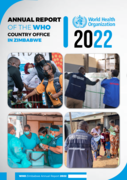
This report highlights the work of the World Health Organization (WHO) in Zimbabwe towards contributing to the triple billion targets in the context of the Sustainable Development Goals (SDGs
To better adapt current case management practices and address excess mortality in otherwise treatable
cases will require better knowledge of the demographic characteristics of the patients and comorbidities
which can make severe dehydration harder to tolerate physiologically. With this in mind, a
...
Benchmarking is a strategic process often used by businesses and institutes to standardize performance in relation to the best practices of their sector. The World Health Organization (WHO) and partners have developed a tool with a list of benchmarks and corresponding suggested actions that can be a
...
Aid Delivery Methods vol.1
Integrated community case management (ICCM) – an approach where community-based health workers are trained to identify, treat and refer children under-five with pneumonia, diarrhoea and malaria – is increasingly being used across sub-Saharan Africa to supplement the gaps in basic healthcare prov
...
guidance for health managers, health workers, and activists

The MSF qualification scheme is concerned with the pharmaceutical quality assessment for drugs. This procedure is applicable to products for international supply, i.e. products supplied through the MSF procurement centres. This qualification procedure is not applicable for local purchase, i.e. purch
...
DG Echo Funding Guidelines
(updated December 2014).
A country Profile 2014
The strategy focuses on mobilizing and coordinating partners, experts and resources to help countries enhance surveillance of the Zika virus and disorders that could be linked to it, improve vector control, effectively communicate risks, guidance and protection measures, provide medical care to thos
...
The first section highlights knowledge and questions regarding security incidents, trends, and causes of violence, including around causes and motives for attacks, and tensions between individual and collective responses. The next section then explores the role of the humanitarian principles, and th
...
A guide for Regional Workshop and Hospital Technicians
User manual.
The Zimbabwe National Pharmacovigilance Policy Handbook, 2nd Edition updates the November 2013 version to indicate the Zimbabwe National Pharmacovigilance (PV) Centre’s compliance with the WHO Pharmacovigilance Indicators Handbook 2015.
(updated December 2014).
ПАКЕТ МЕР ПО РЕАЛИЗАЦИИ ПОЛИТИКИ В ОТНОШЕНИИ ВНЕДРЕНИЯ НОВЫХ ПРОТИВОТУБЕРКУЛЕЗНЫХ ПРЕПАРАТОВ
The third edition, released in 2018, has grown to include a total of 18 chapters, contributed by 20 experts and authors from many countries. The goal remains the same: to educate primary care providers on the best practices in TB diagnosis, treatment and follow-up. All articles are richly illustrate
...
Public Health Action PHA 2017; 7(2): 110–115

This report has been developed, based on data provided by the TB & ORD surveillance system from across Rwanda. It provides a comprehensive picture of the occurrence and management of TB & ORD and Leprosy in Rwanda. It is structured based on the 2013-2018 Rwanda TB national strategic plan (2013-2018
...
The Monitoring Report, which covers the first two months of the response from 25 August to 31 October, highlights the work of the Government of Bangladesh, in cooperation with humanitarian partners who are working to provide relief services for the refugee population and Bangladeshi host communities
...
The emergence of multifrug-resistant malaria in the Greater Mekong Subregion (GMS) has been identified as an emergency issue that may have catastrophic consequences on the future of malaria elimination in the GMS as well as globally. In recognition of the need for a cohesive regional response,
...

The National Health Plan (NHP) aims to strengthen the country’s health system and pave the way towards Universal Health Coverage (UHC),choosing a path that is explicitly pro-poor. The main goal of NHP 2017-2021 is to extend access to a Basic Essential Package of Health Services (EPHS) to the entir
...
Pre-Publication draft version. Lat reviewed on 7th July 2017
Q10: In individuals with psychotic disorders (including schizophrenia) and bipolar disorders are psychoeducation, family interventions and cognitive-behavioural therapy feasible and effective?
Endorsed by the CCM Georgia on April 15th 2015
Accessed: 26.09.2019
Accessed: 26.09.2019
Report by the Director-General. 75th World health assembly 25 April 2022
The increasing global trend of Antimicrobial resistance (AMR) has gradually emerged as a major public health challenge for the entire world. AMR has spread to almost all countries and regions, including Pakistan owing to the “misuse and overuse” of Antimicrobials, contributing to the increasing
...
Updated guidance. The guidance provides useful information to staff working in prisons, as well as to health and prison authorities, explaining how to prevent and address a potential outbreak of COVID-19. In addition, it aims to protect the health and well-being of all those who live and work in, an
...
First published in 2020, this toolkit is intended for clinicians working in acute care, managing adult and paediatric patients with acute respiratory infection, including severe pneumonia, acute respiratory distress syndrome, sepsis and septic shock. The main objective is to provide key tools for us
...
This document offers guidance to Member States in the African region on the key steps used to conduct contact tracing related to the COVID-19 response. It is to be used by national and local health authorities in the implementation of tracing of contacts of probable and confirmed COVID-19 cases.
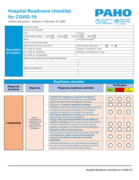
19 February 2020
The content of the tool has been updated to reflect new WHO technical guidance and new evidence on both COVID-19 pandemic and mass gatherings, as well as feedback from end-users. This revision of the risk assessment tool was developed and reviewed by the WHO Mass Gathering Technical Expert Group wit
...
Practical actions in cities to strengthen preparedness for the COVID-19 pandemic and beyond
recommended
This document accompanies the interim guidance on “Strengthening Preparedness for COVID-19 in cities and urban settings”. It provides local authorities, leaders and policy-makers in cities with a checklist tool to ensure that key areas have been covered. An excel version that local authorities m
...
A new reportshows that people in some 25 countries are set to face devasting levels of hunger in coming months due to the fallout from the COVID-19 pandemic. While the greatest concentration of need is in Africa, countries in Latin America and the Caribbean, and in the Middle East and Asia – inclu
...
Усиление мер реагированиясистем здравоохранения на COVID-19: техническое руководство No 5: адаптация первичной медико-санитарной помощи для повышения эффективности оÑ
...
Practical considerations
It provides more detailed and practical guidance for continuing services for each life stage across the life-course continuum. As such, both documents should be read and used together. The countries in South-East Asia and the Pacific regions would like to adapt the guidance
...
Co-trimoxazole is a fixed-dose combination of two antimicrobial drugs (sulfamethoxazole and trimethoprim) that covers a variety of bacterial, fungal and protozoan infections. Co-trimoxazole preventive therapy is a feasible, well tolerated and inexpensive intervention for people living with HIV to re
...
This guide is available in English, French, Spanish, Russian, Arabic and Chinese
This guide consolidates COVID-19 guidance for human resources for health managers and policy-makers at national, subnational and facility levels to design, manage and preserve the workforce necessary to manage the COVI
...
This joint ECDC-European Union Aviation Safety Agency (EASA) document aims to support Member States in determining a coordinated approach to reduce the risks related to the movement of people by air within and between the EU/EEA countries and the UK in the context of the COVID-19 pandemic, noting th
...
The COVID-19 outbreak has restricted global mobility, whilst heightening the risk of exploitation of vulnerable populations. This report provides a snapshot of the COVID-19 epidemiological situation and mobility restrictions, and of the current migration trends along the Eastern Corridor migration r
...
Aviation plays an important role in humanitarian operations around the world, especially in countries where overland transport is difficult or impossible due to insecurity, damaged or inadequate infrastructure, and challenging climatic conditions. Aviation allows the transport of humanitarian aid wo
...
In resource restriced countries
The checklist and reference list has two parts: high-level cross-cutting content (Part A) and specific programme content (Part B). Part A applies to all countries and contains situation and response analysis, the NSP development process, the goal, targets and priority-setting of the NSP and the prin
...
This global guidance provided the framework for over 100 countries to develop their NDVPs. This updated (second) version supersedes the previous version published in 16 November 2020. New information has been added on the following areas:
the COVID-19 Partners Platform;
the use of COVID
...
5 May 2021
This Information Note is intended to assist national TB programmes and health personnel worldwide to maintain essential tuberculosis (TB) services during the COVID-19 pandemic and in the recovery phase. It is important that recent progress made in TB prevention and care is not reversed b
...
July 2021. This publication brings together important clinical and programmatic updates produced by WHO since 2016 and provides comprehensive, evidence-informed recommendations and good practice statements within a public health, rights-based and person-centred approach.
These guidelines bring in
...
Earthquake Haiti: Guidelines and Resources
recommended
25 August 2021. The earthquake on August 14, 2021 was almost as strong as the severe quake in 2010, which killed about 300,000 people. The current number of victims is more than 2,200 people, and more than 12,000 people have been injured. More than 52,000 houses were destroyed and more than 77,000
...
WHO’s antiretroviral treatment (ART) clinic-based acquired drug resistance survey method yields robust estimates of HIV viral suppression and acquired HIV drug resistance in adults, children and adolescents taking both dolutegravir and non-dolutegravir based regimens.
Results are used to inform A
...
his guidance provides interim guidance for the integration of SARS-CoV-2 and influenza virologic and genomic surveillance, from sentinel site case enrolment and sampling to the eventual sharing of the virus sequence data, a process known as end-to-end surveillance. This guidance builds on experience
...
This document aims to encourage countries to develop and implement policies to maintain and strengthen IPC programmes and measures in health care facilities in the context of the current ongoing transmission of the SARS-CoV-2, with recognition that epidemiological trends may vary and the risk of tra
...
This document outlines the working structure and guiding principles for collaboration of COVAX, the Vaccines pillar of the Access to COVID-19 Tools Accelerator (ACT-A). The working structure of COVAX continues to adapt to emerging needs and the changing trajectory of the pandemic. Some components of
...
The Guidelines for drinking-water quality: small water supplies have been developed to address the needs and opportunities associated with small supplies to facilitate progressive improvement towards safe and sustainable drinking-water services for all. These Guidelines are based on the principal re
...

The incidence and mortality of cardiovascular diseases (CVDs) in low and middle income countries (LMICs) have been increasing, while access to CVDs medicines is suboptimal. We assessed selection of essential medicines for the prevention and treatment of CVDs on national essential medicines lists (NE
...
It focuses on nine major priority areas, namely: Leadership and Governance for Health; Health Service Delivery; Human Resources for Health; Health Financing; Health Information Systems; Health Technologies; Community Ownership and Participation; Partnerships for Health Development; and Researc
...
Part 1 Definitions

Consolidated guidelines on the Use of Antiretroviral Drugs for Treating and Preventing HIV Infection
recommended
2nd edition. These guidelines provide guidance on the diagnosis of human immunodeficiency virus (HIV) infection, the use of antiretroviral (ARV) drugs for treating and preventing HIV infection and the care of people living with HIV. They are structured along the continuum of HIV testing, prevention,
...
Infant Feeding in Emergencies Module 2
recommended
for health and nutrition workers in emergency situations for training, practice and reference
2nd edition. Essential guideline for humanitarian assistance
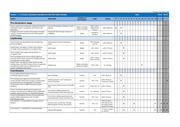
You can download checklists, questionnaire and Cluster monitoring cycle
Monitoring coordination performance at the national and sub-national level in both sudden onset and protracted crises is necessary to ensure that clusters are efficient and effective coordination mechanisms, fulfilling the cor
...
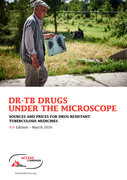
DR-TB drugs under the microscope: Sources and prices for drug-resistant tuberculosis medicines
recommended
4th edition.
This report – now in its fourth edition – analyses the barriers and factors affecting access to treatment regimens for drug-resistant tuberculosis (DR-TB), including new and repurposed drugs. We provide detailed pricing profiles of key DR-TB drugs, using manufacturer responses to s
...