
Filter
433
Text search:
national
disability
mainstreaming
plans
Featured
33
125
Language
Document type
290
55
36
29
19
3
1
Countries
16
15
15
15
14
14
14
13
13
12
11
10
9
9
9
8
8
8
6
6
5
5
4
4
4
4
4
3
3
3
3
3
3
2
2
2
2
2
2
2
2
2
2
2
2
2
2
2
2
2
2
2
1
1
1
1
1
1
1
1
1
1
1
1
1
1
1
1
1
1
1
1
1
1
1
1
1
1
1
1
1
1
Authors & Publishers
Publication Years
Category
198
22
22
15
7
6
4
Toolboxes
112
29
24
22
19
10
9
9
8
7
6
5
3
2
2
1
1
1
1
UNAIDS | 2016–2021 Strategy
Accessed: 20.11.2019
Evaluating the Return on Investment of Scaling Up Treatment for Depression, Anxiety, and Psychosis
RMRP 2020 - Regional Refugee and Migrant Response Plan for Refugees and Migrants from Venezuela 2020
The Venezuelan refugee and migrant crisis is one of the biggest external displacement crises in the world today. The COVID-19 pandemic has compounded an already desperate situation for many refugees and migrants, as well as their hosts, sorely testing health and social welfare systems and the abilit
...
The Western Pacific Regional Action Plan for the Prevention and Control of Noncommunicable Diseases (2014–2020) was developed in response to a resolution adopted at the sixty-second session of the WHO Regional Committee for the Western Pacific. The regional plan is fully harmonized with
...
Mozambique registered its first COVID-19 case on 22 March 2020 and since then numbers have steadily grown over the following three months with cases now reported in all provinces. In response, a level 3 State of emergency was enacted on 1 April 2020 and has been extended until 29 July 2020, with mea
...
Background paper 11
The Independent Panel for Pandemic Preparedness and Response
May 2021
As countries commit to achieving universal health coverage, it is imperative to ensure that the design and delivery of palliative care services place attention on quality of care, with action needed across all domains of quality health services: effectiveness, safety, people-centredness, timeliness,
...
The road map sets global targets and milestones to prevent, control, eliminate or eradicate 20 diseases and disease groups as well as cross-cutting targets aligned with the Sustainable Development Goals. Three foundational pillars will support global efforts to achieve the targets: accelerate progra
...
Health in All Policies (HiAP) is not a new concept. While the term “HiAP” has received much attention since the 1990s, the concept
of working across sectors of government for improved population health and wellbeing is much older than that. Over the last few decades the term has been applied t
...
This report has been prepared in response to informal requests by SIDS Member States and territories for WHO assistance in confronting the stark and dire situation which climate change has created in their countries and the impact it is having on their peoples
This document sets out, therefore, to explain the socioeconomic value of investing in the fight against NTDs and highlights priorities for global investment attention. Our work was guided by the need not only for
additional funding and funders but also for the need to understand the current funding
...
Guidance module.
The QualityRights training and orientation modules have been developed to enhance the knowledge, skills and understanding of key stakeholders on how to promote the rights of people with psychosocial, intellectual or cognitive disabilities, improve the quality of services and suppo
...
В дорожной карте по борьбе с забытыми тропическими болезнями на 2021–2030 гг. («дорожная карта») определены глобальные цели и основные этапы в отношении борьбы с 20 болÐ
...

Rebuilding Liberia’s health system is crucial for improving the country’s overall health outcomes. This annual report highlights key achievements, challenges,and lessons learned in implementing programmes of technical cooperation with the Government of Liberia from January to December 2022. T
...
Unmet mental health needs in the Region of the Americas are a leading source of morbidity and mortality, which result in tremendous health, social, and economic consequences. The COVID-19 pandemic has exacerbated the mental health crisis in the Region, necessitating urgent action at the highest leve
...
The Department of Nutrition, HIV and AIDS (DNHA) in Ministry of Health and Population is grateful to all stakeholders who contributed to the development of the Nutrition Education Communication Strategy II. The DNHA acknowledges the financial and technical support from the World Bank and USAID throu
...
Understanding The UN Convention On The Rights Of Persons With Disabilities
Aid Delivery Methods vol.1
A review of policy and practice; zero Hunger Phase 1
The INEE Minimum Standards Handbook is the only global tool that articulates the minimum level of educational quality and access in emergencies through to recovery. The Minimum Standards express a commitment that all individuals—children, youth and adults—have a right to education.
There are
...
Guidelines for training personnel in developing countries for prosthetics and orthotics services
recommended
1.Orthopedics - education 2.Prostheses and implants - utilization 3. Orthotic devices - utilization 4.Developing countries 5.Guidelines 6.Teaching materials I.World Health Organization II.International Society for Prosthetics and Orthotics
Special issue: WHO South-East Asia Journal of Public Health -Vol. 5, Issue 1, April 2016.This special This issue contains a rich collection of articles, demonstrating the encouraging scientific momentum to address the growing burden of diabetes in the region
Integrating WASH and MHCP interventions will always require imagination and creativity to adapt the approach to specific conditions, opportunities and constraints in each context. The book is designed to stimulate reflection and encourage initiatives to seek opportunities for closer integration of t
...

Second Generation, WHO Country Cooperation Strategy, 2010–2015, Namibia
ARC resource pack - Study material

Based on WHO South-East Asia Regional Strategy on Autism Spectrum Disorder
The collaborative framework for implementation of the “WHO South-East Asia Regional Strategy on Autism Spectrum Disorders” articulates to Member States: the nature of autism spectrum disorder and the issues faced by ...
The collaborative framework for implementation of the “WHO South-East Asia Regional Strategy on Autism Spectrum Disorders” articulates to Member States: the nature of autism spectrum disorder and the issues faced by ...


Advances have been made through expanded interventions delivered through five public health approaches: innovative and intensified disease management; preventive chemotherapy; vector ecology and management; veterinary public health services; and the provision of safe water, sanitation and hygiene. I
...

A companion to the Child Friendly Schools Manual
WASH in Schools aims to improve the health and learning performance of school-aged children – and, by extension, that of their families – by reducing the incidence of water and sanitation-related diseases. Every child friendly school r ...
WASH in Schools aims to improve the health and learning performance of school-aged children – and, by extension, that of their families – by reducing the incidence of water and sanitation-related diseases. Every child friendly school r ...

Census data shows that Myanmar can harness a double dividend – both youth and gender. This year’s annual report provides many facets of the journey to gender equality. It tells a story of widening horizons for women and girls who are capable in their own right. It is also a story of women fulfil
...

Overview:
- Part A is an introductory part which will give you background information about CBDRR in Myanmar. It has a small section about the importance of CBDRR in Myanmar, the stakeholders of CBDRR in Myanmar, as well as an overview about the challenges that are faced when implementing CBDRR ...
- Part A is an introductory part which will give you background information about CBDRR in Myanmar. It has a small section about the importance of CBDRR in Myanmar, the stakeholders of CBDRR in Myanmar, as well as an overview about the challenges that are faced when implementing CBDRR ...

Africa CDC Non Communicable Diseases, Injuries Prevention and Control and Mental Health Promotion Strategy
recommended
Non-communicable diseases (NCDs) & injuries and mental health conditions constitute a serious impediment to achieving the vision of Agenda 2063 to build an integrated, prosperous, and peaceful Africa driven by its own citizens. Each year, these conditions cause millions of premature deaths and disab
...
Strengthening resilient agricultural livelihoods
Level 3 responses are activated in the most complex and challenging humanitarian emergencies, when the highest level of mobilization is required across the humanitarian system. Even before the conflict escalated, the country suffered high levels of p
...

mhGAP is based on evidence-based technical guidelines (4) and provides a set of tools and
training packages to extend service provision. The mhGAP Intervention Guide (mhGAP-IG)
for MNS disorders in non-specialized health settings (8) is a clinical decision-making tool
for assessing and managing p
...
From raising awareness to building capacity
Meeting Report
World Health Organization, Geneva, Switzerland 16 -18 September 2013
What is Violence Against Women? Why does it happen? What does it have to do with development? What does Oxfam do to end violence against women? What does it mean to do that work with a transformative approach?
Available in: English, Arabic, French, Spanish: https://policy-practice.oxfam.org.uk/publ
...
From choice, a world of possibilities
Want to change the world? Here's how...
"i asked: 'Why doesn't somebody do something?' Then I realized I was somebody"
Guidelines.
The guidelines set out essential actions that humanitarian actors must take in order to effectively identify and respond to the needs and rights of persons with disabilities who are most at risk of being left behind in humanitarian settings.
The recommended actions in each chapter pl
...
How should humanitarian organisations prepare and respond to COVID-19 in humanitarian settings in low- and middle-income countries?
This Rapid Learning Review outlines 14 actions, insights and ideas for humanitarian actors to consider in their COVID-19 responses. It summarises and synthesises the
...
The arrival of COVID-19 in Afghanistan has brought heartache to millions of people who are now battling a deadly pandemic while simultaneously fighting for their survival amid poverty, disaster and war. Over my three years as Humanitarian Coordinator, I have marvelled at the resilience of the people
...
This primer aims to guide health professionals on engaging with WASH-related issues. It gives an overview of WASH interventions and the status of WASH services globally and outlines key linkages with health. It provides examples of key actions that health actors can take to ensure WASH efforts effec
...
English Analysis on World about Disaster Management and Protection and Human Rights; published on 12 Jan 2021 by IFRC
December 2020 — May 2021
The INEE Minimum Standards Handbook is the only global tool that articulates the minimum level of educational quality and access in emergencies through to recovery. The Minimum Standards express a commitment that all individuals—children, youth and adults—have a right to education.
There are
...
The Handbook is a guide to the normative framework for humanitarian action and the operational approaches, coordination structures, and available tools and services that facilitate the mobilization of humanitarian assistance.
The Democratic Republic of the Congo (DRC) is one of the most complex and long-standing humanitarian crises in Africa. By the end of 2020, some 940,421 Congolese refugees and asylum seekers were hosted across the African continent. Ongoing conflicts in eastern DRC, as well as intercommunal violence,
...
Analysis on World about Agriculture, Food and Nutrition and more; published on 23 Sep 2021 by ECA, ECLAC and 3 other organizations
This document focus on the direct consequences of the virus (morbidity and mortality) in specific populations and on the results of measures aimed at mitigating the spread of the virus, with indirect impacts on socio-economic conditions. In this complex scenario, the gender approach has not received
...
Against the backdrop of the COVID-19 pandemic, health is receiving unprecedented public and political attention. Yet the fact that climate change also presents us with a health crisis deserves further recognition. From more deaths due to heat stress to increased transmission of infectious diseases,
...
Safe water, sanitation and hygiene (collectively known as WASH) are crucial for human health and well-being. Yet, millions of people globally lack adequate WASH services and consequently suffer from or are exposed to a multitude of preventable illnesses.
Biodiversity and healthy natural ecosystems, including protected areas in and around cities, provide ecosystem benefits and services that support human health, including reducing flood risk, filtering air pollutants, and providing a reliable supply of clean drinking water. These services help to red
...
The Investment guidelines for youth in agrifood systems in Africa, developed jointly by FAO and the African Union Commission (AUC) through a multi-stakeholder and participatory process, highlight the importance of youth as change agents and key stakeholders contributing to sustainable agrifood syste
...
Women have less access to the development services and support – such as adequate healthcare, education and
modern technology – that make people more resilient to climate change and other shocks and stressors.2
Women’s unequal access to resources, their disproportionate responsibility for ca
...
Conflicts and disasters, including pandemics, affect women and men in all their diversity differently, and women and girls often suffer the most. Crisis-related hardships combine and compound pre-existing disadvantages, for example, they often cause women’s working conditions to worsen while incre
...

In the last decade, Timor-Leste has made remarkable progress in strengthening its health system and improving the health status of its population. This has resulted in an increased life expectancy, and the achievement of Millennium Development Goals such as a reduction in infant and under-five morta
...
Skin-related neglected tropical diseases, or “skin NTDs”, are historically neglected because active case detection, individual case management, significant resources and intensive effort are required to control, eliminate and eradicate them. Integrated control and management of skin NTDs offers
...
The 2023 Country Presence Report provides an overview of what WHO does in countries to advance towards the SDGs and implement GPW13, how we do it, with whom we work, and what is needed to overcome challenges for achieving results and impact in countries.
This document is an output of a WHO cross-programme initiative aiming to improve the prevention, diagnosis and management of anaemia and thereby accelerate reduction in its prevalence. It comes at an important time, midway through the era of the Sustainable Development Goals, when progress in reduci
...
Zimbabwe has, over the years, grappled with the repercussions of the climate crisis, which have led to erratic rainfall patterns characterized by either severe floods or prolonged periods of drought. The nation has experienced a concerning trend of numerous regions reporting rainfall levels below th
...
Public health emergencies, including pandemics, highlight the need for health systems and services that are prepared, resilient and ready to respond to health security threats. Endorsed by Member States in 2023, the Asia Pacific Health Security Action Framework (APHSAF) is designed to engage m
...
As Uganda builds back from the COVID-19 shock, the Ugandan government is strengthening its commitment to a more gender-inclusive and sustainable economy. This report supports these efforts by describing the gendered impacts of COVID-19 and provides recommendations for Ugandan policy makers and World
...
The figures and findings reflected in the 2019 Humanitarian Needs Overview (HNO) represent the independent analysis
of the United Nations (UN) and its humanitarian partners based on information available to them. While the HNO aims
to provide consolidated humanitarian analysis and data to help inf
...
Eight years after Super Typhoon Haiyan, the most destructive storm to ever hit the Philippines, Super Typhoon Rai brought similar torrential rains, violent winds, mudslides, floods and storm surges to central parts of the Philippines, leaving a wide path of destruction and debris in its wake. While
...
Links to the Humanitarian Charter and international law
The Child Protection handbook provides a synthesis of good practice and learning and enables better advocacy and communication on child protection risks, needs and responses. Standards addressing child protection needs cover core work areas and critical issues. Those addressing strategy relate to ca
...
This expansive facilitator's guide deals with psychosocial interventions concerning multiple causes of trauma such as HIV and AIDS and post-conflict situations. The guide offers technical advice to the implementor which is usefully augmented by diagrams, ideas for games and other useful intervention
...
This Toolkit is intended to guide humanitarian programme managers and healthcare providers to ensure that sexual and reproductive health interventions put into place both during and after a crisis are responsive to the unique needs of adolescents.
The Multi-Cluster/Sector Initial Rapid Assessment (MIRA) is a joint needs assessment tool that can be used in sudden onset emergencies, including IASC System-Wide Level 3 Emergency Responses (L3 Responses).
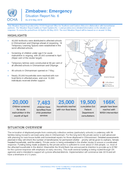
The 2017 Global Nutrition Report focuses on 5 key areas and finds that improving nutrition can have a powerful multiplier effect across the SDGs. Indeed, it indicates that it will be a challenge to achieve any SDG without addressing nutrition. The report shows that there is an exciting opportunity t
...
UNICEF Strategic Plan 2018-2021. Draft Theory of Change Paper
