
Filter
1020
Text search:
national
HIV/AIDS
strategy
Featured
50
352
Language
Document type
836
70
64
16
13
9
4
3
3
2
Countries
59
44
43
41
38
34
33
33
31
29
28
24
17
17
17
17
15
14
14
13
12
12
12
11
11
11
9
9
7
6
6
6
5
4
4
4
4
4
3
3
3
3
3
3
2
2
2
2
2
2
1
1
1
1
1
1
1
1
1
1
1
1
1
1
1
1
Authors & Publishers
Publication Years
Category
533
44
30
25
19
16
1
Toolboxes
311
67
21
17
10
8
8
8
7
6
5
3
2
2
2
2
1
1
1
1
1
Country Progress Report January 2008 - December 2009
Framework of Indictors and Targets
Accessed November 2, 2017

Policy and Legal Opportunities for HIV Testing Services and Civil Society Engagement

The strategic priorities of the CCS 2014–2018 are:
(1) Strengthening the health system.
(2) Enhancing the achievement of communicable disease control targets.
(3) Controlling the growth of the noncommunicable disease burden.
(4) Promoting health throughout the life course.
...
(1) Strengthening the health system.
(2) Enhancing the achievement of communicable disease control targets.
(3) Controlling the growth of the noncommunicable disease burden.
(4) Promoting health throughout the life course.
...
Policy Brief
Accessed: 20.11.2019

Tropical Medicine and International Health volume 21 no 1 pp 101-107 january 2016

“towards quality health and social welfare services”
Updated to Reflect the 2009 Medical Eligibility Criteria of the World Health Organization
UNAIDS Report 2013
Evaluation report November 2014
Please download the latest report from the official website:
http://www.nacp.go.tz/site/publications/epidemiology-and-research-coordination
DHS Working Papers No. 110 | Zimbabwe Working Papers No. 11
Meeting Report
Bangkok, Thailand 8-11 August 2016
Evaluation report
December 2014

Lessons from the Africa Regional Stigma Training Programme
Supporting community action on AIDS in developing countries
WHO working group on HIV incidence assays meeting report
10–11 December 2015
Glion, Switzerland
UNAIDS/WHO working group on global HIV/AIDS and STI surveillance
WHO/HIV/2017.03
Plicy Brief
Joint Action for Results
UNAIDS Outcome Framework: Business Case 2009–2011

Policy Guidelines for Health Facilities

The following document outlines the principles, objectives and strategies of a national policy for the protection of orphans and other vulnerable children in Rwanda. The propositions constitute a first step towards a comprehensive framework, which w
...

The five hepatitis viruses have different epidemiological profiles, and their impact, duration, and transmission route also vary. The most common transmission routes contributing to the spread of hepatitis are exposure to infected blood via blood transfusion or unsafe injection practices, consumptio
...
Frontiers in Pediatrics | www.frontiersin.org
1 April 2019 | Volume 7 | Article 159
Accessed: 17.11.2019
Volumen 5 / Número 1 , 1025-1028 • http://www.revistabionatura.com
To describe the behavior of Tuberculosis/Human Immunodeficiency Virus co-infection in a cohort of people affected by sensitive Tuberculosis in Ecuador from 01 January 2010 to 31 December 2015. Results: The percentage of co
...
The World Health Organization's fourth Country Cooperation Strategy 2022-2026 is an outcome of a consultative process with inputs from the Ministry of Health, various agencies in the health sector, and other relevant stakeholders. It has been develo
...

This publication provides managers with guidance on how to create basic HIV prevention cascades as a starting point to enhance their ability to monitor and improve their programming and to facilitate comparisons of programme effectiveness across sites.
HOW ICAP IS BUILDING NURSING AND MIDWIFERY CAPACITY AND STRENGTHENING HEALTH SYSTEMS
The purpose of this document is to share good practices and processes concerning the inclusion of disability issues in HIV policy and programming, drawing on specific experiences in Senegal, Ethiopia, Kenya, Rwanda and Cambodia and on lessons learned at international AIDS conferences.
AIDS Research and Therapy 2015, 12:12 (24 April 2015)
Malawi Integrated Guidelines and Standard Operating Procedures for Providing HIV Services. 3rd edition 2016
Guidelines
UNAIDS/WHO working group on global HIV/AIDS and STI surveillance
August 2015
HIV strategic information for impact


This document is written for medical doctors, clinical officers, medical assistants, nurses, midwives, health surveillance assistants (HSAs), and medical records clerks who are working in public and private sector health facilities in Malawi. It is designed to be a practical guide for implementation
...
Scant data exists on the prevalence of violence against children worldwide. However, available information, including the United Nations Secretary-General’s Study on Violence against Children, shows that violence against children is a global problem. This desktop study aims to glean from published
...

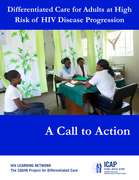
The evidence base for differentiated care for stable patients has grown in recent years. There has been less attention, however, to developing differentiated models of care for patients with advanced or unstable HIV disease. Current clinical guidelines and policies regarding optimal packages of care
...
Evaluation report
September 2014
Research Article
PLOS ONE | DOI:10.1371/journal.pone.0169530 February 16, 2017
“Follow the Voice of Life”
AIDSTAR-One | Case study series October 2011
Tokar et al. Health Research Policy and Systems (2019) 17:23 https://doi.org/10.1186/s12961-019-0415-4
Summary Report on the Comprehensive Study
This study is made possible by the generous support of the American people through the United States Agency for International Development (USAID). The contents are the responsibility of their authors and do not necessarily reflect the views of USAID or th
...
Developed in collaboration with the International Council of AIDS Service Organizations (ICASO)
Rural Development through decent work
Themes: Rural Policy Briefs
UNAIDS/WHO Working group
HIV/AIDS and STI surveillance 2015 / Reference
A Rapid Appraisal of Priorities, Policies and Practices
In 2015 around 15 million people living with HIV were receiving antiretroviral treatment (ART) in sub–Saharan Africa. Sustained provision of ART, though both prudent and necessary, creates substantial long–term fiscal obligations for countries affected by
...
The coronavirus outbreak that began in 2019 (COVID-19) threatens to reverse years of hard-won gains in preventing and treating HIV. Fragile health systems are further stressed as health workers navigate an increased client load and demands at work while also being concerned for their own health and
...
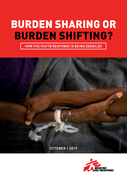
MSF provides treatment for HIV and tuberculosis (TB) in more than 20 countries around the world. The report Burden sharing or burden shifting? How the HIV/TB response is being derailed examines the situation in nine countries where MSF runs programmes: Central African Republic, Democratic Republic
...
