
Filter
166
Text search:
mentale
gesundheit
Featured
14
17
Language
Document type
45
38
24
20
10
8
8
7
2
2
1
1
Countries / Regions
24
19
12
12
9
8
6
5
5
4
4
4
4
3
3
3
3
3
3
3
3
2
2
2
2
2
2
2
2
1
1
1
1
1
1
1
1
1
1
1
1
1
1
1
1
1
1
1
1
1
1
1
1
1
1
1
1
1
1
1
1
1
Authors & Publishers
Publication Years
Category
125
12
9
5
3
1
1
Toolboxes
64
32
24
9
7
2
2
2
1
1
1
1

كرة مختصرة
تتناول الجوانب المتعلقة بالصحة النفسية والدعم النفسي الاجتماعي
خلال تفشي فيروس كورونا المستجد 2019
النسخة 1.5
17 марта 2020 г.
Рабочая группа Межведомственного постоянного комитета по психическому здоровью и психосоциальной поддержке в условиях чрезвычайной ситуации
Feelings just are. They are neither good nor bad. Emotions are a natural reaction to a situation, a
person, an environment. We cannot not have feelings. The word “bad” when referring to feelings is
a inaccurate description because there is no such thing as a bad feeling. Difficult feelings do
...
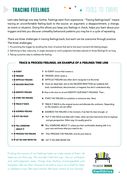
Let’s take feelings one step further. Feelings stem from experience. “Tracing feelings back” means
tracing an uncomfortable feeling back to the source: an argument, a disappointment, a change,
an event or situation. Doing this allows you keep you feelings in check, helps you learn about your
...
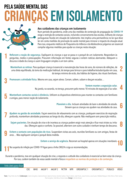
Aos cuidadores das crianças em isolamento
Num período de pandemia, onde uma das medidas de contenção de propagação da COVID-19 exige a restrição de contactos sociais, incluindo o encerramento das escolas, milhares de crianças portuguesas ficarão em situação de isolamento. Isto implica u
...
As the Coronavirus pandemic heightens, ESCAP is sourcing guidelines, recommendations and information in various languages to help exchange knowledge on dealing with mental health in children and adolescent during this time.
The Emerging Minds Network is committed to reducing the prevalence of mental health problems experienced by children and young people. As part of that, we hope to promote wellbeing through sharing positive practice and information. We hope to build a bank of community resources from and for our netw
...
Infectious diseases, such as COVID-19, can have a significant impact on children’s and their caregivers’
wellbeing beyond the disease itself. In terms of child protection, there are three main potential
secondary impacts:
- Neglect and lack of parental care.
- Mental health and Psychosocia
...

The current COVID-19 epidemic, like other infectious disease outbreak
previously, imposes to Child Protection actors to work and deliver services with
great creativity and flexibility, especially in those areas of interventions
traditionally relying on group-gathering (i.e. Child Friendly Spaces)
...
Junio 2020.Este documento describe las intervenciones de salud mental y apoyo psicosocial (SMAPS) fundamentales que se recomienda desarrollar de manera intersectorial en los países y en las comunidades. Para ello se propone utilizar como marco de referencia la pirámide de intervenciones para los s
...
This guide provides valuable resources for both, Healthcare Professionals (physicians, nurses and practitioners) and Health Consumers about the COVID-19 outbreak and recent research related to this topic.
El documento contiene los criterios técnicos y procedimientos para el cuidado y autocuidado de la salud mental de la población, pacientes con COVID-19 y sus familiares, así como de la población en situación de vulnerabilidad
Esta publicación pertenece al compendio Publicaciones Minsa sobre CO
...
The COVID-19 pandemic led to school closures around the world, affecting almost 1.6 billion students. The effects of even short disruptions in a child’s schooling on their learning and well-being have been shown to be acute and long lasting. The capacities of education systems to respond to the cr
...
The World Health Organization (WHO) has identified mental health as an integral component of the COVID-19 response. Its rapid assessment of service delivery for mental, neurological and substance use (MNS) disorders during the COVID-19 pandemic, on which this report is based, is the first attempt to
...
Accessed on 17.05.2022
El documento, preparado por un equipo interdisciplinario de la Casa de Bello, presenta principios, medidas y los grupos de personas que son focos específicos
El presente documento recoge los principales desafíos que, como sector tenemos para dar respuesta a las necesidades de salud mental de la población que habita en el territorio nacional. Desafíos que surgen de un análisis detallado de la situación actual de la salud mental en nuestro país y que
...
Guía de Práctica Clínica 2017
Annals of Medicine and Surgery, 79 (2022)104033
