
Filter
5306
Text search:
human
rights
approach
Featured
465
1309
Language
Document type
3010
877
642
319
243
89
62
28
10
10
7
3
1
Countries
238
142
134
115
96
94
90
87
86
84
81
78
74
69
68
66
66
66
59
57
56
50
45
41
40
40
39
37
35
33
32
31
29
25
24
23
23
22
21
21
19
19
18
18
18
17
17
17
16
16
16
15
13
13
13
13
12
11
11
11
11
11
11
10
9
9
9
8
8
7
6
6
6
6
5
5
5
5
5
5
5
5
4
4
4
4
4
4
3
3
3
3
3
3
3
3
3
3
3
3
3
2
2
2
2
2
2
2
2
2
2
2
2
2
2
2
2
2
1
1
1
1
1
1
1
1
1
1
1
1
1
1
1
1
1
1
1
1
1
1
Authors & Publishers
Publication Years
Category
1571
412
356
331
254
108
50
9
3
1
Toolboxes
522
476
387
361
249
233
203
154
142
139
128
114
105
95
78
69
54
45
44
26
23
17
16
3
1
This guideline provides health policy-makers and decision-makers in health professional training institutions with advice on the rationale for health-care providers’ use of counselling skills to address sexual health concerns in a primary health care setting


Volume 2 - 2014
This brief gives an overview of disability rights in the Sub-Saharan region, with focus on Sida partner countries; DRC, Ethiopia, Kenya, Liberia, Mali, Mozambique, Rwanda, Somalia, Sudan and South Sudan, Tanzania, Uganda, Zambia and Zimbabwe

According to the National Institute of Statistics and Demography (NSID) 168,094 persons out of Burkina Faso’s 14,017,262 inhabitants are living with a physical, sensory or mental disability. The numbers are questioned as the effort to collect in-depth statistics has not been great. Furthermore, mu
...
These policy guidelines provide a strategic approach and new recommendations for integrated TB and HIV services for patients suffering from substance-abuse addiction. The key recommendations fall under three main categories: joint planning, key inte
...
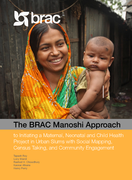
To Initiating a Maternal, Neonatal and Child Health Project in Urban Slums with Social Mapping, Census Taking, and Community Engagement
From Exclusion to Inclusion
This brief focuses on disability rights in the ASEAN countries, namely Brunei Darussalam, Cambodia, Indonesia, Lao People’s Democratic
Republic (PDR), Malaysia, Myanmar, the Philippines, Singapore, Thailand and Viet Nam.

It is the policy of the GoR to ensure that children’s rights are met through the provision of basic needs and services for all children in the country, and protect them from abuse and exploitation. Children are defined as persons below the age of
...
Every year, an estimated 15 million babies are born preterm – before 37 weeks of pregnancy. That is more than 1 in 10 live births. Approximately 1 million children die each year worldwide due to complications from their early birth. Those that survive often face a lifetime of ill-health including
...
Preliminary version for country introduction
The content of these guidelines acknowledges that wasting and undernutrition in HIV-infected children reflect a series of failures within the health system, the home and community and not just a biological process related to virus and host interactions.
The guidelines do not cover the feeding of i
...
5th revised edition.
This document provides a ranking of medically important antimicrobials for risk management of antimicrobial resistance due to non-human use. The current revision took place at the seventh meeting of the AGISAR held in Raleigh,
...
Zambia has about 1.2 physicians, nurses, and midwives per 1000 population while the minimum acceptable density threshold is 2.3 per 1000 population. The estimated shortage of doctors, nurses and midwives in Zambia is about 14,960. However, with the projected population growth the deficit more than d
...
Rabies remains an under-reported neglected zoonosis with a case-fatality rate of almost 100% in humans and animals. Dog-mediated human rabies causes tens of thousands of human deaths annually despit
...
The Resolution Population and Individual Approaches to the Prevention and Management of Diabetes and Obesity was approved by the 48th Directing Council of the Pan American Health Organization, September 29- October 3, 2008, in response to the epidemic of obesity and diabetes currently affecting the
...
Guidelines for action
Non-discrimination disability and ethnic rights
UNICEF Strategic Plan 2018-2021. Draft Theory of Change Paper


The cluster approach is a mechanism that helps to address identified gaps in response and enhance the quality of humanitarian action
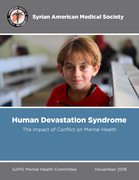
The magnitude and complexity of these mental health conditions caused by prolonged and extensive trauma requires a diagnosis fitting the unique context of the Syrian conflict. Over half a million people have been killed since the beginning of the conflict in 2011, and more than 6.4 million are inter
...
Asia-Pacific Human Development Report
This document focuses on the management of patients affected by gambiense HAT and
constitutes an update to the WHO therapeutic guidance issued in 2013. The main changes in recommendations concern the criteria and methods for deciding the treatment among the new set of therapeutic options and the pa
...
The revision of the SRHR Policy is based on the results of the analysis of the implementation process of the past policy, which has provided evidence to
ensure that the revised policy is relevant and effective. The revision has also been done with the participation of all national stakeholders who
...
Coordinated Use of Anthelminthic Drugs in Control Interventions: a Manual for Health Professionals and Programme Managers
In the area of nutrition and HIV, children deserve special attention because of their additional needs to ensure growth and development and their dependency on adults for adequate care. It was therefore proposed to first develop guidelines for children and thereafter consider a similar
...
HRH Strategy for the Health Sector: 2012/13 – 2016/17
The Human Resources for Health policy (HRH) will provide guidelines and the direction toward strengthening the planning, management, utilization and monitoring of health sector human resources; not
...

This paper aimed to demonstrate how participatory action research (PAR) within a Community-based Rehabilitation (CBR) project facilitated community participation to advocate for the rights of people with visual impairment. An advocacy campaign, led
...
The availability of water, sanitation and hygiene (WASH) services in health care facilities, especially in maternity and primary-care settings where they are often absent, supports core aspects of quality, equity and dignity for all people. This document describes an
...
Healthy communities rely on well-functioning ecosystems. They provide clean air, fresh water, medicines and food security. They also limit disease and stabilize the climate. But biodiversity loss is happening at unprecedented rates, impacting human
...
Compilation of country case studies and best practices. World Health Report (2010) Background Paper, 25
This companion document to Ending the neglect to attain the Sustainable Development Goals: a road map for neglected tropical diseases 2021-2030 ("the road map") aims to support a range of stakeholders - including countries in which neglected tropical diseases (NTDs) are endemic, international organi
...
Connecting global priorities: biodiversity and human health: a state of knowledge review
The objectives of the meeting were:
1. To step up the commitment of national authorities and technical and financial partners toWHO’s elimination objective for g-HAT.
2. To share achievements, challenges and views on the elimination goal among countries and implementing partners.
3. To assess t
...
The Government of Botswana’s SRH Policy Guidelines and Service Standards document provides the framework for developing a responsive strategy and an implementation plan for SRHR and HIV&AIDS Linkages and Integration. The global call on governments to demonstrate commitments to intensify linkages b
...

Findings on maternal and child health in Nepal, Mozambique and
Rwanda, and neglected tropical diseases in Cambodia and Sierra Leone | This report synthesises findings from five country case studies from the health dimension of this project, which focus on maternal and child health (MCH) (Mozambique
...
A Formative Evaluation of UNICEF’s Child Protection System Building Approach in Indonesia
"Some of the problems with our current drug policies stem from the fact that these policies have been largely bifurcated between two different and often contradictory approaches. One treats drug use as a crime that cannot be tolerated and should be punished; the other views addiction as a chronic re
...
This manual outlines proposals for the insertion of housing, land and property restitution rights simultaneously within the context of the ongoing peace process and within broader national legal reform efforts, including work towards a national land
...
Interim guidanceAnnex to: Policy considerations for implementing a risk-based approach to international travel in the context of COVID-19, 2 July 2021
Getting to Zero
Sustainable Financing of National HIV Responses
For biological agents, the publication covers 11 bacteria,
fungi and viruses listed by states parties to the Biological
Weapons Convention in declarations of past offensive
research and development programmes, or considered of
special concern for possible use in terrorism. All of these
agents c
...
An estimated 59 000 people die from rabies each year. That’s one person every nine minutes of every day, 40% of whom are children living in Asia and Africa. As dog bites cause almost all human cases, we can prevent rabies deaths by increasing awar
...

Rabies is a global public health problem with important socioeconomic impacts. Human rabies is preventable; almost all cases are transmitted through the bite of a rabid dog. Elimination of human rab
...
Women and girls have specific needs that are often ignored during crisis. While on the run or while living in shelters, women and girls continue to become pregnant, but they often lack access to basic sexual and reproduc-tive health care. Without assistance by midwifes or access to contraceptives, w
...
A multidisciplinary and multisectoral collaboration, through a One Health approach is required to effectively prepare for, detect, assess, and respond to emerging and endemic zoonotic diseases. However, external and internal health system evaluation
...

This policy brief has been developed in response to the contemporary challenge of antibiotic resistance (ABR). ABR poses a formidable threat to global health and sustainable development. It is now increasingly recognized that the systematic neglect of cultural factors is one of the biggest obs
...
This guidance is intended to be used by programme managers following the decision to introduce human papillomavirus (HPV) virological testing as a screening assay in their national cervical cancer prevention and control programme. The guidance inclu
...
The global migration context is rapidly changing with new conflicts and coups, new public health threats, new levels of environmental stress and changing perceptions around human mobility. Against that backdrop, migration policies, actions and attit
...
The overview of findings from five Latin American countries
The WHO Global strategy on human resources for health: workforce 2030 encourages development partners and global health initiatives to leverage their support to health systems in countries to sustainably strengthen the health workforce. To assess th
...
The main purpose of the meeting was to review tsetse control tools, activities and their contribution to the elimination of gHAT and the monitoring thereof. Seven endemic countries provided reports on recent and ongoing vector control interventions at the national level (Angola, Cameroon, Côte d’
...
Since 2000, concerted efforts by national programmes, supported by public–private partnerships, nongovernmental organizations, donors and academia under the auspices and coordination of the World Health Organization (WHO), have produced important achievements in the control of
...

Rabies is entirely preventable, and vaccines, medicines, tools and technologies have long
been available to prevent people from dying of dog-mediated rabies. Nevertheless, rabies still
kills about 60 000 people a year, of whom over 40% are children under 15, mainly in rural areas
of economically
...
Self-care interventions are evidence-based, quality drugs, devices, diagnostics and/or digital products which can be provided fully or partially outside of formal health services and can be used with or without the direct supervision of health care personnel.
Where HPV tests are available as part o
...
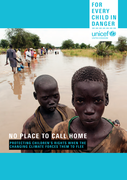
Around the world, approximately 1 in 45 children are on the move – nearly 50 million boys and girls that have migrated across borders or been forcibly displaced within their own countries.1 Climate-related events
and their impacts are already contributing significantly to these staggering numbers
...

The report showed commitments made three decades ago to protect the rights of children remain unfulfilled for millions. Violence still affects countless children. Discrimination based on age, gender, disability, sexual orientation and religion harms
...
Women, girls and marginalized groups who are largely dependent on natural resources for livelihoods are among the hardest hit by extreme weather patterns. These weather patterns limit their access to food, water, shelter, education and access to essential health services, including those that addres
...
This tool is a living document that provides guidance on good partnership practices that promote strong relationships between civil society organizations and government representatives on engaging men and boys in gender equality and sexual and reproductive health and
...
The mission of the Women’s Health Council is to inform and influence the development of health policy to ensure the maximum health and social gain for women in Ireland.
Its membership is representative of a wide range of expertise and interest in women’s health.
The Women’s Health Council
...
The interim Emergency Response Preparedness (ERP) guidance is designed to be a short technical step-by-step guide aimed at non-Humanitarian Response Plan (HRP) countries to support the development, or strengthening, of preparedness measures to ensure that country teams are operationally ready to imp
...
Guiding the work of medica mondiale is an attitude of sensitivity towards both trauma and stress.
This stress- and trauma-sensitive approach has a strengthening and relieving effect on the affected
people and also the activists, specialist staff a
...
Obesity in all age groups, including children and adolescents, is a public health challenge across all settings. Obesity is now classified as a complex multifactorial chronic disease and not just a risk factor for other noncommunicable diseases and comorbidities. Recognizing the significance of prim
...
- The Role of Plant Nutrition in Supporting Food Security
- Micronutrient Malnutrition: Causes, Prevalence, Consequences and Interventions
- Fertilizer Application and Nutraceutical Content in
Health-Functional Foods
- Plant Nutrition and Health Risks Associated with Plant Diseases
-
...
A concept (leaflet)
This document outlines the concept of a stimulus package for rabies elimination. The aim of a stimulus package is to catalyse rabies control by starting community projects, building local capacity and using success to generate momentum for growth. Governments could apply for ...
This document outlines the concept of a stimulus package for rabies elimination. The aim of a stimulus package is to catalyse rabies control by starting community projects, building local capacity and using success to generate momentum for growth. Governments could apply for ...
Supplement Article
WHO Guidelines for HIV PEP • CID 2015:60 (Suppl 3), S161 - S164
To understand the national situation, Ethiopia did a situation assessment, launched its first strategy in 2011, and took action to contain AMR, as detailed in the blue boxes found throughout this strategy. This updated version of the strategy was in response to the revised health and medicines polic
...
The purpose of this guidance is to assist WHO Member States, and other stakeholders, in the establishment and development of programmes of integrated surveillance of antimicrobial resistance in foodborne bacteria (i.e., bacteria commonly transmitted by food). In this guidance, “integrated surveill
...
