
Filter
841
Text search:
health
disciplines
Featured
71
204
Language
Document type
409
167
124
69
37
18
10
3
1
1
1
1
Countries
40
39
22
18
17
15
14
12
11
10
10
10
9
9
8
8
7
6
6
6
6
6
6
5
4
4
4
4
4
4
4
3
3
3
3
3
3
3
3
3
2
2
2
2
2
2
2
2
2
2
1
1
1
1
1
1
1
1
1
1
1
1
1
1
1
1
1
1
1
1
1
1
1
1
Authors & Publishers
Publication Years
Category
235
68
65
39
21
16
8
Toolboxes
81
65
63
54
47
39
32
32
24
21
20
19
18
17
17
16
14
9
9
3
2
1
1
The duration of breastfeeding and support from health services to improve feeding practices among mothers living with HIV
This operational guidance, developed by WHO, UNICEF and ENN, outlines the duration of breastfeeding and support from ...
This operational guidance, developed by WHO, UNICEF and ENN, outlines the duration of breastfeeding and support from ...
This WHO Guidance Note advocates for a comprehensive approach to cervical cancer prevention and control and is aimed at senior policy makers and programme managers. It describes the need to deliver effective interventions across the female life course from childhood through to adulthood. These inclu
...
A lack of knowledge about the threat of vaccine-preventable diseases, risks and benefits of vaccines, mistrust of government and health workers, poor service delivery and alternative health or relig
...

The immediate objective of the country visit to Cameroon was to ensure that the country is as operationally ready as possible to effectively and safely detect, investigate and report potential Ebola virus disease cases and to mount an effective response that will prevent a larger outbreak. After te
...
The document summarizes the infrastructure and activities for Ebola virus disease (EVD) preparedness that are already in place in the Gambia and identifies opportunities for improvement to strengthen the nation’s readiness in the event of an EVD incident.

The preparedness strengthening team deployed to Ghana focused on specific objectives in order to assist the country in becoming as operationally prepared as possible to detect, investigate and report potential EVD cases effectively and safely and to mount an effective response to prevent a larger o
...


Une mission d’appui regroupant des experts diligentés par l’OMS Genève s’est rendue au Bénin du 17 au 24 novembre 2014 pour aider le pays dans la mise en place de son plan de prévention et de riposte à une éventuelle épidémie de maladie à virus Ebola.
Dans ce rapport la mission esti
...
4th edition. A manual for clinics, community health centers and district hospitals
The document introduces a simple classification, minimums standards and a registration form for Foreign Medical Teams (FMTs) that may provide surgical and trauma care arriving within the aftermath of a sudden onset disaster. These can serve as tools to improve the coordination of the foreign medical
...
Updated Guideline.
The Emergency Triage Assessment and Treatment (ETAT) guidelines provide guidance on the most common emergency conditions in children presenting at the health facility. These include but are not limited to airway obstruction and o
...
Skin and mucosal conditions are extremely common in all children and adults in particular in HIV-infected adults and children and are one of the commonest daily management problems faced by health care workers caring for patients with HIV infection
This implementation guide has been developed to help birth attendants and health-care leaders successfully launch and sustain use of the WHO Safe Childbirth Checklist. Development, use and implementation of the Checklist are described in this guide.
...
Conducting simulations and drills is the most effective way to evaluate and test disaster preparedness plans; these exercises are used widely by organizations and institutions working in development and in disaster response. Drills and simulations are also excellent tools for training, and for asses
...
This report reviews the current situation in relation to national capacity to address NCDs and the progress made at country level over the past decade. It highlights that, while progress is being made, there is still much work to be done to create the infrastructure, policies, surveillance and
...
The "Global NCD action plan" provides a road map and a menu of policy options for countries to take in order to attain the 9 voluntary global targets, including that of a 25% relative reduction in premature mortality from cardiovascular diseases, cancer, diabetes or chronic respiratory diseases by 2
...
Standard Treatment Guideline
Global Action Plan on Antimicrobial Resistance
recommended
The goal of the draft global action plan is to ensure, for as long as possible, continuity of successful treatment and prevention of infectious diseases with effective and safe medicines that are quality-assured, used in a responsible way, and accessible to all who need them.
THEME: TEENAGE PREGNANCY AN OBSTACLE TO MATERNAL HEALTH; LET US STOP IT NOW. 5th November 2013
Managing possible serious bacterial infection in young infants when referral is not feasible
recommended
It provides guidance on care for use in resource-limited settings or in settings where families with sick young infants do not accept or cannot access referral care, but can be managed in outpatient settings by an appropriately trained health worker
...
Good primary care may lead to fewer avoidable hospitalizations, but unsafe primary care can cause avoidable illness and injury, leading to unnecessary hospitalizations, and in some cases, disability and even death.Implementing system changes and practices are crucial to improve safety at all levels
...
These guidelines present evidence-based recommendations and best practice statements on use of medically important antimicrobials in food-producing animals, based on the WHO list of critically important antimicrobials for human medicine (WHO CIA List). These guidelines aim primarily to help preserve
...
Application of a One Health approach .
The present guidance was developed with the support of the WHO Advisory Group on Integrated Surveillance of Antimicrobial Resistance (AGISAR) to assist countries and other stakeholders in the establishment and
...

WHO/CDS/CSR/EDC/99.2 Plague Manual
Epidemiology, Distribution, Surveillance and Control
A Step-by-Step Guide.
It is intended for health planners, dengue or vector control programme managers and individuals, nongovernmental organizations (NGOs) and other agencies with interests and/or expertise in developing biological, chemical, envir
...
The End TB Strategie
There is a substantial and ever-increasing unmet need for rehabilitation worldwide, which is particularly profound in low- and middle
-income countries. The availability of accessible and affordable rehabilitation is necessary for many people with health
...
Prevention, early identification, assessment and intervention in low- and middle-income countries | A Review | CHILD AND ADOLESCENT HEALTH AND DEVELOPMENT
"Le Manuel de l’OMS pour la gestion de l’aspect santé publique des accidents chimiques a pour objet de passer en revue l’ensemble des principes et des rôles qui sont ceux de la santé publique dans la gestion des accidents et des situations d’urgence d’origine chimique. Tout en apportant
...
This working paper was conceived to offer practical tips and suggestions on how to establish and sustain the multisectoral coordination needed to develop and implement National Action Plans on AMR (NAPs). It is intended for anyone with responsibility for addressing AMR at country level. Drawing on b
...
The aim of the Annual Inspection Report is to present findings of public sector health establishments inspected by the OHSC to monitor compliance with the National Core Standards (NCS) during the 2016/2017 financial year in South Africa.
The NCS de
...

The WHO South-East Asia (SEA) Region bears a high burden of tuberculosis (TB) and MDR-TB. In 2015, the Region accounted for nearly 200 000 or 35% of the global estimated new RR/MDR-TB cases eligible for treatment. Extensively drug-resistant TB (XDRTB) has also been reported from s
...

The Global vector control response 2017–2030 (GVCR) provides a new strategy to strengthen vector control worldwide through increased capacity, improved surveillance, better coordination and integrated action across sectors and diseases.
In May 2017, the World ...
In May 2017, the World ...

WHO, in partnership with the International Society for Prosthetics and Orthotics (ISPO) and the United States Agency for International Development (USAID), has published global standards for prosthetics and orthotics. Its aim is to ensure that prosthetics and orthotics services are people-centred an
...

WHO, in partnership with the International Society for Prosthetics and Orthotics (ISPO) and the United States Agency for International Development (USAID), has published global standards for prosthetics and orthotics. Its aim is to ensure that prosthetics and orthotics services are people-centred an
...

2nd edition. The 2018 Roadmap incorporates an additional critical population: adolescents. Despite making up 1 in 6 of the world’s people, adolescents have been largely overlooked as global momentum to address TB has grown. Spanning the ages of 10–19 years, adolescents are both at risk of TB and
...
Version 1.1. The WHO protocol has been adapted to resource-limited settings and builds on existing methodologies from the European Centre for Disease Prevention and Control (ECDC), the Global PPS project from University of Antwerp, the US Centers for Disease Control and Prevention (CDC), and the Med
...
The Hand Hygiene Self-Assessment Framework is a systematic tool with which to obtain a situation analysis of hand hygiene promotion and practices within an individual health-care facility.
Version 1.1
Department of Mental Health and Substance Abuse
mhGAP is based on evidence-based technical guidelines (4) and provides a set of tools and
training packages to extend service provision. The mhGAP Intervention Guide (mhGAP-IG)
for MNS disorders in non-specialized health settings (8) is a clinical
...
The Infection Prevention and Control (IPC) Assessment Framework (IPCAF) is a tool to support the implementation of the World Health Organization (WHO) Guidelines on core components of IPC programmes at the acute
...
Свод методических рекомендаций состоит из нескольких тематически связанных и удобных для пользователя модулей для решения широкого спектра задач и приоритетных
...
The WHO Toolkit for the care and support of people affected by complications associated with Zika virus has been developed to serve as a model guide, with the goal of enhancing country preparedness for Zika virus outbreaks. The toolkit is intended to provide a systems approach involving public
...
The EYE strategy is a comprehensive and long-term strategy built on lessons learned that aims at ending yellow fever epidemics by 2026, and consists of three strategic objectives:
protect at-risk populations;
prevent international spread; and
contain outbreaks rapidly.
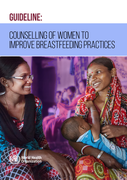
This guideline examines the evidence and makes recommendations and remarks on the implementation of some of the details of breastfeeding counselling, such as frequency, timing, mode and provider of breastfeeding counselling, to improve breastfeeding practices. The objective of this guideline is to p
...
Meeting Report
27–30 June 2017 Manila, Philippines
The ICOPE Implementation Framework provides a score card to help assess the overall capacity of health and social care services and systems to deliver integrated care in community settings and support the development of ICOPE implementation action p
...

Antimicrobial resistance is a global crisis that threatens a century of progress in health and achievement of the Sustainable Development Goals. There is no time to wait. Unless the world acts urgently, antimicrobial resistance will have disastrous
...
Consolidated guidelines on the use of antiretroviral drugs for treating and preventing HIV infection
Accessed: 26.02.2020
Pandemic Influenza Risk Management
recommended
A WHO guide to inform & harmonize national & international pandemic preparedness and response
The main updates from the 2013 interim guidance are:
Alignment with other relevant United Nations policies for crisis and emergency management, and
Inclusion of the significant development in re
...

In concordance with the global and WHO activities on ARC, the Ministry of Health and Family Welfare (MoHFW) in Bangladesh has come forward and initiative was taken to conduct program for containment of antimicrobial resistance in Bangladesh. Directo
...
This National Action Plan addresses actions needed to be taken in order to combat antimicrobial resistance (AMR) in the country. It is obligatory to raise awareness of antimicrobial resistance and promote behavioral change through public communication
programmes that targets human, animal and plant
...
The most significant finding of the case study for integrating antimicrobial resistance (AMR)into existing programs and mobilising resources for funding in Nigeria, is that most of the AMR activities within the Nigerian National Action Plan (NAP)canalready be incorporated within exi
...
Le présent document a été élaboré pour aiderles comités de coordination RAM et d’autres comités chargés de la RAM au niveau des pays àparvenir à cet objectif. S’appuyant sur la littérature publiée ainsi que sur l’expérience opérationnelle et l’expertise de différents PRFI, le
...
This paper was developed to support AMR coordination committees and others tasked with addressing AMR at country level to do just that. Drawing on the published literature and the operational experience and expertise of different LMICs, the paper points to six key strategies for success and offers a
...

Using the WHO model list of essential medicines to update a national essential medicines list
Since 1977, WHO has been working with countries to design the package of essential medicines as an integral component of treatment within the continuum of care, developing and disseminating the Model List
...
A practical approach for developing policy and strategy to improve quality of care
The handbook outlines an approach for the development of national policies and strategies to improve the quality of care. Such policy and strategy can help clarify the structures, roles and responsibilities within n
...
Updated 2022. This guide addresses the care pathway from presentation of the patient to a health facility to patient discharge. It considers different levels of disease severity, from asymptomatic individuals to critically ill patients. Accounting f
...
The Western Pacific Regional Action Plan for the Prevention and Control of Noncommunicable Diseases (2014–2020) was developed in response to a resolution adopted at the sixty-second session of the WHO Regional Committee for the Western Pacific. The regional plan is fully harmonized with
...
The Pharmacovigilance team in WHO aims to assure the safety of medicines and vaccines by ensuring reliable and timely exchange of information on safety issues, promoting pharmacovigilance activities throughout the Organization and encouraging participation in the WHO Programme for International Drug
...

The Global Strategy for Tuberculosis Research and Innovation will support the efforts of governments and other stakeholders to accelerate TB research and innovation, and improve equitable access to the benefits of research.
Availabl in Arabic, Chinese, English, French, Spanish and Russian
his document, a first of its kind, clearly sets out the standards for rehabilitation and provides guidance on building or strengthening the capacity of EMTs in this area.The importance of early rehabilitation for functional outcomes is well documented. Rehabilitation needs can pe
...
These guidelines group all recommendations on TB care and support in one document and are complemented by an operational handbook. The guidelines are to be used primarily by national TB programmes, or their equivalents in Ministries of Health,
...
Member States have requested WHO policy guidance on how to facilitate the implementation of national AMS activities in an integrated and programmatic approach. This policy guidance responds to that demand from Member States and is anchored in public health
...
On 9 February 2021, a first webinar entitled “Expanding our understanding of Post COVID-19 condition” was held under the auspices of WHO and in consultation with the International Severe Acute Respiratory and Emerging Infection Consortium(ISARIC), Global Research Collaboration for Infectious Dis
...
Available in Arabic, Chinese, English, French, Russian and Spanish. You can download a summary of the main report and background documents!
The report demonstrates that the current system—at both national and international levels— was not adequate to protect people from COVID-19. The time it t
...
