
Filter
10990
Text search:
health
care
services
Featured
938
2839
Language
10110
563
284
218
130
96
55
50
24
24
19
16
15
15
14
13
11
10
10
9
9
9
8
8
8
7
7
7
7
7
7
7
6
6
6
6
6
5
5
5
5
5
4
4
4
4
4
4
4
4
4
3
3
3
3
3
3
3
2
2
2
1
1
1
1
1
1
1
1
1
1
1
1
1
1
1
1
Document type
6349
1730
1291
553
373
252
189
132
35
32
28
16
3
1
Countries
478
405
332
237
233
219
214
208
202
199
185
175
163
161
158
157
155
152
145
143
130
120
113
101
98
83
79
77
76
73
72
72
67
67
66
65
65
65
64
59
56
56
54
53
51
49
49
40
39
35
34
34
31
30
29
28
27
26
25
24
24
24
22
22
19
19
18
18
16
16
16
15
14
14
13
13
13
13
13
10
10
10
10
9
8
8
8
8
8
8
8
8
7
7
7
7
7
7
7
7
6
6
6
6
6
6
5
5
5
5
4
4
4
4
4
4
4
4
3
3
3
3
3
3
3
3
3
3
2
2
2
2
2
2
2
2
2
2
2
2
2
1
1
1
1
1
1
1
1
1
1
1
1
1
1
1
1
Authors & Publishers
1318
561
497
372
290
279
206
188
178
111
73
65
64
61
59
52
52
51
50
49
46
43
43
42
41
41
40
40
38
38
37
37
36
35
35
34
34
33
33
33
32
31
31
29
29
28
28
28
28
26
26
26
26
26
25
25
24
24
24
23
22
22
22
22
22
21
21
21
21
21
21
20
20
20
20
20
19
19
19
19
17
17
17
17
17
17
17
16
16
16
15
15
15
15
15
15
15
14
14
14
14
14
14
14
14
14
14
14
13
13
13
13
13
13
13
13
13
13
13
12
12
12
12
12
12
12
12
12
11
11
11
11
11
11
11
11
11
11
11
10
10
10
10
10
10
10
10
10
10
10
10
9
9
9
9
9
9
9
9
9
9
9
9
9
9
9
9
9
9
9
9
8
8
8
8
8
8
8
8
8
8
8
8
8
8
8
8
8
8
8
8
8
8
7
7
7
7
7
7
7
7
7
7
7
7
7
7
7
7
7
7
7
7
7
7
7
7
7
7
7
7
7
7
7
7
7
7
7
7
7
6
6
6
6
6
6
6
6
6
6
6
6
6
6
6
6
6
6
6
6
6
6
6
6
6
6
6
6
6
6
6
6
6
6
6
6
6
6
6
6
6
6
6
6
6
6
6
6
6
6
6
6
6
6
6
6
5
5
5
5
5
5
5
5
5
5
5
5
5
5
5
5
5
5
5
5
5
5
5
5
5
5
5
5
5
5
5
5
5
5
5
5
5
5
5
5
5
5
5
5
5
5
5
5
5
5
5
5
5
5
5
5
5
5
5
5
5
5
5
5
5
5
5
5
5
5
5
5
5
5
5
5
5
5
5
5
5
5
5
4
4
4
4
4
4
4
4
4
4
4
4
4
4
4
4
4
4
4
4
4
4
4
4
4
4
4
4
4
4
4
4
4
4
4
4
4
4
4
4
4
4
4
4
4
4
4
4
4
4
4
4
4
4
4
4
4
4
4
4
4
4
4
4
4
4
4
4
4
4
4
4
4
4
4
4
4
4
4
4
4
4
4
4
4
4
4
4
4
4
4
4
4
4
4
4
4
4
4
4
4
4
4
4
4
4
4
4
4
4
3
3
3
3
3
3
3
3
3
3
3
3
3
3
3
3
3
3
3
3
3
3
3
3
3
3
3
3
3
3
3
3
3
3
3
3
3
3
3
3
3
3
3
3
3
3
3
3
3
3
3
3
3
3
3
3
3
3
3
3
3
3
3
3
3
3
3
3
3
3
3
3
3
3
3
3
3
3
3
3
3
3
3
3
3
3
3
3
3
3
3
3
3
3
3
3
3
3
3
3
3
3
3
3
3
3
3
3
3
3
3
3
3
3
3
3
3
3
3
3
3
3
3
3
3
3
3
3
3
3
3
3
3
3
3
3
3
3
3
3
3
3
3
3
3
3
3
3
3
3
3
3
3
3
3
3
3
3
3
3
3
3
3
3
3
3
3
3
3
3
3
3
3
3
3
3
3
3
3
3
3
3
3
3
3
3
3
3
3
3
3
3
3
3
3
3
3
3
3
3
3
3
3
3
3
3
3
3
3
3
3
3
3
3
3
3
3
3
3
3
3
3
3
3
2
2
2
2
2
2
2
2
2
2
2
2
2
2
2
2
2
2
2
2
2
2
2
2
2
2
2
2
2
2
2
2
2
2
2
2
2
2
2
2
2
2
2
2
2
2
2
2
2
2
2
2
2
2
2
2
2
2
2
2
2
2
2
2
2
2
2
2
2
2
2
2
2
2
2
2
2
2
2
2
2
2
2
2
2
2
2
2
2
2
2
2
2
2
2
2
2
2
2
2
2
2
2
2
2
2
2
2
2
2
2
2
2
2
2
2
2
2
2
2
2
2
2
2
2
2
2
2
2
2
2
2
2
2
2
2
2
2
2
2
2
2
2
2
2
2
2
2
2
2
2
2
2
2
2
2
2
2
2
2
2
2
2
2
2
2
2
2
2
2
2
2
2
2
2
2
2
2
2
2
2
2
2
2
2
2
2
2
2
2
2
2
2
2
2
2
2
2
2
2
2
2
2
2
2
2
2
2
2
2
2
2
2
2
2
2
2
2
2
2
2
2
2
2
2
2
2
2
2
2
2
2
2
2
2
2
2
2
2
2
2
2
2
2
2
2
2
2
2
2
2
2
2
2
2
2
2
2
2
2
2
2
2
2
2
2
2
2
2
2
2
2
2
2
2
2
2
2
2
2
2
2
2
2
2
2
2
2
2
2
2
2
2
2
2
2
2
2
2
2
2
2
2
2
2
2
2
2
2
2
2
2
2
2
2
2
2
2
2
2
2
2
2
2
2
2
2
2
2
2
2
2
2
2
2
2
2
2
2
2
2
2
2
2
2
2
2
2
2
2
2
2
2
2
2
2
2
2
2
2
2
2
2
2
2
2
2
2
2
2
2
2
2
2
2
2
2
2
2
2
2
2
2
2
2
2
2
2
2
2
2
2
2
2
2
2
2
2
2
2
2
2
2
2
2
2
2
2
2
2
2
2
2
2
2
2
2
2
2
2
2
2
2
2
2
2
2
2
2
2
2
2
2
2
2
2
2
2
2
2
2
2
2
2
2
2
2
2
2
2
2
2
2
2
2
2
2
2
2
2
2
2
2
2
2
2
2
2
2
2
2
2
2
2
2
2
2
2
2
2
2
2
2
2
2
2
2
2
2
2
2
2
2
2
2
2
2
2
2
2
2
2
2
2
2
2
2
2
2
2
2
2
2
2
2
2
2
2
2
2
2
2
2
2
2
2
2
2
2
2
2
2
2
2
2
2
2
2
2
2
2
2
2
2
2
2
2
2
2
2
2
2
2
2
2
2
2
2
2
2
2
2
2
2
2
2
2
2
2
2
2
2
2
2
2
2
2
2
2
2
2
2
2
2
2
2
2
2
2
2
2
2
2
2
2
2
2
2
1
1
1
1
1
1
1
1
1
1
1
1
1
1
1
1
1
1
1
1
1
1
1
1
1
1
1
1
1
1
1
1
1
1
1
1
1
1
1
1
1
1
1
1
1
1
1
1
1
1
1
1
1
1
1
1
1
1
1
1
1
1
1
1
1
1
1
1
1
1
1
1
1
1
1
1
1
1
1
1
1
1
1
1
1
1
1
1
1
1
1
1
1
1
1
1
1
1
1
1
1
1
1
1
1
1
1
1
1
1
1
1
1
1
1
1
1
1
1
1
1
1
1
1
1
1
1
1
1
1
1
1
1
1
1
1
1
1
1
1
1
1
1
1
1
1
1
1
1
1
1
1
1
1
1
1
1
1
1
1
1
1
1
1
1
1
1
1
1
1
1
1
1
1
1
1
1
1
1
1
1
1
1
1
1
1
1
1
1
1
1
1
1
1
1
1
1
1
1
1
1
1
1
1
1
1
1
1
1
1
1
1
1
1
1
1
1
1
1
1
1
1
1
1
1
1
1
1
1
1
1
1
1
1
1
1
1
1
1
1
1
1
1
1
1
1
1
1
1
1
1
1
1
1
1
1
1
1
1
1
1
1
1
1
1
1
1
1
1
1
1
1
1
1
1
1
1
1
1
1
1
1
1
1
1
1
1
1
1
1
1
1
1
1
1
1
1
1
1
1
1
1
1
1
1
1
1
1
1
1
1
1
1
1
1
1
1
1
1
1
1
1
1
1
1
1
1
1
1
1
1
1
1
1
1
1
1
1
1
1
1
1
1
1
1
1
1
1
1
1
1
1
1
1
1
1
1
1
1
1
1
1
1
1
1
1
1
1
1
1
1
1
1
1
1
1
1
1
1
1
1
1
1
1
1
1
1
1
1
1
1
1
1
1
1
1
1
1
1
1
1
1
1
1
1
1
1
1
1
1
1
1
1
1
1
1
1
1
1
1
1
1
1
1
1
1
1
1
1
1
1
1
1
1
1
1
1
1
1
1
1
1
1
1
1
1
1
1
1
1
1
1
1
1
1
1
1
1
1
1
1
1
1
1
1
1
1
1
1
1
1
1
1
1
1
1
1
1
1
1
1
1
1
1
1
1
1
1
1
1
1
1
1
1
1
1
1
1
1
1
1
1
1
1
1
1
1
1
1
1
1
1
1
1
1
1
1
1
1
1
1
1
1
1
1
1
1
1
1
1
1
1
1
1
1
1
1
1
1
1
1
1
1
1
1
1
1
1
1
1
1
1
1
1
1
1
1
1
1
1
1
1
1
1
1
1
1
1
1
1
1
1
1
1
1
1
1
1
1
1
1
1
1
1
1
1
1
1
1
1
1
1
1
1
1
1
1
1
1
1
1
1
1
1
1
1
1
1
1
1
1
1
1
1
1
1
1
1
1
1
1
1
1
1
1
1
1
1
1
1
1
1
1
1
1
1
1
1
1
1
1
1
1
1
1
1
1
1
1
1
1
1
1
1
1
1
1
1
1
1
1
1
1
1
1
1
1
1
1
1
1
1
1
1
1
1
1
1
1
1
1
1
1
1
1
1
1
1
1
1
1
1
1
1
1
1
1
1
1
1
1
1
1
1
1
1
1
1
1
1
1
1
1
1
1
1
1
1
1
1
1
1
1
1
1
1
1
1
1
1
1
1
1
1
1
1
1
1
1
1
1
1
1
1
1
1
1
1
1
1
1
1
1
1
1
1
1
1
1
1
1
1
1
1
1
1
1
1
1
1
1
1
1
1
1
1
1
1
1
1
1
1
1
1
1
1
1
1
1
1
1
1
1
1
1
1
1
1
1
1
1
1
1
1
1
1
1
1
1
1
1
1
1
1
1
1
1
1
1
1
1
1
1
1
1
1
1
1
1
1
1
1
1
1
1
1
1
1
1
1
1
1
1
1
1
1
1
1
1
1
1
1
1
1
1
1
1
1
1
1
1
1
1
1
1
1
1
1
1
1
1
1
1
1
1
1
1
1
1
1
1
1
1
1
1
1
1
1
1
1
1
1
1
1
1
1
1
1
1
1
1
1
1
1
1
1
1
1
1
1
1
1
1
1
1
1
1
1
1
1
1
1
1
1
1
1
1
1
1
1
1
1
1
1
1
1
1
1
1
1
1
1
1
1
1
1
1
1
1
1
1
1
1
1
1
1
1
1
1
1
1
1
1
1
1
1
1
1
1
1
1
1
1
1
1
1
1
1
1
1
1
1
1
1
1
1
1
1
1
1
1
1
1
1
1
1
1
1
1
1
1
1
1
1
1
1
1
1
1
1
1
1
1
1
1
1
1
1
1
1
1
1
1
1
1
1
1
1
1
1
1
1
1
1
1
1
1
1
1
1
1
1
1
1
1
1
1
1
1
1
1
1
1
1
1
1
1
1
1
1
1
1
1
1
1
1
1
1
1
1
1
1
1
1
1
1
1
1
1
1
1
1
1
1
1
1
1
1
1
1
1
1
1
1
1
1
1
1
1
1
1
1
1
1
1
1
1
1
1
1
1
1
1
1
1
1
1
1
1
1
1
1
1
1
1
1
1
1
1
1
1
1
1
1
1
1
1
1
1
1
1
1
1
1
1
1
1
1
1
1
1
1
1
1
1
1
1
1
1
1
1
1
1
1
1
1
1
1
1
1
1
1
1
1
1
1
1
1
1
1
1
1
1
1
1
1
1
1
1
1
1
1
1
1
1
1
1
1
1
1
1
1
1
1
1
1
1
1
1
1
1
1
1
1
1
1
1
1
1
1
1
1
1
1
1
1
1
1
1
1
1
1
1
1
1
1
1
1
1
1
1
1
1
1
1
1
1
1
1
1
1
1
1
1
1
1
1
1
1
1
1
1
1
1
1
1
1
1
1
1
1
1
1
1
1
1
1
1
1
1
1
1
1
1
1
1
1
1
1
1
1
1
1
1
1
1
1
1
1
1
1
1
1
1
1
1
1
1
1
1
1
1
1
1
1
1
1
1
1
1
1
1
1
1
1
1
1
1
1
1
1
1
1
1
1
1
1
1
1
1
1
1
1
1
1
1
1
1
1
1
1
1
1
1
1
1
1
1
1
1
1
1
1
1
1
1
1
1
1
1
1
1
1
1
1
1
1
1
1
1
1
1
1
1
1
1
1
1
1
1
1
1
1
1
1
1
1
1
1
1
1
1
1
1
1
1
1
1
1
1
1
1
1
1
1
1
1
1
1
1
1
1
1
1
1
1
1
1
1
1
1
1
1
1
1
1
1
1
1
1
1
1
1
1
1
1
1
1
1
1
1
1
1
1
1
1
1
1
1
1
1
1
1
1
1
1
1
1
1
1
1
1
1
1
1
1
1
1
1
1
1
1
1
1
1
1
1
1
1
1
1
1
1
1
1
1
1
1
1
1
1
1
1
1
1
1
1
1
1
1
1
1
1
1
1
1
1
1
1
1
1
1
1
1
1
1
1
1
1
1
1
1
1
1
1
1
1
1
1
1
1
1
1
1
1
1
1
1
1
1
1
1
1
1
1
1
1
1
1
1
1
1
1
1
1
1
1
1
1
1
1
1
1
1
1
1
1
1
1
1
1
1
1
1
1
1
1
1
1
1
1
1
1
1
1
1
1
1
1
1
1
1
1
1
1
1
1
1
1
1
1
1
1
1
1
1
1
1
1
1
1
1
1
1
1
1
1
1
1
1
1
1
1
1
1
1
1
1
1
1
1
1
1
1
1
1
1
1
1
1
1
1
1
1
1
1
1
1
1
1
1
1
1
1
1
1
1
1
1
1
1
1
1
1
1
1
1
1
1
1
1
1
1
1
1
1
1
1
1
1
1
1
1
1
1
1
1
1
1
1
1
1
1
1
1
1
1
1
1
1
1
1
1
1
1
1
1
1
1
1
1
1
1
1
1
1
1
1
1
1
1
1
1
1
1
1
1
1
1
1
1
1
1
1
1
1
1
1
1
1
1
1
1
1
1
1
1
1
1
1
1
1
1
1
1
1
1
1
1
1
1
1
1
1
1
1
1
1
1
1
1
1
1
1
1
1
1
1
1
1
1
1
1
1
1
1
1
1
1
1
1
1
1
1
1
1
1
1
1
1
1
1
1
1
1
1
1
1
1
1
1
1
1
1
1
1
1
1
1
1
1
1
1
1
1
1
1
1
1
1
1
1
1
1
1
1
1
1
1
1
1
1
1
1
1
1
1
1
1
1
1
1
1
1
1
1
1
1
1
1
1
1
1
1
1
1
1
1
1
1
1
1
1
1
1
1
1
1
1
1
1
1
1
1
1
1
1
1
1
1
1
1
1
1
1
1
1
1
1
1
1
1
1
1
1
1
1
1
1
1
1
1
1
1
1
1
1
1
1
1
1
1
1
1
1
1
1
1
1
1
1
1
1
1
1
1
1
1
1
1
1
1
1
1
1
1
1
1
1
1
1
1
1
1
1
1
1
1
1
1
1
1
1
1
1
1
1
1
1
1
1
1
1
1
1
1
1
1
1
1
1
1
1
1
1
1
1
1
1
1
1
1
1
1
1
1
1
1
1
1
1
1
1
1
1
1
1
1
1
1
1
1
1
1
1
1
1
1
1
1
1
1
1
1
1
1
1
1
1
1
1
1
1
1
1
1
1
1
1
1
1
1
1
1
1
1
1
1
1
1
1
1
1
1
1
1
1
1
1
1
1
1
1
1
1
1
1
1
1
1
1
1
1
1
1
1
1
1
1
1
1
1
1
1
1
1
1
1
1
1
1
1
1
1
1
1
1
1
1
1
1
1
1
1
1
1
1
1
1
1
1
1
1
1
1
1
1
1
1
1
1
1
1
1
1
1
1
1
1
1
1
1
1
1
1
1
1
1
1
1
1
1
1
1
1
1
1
1
1
1
1
1
1
1
1
1
1
1
1
1
1
1
1
1
1
1
1
1
1
1
1
1
1
1
1
1
1
1
1
1
1
1
1
1
1
1
1
1
1
1
1
1
1
1
1
1
1
1
1
1
1
1
1
1
1
1
1
1
1
1
1
1
1
1
1
1
1
1
1
1
1
1
1
1
1
1
1
1
1
1
1
1
1
1
1
1
1
1
1
1
1
1
1
1
1
1
1
1
1
1
1
1
1
1
1
1
1
1
1
1
1
1
1
1
1
1
1
1
1
1
1
1
1
1
1
1
1
1
1
1
1
1
1
1
1
1
1
1
1
1
1
1
1
1
1
1
1
1
1
1
1
1
1
1
1
1
1
1
1
1
1
1
1
1
1
1
1
1
1
1
1
1
1
1
1
1
1
1
1
1
1
1
1
1
1
1
1
1
1
1
1
1
1
1
1
1
1
1
1
1
1
1
1
1
1
1
1
1
1
1
1
1
1
1
1
1
1
1
1
1
1
1
1
1
1
1
1
1
1
1
1
1
1
1
1
1
1
1
1
1
1
1
1
1
1
1
1
1
1
1
1
1
1
1
1
1
1
1
1
1
1
1
1
1
1
1
1
1
1
1
1
1
1
1
1
1
1
1
1
1
1
1
1
1
1
1
1
1
1
1
1
1
1
1
1
1
1
1
1
1
1
1
1
1
1
1
1
1
1
1
1
1
1
1
1
1
1
1
1
1
1
1
1
1
1
1
1
1
1
1
1
1
1
1
1
1
1
1
1
1
1
1
1
1
1
1
1
1
1
1
1
1
1
1
1
1
1
1
1
1
1
1
1
1
1
1
1
1
1
1
1
1
1
1
1
1
1
1
1
1
1
1
1
1
1
1
1
1
1
1
1
1
1
1
1
1
1
1
1
1
1
1
1
1
1
1
1
1
1
1
1
1
1
1
1
1
1
1
1
1
1
1
1
1
1
1
1
1
1
1
1
1
1
1
1
1
1
1
1
1
1
1
1
1
1
1
1
1
1
1
1
1
1
1
1
1
1
1
1
1
1
1
1
1
1
1
1
1
1
1
1
1
1
1
1
1
1
1
1
1
1
1
1
1
1
1
1
1
1
1
1
1
1
1
1
1
1
1
1
1
1
1
1
1
1
1
1
1
1
1
1
1
1
1
1
1
1
1
1
1
1
1
1
1
1
1
1
1
1
1
1
1
1
1
1
1
1
1
1
1
1
1
1
1
1
1
1
1
1
1
1
1
1
1
1
1
1
1
1
1
1
1
1
1
1
1
1
1
1
1
1
1
1
1
1
1
1
1
1
1
1
1
1
1
1
1
1
1
1
1
1
1
1
1
1
1
1
1
1
1
1
1
1
1
1
1
1
1
1
1
1
1
1
1
1
1
1
1
1
1
1
1
1
1
1
1
1
1
1
1
1
1
1
1
1
1
1
1
1
1
1
1
1
1
1
1
1
1
1
1
1
1
1
1
1
1
1
1
1
1
1
1
1
1
1
1
1
1
1
1
1
1
1
1
1
1
1
1
1
1
1
1
1
1
1
1
1
1
1
1
1
1
1
1
1
1
1
1
1
1
1
1
1
1
1
1
1
1
1
1
1
1
1
1
1
1
1
1
1
1
1
1
1
1
1
1
1
1
1
1
1
1
1
1
1
1
1
1
1
1
1
1
1
1
1
1
1
1
1
1
1
1
1
1
1
1
1
1
1
1
1
1
1
1
1
1
1
1
1
1
1
1
1
1
1
1
1
1
1
1
1
1
1
1
1
1
1
1
1
1
1
1
1
1
1
1
1
1
1
1
1
1
1
1
1
1
1
1
1
1
1
1
1
1
1
1
1
1
1
1
1
1
1
1
1
1
1
1
1
1
1
1
1
1
1
1
1
1
1
1
1
1
1
1
1
1
1
1
1
1
1
1
1
1
1
1
1
1
1
1
1
1
1
1
1
1
1
1
1
1
1
1
1
1
1
1
1
1
1
1
1
1
1
1
1
1
1
1
1
1
1
1
1
1
1
1
1
1
1
1
1
1
1
1
1
1
1
1
1
1
1
1
1
1
1
1
1
1
1
1
1
1
1
1
1
1
1
1
1
1
1
1
1
1
1
1
1
1
1
1
1
1
1
1
1
1
1
1
1
1
1
1
1
1
1
1
1
1
1
1
1
1
1
1
1
1
1
1
1
1
1
1
1
1
1
1
1
1
1
1
1
1
1
1
1
1
1
1
1
1
1
1
1
1
1
1
1
1
1
1
1
1
1
1
1
1
1
1
1
1
1
1
1
1
1
1
1
1
1
1
1
1
1
1
1
1
1
1
1
1
1
1
1
1
1
1
1
1
1
1
1
1
1
1
1
1
1
1
1
1
1
1
1
1
1
1
1
1
1
1
1
1
1
1
1
1
1
1
1
1
1
1
1
1
1
1
1
1
1
1
1
1
1
1
1
1
1
1
1
1
1
1
1
1
1
1
1
1
1
1
1
1
1
1
1
1
1
1
1
1
1
1
1
1
1
1
1
1
1
1
1
1
1
1
1
1
1
1
1
1
1
1
1
1
1
1
1
1
1
1
1
1
1
1
1
1
1
1
1
1
1
1
1
1
1
1
1
1
1
1
1
1
1
1
1
1
1
1
1
1
1
1
1
1
1
1
1
1
1
1
1
1
1
1
1
1
1
1
1
1
1
1
1
1
1
1
1
1
1
1
1
1
1
1
1
1
1
1
1
1
1
1
1
1
1
1
1
1
1
1
1
1
1
1
1
1
1
1
1
1
1
1
1
1
1
1
1
1
1
1
1
1
1
1
1
1
1
1
1
1
1
1
1
1
1
1
1
1
1
1
1
1
1
1
1
1
1
1
1
1
1
1
1
1
1
1
1
1
1
1
1
1
1
1
1
1
1
1
1
1
1
1
1
1
1
1
1
1
1
1
1
1
1
1
1
1
1
1
1
1
1
1
1
1
1
1
1
1
1
1
1
1
1
1
1
1
1
1
1
1
1
1
1
1
1
1
1
1
1
1
1
1
1
1
1
1
1
1
1
1
1
1
1
1
1
1
1
1
1
1
1
1
1
1
1
1
1
1
1
1
1
1
1
1
1
1
1
1
1
1
1
1
1
1
1
1
1
1
1
1
1
1
1
1
1
1
1
1
1
1
1
1
1
1
1
1
1
1
1
1
1
1
1
1
1
1
1
1
1
1
1
1
1
1
1
1
1
1
1
1
1
1
1
1
1
1
1
1
1
1
1
1
1
1
1
1
1
1
1
1
1
1
1
1
1
1
1
1
1
1
1
1
1
1
1
1
1
1
1
1
1
1
1
1
1
1
1
1
1
1
1
1
1
1
1
1
1
1
1
1
1
1
1
1
1
1
1
1
1
1
1
1
1
1
1
1
1
1
1
1
1
1
1
1
1
1
1
1
1
1
1
1
1
1
1
1
1
1
1
1
1
1
1
1
1
1
1
1
1
1
1
1
1
1
1
1
1
1
1
1
1
1
1
1
1
1
1
1
1
1
1
1
1
1
1
1
1
1
1
1
1
1
1
1
1
1
1
1
1
1
1
1
1
1
1
1
1
1
1
1
1
1
1
1
1
1
1
1
1
1
1
1
1
1
1
1
1
1
1
1
1
1
1
1
1
1
1
1
1
1
1
1
1
1
1
1
1
1
1
1
1
1
1
1
1
1
1
1
1
1
1
1
1
1
1
1
1
1
1
1
1
1
1
1
1
1
1
1
1
1
1
1
1
1
1
1
1
1
1
1
1
1
1
1
1
1
1
1
1
1
1
1
1
1
1
1
1
1
1
1
1
1
1
1
1
1
1
1
1
1
1
1
1
1
1
1
1
1
1
1
1
1
1
1
1
1
1
1
1
1
1
1
1
1
1
1
1
1
1
1
1
1
1
1
1
1
1
1
1
1
1
1
1
1
1
1
1
1
1
1
1
1
1
1
1
1
1
1
1
1
1
1
1
1
1
1
1
1
1
1
1
1
1
1
1
1
1
1
1
1
1
1
1
1
1
1
1
1
1
1
1
1
1
1
1
1
1
1
1
1
1
1
1
1
1
1
1
1
1
1
1
1
1
1
1
1
1
1
1
1
1
1
1
1
1
1
1
1
1
1
1
1
1
1
1
1
1
1
1
1
1
1
1
1
1
1
1
1
1
1
1
1
1
1
1
1
1
1
1
1
1
1
1
1
1
1
1
1
1
1
1
1
1
1
1
1
1
1
1
1
1
1
1
1
1
1
1
1
1
1
1
1
1
1
1
1
1
1
1
1
1
1
1
1
1
1
1
1
1
1
1
1
1
1
1
1
1
1
1
1
1
1
1
1
1
1
1
1
1
1
1
1
1
1
1
1
1
1
1
1
1
1
1
1
1
1
1
1
1
1
1
1
1
1
1
1
1
1
1
1
1
1
1
1
1
1
1
1
1
1
1
1
1
1
1
1
1
1
1
1
1
1
1
1
1
1
1
1
1
1
1
1
1
1
1
1
1
1
1
1
1
1
1
1
1
1
1
1
1
1
1
1
1
1
1
1
1
1
1
1
1
1
1
1
1
1
1
1
1
1
1
1
1
1
1
1
1
1
1
1
1
1
1
1
1
1
1
1
1
1
1
1
1
1
1
1
1
1
1
1
1
1
1
1
1
1
1
1
1
1
1
1
1
1
1
1
1
1
1
1
1
1
1
1
1
1
1
1
1
1
1
1
1
1
1
1
1
1
1
1
1
1
1
1
1
1
1
1
1
1
1
1
1
1
1
1
1
1
1
1
1
1
1
1
1
1
1
1
1
1
1
1
1
1
1
1
1
1
1
1
1
1
1
1
1
1
1
1
1
1
1
1
1
1
1
1
1
1
1
1
1
1
1
1
1
1
1
1
1
1
1
1
1
1
1
1
1
1
1
1
1
1
1
1
1
1
1
1
1
1
1
1
1
1
1
1
1
1
1
1
1
1
1
1
1
1
1
1
1
1
1
1
1
1
1
1
1
1
1
1
1
1
1
1
1
1
1
1
1
1
1
1
1
1
1
1
1
1
1
1
1
1
1
1
1
1
1
1
1
1
1
1
1
1
1
1
1
1
1
1
1
1
1
1
1
1
1
1
1
1
1
1
1
1
1
1
1
1
1
1
1
1
1
1
1
1
1
1
1
1
1
1
1
1
1
1
1
1
1
1
1
1
1
1
1
1
1
1
1
1
1
1
1
1
1
1
1
1
1
1
1
1
1
1
1
1
1
1
1
1
1
1
1
1
1
1
1
1
1
1
1
1
1
1
1
1
1
1
1
1
1
1
1
1
1
1
1
1
1
1
1
1
1
1
1
1
1
1
1
1
1
1
1
1
1
1
1
1
1
1
1
1
1
1
1
1
1
1
1
1
1
1
1
1
1
1
1
1
1
1
1
1
1
1
1
1
1
1
1
1
1
1
1
1
1
1
1
1
1
1
1
1
1
1
1
1
1
1
1
1
1
1
1
1
1
1
1
1
1
1
1
1
1
1
1
1
1
1
1
1
1
1
1
1
1
1
1
1
1
1
1
1
1
1
1
1
1
1
1
1
1
1
1
1
1
1
1
1
1
1
1
1
1
1
1
1
1
1
1
1
1
1
1
1
1
1
1
1
1
1
1
1
1
1
1
1
1
1
1
1
1
1
1
1
1
1
1
1
1
1
1
1
1
1
1
1
1
1
1
1
1
1
1
1
1
1
1
1
1
1
1
1
1
1
1
1
1
1
1
1
1
1
1
1
1
1
1
1
1
1
1
1
1
1
1
1
1
1
1
1
1
1
1
1
1
1
1
1
1
1
1
1
1
1
1
1
1
1
1
1
1
1
1
1
1
1
1
1
1
1
1
1
1
1
1
1
1
1
1
1
1
1
1
1
1
1
1
1
1
1
1
1
1
1
1
1
1
1
1
1
1
1
1
1
1
1
1
1
1
1
1
1
1
1
1
1
1
1
1
1
1
1
1
1
1
1
1
1
1
1
1
1
1
1
1
1
1
1
1
1
1
1
1
1
1
1
1
1
1
1
1
1
1
1
1
1
1
1
1
1
1
1
1
1
1
1
1
1
1
1
1
1
1
1
1
1
1
1
1
1
1
1
1
1
1
1
1
1
1
1
1
1
1
1
1
1
1
1
1
1
1
1
1
1
1
1
1
1
1
1
1
1
1
1
1
1
1
1
1
1
1
1
1
1
1
1
1
1
1
1
1
1
1
1
1
1
1
1
1
1
1
1
1
1
1
1
1
1
1
1
1
1
1
1
1
1
1
1
1
1
1
1
1
1
1
1
1
1
1
1
1
1
1
1
1
1
1
1
1
1
1
1
1
1
1
1
1
1
1
1
1
1
1
1
1
1
1
1
1
1
1
1
1
1
1
1
1
1
1
1
1
1
1
1
1
1
1
1
1
1
1
1
1
1
1
1
1
1
1
1
1
1
1
1
1
1
1
1
1
1
1
1
1
1
1
1
1
1
1
1
1
1
1
1
1
1
1
1
1
1
1
1
1
1
1
1
1
1
1
1
1
1
1
1
1
1
1
1
1
1
1
1
1
1
1
1
1
1
1
1
1
1
1
1
1
1
1
1
1
1
1
1
1
1
1
1
1
1
1
1
1
1
1
1
1
1
1
1
1
1
1
1
1
1
1
1
1
1
1
1
1
1
1
1
1
1
1
1
1
1
1
1
1
1
1
1
1
1
1
1
1
1
1
1
1
1
1
1
1
1
1
1
1
1
1
1
1
1
1
1
1
1
1
1
1
1
1
1
1
1
1
1
1
1
1
1
1
1
1
1
1
1
1
1
1
1
1
1
1
1
1
1
1
1
1
1
1
1
1
1
1
1
1
1
1
1
1
1
1
1
1
1
1
1
1
1
1
1
1
1
1
1
1
1
1
1
1
1
1
1
1
1
1
1
1
1
1
1
1
1
1
1
1
1
1
1
1
1
1
1
1
1
1
1
1
1
1
1
1
1
1
1
1
1
1
1
1
1
1
1
1
1
1
1
1
1
1
1
1
1
1
1
1
1
1
1
1
1
1
1
1
1
1
1
1
1
1
1
1
1
1
1
1
1
1
1
1
1
1
1
1
1
1
1
1
1
1
1
1
1
1
1
1
1
1
1
1
1
1
1
1
1
1
1
1
1
1
1
1
1
1
1
1
1
1
1
1
1
1
1
1
1
1
1
1
1
1
1
1
1
1
1
1
1
1
1
1
1
1
1
1
1
1
1
1
1
1
1
1
1
1
1
1
1
1
1
1
1
1
1
1
1
1
1
1
1
1
1
1
1
1
1
1
1
1
1
1
1
1
1
1
1
1
1
1
1
1
1
1
1
1
1
1
1
1
1
1
1
1
1
1
1
1
1
1
1
1
1
1
1
1
1
1
1
1
1
1
1
1
1
1
1
1
1
1
1
1
1
1
1
1
1
1
1
1
1
1
1
1
1
1
1
1
1
1
1
1
1
1
1
1
1
1
1
1
1
1
1
1
1
1
1
1
1
1
1
1
1
1
1
1
1
1
1
1
1
1
1
1
1
1
1
1
1
1
1
1
1
1
1
1
1
1
1
1
1
1
1
1
1
1
1
1
1
1
1
1
1
1
1
1
1
1
1
1
1
1
1
1
1
1
1
1
1
1
1
1
1
1
1
1
1
1
1
1
1
1
1
1
1
1
1
1
1
1
1
1
1
1
1
1
1
1
1
1
1
1
1
1
1
1
1
1
1
1
1
1
1
1
1
1
1
1
1
1
1
1
1
1
1
1
1
1
1
1
1
1
1
1
1
1
1
1
1
1
1
1
1
1
1
1
1
1
1
1
1
1
1
1
1
1
1
1
1
1
1
1
1
1
1
1
1
1
1
1
1
1
1
1
1
1
1
1
1
1
1
1
1
1
1
1
1
1
1
1
1
1
1
1
1
1
1
1
1
1
1
1
1
1
1
1
1
1
1
1
1
1
1
1
1
1
1
1
1
1
1
1
1
1
1
1
1
1
1
1
1
1
1
1
1
1
1
1
1
1
1
1
1
1
1
1
1
1
1
1
1
1
1
1
1
1
1
1
1
1
1
1
1
1
1
1
1
1
1
1
1
1
1
1
1
1
1
1
1
1
1
1
1
1
1
1
1
1
1
1
1
1
1
1
1
1
1
1
1
1
1
1
1
1
1
1
1
1
1
1
1
1
1
1
1
1
1
1
1
1
1
1
1
1
1
1
1
1
1
1
1
1
1
1
1
1
1
1
1
1
1
1
1
1
1
1
1
1
1
1
1
1
1
1
1
1
1
1
1
1
1
1
1
1
1
1
1
1
1
1
1
1
1
1
1
1
1
1
1
1
1
1
1
1
1
1
1
1
1
1
1
1
1
1
1
1
1
1
1
1
1
1
1
1
1
1
1
1
1
1
1
1
1
1
1
1
1
1
1
1
1
1
1
1
1
1
1
1
1
1
1
1
1
1
1
1
1
1
1
1
1
1
1
1
1
1
1
1
1
1
1
1
1
1
1
1
1
1
1
1
1
1
1
1
1
1
1
1
1
1
1
1
1
1
1
1
1
1
1
1
1
1
1
1
1
1
1
1
1
1
1
1
1
1
1
1
1
1
1
1
1
1
1
1
1
1
1
1
1
1
1
1
1
1
1
1
1
1
1
1
1
1
1
1
1
1
1
1
1
1
1
1
1
1
1
1
1
1
1
1
1
1
1
1
1
1
1
1
1
1
1
1
1
1
1
1
1
1
1
1
1
1
1
1
1
1
1
1
1
1
1
1
1
1
1
1
1
1
1
1
1
1
1
1
1
1
1
1
1
1
1
1
1
1
1
1
1
1
1
1
1
1
1
1
1
1
1
1
1
1
1
1
1
1
1
1
1
1
1
1
1
1
1
1
1
1
1
1
1
1
1
1
1
1
1
1
1
1
1
1
1
1
1
1
1
1
1
1
1
1
1
1
1
1
1
1
1
1
1
1
1
1
1
1
1
1
1
1
1
1
1
1
1
1
1
1
1
1
1
1
1
1
1
1
1
1
1
1
1
1
1
1
1
1
1
1
1
1
1
1
1
1
1
1
1
1
1
1
1
1
1
1
1
1
1
1
1
1
1
1
1
1
1
1
1
1
1
1
1
1
1
1
1
1
1
1
1
1
1
1
1
1
1
1
1
1
1
1
1
1
1
1
1
1
1
1
1
1
1
1
1
1
1
1
1
1
1
1
1
1
1
1
1
1
1
1
1
1
1
1
1
1
1
1
1
1
1
1
1
1
1
1
1
1
1
1
1
1
1
1
1
1
1
1
1
1
1
1
1
1
1
1
1
1
1
1
1
1
1
1
1
1
1
1
1
1
1
1
1
1
1
1
1
1
1
1
1
1
1
1
1
1
1
1
1
1
1
1
1
1
1
1
1
1
1
1
1
1
1
1
1
1
1
1
1
1
1
1
1
1
1
1
1
1
1
1
1
1
1
1
1
1
1
1
1
1
1
1
1
1
1
1
1
1
1
1
1
1
1
1
1
1
1
1
1
1
1
1
1
1
1
1
1
1
1
1
1
1
1
1
1
1
1
1
1
1
1
1
1
1
1
1
1
1
1
1
1
1
1
1
1
1
1
1
1
1
1
1
1
1
1
1
1
1
1
1
1
1
1
1
1
1
1
1
1
1
1
1
1
1
1
1
1
1
1
1
1
1
1
1
1
1
1
1
1
1
1
1
1
1
1
1
1
1
1
1
1
1
1
1
1
1
1
1
1
1
1
1
1
1
1
1
1
1
1
1
1
1
1
1
1
1
1
1
1
1
1
1
1
1
1
1
1
1
1
1
1
1
1
1
1
1
1
1
1
1
1
1
1
1
1
1
1
1
1
1
1
1
1
1
1
1
1
1
1
1
1
1
1
1
1
1
1
1
1
1
1
1
1
1
1
1
1
1
1
1
1
1
1
1
1
1
1
1
1
1
1
1
1
1
1
1
1
1
1
1
1
1
1
1
1
1
1
1
1
1
1
1
1
1
1
1
1
1
1
1
1
1
1
1
1
1
1
1
1
1
1
1
1
1
1
1
1
1
1
1
1
1
1
1
1
1
1
1
1
1
1
1
1
1
1
1
1
1
1
1
1
1
1
1
1
1
1
1
1
1
1
1
1
1
1
1
1
1
1
1
1
1
1
1
1
1
1
1
1
1
1
1
1
1
1
1
1
1
1
1
1
1
1
1
1
1
1
1
1
1
1
1
1
1
1
1
1
1
1
1
1
1
1
1
1
1
1
1
1
1
1
1
1
1
1
1
1
1
1
1
1
1
1
1
1
1
1
1
1
1
1
1
1
1
1
1
1
Publication Years
3018
6922
993
51
4
1
1
Category
4289
726
612
565
385
251
101
9
4
3
Toolboxes
1027
919
900
534
489
365
357
316
282
255
253
249
188
172
172
154
137
103
59
56
55
52
39
6
2
2
According to the previous NHSSP 2014 - 2020, the long-term health sector objective is “the provision of adequate, effective and affordable health care
...
for all Gambians.” The overall ob-jective for the previous plan 2014-20 was “to reduce inequalities in health care services and reverse the downward trend in health-related outcome indicators.”
more
Strengthening mental health responses to COVID-19 in the Americas: A health policy analysis and recommendations
A. Tausch; Oliveira e Souza, R.; Martinez Viciana, C.; et al.
Pan American Health Organization
(2021)
CC
The COVID-19 pandemic is having a major impact on the mental health of populations in the Americas. Studies
show high rates of depression and anxiety, among other psychological symptoms, particularly among women, young
people, those with pre-exist
...
ing mental health conditions, health workers, and persons living in vulnerable condi-
tions. Mental health systems and services have also been severely disrupted. A lack of financial and human resource
investments in mental health services, limited implementation of the decentralized community-based care approach
and policies to address the mental health gap prior to the pandemic, have all contributed to the current crisis. Coun-
tries must urgently strengthen their mental health responses to COVID-19 by taking actions to scale up mental
health and psychosocial support services for all, reach marginalized and at-risk populations, and build back better
mental health systems and services for the future.
more
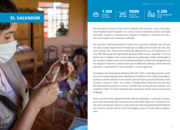
The recurrence of severe climate events combined with economic, social, and institutional fragilities leave El Salvador in an utterly critical humanitarian situation and highly vulnerable. Located in a disaster-prone subregion, El Salvador is among the 20 countries at the highest risk of disasters w
...
orldwide. The successive hydrometeorological hazards that impacted El Salvador over the past two years include tropical storms Amanda and Cristóbal and hurricanes Eta, Iota, and,
more recently, Julia. These storms profoundly affected the lives and livelihoods of almost 900 000 people and significantly disrupted health services, especially at the first level of care. In addition, the country’s exposure to earthquakes, floods, and droughts is also constant. Infrastructural and institutional limitations to deal with emergencies and
low capacity to respond to adverse events are an additional challenge, which leaves the population—particularly the most vulnerable—at even higher risk.
more
Mental disorders are a leading cause of the global burden of disease, and the provision of mental health services in developing countries remains very limited and far from equitable. Using the Credi
...
tor Reporting System, we estimate the amounts and patterns of development assistance for global mental health (DAMH) between 2007 and 2013. This allows us to examine how well international donors have responded to calls by global mental health advocates to scale up evidence-based services. Although DAMH did increase between 2007 and 2013, it remains low both in absolute terms and as a proportion of total development assistance for health (DAH). The average annual DAMH between 2007 and 2013 was US$133.57 million, and the proportion of DAH attributed to mental health is less than 1%. Approximately 48% of total DAMH was for humanitarian assistance, education, and civil services. More annual DAMH was channelled into the nonpublic sector than the public sector. Despite an expanding body of evidence suggesting that sustainable mental health care can be effectively integrated into existing health systems at relatively low cost, mental health has not received significant development assistance.
more
DHS Methodological Report No. 20
This study used Service Provision Assessment (SPA) and Demographic and Health Survey (DHS) data from Haiti, Malawi, and Tanzania to compare traditionally used additive methods with a data reduction method— ... principal component analysis (PCA).
We scored the quality of health facilities with three approaches (simple additive, weighted additive, and PCA) for two constructs: quality of services, with only facilities-level data, and quality of care, which incorporates observation and client data. We ranked facilities as high, medium, or low quality based on their scores. Our results indicated that the rankings change with the scoring methodology. There was more consistency in the rankings of facilities by the simple additive and PCA methods than the weighted additive and PCA-based rankings. This may be due to the low factor loadings and little variance explained by the first component in the PCA. We aggregated facility scores to their respective DHS clusters (Haiti, Malawi) or regions (Tanzania) and geographically linked them to women interviewed in DHS surveys to test associations between the use of family planning services and the quality environment, as measured with each index. more
This study used Service Provision Assessment (SPA) and Demographic and Health Survey (DHS) data from Haiti, Malawi, and Tanzania to compare traditionally used additive methods with a data reduction method— ... principal component analysis (PCA).
We scored the quality of health facilities with three approaches (simple additive, weighted additive, and PCA) for two constructs: quality of services, with only facilities-level data, and quality of care, which incorporates observation and client data. We ranked facilities as high, medium, or low quality based on their scores. Our results indicated that the rankings change with the scoring methodology. There was more consistency in the rankings of facilities by the simple additive and PCA methods than the weighted additive and PCA-based rankings. This may be due to the low factor loadings and little variance explained by the first component in the PCA. We aggregated facility scores to their respective DHS clusters (Haiti, Malawi) or regions (Tanzania) and geographically linked them to women interviewed in DHS surveys to test associations between the use of family planning services and the quality environment, as measured with each index. more
The Agency for Toxic Substances and Disease Registry (ATSDR) has produced a three-volume series entitled Managing Hazardous Material Incidents. The series is designed to help emergency response and health
...
care professionals plan for and respond to hazardous material emergencies.
- Volume I Emergency Medical Services: A Planning Guide for the Management of Contaminated Patients
- Volume II Hospital Emergency Departments: A Planning Guide for the Management of Contaminated Patients
- Volume III Medical Management Guidelines for Acute Chemical Exposures
Volumes I and II are planning guides to assist first responders and hospital emergency department personnel in planning for incidents that involve hazardous materials.
Volume III is a guide for health care professionals who treat persons who have been exposed to hazardous materials.
more
As the culminating volume in the DCP3 series, volume 9 will provide an overview of DCP3 findings and methods, a summary of messages and substantive lessons to be taken from DCP3, and a further discussion of cross-cutting and synthesizing topics across the first eight volumes. The introductory chapte
...
rs (1-3) in this volume take as their starting point the elements of the Essential Packages presented in the overview chapters of each volume. First, the chapter on intersectoral policy priorities for health includes fiscal and intersectoral policies and assembles a subset of the population policies and applies strict criteria for a low-income setting in order to propose a "highest-priority" essential package. Second, the chapter on packages of care and delivery platforms for universal health coverage (UHC) includes health sector interventions, primarily clinical and public health services, and uses the same approach to propose a highest priority package of interventions and policies that meet similar criteria, provides cost estimates, and describes a pathway to UHC.
more
CHWs demonstrated social commitment and purpose in the short term observed. The evaluation of the training of CHWs revealed that most demonstrated the necessary skills for referrals to prevent complications, caring for newborns and their mothers at home immediately after discharge from
...
health care centers. CHW upskilling training on maternal-newborn services should be prioritized in the most affected areas.
more
This guideline is based on the current epidemiological knowledge about the COVID-19. India is currently having travel related cases and few cases of local transmission. At this stage, all suspect/ confirmed cases will be isolated in a health
...
care facility. Hence the document is limited in scope to hospital deaths.
more
In Kenya, 12.7 percent of sick Kenyans do not seek health care when they are ill with high cost of services being one of the major barriers that ac
...
counted for upto 21 percent of those who did not seek care in 2013. Further, 2.6 million Kenyans (6.2 percent) of households were at risk of impoverishment as a consequence of expenditure on health care depleting household savings and were at a risk of falling into poverty (Republic of Kenya 2015b).
more
Needs assessment and analysis
Collect and analyze sex, age and disability disaggregated data (SADDD) and conduct a participatory gender analysis to understand different health needs, capacities, barriers and aspirations and identify populations w
...
ith special health requirements
Population demographics. E.g. pregnant and lactating women, infants, elderly, unaccompanied children, persons with disabilities, chronically ill persons 9 Gender roles and power dynamics. E.g. ability of women, girls, men and boys to make health decisions and access services; roles and responsibility of household members in health.
Gender and cultural norms and practices. E.g. preference for mixed/segregated facilities and staff; socio-cultural and religious taboos and beliefs around health, practices and beliefs on menstruation, practices and expectations on pregnancy, childbirth and breastfeeding; traditional health care providers
Intersectional issues. E.g. access to health care for LGBTIQ persons, for GBV survivors, for adolescent girls and boys
more

Since the beginning of 2019, increasing violence in Sudan has resulted in greater numbers of injured civilians requiring life-saving care. It is imperative that doctors and other health staff are pr
...
otected so that they can continue their work without obstruction, and without risk to their own personal safety. Earlier this year, the Federal Ministry of Health committed to protecting health facilities and health professionals, and assuring access for all people, including those inured, to health services
more
This updated Comprehensive Mental Health Action Plan 2013-2030 builds upon its predecessor and sets out clear actions for Member States, the WHO Secretariat and international, regional and national partners to promote mental
...
health and well-being for all, to prevent mental health conditions for those at-risk and to achieve universal coverage for mental health services. While the updated action plan includes new and updated indicators and implementation options, the original four major objectives remain unchanged: more effective leadership and governance for mental health; the provision of comprehensive, integrated mental health and social care services in community-based settings; implementation of strategies for promotion and prevention; and strengthened information systems, evidence and research.
In English, French, Spanish, Arabic and Russian available
more
Internally displaced persons (IDPs), refugees, migrants and returnees constitute a sizeable population in the WHO Eastern Mediterranean Region. There were 12 million refugees (half are Palestinians) and 13 million IDPs in the Region as of 2018. These populations are often vul
...
nerable to poor health due to the conditions they live in and limited access to needed quality health care. In addition, those who can access care, are often faced with financial hardship. There are also 46 million professionals and low-income labour migrants in the Region (of which 22 million are from the Region), with differential access to health services and varied health coverage schemes
more
Every year, nearly 250 million people move across borders temporarily or permanently for a job opportunity, studying, to flee a crisis back home, or for other reasons. Another 750 million move for similar reasons within the borders of their countries. With the understanding that human mobility affec
...
ts public health, and health affects human mobility and migrants, for decades, IOM has been providing critical health services to women, children and men on the move, while standing by governments for technical and operational support as needed. In 2019, in lower-income settings and in complex emergencies, along the world’s most perilous migration routes, in the aftermath of natural disasters or in response to disease outbreaks, IOM’s health teams have provided hundreds of thousands with primary health-care consultations, mental health and psychosocial support, sexual and reproductive health care, pre-migration health services, and much more.
This year, more than ever before, as the world reels from the socioeconomic impact of COVID-19, we have experienced that health is a cross-cutting component of overall human development and well-being.
more
UNHCR’s Public Health Strategy 2021-2025 is based on the lessons learnt, and builds on the achievements, of the Global Strategy for Public Health 2014-2018.
Progress was made on policies favourin
...
g inclusion and integration into national systems3 with 92% of 48 operations surveyed reporting refugees having access to national primary health care facilities under the same conditions as nationals and 96% reporting refugees having access to all relevant vaccines under the same conditions as nationals. While many refugee hosting countries have policies that allow refugees to access national health services, many face partial access, prohibitive out-of-pocket expenditures and other barriers including distance to facilities, language and provider acceptance. Furthermore, more work is needed on strengthening these systems to be able to meet the needs of both host communities and refugees.
more
Pakistan is on the verge of a public health disaster as a result of the massive monsoon rainfalls and unprecedented levels of flooding that are affecting 33 million people across the country.
The risk of disease outbreaks is extremely high and maln
...
utrition rates are rising.
WHO requires US$ 81.5 million to respond to this health crisis in flood-affected Pakistan, to ensure a coordinated delivery of essential health care services, efficient management of severe acute malnutrition, and stronger outbreak detection and control.
more
The WHO document "Integrating the prevention and control of noncommunicable diseases in HIV/AIDS, tuberculosis, and sexual and reproductive health programmes: implementation guidance" provides a framework for integrating noncommunicable diseases (NC
...
Ds) into existing health programs for HIV/AIDS, tuberculosis (TB), and sexual and reproductive health (SRH). It emphasizes the importance of a people-centered approach to enhance healthcare accessibility and efficiency, especially in low-resource settings. The document outlines strategies for strengthening policy, financing, capacity building, and health system infrastructure. It offers actionable steps, tools, and case studies to support countries in reducing the burden of NCDs through integrated, holistic care within primary health services.
more
This integrated operational framework provides an overview of the connections between mental health, neurological and substance use (MNS) conditions, and their links to health, well-being and the br
...
oader public health and sustainable development agenda. The need for integrated approaches is increasingly recognized as critical to address the complex interactions between mental health, brain health, substance use, and physical health, particularly in light of global threats such as the COVID-19 pandemic. The framework also provides a series of actions for governments and health service planners and advisors to achieve integration across four domains: leadership and governance; care services; promotion and prevention; and health information systems, evidence generation and research.
more
1. MYTH: Sexual violence is just another stressor in populations exposed to extreme stress: there is no need to do anything special to address sexual violence | 2. MYTH: The most important consequence of sexual violence is posttraumatic stress disorder (PTSD) | 3. MYTH. Concepts of mental disorders
...
– such as depression and PTSD – and treatment for mental health problems have no relevance outside western cultures | 4. MYTH: All sexual violence survivors need help for mental health problems | 5. MYTH: Mental health and psychosocial supports should specifically target sexual violence survivors | 6. MYTH: Vertical (stand-alone) specialized services are a priority to meet the needs of sexual violence survivors | 7. MYTH: The most important support is specialized mental health care | 8. Only psychologists and psychiatrists can deliver services for sexual violence survivors | 9. MYTH: Any intervention is better than nothing | 10. MYTH: Only the victim/survivor suffers as a result of sexual violence
more
Ethiopia has been repeatedly affected by conflict, flooding, drought, and disease outbreaks in the past years. As of January 2024, the country is actively responding to the longest recorded cholera outbreak which started in August 2022, recurrent measles outbreaks which started in August 2021, and t
...
he highest number of malaria cases reported since 2017. The El Niño phenomenon is expected to cause further havoc up to July 2024, by causing drought in some parts of the country, and flooding in others. Food insecurity due to lost harvest and livestock is aggravating already high malnutrition rates, negatively impacting morbidity and mortality.
The Health Cluster is closely collaborating with the Ministry of Health (MOH) to prepare for, prevent, and respond to public health emergencies by mobilizing resources to enable health partners to provide life-saving health services to vulnerable populations.
In an environment with ever-increasing needs and decreased funding, the below priorities for 2024 and 2025 have been identified: 1 Strengthen advocacy for longer-term, development funding to address root causes of recurrent disease outbreaks, including through the Humanitarian-Development-Peace Nexus 2 Advocate for increased access to quality health services, with a strong focus on:
sexual and reproductive health services (including for survivors of sexual and gender-based violence)
inclusion of people with disabilities, older people, and people living with HIV
remote populations through inclusion of Mobile Health Teams (MHT) as part of the health system 3 Standardize health services provided by Health Cluster partners through the implementation of Essential Health Care packages, aligned with existing MOH guidance, aimed at ensuring quality service delivery for affected populations, especially at community level 4 Strengthen quality of, and access to data for needs analysis and informed decision-making 5 Strengthen subnational coordination, with increased focus on zones and local health partners
more
n recent decades, a significant improvement in people’s general health conditions has occurred, leading to an increase in life expectancy at birth in most countries in the Region of the Americas. This progress has been the result of both
...
health technology advances – antibiotics, vaccines, and other treatments – and improvements in the conditions in which people live, including increased access to improved drinking water and sanitation, and health services. Nevertheless, progress has slowed in recent years, and achievements have varied among countries and territories, as well as within them. In the journey toward universal health, it is essential to have the ability to monitor and assess progress in terms of the ultimate goal of health systems: improving the health and well-being of populations. To this end, this edition of Health in the Americas analyzes the standardized rate of potentially avoidable premature mortality as an indicator of health system performance, considering both its preventable component through public and intersectoral health interventions, as well as the treatable component, related to the effectiveness of health services, that is, the quality of health care. The analysis of potentially avoidable premature mortality provides a metric for comparing and tracking performance over time.
more
Journal of the International AIDS Society 2017, 20(Suppl 4):21644
National AIDS Programme in Myanmar has made significant progress in scaling up antiretroviral treatment (ART) services and recognizes the importance of differentiated ... care for people living with HIV. Indeed, long centred around the hospital and reliant on physicians, the country's HIV response is undergoing a process of successful decentralization with HIV care increasingly being integrated into other health services as part of a systematic effort to expand access to HIV treatment. This study describes implementation of differentiated care in Médecins Sans Frontières (MSF)‐supported programmes and reports its outcomes.
https://doi.org/10.7448/IAS.20.5.21644 more
National AIDS Programme in Myanmar has made significant progress in scaling up antiretroviral treatment (ART) services and recognizes the importance of differentiated ... care for people living with HIV. Indeed, long centred around the hospital and reliant on physicians, the country's HIV response is undergoing a process of successful decentralization with HIV care increasingly being integrated into other health services as part of a systematic effort to expand access to HIV treatment. This study describes implementation of differentiated care in Médecins Sans Frontières (MSF)‐supported programmes and reports its outcomes.
https://doi.org/10.7448/IAS.20.5.21644 more
Neonatal mortality is a major challenge in reducing child mortality rates in Nepal. Despite efforts by the Government of Nepal, data from the last three demographic and health surveys show a rise in the contribution of neonatal deaths to infant and
...
child mortality. The Government of Nepal has implemented community-based programs that were piloted and then scaled up based on lessons learned. These programs include, but are not limited to ensuring safe motherhood, birth preparedness package, community-based newborn care package, and integrated management of childhood illnesses. Despite the implementation of such programs on a larger scale, their effective coverage is yet to be achieved. Health system challenges included an inadequate policy environment, funding gaps, inadequate procurement, and insufficient supplies of commodities, while human resource management has been found to be impeding service delivery. Such bottlenecks at policy, institutional and service delivery level need to be addressed incorporating health information in decision-making as well as working in partnership with communities to facilitate the utilization of available services.
more
In 1964 medical mission was challenged and called to define its distinctiveness and its special role in the context of that particular time. The consultation "Tuebingen I" clearly stated: "The Christian church has a specific task in the field of
...
health and healing"1, and developed a concept of wholeness and of the role of the congregation in health provision. 50 years later, the question of the proprium of Christian health services is again a very important one. At a time when governments, international non-governmental organizations and other philanthropic organizations participate in health care, the question has to be asked: What is the specific contribution of a Christian health service or ministry of healing? At a time when chronic disease challenges not only rich but now also poor countries, when infections like Ebola that for years were hidden in Africa pose a threat to the global situation, Christians have to reflect on the question of the proprium of Christian health care.
more
Peru − Progress in health and sciences in 200 years of independence
Carrillo-Larco; R.M.; Guzman-Vilca, W. C.; Leon-Velarde, F.; et al.
The Lancet Regional Health - Americas
(2021)
CC
Peru celebrates 200 years of independence in 2021. Over this period of independent life, and despite the turbulent socio-political scenarios, from internal armed conflict to economic crisis to political instability over the last 40 years, Peru has experienced major changes on its epidemiological and
...
population health profile. Major advancements in maternal and child health as well as in communicable diseases have been achieved in recent decades, and today
Peru faces an increasing burden of non-communicable diseases including mental health conditions. In terms of the configuration of the public health system, Peru has also strived to secure country-wide optimal health care, struggling in particular to improve primary health care and intercultural services.
more
The chapter Closing the Gap: The Health Disparities of Older LGBTI People in the Americas, is part of the publication series titled ‘Decade of Healthy Aging: situation and challenges’. In order to outline the current knowledge available on the s
...
ituation of health and well-being of older persons in the Americas at the beginning of the United Nations Decade of Healthy Aging (2021-2030), this document presents data and existing evidence different forms of discrimination and mistreatment older people face due to their sexual orientation and gender identities that ultimately increase health disparities. Previous studies on LGBTI older people offer valuable information on the lived experiences of these communities and demonstrate that they face unique challenges with aging, emphasizing the difficulties related to access to care. Very few studies on older people and aging include a focus on sexual orientation or gender identity; however, it is possible to point out that HIV/AIDS is one of the most significant health disparities confronting LGBTI older persons, followed by physical and mental health problems, substance use, social isolation, poverty, and the lack of access to quality healthcare, including long-term care facilities or other institutions. Closing the gap in access and quality of health and care services is an imperative to increase longevity, health status and quality of life of LGBTI older people.
more
The Democratic Republic of Timor-Leste has the highest TB incidence rate in the South East Asian Region - 498 per 100,000, which is the seventh highest in the world. In Timor-Leste TB is the eighth most common cause of death.
The salient observations are as follows:
In 2018, 487 (12.5%) of the
...
3906 notified TB patients were tested for RR-TB and only 12 lab confirmed RR-TB patients were initiated on standard MDR-TB treatment of 20-months duration, (a 3-fold increase in RR-TB detection compared with 2017). This amounts to treatment coverage of only 17% of 72 estimated MDR/RR-TB among notified TB patients (3906) and 5% of 240 estimated incident MDR-TB patients as compared to 62% treatment coverage of 6300 incident drug sensitive TB patients estimated in TLS. The treatment success in the 2016 annual cohort of 6 MDR-TB patients has been reported at 83%. 80% of TB patients know their HIV Status with around 1% TB-HIV co-infection, 37/ 77 (48%) TB-HIV Co-infection Detected. Of the 387 PLHIV currently alive on ART, exact status on TB screening and testing is unknown. % of PLHIV newly enrolled in HIV care who received IPT is not known.
In 2018, the mortality rate for TB was 94 deaths per 100,000 people (1200 per annum) in TL with an increasing mortality trend (Figure 1), despite TB services being available for nearly two decades.
A survey of catastrophic costs due to TB (2016) highlights that 83% of TB patients are reported to be facing catastrophic costs due to the disease. This is the highest rate in the world.
more
Women and Health Initiative Working Paper No. 1. Women and Health Initiative
Improving maternal health in the context of the sub-Saharan African ... HIV epidemic requires greater understanding of the relationships between HIV disease and maternal morbidity and mortality, integrated and effective responses by the health system, and a social context which promotes quality care and encourages use of MCH and HIV services. Advancing the proposed research agenda will make an invaluable contribution by generating needed evidence for policy and practice that improves the maternal health of women who are living with HIV, as well as those who are not. Bringing together maternal health and HIV researchers, policy-makers and program implementers to reduce HIV-related maternal morbidity and mortality and improve the HIV response for women represents an opportunity and a challenge. more
Improving maternal health in the context of the sub-Saharan African ... HIV epidemic requires greater understanding of the relationships between HIV disease and maternal morbidity and mortality, integrated and effective responses by the health system, and a social context which promotes quality care and encourages use of MCH and HIV services. Advancing the proposed research agenda will make an invaluable contribution by generating needed evidence for policy and practice that improves the maternal health of women who are living with HIV, as well as those who are not. Bringing together maternal health and HIV researchers, policy-makers and program implementers to reduce HIV-related maternal morbidity and mortality and improve the HIV response for women represents an opportunity and a challenge. more
United for Global Mental Health
(2019)
CC
Working in partnership with international agencies and experts in the field, we exist to support and unite the global effort to promote mental health. We are all passionate about catalysing greater action on mental
...
health and many of us have first-hand experience of living with a condition ourselves.
We provide advocacy, campaigning and financial support to global institutions, businesses, communities and individual changemakers seeking greater action on global mental health.
Do you need mental health support?
Talking about mental health is really important. However it can be difficult for some and can trigger a strong emotional response. United for Global Mental Health is not a provider of mental health support services or guidance. If you feel you need support with your mental health please ensure you seek the appropriate support from your local health care facility, local community group that specialises in mental health or (if available) a national helpline. (Countries: UK; India; Nigeria; South Africa; New Zealand; Australia)
more
Best practice guidelines are systematically developed statements designed to assist nurses working in partnership with persons and their families to make decisions about health care and
...
services (Field & Lohr, 1990). This nursing Best Practice Guideline (BPG) is intended to replace the RNAO BPGs Screening for Delirium, Dementia and Depression in Older Adults (2010b) and Caregiving Strategies for Older Adults with Delirium, Dementia and Depression (2010a).
more

The development of this Operational Roadmap has been driven by a growing consensus in Ukraine on the need to prioritize activities that are urgently required to address the mental health and psychosocial needs of the country’s population and also
...
the importance of basing the response on existing structures, resources and innovations introduced in reforms in past years.
According to this consensus, new resources mobilized by and for Ukraine should complement existing ones, in line with the national vision and with best international standards, and should be planned in a way that further strengthens the country’s mental health system.
The Government of Ukraine is committed to urgently addressing the mental health and psychosocial needs of the population, under the auspices of the First Lady of Ukraine and the leadership of the recently established Intersectoral Coordination Council for Mental Health and Psychological Assistance to Victims of the Armed Aggression of the Russian Federation against Ukraine (referred to in this document as the Intersectoral Coordination Council).
This Roadmap has been developed following a series of consultations with Ukrainian authorities and national and international agencies working in the area of mental health and psychosocial support (MHPSS) and engaged in emergency response in Ukraine. The consultation process was organized by the Ministry of Health of Ukraine (MOH) and supported by WHO Ukraine, under the auspices of the First Lady of Ukraine and in collaboration with the MHPSS Technical Working Group of Ukraine (MHPSS TWG Ukraine) and the IASC MHPSS Reference Group (IASC MHPSS RG), and building on substantial advances in the mental health sector under existing programmes in the country.
The Roadmap is informed by international technical guidance and national policies and plans, including the IASC Guidelines on MHPSS in Emergency Settings, the Minimum Services Package for MHPSS in Emergencies (MHPSS MSP), the IASC Common Monitoring and Evaluation Framework, the World Health Organization (WHO)’s Comprehensive Mental Health Action Plan 2013– 2030, the WHO European Framework for Action on Mental Health, the Concept for Development of Mental Health Care in Ukraine until 2030, the National Mental Health Action Plan for 2021–2023 and the National Recovery and Development Plan.
Informed by the overall goal of MHPSS assistance in Ukraine – to reduce suffering and improve the mental health and psychosocial well-being of the affected population – the Roadmap aims to provide a consolidated overview of envisioned MHPSS priorities, informed by the local context and the vision of the Government of Ukraine together with national and international partners, and with the best available evidence and resources, to all MHPSS stakeholders already engaged in or joining emergency response and recovery efforts in Ukraine.
As well as information on the context in Ukraine, the Roadmap includes:
• a list of evidence-based MHPSS interventions and services contextualized and introduced in Ukraine in recent years (described in Table 1) and
• a set of multisectoral actions to scale up MHPSS services in both the short and longer terms, informed by available evidence, international technical guidance and expert consensus (described in Table 2).
more
Bolkan HA, Bash-Taqi DA, Samai M, Gerdin M, von Schreeb J. Ebola and Indirect Effects on Health Service Function in Sierra Leone. PLOS Currents Outbreaks. 2014 Dec 19. Edition 1. doi: 10.1371/currents.outbreaks.0307d588df619f9c9447f8ead5b72b2d.
I
...
npatient health services have been severely affected by the Ebola outbreak. The dramatic documented decline in facility inpatient admissions and major surgery is likely to be an underestimation. Reestablishing such care is urgent and must be a priority.
more
The purpose of this interim guidance is to provide information and insight to assist public policy and
health system leaders in preparing for and responding to an MCE caused by terrorist use of explosives
(TUE). This document provides practical in
...
formation to promote comprehensive mass casualty care
in the event of a TUE event and focuses on two areas:
1. leadership in preparing for and responding to a TUE event, and
2. effective care of patients in the prehospital and hospital environments during a TUE event.
more
In 2018, approximately 60,000 Ugandans were estimated to be suffering from cancer. It was also reported that only 5% of cancer patients access cancer care and 77% present with late-stage cancer coupled with low level of cancer
...
health literacy in the population despite a wide coverage of primary healthcare facilities in Uganda. We aimed to contribute to reducing the unmet needs of cancer prevention and early detection services in Uganda through capacity building.
more
"Explosions can produce unique patterns of injury seldom seen outside combat.
When they do occur, they have the potential to inflict multi-system life-threatening injuries
on many persons simultaneously. The injury patterns following such events are a product of
the composition and amount of the
...
materials involved, the surrounding environment,
delivery method (if a bomb), the distance between the victim and the blast, and any
intervening protective barriers or environmental hazards. Because explosions are relatively
infrequent, blast-related injuries can present unique triage, diagnostic, and management
challenges to providers of emergency care. "
accessed 2018/03/29
more
Plan de acciόn sobre salud mental 2013-2020.
recommended
Four major objectives are set forth: more effective leadership and governance for mental health; the provision of comprehensive, integrated mental health and social
...
care services in community-based settings; implementation of strategies for promotion and prevention; and strengthened information systems, evidence and research.
more
WHO QualityRights Act, unite and empower
recommended
QualityRights is WHO’s global initiative to improve the quality of care provided by mental health services and promote the human rights of people
...
with psychosocial, intellectual and cognitive disabilities1. It offers a new approach to mental health care which is rights-based and recovery-oriented.
more
A guide to management in Primary Health Care. A practical, instructive training guide that has proven its capacity to improve the managerial skills of middle-level
...
health workers responsible for the management or supervision of health services. Presented as an activity-centered working guide, the book uses numerous questionnaires, exercises, practical examples, illustrations, charts, and sample forms to help readers relate advice and suggestions to their own daily problems. Emphasis is placed on ways to improve the management of health services provided by full-time, qualified staff. The guide features 18 chapters presented in four main parts, any one of which can be studied separately or as part of the whole, according to individual learning needs.
more
Humanitarian emergencies result in a breakdown of critical health-care services and often make vulnerable communities dependent on external agencie
...
s for care. In resource-constrained settings, this may occur against a backdrop of extreme poverty, malnutrition, insecurity, low literacy and poor infrastructure. Under these circumstances, providing food, water and shelter and limiting communicable disease outbreaks become primary concerns. Where effective and safe vaccines are available to mitigate the risk of disease outbreaks, their potential deployment is a key consideration in meeting emergency health needs. Ethical considerations are crucial when deciding on vaccine deployment. Allocation of vaccines in short supply, target groups, delivery strategies, surveillance and research during acute humanitarian emergencies all involve ethical considerations that often arise from the tension between individual and common good. The authors lay out the ethical issues that policy-makers need to bear in mind when considering the deployment of mass vaccination during humanitarian emergencies, including beneficence (duty of care and the rule of rescue), non-maleficence, autonomy and consent, and distributive and procedural justice
more
STGs are designed to assist health care professionals in making decisions about appropriate, effective patient care. However,
...
health managers often have trouble setting and meeting the high standards required of modern, developed health care systems. With stakeholders expressing concern over issues such as strength of evidence, transparency, conflicts of interest, and effective implementation, it is clear that many health care professionals need further guidance in developing and making use of STGs.
This manual guides health professionals through the process of establishing and implementing STGs, placing special emphasis on the low- and middle-income country (LMIC) context. By including tools, templates, and success stories as well as hyperlinks to useful resources, the manual helps health practitioners understand not only important concepts of treatment guidelines, but also how they can best be used in practice.
more

Compliance with the standards is monitored as part of our Quality Improvement Program.
Practitioner refers to physicians or other health professionals who provide health
...
care services.
more
Comprehensive Primary Health Care has an important role in the primary and secondary prevention of several disease conditions, including non-communicable diseases which today contribute to over 60%
...
of the mortality in India. The provision of Comprehensive primary health care reduces morbidity, disability and mortality at much lower costs and significantly reduces the need for secondary and tertiary care. Estimates suggest that almost 52% of all conditions can be managed at the
primary care level.
In order to ensure comprehensive primary health care, close to where people live, Sub- Centres should be strengthened as Health and Wellness Centres (H&WC), staffed by appropriately trained primary health care team. The Medical officer of the Primary Health Centre would oversee the functioning of the SC/HWC that falls in that area.
Services include those that (i) can be delivered at the level of the household and outreach sites in the community by suitably trained frontline workers, (ii) those that are delivered by a team headed by a mid-level health provider, at the level of the Sub-Centre/Health and Wellness Centre and (iii) the referral support and continuity of care within the district health system in rural and urban areas. The package of services is in Box. States would need to either phase in these services or add on additional services based on state specific and local context.
more
Strengthening competency based training of health care providers for Reproductive Maternal Newborn Child & Adolescenct Health (RMNCH + A)
...
services
more
The health care environment contains a diverse population of microorganisms and can be a reservoir for potential pathogens. If environmental cleaning is not performed correctly, then environmental c
...
ontamination can contribute to the spread of multidrug-resistant organisms and health care-associated infections. Collaboration between infection prevention and control (IPC) and environmental services (EVS) staff limits the role of the health care environment in disease transmission.
This course is also available in the following languages:
Tetun - Bahasa Indonesia
more
A guide to management in Primary Health Care. A practical, instructive training guide that has proven its capacity to improve the managerial skills of middle-level
...
health workers responsible for the management or supervision of health services. Presented as an activity-centered working guide, the book uses numerous questionnaires, exercises, practical examples, illustrations, charts, and sample forms to help readers relate advice and suggestions to their own daily problems. Emphasis is placed on ways to improve the management of health services provided by full-time, qualified staff. The guide features 18 chapters presented in four main parts, any one of which can be studied separately or as part of the whole, according to individual learning needs.
more
This publication summarizes the facilitators and barriers that will be encountered in the deinstitutionalization process and identifies useful and proven interventions in Latin American and Caribbean countries. Four areas of work are identified with the respective guidelines or suggestions for actio
...
n, which should provide an operational guide for countries that are restructuring mental health services and moving toward the deinstitutionalization of psychiatric care.
more
Guidelines for the Clinical Management of HIV Infection in Myanmar, 5th ed.
recommended
The Republic of the Union of Myanmar, Ministry of Health, Department of Health, National AIDS Programme
World Health Organization (WHO), Country Office for Myanmar
(2017)
C1
These guidelines aim to guide all health care providers in Myanmar, accommodating the situation of different settings in the context of progressive decentralization of HIV
...
services. Notable changes from the previous edition include:
• diagnosis of HIV
• update on the initiation of ART
• new ARV drugs and regimens
• new recommendation on infant prophylaxis
• PrEP and PEP updates
• updates on co-infections and comorbidities management
It should be noted that these guidelines are meant for the operational level and are adapted and adopted in line with existing Myanmar context. more
• diagnosis of HIV
• update on the initiation of ART
• new ARV drugs and regimens
• new recommendation on infant prophylaxis
• PrEP and PEP updates
• updates on co-infections and comorbidities management
It should be noted that these guidelines are meant for the operational level and are adapted and adopted in line with existing Myanmar context. more
The ongoing war in Ukraine has made it difficult to access to vital health-care services and supplies, particularly for people living close to conf
...
lict zones. These challenges include limited access to medications and pharmacies as well as concerns over the affordability of medicines in areas deemed high- or very high-risk due to ongoing hostilities. To address this issue, the WHO Country Office in Ukraine has launched an initiative to distribute OTC health-care kits to people living in these high-risk areas.
more
The Ethiopian Hospital Services Transformation Guidelines (EHSTG) build on and expand the Ethiopian Hospital Reform Implementation Guidelines (EHRIG) and are consistent with the Heal
...
th Sector Transformation Plan (HSTP). The EHSTG, which is consistent with the national focus on quality improvement in health care, contains a common set of guidelines to help hospital Chief Executive Officers(CEOs), managers, and clinicians (care providers) in steering the consistent implementation of these transformational systems and processes in hospitals throughout the country. The EHSTG focused on selected management and clinical functions, including new individual service specific chapters for Emergency Medical, Outpatient and Inpatient Services, Nursing and Midwifery, Maternal, Neonatal and Child Health and Teaching Hospitals’ Management. These guidelines also incorporate recent lessons from the operationalization of the EHRIG, as well as, new national initiatives such as the Guidelines for the Management of Federal Hospitals in Ethiopia, Hospital Development Army (HDA), Clean and Safe Hospital (CASH), and Auditable Pharmaceutical Transaction and Service (APTS).
II10 Pharmacy ChapterIt is expected that the guidelines will continuously evolve as new evidence emerges regarding improved hospital care and practices that are better tailored to needs and circumstances of different tiers of public hospitals. We are grateful to all partners that have participated in the production of these guidelines. Special thanks go to our colleagues at the Clinton Health Access Initiative for their substantial contributions and support throughout the development of these guidelines as well as their dedicated efforts in support of our health reform efforts in so many other capacities
more
Laboratory diagnosis of Buruli ulcer
recommended
A manual for health care providers.
This manual provides expert guidance on the laboratory techniques and procedures used in the diagnosis of Buruli ulcer, a disease caused by Mycobacterium ulceran
...
s. Aimed at laboratory technicians and scientists working on this disease, the manual details the exact procedures to follow when performing a range of diagnostic tests. Recommended procedures, intended for use throughout the health system, are presented at levels appropriate for peripheral, district and central services and in accordance with the varying resources, skills and equipment typically found in countries where Buruli ulcer is endemic.
more
Emergency medical teams (EMT) are first response health care providers – doctors, nurses, paramedics, and others – during outbreaks and emergencies or disasters, working with governments, charit
...
ies such as nongovernmental organizations (NGOs), armies, and international organizations such as the International Red Cross/Red Crescent movement. They comply with the classification and minimum standards set by the World Health Organization (WHO) and its partners and bring to an emergency their training and self-sufficiency so as not to burden the national health system. EMT initiatives strengthen national surge capacities and facilitate the deployment of internationally classified teams of health- care professionals to countries and territories during emergencies, particularly during disease outbreaks and natural disasters, providing immediate assistance when national health systems are overwhelmed . Considering that they aim to support the provision of quality clinical care services to populations affected by public health emergencies, the expectation is that financial resources and equipment will be available to enable the performance of the requested task.
more
Towards Sustainable Community Health and Social Welfare Services
Leaving No One Behind. This Operational Guideline for Community-Based Health
...
Services (CBHS)
in line with the CBHS Policy Guideline map an integrated and coordinated
national approach to community-based health services in Tanzania. The
approach builds on and furthers national priorities for decentralization,
community empowerment and strengthened systems for expansion of
access to essential health services at the village level and below.
more
WHO Package of Essential NCD interventions will help to improve the coverage of appropriate services for people with NCDs services in primary care
...
settings. The HEARTS technical package provides a strategic approach to improving cardiovascular health in countries in primary care settings.
more

The target audience for this guideline is primarily for health care providers nurses, doctors, social workers and other people involved in HIV response in Rwanda so that they are capable of offering
...
quality care services to patients over a long time. The new National Guidelines for Prevention and Management of HIV and STIs are articulated in accordance to treat all HIV+ patients regardless of CD4 count and a new service delivery model to support its implementation.
more
This guide is intended to promote a global health sector response to FGM for the provision of high-quality prevention and care services to women an
...
d girls at risk of FGM or living with the consequences of FGM. It also aims to support the systematic development of pre-service and in-service FGM content for midwifery and nursing education curricula which are relevant to context and need. This document could also be used for training materials of other cadres of health-care providers.
more
The Ideal Clinic Realisation and Maintenance (ICRM) programme was initiated by the National Department of Health in July 2013 in order to systematically improve primary health
...
care (PHC) facilities and the quality of care they provide. The Ideal Clinic framework/dashboard sets out the standards for PHC facilities to provide good-quality health services. An Ideal Clinic is defined as a clinic with good infrastructure, adequate staff, adequate medicines and supplies, good administrative processes, and sufficient adequate bulk supplies. Applicable clinical policies, protocols and guidelines are adhered to, and it harnesses partner and stakeholder support.
more
In emergency or humanitarian settings, mobile clinics are used to bring essential lifesaving health care to communities affected by crises. Though there are standard emergency benefit packages for
...
health services during emergencies, there are however no agreed or standard way of running mobile clinics in such settings. Drawing on the experiences of running mobile clinics in the NWSW and relevant literature, this manual provides a practical example of how to set up and run a mobile clinic in an African humanitarian setting in hard to reach communities with limited resources.
more

The aim of the Annual Inspection Report is to present findings of public sector health establishments inspected by the OHSC to monitor compliance with the National Core Standards (NCS) during the 2016/2017 financial year in South Africa.
The NCS de
...
fine fundamentals for quality of care based on six dimensions of quality: Acceptability,Safety, Reliability, Equity, Accessibility, and Efficiency.
The NCS structured assessment tools were used to collect data during inspections across the seven domains namely: Patient Rights; Patient Safety, Clinical Governance and Clinical Care; Clinical Support Services; Public Health; Leadership and Governance; Operational Management and Facilities and Infrastructure. A total of 851 routine inspections were conducted with 201 of these facilities re-inspected. Inspection data was captured on District Health Information System (DHIS) data entry forms and exported for analysis to Statistical Analysis Software (SAS) version 9.4.
more
Community pharmacists are the health professionals most accessible to the public and are a cornerstone of primary health care. The role of communit
...
y pharmacists is expanding globally. This report provides an overview of existing components and provisions of the legal and regulatory framework for community pharmacies and their activities in Europe. It presents the diverse approaches to community pharmacy licenses and to establishment of new pharmacies and their ownership. It also details the framework for community pharmacy operating requirements (including opening hours, workforce, premises and equipment, services provided and identification of a community pharmacy) and the types of activity undertaken. Provisions associated with possible alternative forms of dispensing medicines (over-the-counter medicines, prescription-only medicines, dispensing by medical doctors and online medicine sales) are also described
more
The primary objective of this curriculum is to equip health and care workers with the essential knowledge and competencies necessary for delivering safe and effective
...
care. By doing so it aims to significantly reduce HAIs and combat antimicrobial resistance, thereby safeguarding both patient and HCWs well-being.
This curriculum is developed to meet the needs of IPC professionals responsible for developing learning resources and overseeing training within health care organizations. Moreover, the curriculum is intended to encompass all individuals involved in health care delivery and support. This holistic approach includes a wide range of staff -ranging from clinical workers to administrative and auxiliary services, thus ensuring a broad and inclusive approach to IPC training.
more
his course provides an overview of the basic information relevant to FP programs and services, including rationale for voluntary FP, contraceptive method considerations, contraceptive options (including short-acting, long-acting, and permanent metho
...
ds), and FP for clients with special needs. It also addresses quality of services and access to care, as well as contraceptive security. Finally, the course highlights key tools to facilitate service delivery, client counseling, and provider training.
more
WHO recommends replacing western blotting and line immunoassays with simpler tests in HIV testing services. These simpler tests include rapid diagnostic tests (RDTs) that can be used at the point-of-care
...
, and enzyme immunoassays (EIAs).
These tests get results to the client faster, produce accurate results more often, cost less, can be performed by various cadres of health providers, and can thus facilitate greater access and uptake of HIV testing services among those who need it most.
more
Policy brief. HIV testing services (HTS) and anti-retroviral therapy (ART) have been scaled up substantially. It is estimated that, globally, nearly 80% of people with HIV now know their status. With the offer of immediate ART initiation and improve
...
d treatment options, access to and uptake of treatment have increased, too. Now, most people with HIV who know their status are obtaining treatment and care.
In response to these changes in the global HIV epidemic, WHO is encouraging countries to use three consecutive reactive tests for an HIV-positive diagnosis as their treatment-adjusted prevalence and national HTS positivity fall below 5% .
more
These guidelines provide new and updated recommendations on the use of point-of-care testing in children under 18 months of age and point-of-care tests to monitor treatment in people living with HIV
...
; the treatment monitoring algorithm; and timing of antiretroviral therapy (ART) among people living with HIV who are being treated for tuberculosis.
New recommendations launched today outline key new actions that countries can take to improve the delivery of HIV testing, treatment and care services by providing greater options for differentiated approaches such as, supporting HIV treatment start in the community, ensuring that children are diagnosed and treated early, and that viral load treatment monitoring is more accessible, focused and triggers clinical action
more
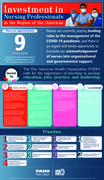
Nurses are key players in health promotion and disease prevention and the backbone of health care systems worldwide. Nurses work on the front lines
...
of disease prevention, health promotion, and health management and are often the unsung heroes in health care facilities and emergency response. Despite the critical role they play in health care, there is a nursing shortage across the world that will affect the delivery of competent nursing care. This fact sheet highlights key action points for targeted investment in the nursing workforce and calls on Member States to strengthen nursing within the context of their own country efforts. Suggestions for action and strategies for strengthening the nursing workforce in primary health care services are through investment in education, jobs, leadership, and service delivery are provided.
more
Objective: To identify gaps in national stroke guidelines that could be bridged to enhance the quality of stroke care services in low- and
middle-income countries.
Methods: We systematically searc
...
hed medical databases and websites of medical societies and contacted international organizations.
Country-specific guidelines on care and control of stroke in any language published from 2010 to 2020 were eligible for inclusion. We reviewed
each included guideline for coverage of four key components of stroke services (surveillance, prevention, acute care and rehabilitation).
We also assessed compliance with the eight Institute of Medicine standards for clinical practice guidelines, the ease of implementation of
guidelines and plans for dissemination to target audiences.
Findings: We reviewed 108 eligible guidelines from 47 countries, including four low-income, 24 middle-income and 19 high-income countries.
Globally, fewer of the guidelines covered primary stroke prevention compared with other components of care, with none recommending
surveillance. Guidelines on stroke in low- and middle-income countries fell short of the required standards for guideline development;
breadth of target audience; coverage of the four components of stroke services; and adaptation to socioeconomic context. Fewer low- and
middle-income country guidelines demonstrated transparency than those from high-income countries. Less than a quarter of guidelines
encompassed detailed implementation plans and socioeconomic considerations.
Conclusion: Guidelines on stroke in low- and middle-income countries need to be developed in conjunction with a wider category of
health-care providers and stakeholders, with a full spectrum of translatable, context-appropriate interventions.
more
These guidelines for the prevention and management of cardiovascular diseases are a critical ingredient for streamlining care across the entire health
...
services provision continuum. They are a strategic component in achieving universal health coverage, securing affordable health care and improving the livelihood of all Kenyans which in turn will guarantee a healthy nation working towards sustainable development and prosperity.These guidelines bring to the fore the need for availability of skilled human resource, sustained adequate funding and partnership building at all levels of governance. It provides clear roles for health workers at the different levels of our devolved system which will ensure a harmonized referral system with basic cardiovascular diseases treatment services available closest to the people while decongesting the county and national referral facilities.
more
Childhood cancer is curable for the vast majority of children when essential diagnostic, therapeutic and supportive care services are accessible. However, profound inequalities in outcomes exist wit
...
hin and between countries with as few as 20% or 30% of children living in low- and middle-income countries surviving.
The Global Initiative for Childhood Cancer Overview document presents the CureAll approach to support governments, partners and communities achieve the best possible cancer care for all children. This approach, summarized as four pillars of action supported by three enablers, will improve the care for children with cancer around the world.
more
One of the main limitations to accessing hearing aids is the lack of diagnostic and rehabilitative services, especially at primary and secondary levels of care. This is due to the small number of sp
...
ecialists in ear and hearing care, and to their poor territorial distribution which is more evident in low- and middle-income countries
more
Programming strategies for Postpartum Family Planning
World Health Organization; USAID; MCHIP
(2013)
This publication is designed to be used by programme planners and managers as a resource when designing interventions to integrate postpartum family planning into national and subnational strategies. Postpartum family planning should not be considered a ‘vertical’ programme, but rather as an int
...
egrated part of existing maternal and child health and family planning efforts. Successful interventions for postpartum family planning require holistic and evidence-based programme strategies that contribute to strengthened health systems and sustained improvements in high-quality services that put people at the centre of health care
more
Guidelines on hepatitis B and C testing
recommended
Testing and diagnosis of hepatitis B (HBV) and C (HCV) infection is the gateway for access to both prevention and treatment services, and is a crucial component of an effective response to the hepatitis epidemic. Early identification of persons with
...
chronic HBV or HCV infection enables them to receive the necessary care and treatment to prevent or delay progression of liver disease. Testing also provides an opportunity to link people to interventions to reduce transmission, through counselling on risk behaviours and provision of prevention commodities (such as sterile needles and syringes) and hepatitis B vaccination.
more
In African traditional medicine, the curative, training, promotive and rehabilitative services are referred to as clinical practices. These traditional health
...
care services are provided through tradition and culture prescribed under a particular philosophy, e.g. ubuntu or unhu. Norms, taboos, tradition and culture, which are the cornerstones of clinical practice of traditional medicine, are the major reason for the acceptability of traditional health practitioners in the community they serve. The philosophical clinical care embedded in these traditions, culture and taboos have contributed to making traditional medicine practices acceptable and hence highly demanded by the population. This paper discusses the different traditional health care services, such as curative services, general traditional healthcare, mental healthcare, midwifery, bone setting, rehabilitative and promotional services that increases health awareness and developing
positive attitudes and behaviour towards healthier living).
more
The workshop aimed to support countries in the prioritization and acceleration of NCD prevention and management with a specific focus on accelerating the prevention and control of hypertension and diabetes, identifying the most impactful NCD interventions within their context, closing the gaps in ca
...
ncer care services through regional collaboration and integrating NCD services in when responding to emergencies.
more
Poverty is both a cause and a consequence of poor health, and the scarcity of resources limits access to
essential health care
...
services.
more
Non-communicable diseases (NCDs) pose a substantial threat to many health systems, especially in low-income and middle-income countries (LMICs) where they are already overstretched. In the past few decades, deaths from NCDs in LMICs have spiked, whe
...
reas numbers in high-income countries have stabilised. Worryingly, a large proportion of deaths from NCDs (29%) in LMICs occur among people younger than 60 years compared with the proportion in high-income countries (13%). This finding has been attributed to poor access to effective and equitable health-care services in most LMICs. The threat of NCDs in LMICs was recognised by the UN 2011 High-Level Meeting, and is now featured in Sustainable Development Goal 3 in the form of reducing premature mortality from NCDs by one-third before 2030. Cardiovascular diseases (CVDs) are the leading cause of deaths from NCDs (ie, 48% of all NCDs deaths). Therefore, substantial reductions in CVDs will have a major impact on reducing the overall burden of NCDs globally. The good news is that most CVDs can be prevented by addressing the key underlying behavioural risk factors, such as physical inactivity, unhealthy diet, tobacco use, and harmful use of alcohol, through population-wide approaches. Among individuals with or at high risk of CVD, early detection and effective management with appropriate counselling and medicines can reduce cardiovascular deaths substantially.
The importance of effective treatment for CVD has been recognised in the Global NCD Action Plan 2013–20, for which one of the nine global targets is that at least 50% of eligible individuals should receive drug therapy and counselling to prevent heart attacks and strokes by 2025.5 Although admirable, this is a hard target to achieve given that secondary prevention strategies in LMICs are often unaffordable or unavailable.
more
This report recounts the experiences of 27 physicians and other health workers in Syria (all but two of them Syrian) who struggle to provide trauma care and
...
health services to a population under assault.
more

Review of International, Regional and National Policies and Legal Frameworks that Promote Migrants and Mobile Populations' Access to Health and Malaria Services in the Greater Mekong Subregion (Camb
...
odia, Lao People's Democratic Republic, Myanmar, Thailand and Viet Nam)
Migrants and mobile populations face many obstacles in accessing equitable essential health care services due to factors such as living and working conditions, education level, gender, irregular migration status, language and cultural barriers, anti-migrant sentiments, and lack of migrant-inclusive health policies among others. Despite significant progress having been made in the context of malaria control in the Greater Mekong Subregion (GMS), human movements can impact malaria transmission patterns and potentially introduce drug-resistant parasites. This legal framework review therefore serves as a guidance document on approaches to address malaria and malaria elimination for migrant and mobile populations (MMPs) in five countries of the GMS. more
Migrants and mobile populations face many obstacles in accessing equitable essential health care services due to factors such as living and working conditions, education level, gender, irregular migration status, language and cultural barriers, anti-migrant sentiments, and lack of migrant-inclusive health policies among others. Despite significant progress having been made in the context of malaria control in the Greater Mekong Subregion (GMS), human movements can impact malaria transmission patterns and potentially introduce drug-resistant parasites. This legal framework review therefore serves as a guidance document on approaches to address malaria and malaria elimination for migrant and mobile populations (MMPs) in five countries of the GMS. more
At present at least 2.2 billion people around the world have a vision impairment, of whom at least 1 billion have a vision impairment that could have been prevented or is yet to be addressed. The world faces considerable challenges in terms of eye care
...
, including inequalities in the coverage and quality of prevention, treatment and rehabilitation services; a shortage of trained eye care service providers; and poor integration of eye care services into health systems, among others. The World report on vision aims to address these challenges and galvanize action.
more
Refugees and migrants face similar health threats from COVID-19 as their host populations. However, inadequate access to essential services and exclusion may makes early detection, testing, diagnosi
...
s, contact tracing and seeking care for COVID-19 difficult for refugees and migrants thus increasing the risk of outbreaks in these population and presenting an additional threat to public health. This document offers guidance to Member States and partners for the inclusion of refugees and migrants, as part of holistic efforts to respond to COVID-19 epidemics in the general populations.
17 April 2020
more
This publication is based on the list of clinical interventions selected from clinical guidelines on prevention, screening, diagnosis, treatment, palliative care, monitoring and end of life care. Th
...
is publication addresses medical devices for six types of cancer: breast, cervical, colorectal, leukemia, lung and prostate. The first section defines the global increase in cancer cases, the global goals to manage NCDs and the WHO activities related to these goals. The second section presents the methodology used for the selection of medical devices that support clinical interventions required to screen, diagnose, treat and monitor cancer stages, as well as the provision of palliative care, based on evidence-based information. The third section lists the priority medical devices required to manage cancer in seven different units of health care services: 1. Vaccination, clinical assessment and endoscopy, 2. Medical imaging and nuclear medicine, 3. Surgery, 4. Laboratory and pathology, 5. Radiotherapy, 6. Systemic therapy and 7. Palliative and end of life care
more

This document is based on currently available scientific evidence on treatment for drug use disorders and sets out a framework for the implementation of the Standards, in line with principles of public health
...
care. The Standards identify major components and features of effective systems for the treatment of drug use disorders. They describe treatment modalities and interventions to match the needs of people at different stages and severities of drug use disorders, in a manner consistent with the treatment of any chronic disease or health condition. The Standards are aspirational, and such, national or local treatment services or systems need not attempt to meet all the standards and recommendations made in this document all at once. However over time, progressive quality improvement, with ‘evidence-based and ethical practice’ as an objective, can and should be expected to achieve better organized, more effective and ethical systems and services for people with drug use disorders.
more
Assessment of non-communicable diseases (NCDs) service disruptions during the COVID-19 pandemic. Preliminary results.
Guidance on how to provide continuity for NCD programmes:• How to include NCDs in public health emergencies protocols?• How to
...
develop national NCDs tool kits for use in emergencies?• How to provide ambulatory essential NCD services during lockdown?• How to provide medical care for NCDs through telemedicine and digital solutions?
more
9 March 2022, Timely and accurate diagnostic testing for SARS-CoV-2 is an essential part of a comprehensive COVID-19 response strategy. Ag-RDTs can be performed by individuals in which they collect their own specimen, perform a simple rapid test and interpret their test result themselves at a time a
...
nd place of their choosing, termed COVID-19 self-testing. This interim guidance provides a new recommendation that COVID-19 self-testing, using SARS-CoV-2 Ag-RDTs, should be offered as part of SARS-CoV-2 testing services. It also includes implementation considerations that can guide decisions on whether, and how, to adopt self-testing in different contexts, including the populations being prioritized; the disease prevalence in that population; and the impact on accessibility of testing, health care services and result reporting.
more
Addressing comorbidities and risk factors for TB is a crucial component of Pillar one of the End TB Strategy, which focuses on integrated patient-centred care and prevention, including action on TB and comorbidities. The Framework for collaborative
...
action on TB and comorbidities aims to support countries in the evidence-informed introduction and scale-up of holistic people-centred services for TB, comorbidities and health-related risk factors, with the goal of comprehensively addressing TB and other co-existing health conditions. It should be used in conjunction with relevant WHO guidelines. The Framework is intended for use by people working in ministries of health, other relevant line-ministries, policymakers, international technical and funding organizations, researchers, nongovernmental and civil society organizations, as well as primary care workers, specialist health practitioners, and community health workers who support the response to TB and comorbidities in both the public and private sectors.
more
WHO’s Country Cooperation Strategy (CCS) defines the Organization’s medium-term vision for working in and with a particular country. The CCS, developed in the context of global and national health priorities, examines the overall
...
health situation in a country, including the state of the health sector, socioeconomic status and the major health determinants.
This CCS sets out WHO’s strategic framework for collaboration with the Syrian Arab Republic, from June 2022 until June 2025, in light of the 12 years of crisis that have had a devastating impact on the health sector and infrastructure of basic services. It carefully considers the current and projected issues during its transition from continued humanitarian assistance to recovery, resilience and development. The consolidation of health policies and strategies and health system strengthening, based on the strengthening of primary health care (PHC), aims to contribute to the achievement of national and global development and health goals and the targets of the SDGs.
more
This report describes the results of the Lao People's Democratic Republic (LAO PDR) National WASH Survey 2021. The survey examined water, sanitation and hygiene (WASH) and waste management services, as well as climate resilience, in Lao PDR
...
health-care facilities. The survey reveals that while most facilities (70%) have basic water services, there are significant gaps in the delivery of sanitation, hygiene and health-care waste services, and few facilities are climate resilient, despite a majority being impacted by extreme weather events. Based on these results, the report presents a monitoring framework and national- and HCF-level measures to further enhance WASH services and climate resilience in the country.
more
The guidelines presented in this document are designed to provide a useful resource for healthcare professionals involved in clinical case management. They were developed taking into consideration services provided at different levels within the
...
health system and resources available. These guidelines are intended to standardize care at both tertiary and secondary levels of service delivery across different socio economic stratifications of our society.
more
Policy Note #4: Myanmar Health Systems in Transition Policy Notes Series
Protecting people from financial hardship when they fall ill is one of the two key elements of universal health coverage ... (UHC). In practice, this means that the majority of health care costs have to be met from government revenues so that services are provided free or with a small affordable co-payment. The alternative is to rely on pre-payment through some form of insurance, where risks are pooled across all contributors.
The challenge in Myanmar is that at present neither approach is functioning. Government spending is too low to meet people’s health needs and the proportion of the population covered by insurance is negligible. As a result, families face a stark choice in the event of serious illness: either defer treatment and face the consequences, or incur what can amount to catastrophic expenses and a downward spiral of disinvestment and poverty. more
Protecting people from financial hardship when they fall ill is one of the two key elements of universal health coverage ... (UHC). In practice, this means that the majority of health care costs have to be met from government revenues so that services are provided free or with a small affordable co-payment. The alternative is to rely on pre-payment through some form of insurance, where risks are pooled across all contributors.
The challenge in Myanmar is that at present neither approach is functioning. Government spending is too low to meet people’s health needs and the proportion of the population covered by insurance is negligible. As a result, families face a stark choice in the event of serious illness: either defer treatment and face the consequences, or incur what can amount to catastrophic expenses and a downward spiral of disinvestment and poverty. more
Accessed: 02.05.2020
These consolidated guidelines provide recommendations for comprehensive prevention and case management strategies in Kenya
Scope of the Guidelines: Infection prevention and control Patient triage Emergency Medical Services C
...
ase management Laboratory testing algorithm
Target Audience: Health care workers taking care of patients suspected or confirmed to have COVID-19
These guidelines combine both preventive and clinical management of the disease in Kenyan context. The protocol borrows various international recommendations including the World Health Organization, from experience of other countries such as China that has struggled with the outbreak for a longer time and from principles of virology and infectious disease management.
more

Interim rapid response guidance, 10 June 2022.
It includes considerations for certain populations such as patients with mild disease with considerations for community care, patients with moderate to severe disease, sexually active persons, pregnant
...
or breastfeeding women, children and young persons. The guidance also addresses considerations for clinical management such as the use of therapeutics, nutritional support, mental health services, and post-infection follow-up.
The document provides guidance for clinicians, health facility managers, health workers and infection prevention and control practitioners including but not limited to those working in primary care clinics, sexual health clinics, emergency departments, infectious diseases clinics, genitourinary clinics, dermatology clinics, maternity services, paediatrics, obstetrics and gynaecology and acute care facilities that provide care for patients with suspected or confirmed monkeypox
more
Interim rapid response guidance, 10 June 2022.
It includes considerations for certain populations such as patients with mild disease with considerations for community care, patients with moderate to severe disease, sexually active persons, pregnant
...
or breastfeeding women, children and young persons. The guidance also addresses considerations for clinical management such as the use of therapeutics, nutritional support, mental health services, and post-infection follow-up.
The document provides guidance for clinicians, health facility managers, health workers and infection prevention and control practitioners including but not limited to those working in primary care clinics, sexual health clinics, emergency departments, infectious diseases clinics, genitourinary clinics, dermatology clinics, maternity services, paediatrics, obstetrics and gynaecology and acute care facilities that provide care for patients with suspected or confirmed monkeypox
more
Infertility is a disease of the male or female reproductive system defined by the failure to achieve a pregnancy after 12 months or more of regular unprotected sexual intercourse. Understanding the magnitude of infertility is critical for developing appropriate interventions, for monitoring access t
...
o quality fertility care, and for mitigating risk factors for and consequences of infertility.
The objective of this report is to provide estimates of the global and regional prevalence of infertility by analyzing all relevant and representative studies from 1990 to 2021, taking into account different study approaches. This report also provides insight into how the estimation of infertility prevalence can be improved to obtain more reliable and actionable data. These estimates improve the understanding of the burden of infertility, and provide a basis for appropriate policies and services to achieve universal access to fertility care for all.
more
Global update on HIV treatment 2013: Results, impact and opportunities
World Health Organization; UNICEF; UNAIDS
(2013)
Chapter 1 provides new data on the latest developments in the global treatment effort, highlighting positive trends as well as aspects that require improvement. Chapter 2 summarizes the impact of the scale-up in reducing AIDS-related mortality and new HIV infections. Chapter 3 examines the sequence
...
of steps in the continuum of care from HIV diagnosis to successful provision of ART services and outlines key supportive innovations. Chapter 4 discusses the implications and anticipated impact of the new "Consolidated guidelines on the use of ARV drugs for treating and preventing HIV infection
more
2nd edition. The 2018 Roadmap incorporates an additional critical population: adolescents. Despite making up 1 in 6 of the world’s people, adolescents have been largely overlooked as global momentum to address TB has grown. Spanning the ages of 10–19 years, adolescents are both at risk of TB and
...
represent an important population for TB control. They often present with infectious TB and frequently have multiple contacts in congregate settings, such as schools and other educational institutions. Nevertheless, few countries capture TB data in suitably age-disaggregated ways to allow full understanding of its impact in this group and even fewer provide the adolescent-friendly services our young people need to access diagnosis and care.
more
This Plan envisions a future with the elimination of cervical cancer as a public health problem as a result of universal access to sexual health and STI prevention
...
services, HPV vaccines, effective screening and precancer treatment services, treatment of invasive cervical cancer, and palliative care. It foresees that all women and girls, regardless of age, race, ethnicity, socioeconomic status, HIV status, or disability will have timely access to quality cervical cancer prevention, care, and treatment so that they can live in good health throughout the life course and enjoy the health-related human rights.
The goal is to accelerate progress toward the elimination of cervical cancer as a public health problem in the Americas by reducing incidence and mortality rates by one-third by 2030.
more
This new guideline on non-clinical interventions to reduce unnecessary caesarean sections incorporates the views, fears and beliefs of both women and health professionals about caesarean sections. It also considers the complex dynamics and limitatio
...
ns of health systems and organizations and relationships between women, health professionals and organization of health care services.
more
The National AIDS Control Council recognizes the growing, organized and progressive inter-faith religious voice in the spheres of governance and development in Kenya. Across the country, the Faith Sector has been involved in HIV prevention, treatment,
...
care and support to programmes towards the HIV response.On behalf of the board and the NACC family, I want to thank the Faith Sector Working Group (FSWG) and the Faith Religious Leaders for their contribution in HIV prevention by recognizing their comparative advantage in moulding behaviors among the various populations. We pride in your ability of being able to reach millions of Kenyans at any given time. This is the more reason why NACC wishes to sincerely thank you for working closely with us on the HIV response.We appreciate the Faith Sector support to the provision of HIV and health care services provision which has facilitated access to health services even in the remotest parts our country. The role played by the Religious Leaders in addressing stigma and discrimination as the greatest barrier to access of HIV and Health services by PLHIV and other vulnerable populations is well acknowledged.Finally, our gratitude goes to the theologians who participated in the development of the Faith Sector HIV messages booklet, which provides a tool to facilitate the Religious Leaders with knowledge to address the gaps in the HIV response among the congregants.
more
Cancer centres are a major resource in ensuring a comprehensive approach to cancer treatment and its planning. As part of a new roadmap developed by WHO and IAEA to help countries design national cancer control programmes, this publication proposes a framework to develop a cancer centre and/or to st
...
rengthen the provision of services in an existing cancer centre. The publication provides the features of multidisciplinary cancer care and details the infrastructure, human resources and equipment for different services. This framework is expected to be used as a guide to implementation, taking into consideration the local context and resources.
more
In May the Sixty-sixth World Health Assembly adopted resolution WHA66.12 (1) on 17 neglected tropical diseases (NTDs). Among other measures, the resolution urges Member States to:
• ensure country ownership of prevention, control, elimination an
...
d eradication programmes;
• expand and implement interventions and advocate for predictable, long-term international financing for activities related to control and capacity strengthening;
• integrate control programmes into primary health-care services and existing programmes;
• ensure optimal programme management and implementation;
• achieve and maintain universal access to interventions and reach the targets of the roadmap.
more
