Search database
Filter
439
Text search: handwashing
Featured
Language
Document type
295
31
25
19
17
15
14
11
10
1
1
Countries
29
20
17
17
16
15
11
11
11
11
11
11
10
9
9
8
8
7
7
7
6
6
6
5
4
4
3
3
3
3
3
3
3
3
3
2
2
2
2
2
2
2
2
2
2
2
2
2
2
1
1
1
1
1
1
1
1
1
1
1
1
1
1
1
1
1
1
1
1
1
1
1
1
1
1
Authors & Publishers
40
30
21
18
18
13
12
12
12
12
12
8
7
7
6
6
6
5
5
5
5
4
4
4
3
3
3
3
3
3
3
3
2
2
2
2
2
2
2
2
2
2
2
2
2
2
2
2
2
2
2
2
2
2
2
2
2
2
2
2
2
2
2
2
2
2
2
1
1
1
1
1
1
1
1
1
1
1
1
1
1
1
1
1
1
1
1
1
1
1
1
1
1
1
1
1
1
1
1
1
1
1
1
1
1
1
1
1
1
1
1
1
1
1
1
1
1
1
1
1
1
1
1
1
1
1
1
1
1
1
1
1
1
1
1
1
1
1
1
1
1
1
1
1
1
1
1
1
1
1
1
1
1
1
1
1
1
1
1
1
1
1
1
1
1
1
1
1
1
1
1
1
1
1
1
1
1
1
1
1
1
1
1
1
1
1
1
1
1
1
1
1
1
1
1
1
1
1
1
1
1
1
1
1
1
1
1
1
1
1
1
1
1
1
1
1
1
1
1
1
1
1
1
1
1
1
1
1
1
1
1
1
1
1
1
1
1
1
1
1
1
1
1
1
1
1
1
1
1
1
1
1
1
1
1
1
1
1
1
1
1
1
1
1
1
1
1
1
1
1
1
1
1
1
1
1
1
1
1
1
1
1
1
1
1
1
1
1
1
1
1
1
1
1
1
1
1
1
1
1
1
1
1
1
1
1
1
1
1
1
1
1
1
1
1
1
1
1
1
1
1
1
1
1
1
1
1
1
1
1
1
1
1
1
1
1
1
1
1
1
1
1
1
1
1
1
1
1
1
1
1
1
1
1
1
1
1
1
1
1
1
1
1
1
1
1
1
1
1
1
1
1
1
1
1
1
1
1
1
1
1
Publication Years
Category
196
79
37
26
25
12
4
Toolboxes
49
47
34
31
15
12
11
9
5
5
4
4
3
2
2
1
1
1
A GUIDE FOR HEALTH WORKERS AND AUTHORITIES IN NIGERIA
DHS Comparative Reports No. 41
RDP conducted a water, sanitation, and hygiene (WASH) needs assessment in three areas (Bani Ahmed, Al-Aqiba, Al-Ahmol) located in Far Al Udayn district, Ibb Governorate (December 23th , 2017 to January 7th, 2018).
UNICEF Child Alert | February 2018
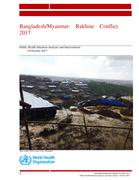
Back in Myanmar, an estimated half million Rohingya remain largely sealed off in their communities and displacement camps, fearful that the violence and horror that had driven so many of their relatives and neighbours to fl ee would engulf them too. Today, t ... more
Cholera is a major health risk in many parts of the world, affecting millions of people every year. Since mid-2021, the world has been facing an acute upsurge of the 7th cholera pandemic, which is characterized by the number, size and concurrence of multiple outbreaks, the spread to areas that had b ... more
The Community Health Systems (CHS) Catalog is a resource that provides information on community health program workers, and interventions for the 25 countries deemed priority by USAID’s Of of Population and Reproductive Health. It comprises a compilation of 25 country profiles developed from a de ... more
Water, sanitation and hygiene education in schools – WASH in Schools – provides safe drinking water, improves sanitation facilities and promotes lifelong health. WASH in Schools enhances the well-being of children and their families, and paves the way for new generations of healthy children. f ... more
While much progress has been achieved over the past year, the Region of the Americas has stubbornly remained the epicenter of the COVID-19 pandemic. PAHO is launching its 2021 COVID-19 Response Strategy and Donor Appeal to continue supporting Latin American and Caribbean countries and territories i ... more
The substantial burden of death and disability that results from interpersonal violence, road traffic injuries, unintentional injuries, occupational health risks, air pollution, climate change, and inadequate water and sanitation falls disproportionally on low- and middle-income countries. Injury Pr ... more
"This document has been developed for outpatient oncology facilities to serve as a model for a basic infection control and prevention plan. It contains policies and procedures tailored to these settings to meet minimal expectations of patient protections as described in the CDC Guide to Infecti ... more
Basic Expectations for Safe Care
BMC Health Services Research BMC series – open, inclusive and trusted201818:251; https://doi.org/10.1186/s12913-018-3072-3
2nd edition WASH FIT is a risk-based, continuous improvement framework with a set of tools for undertaking water, sanitation and hygiene (WASH) improvements as part of wider quality improvements in health care facilities. It is aimed at small primary, and in some instances secondary, health care fa ... more
The Global Reference List of 100 Core Health Indicators is a standard set of core indicators prioritized by the global community to provide concise information on the health situation and trends, including responses at national and global levels. This second (2018) edition builds on the previous ... more
DHS Further Analysis Reports No. 88 - This further analysis examines levels, trends, and determinants of neonatal mortality in Rwanda, using data from the 2000, 2005, and 2010 Rwanda Demographic and Health Surveys (RDHS).
Survey finding report
The report presents the latest data on more than 50 health-related Sustainable Development Goal and "triple billion" target indicators. The 2021 edition includes preliminary estimates for global excess deaths attributable to COVID-19 for 2020 and the state of global and regional health trends from 2 ... more
Standard Operating Procedures | RBC/IHDPC/EID Division | 9/30/2011
Prepared for the Stunting Prevention and Reduction Project - The project Medical Waste Management Plan’s (MWMP) overall objective is to prevent and/or mitigate the negative effects of increased generation of medical waste on human health and the environment. The plan proposes measures to prevent t ... more
While the full effects of COVID-19 remain unknown, the pandemic continues to profoundly impact regional migration and mobility dynamics, with deep health, social and economic consequences for the most vulnerable, including migrants, displaced populations and their host communities, and returnees.
Préparation et riposteà l’épidémie de COVID-19
A comprehensive briefing by Half of Syria April 2020 A comprehensive briefing on the critical challenges of the COVID-19 pandemic to Syrians, as reported by Syrian civil society organisations. These challenges have been collated following extensive interviews with the teams of member and partner ... more

Guidelines for the Prevention and Treatment of Opportunistic Infections in Adults and Adolescents with HIV.

AIDSinfo; CDC Centers for Disease Control and Prevention; National Institutes of Health; et al. (2019) C2
Downloaded from https://aidsinfo.nih.gov/guidelines on 11/27/2019 Visit the AIDSinfo website to access the most up-to-date guideline. Register for e-mail notification of guideline updates at https://aidsinfo.nih.gov/e-news.
Orientações provisórias23 de Abrilde2020
Overview: Risk communication and community engagement are essential for any disease outbreak response. This is particularly critical during outbreaks of Ebola which may create fear in the public and frontline responders alike due to severe presentation of symptoms, misunderstanding of the causes of ... more
A Focus on the Journey to Self-Reliance for Preventing Child and Maternal Deaths . June 2018
The 2018 Acting on the Call report focuses on 25 countries’ journeys to self-reliance for preventing child and maternal deaths. Self-reliance is a country’s ability to finance and implement solution ... more
The aim of this report is to: (1) synthesize the findings from selected maternal and newborn related studies in Nepal conducted during 2011-2014, (2) identify areas of improvement in existing interventions, and (3) recommend possible strategies to fulfill such gaps.
The Newborn Situational Analysis reports of 2009 and 2011, as well as the “Bottleneck analysis on neonatal health” of 2013, culminated in the Nigeria launch of “Call to action on Newborn health” at the first National Newborn Health Conference in 2014. This call to action provided the framewo ... more
Globally, in low-income countries, the average newborn mortality rate is 27 deaths per 1,000 births, the report says. In high-income countries, that rate is 3 deaths per 1,000. Newborns from the riskiest places to give birth are up to 50 times more likely to die than those from the safest places.
... more
This guidance document sets out a methodology to identify and track financing to the WASH sector in a coherent and consistent manner across several countries. It is designed to help countries track financing to the WASH sector on a regular and comparable basis and analyse this information to support ... more
Water, sanitation and hygiene (WASH) are critical in the prevention and care for all of the 17 neglected tropical diseases (NTDs) scheduled for intensified control or elimination by 2020.
Provision of safe water, sanitation and hygiene is one of the five key interventions within the global NTD ... more
Technical report
This manual aims to provide information about the methods for investigating outbreaks of hepatitis E, and measures for their prevention and control. In addition, the manual gives information about the causative agent – known as the hepatitis E virus (HEV) – its epidemiology ... more
The overall goal of the programme, to reduce the malaria morbidity and mortality by 75% (using 2012 as baseline) by the year 2020, continued to be pursued in 2014. The following areas were identified as some of the priorities for the year: Malaria Case Management under which we have Malaria in Pregn ... more
A companion to the Child Friendly Schools Manual
WASH in Schools aims to improve the health and learning performance of school-aged children – and, by extension, that of their families – by reducing the incidence of water and sanitation-related diseases. Every child friendly school r ... more
The development of water, sanitation and hygiene (WASH) in schools guidelines for TimorLeste is a landmark moment in our quest to make every school child-friendly – a place where every child can learn, play and grow with pride and dignity. The overarching goal is to improve health, boost education ... more
Census Report Volume 4-K
The results of the 2014 Census collected only relates to four of the six types of disability domains recommended by the Washington Group on Disability Statistics, namely: seeing, hearing, walking, and remembering or concentrating.
Out of a total of 50.3 million pe ... more
The purpose of this Strategy is to set out the way to meet the needs of the rural populations for improved domestic water supply services, access to and use of improved sanitation with elimination of open defecation, and improved hygiene behaviour by the Year 2030. It also addresses water, sanitatio ... more
Adaptation and roll-out of Epidemic Control for Volunteers’ (ECV) Toolkit and Training Manual in Myanmar
The ECV Toolkit ensures that volunteers have the proper training and essential communication tools (among other materials) before they are engaged in outbreak and epidemic response in thei ... more
- Twenty-two joint integrated rapid response mechanism (IRRM) missions were conducted in 11 counties and reached 305,887 people including 65,432 children under 5 years of age.
- UNICEF’s Integrated Community Mobilization Network reached 345,219 households (total population 2.1 million) advoca ... more
The 2015-16 MDHS is a national sample survey that provides up-to-date information on fertility levels; marriage; fertility preferences; awareness and use of family planning methods; child feeding practices; nutrition; adult and childhood mortality; awareness and attitudes regarding HIV/AIDS; women ... more
Updated May 2017
This document is meant to respond to the questions:
■ What health interventions should be delivered during pregnancy, childbirth and the postnatal period?
■ What health behaviours should the women practise (or not practise) during these periods to care for ... more
Civil Society Organisations’ contribution towards community engagement to access and demand health services and encourage communities to practice appropriate health-seeking behaviour in Mon and Chin States
The following report is a study of 14 villages under the Collective Voices project (Nov ... more
Draft for consultation
The current guidelines on Integrated Management of Acute Malnutrition (IMAM), addresses the issue of improved management of severe acute malnutrition (SAM), particularly in children under 5 years of age. In the absence of standard protocols, mortality in children admitted to hospital with SAM can ra ... more
Safe disposal of children’s feces is as essential as the safe disposal of adults’ feces. Th is brief provides an overview of the available data on child feces disposal in Burkina Faso and concludes with ideas to strengthen safe disposal practices, based on emerging good practice. Th e Joint Mon ... more
English Manual and Guideline on World about Food and Nutrition, Health and Epidemic; published on 30 Nov 2021 by USAID
This publication provides a practical tool to support countries in strengthening surveillance of WASH in schools. The findings will inform the development of supportive regulations and improvement planning to safeguard children’s health, well-being, dignity and cognitive performance. The tool also ... more
Ce guide a été préparé par le Bureau des activités pour les employeurs (ACT/EMP) de l’Organisation internationale du Travail et contient des recommandations sur les mesures pratiques et les méthodes à mettre en oeuvre en matière de santé et de sécurité pour la prévention du COVID-19.
This curricula guide builds on several existing products of WHO and partners, aimed at supporting countries in their effort to address the first objective of the GAP-AMR (to improve awareness and understanding of AMR). It is targeted specifically at health educators and policy planners, and applies ... more
The Border Consortium (TBC) developed a comprehensive Training of Trainers Nutrition Curriculum which includes 12 Modules (6 Basic and 6 Advanced topics). The Manual provides trainers with standardized methods and content to deliver nutrition training.
Original file: 25 MB
Civil Society Organisations’ contribution towards community engagement to access and demand health services and encourage communities to practice appropriate health-seeking behaviour in Mon and Chin States. The study recognizes that civil society can promote people-centered health by creating an e ... more
This manual is intended to enable WASH practitioners who work in Mozambique to contribute to the reduction of WASH-preventable NTDs.
In many humanitarian emergencies, there is a serious lack of access to even the most basic materials needed for managing the blood in addition to a lack of appropriate sanitation facilities (including water), which are critical for addressing menstrual hygiene. Privacy in emergencies is often scarc ... more
The new WHO Guidelines on Sanitation and Health summarize the evidence on the effectiveness of a range of sanitation interventions and provide a comprehensive framework for health-protecting sanitation, covering policy and governance measures, implementation of sanitation technologies, systems and b ... more
This checklist will help child psychosocial support and Child Friendly Space supervisors adhere to quality standards during program implementation. This checklist was developed by consultant Nicole Bohl, based on her previous work with Plan International and Save the Children. It has been adapted wi ... more
Cholera is a diarrhoeal disease that is usually contracted when drinking water contaminated with Vibrio cholerae bacteria. The fight against this disease requires a multidisciplinary approach that combines a water, hygiene and sanitation (WaSH) response with a monitoring system, improved water suppl ... more
Since the beginning of December a significant increase in the incidence of new cases has been observed particularly along the corridor towards the large urban center of Butembo (health zones of Butembo and Katwa) and beyond in the zone of Kayna health center located about 150 km from Goma. In additi ... more
Strengthening of SDB teams through refresher trainings and regular simulation exercises/drills Continue social mobilization and community engagement through mobile cinema and community awareness sessions Procure and preposition additional PPE kits
This topic brief highlights how nutrition and healthy diets support the achievement of education and learning objectives, and explains how intervention benefits can be amplified with a whole-school and systems approach. The recommended actions are informed by the Global Standards for health-promotin ... more
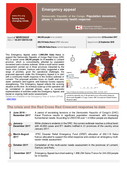
The disaster and Red Cross Red Crescent response to date 9 March 2019: Tropical Cyclone Idai forms over Northern Mozambique Channel. CVM preparedness and early warning actions underway 13 March 2019: IFRC Surge Capacity is deployed to Maputo 14 March 2019: 342,562 Swiss francs allocated from th ... more
Nearly half the population of Sierra Leone is under the age of 18 years and the impact of the Ebola crisis on their lives now and on their future opportunities has been far-reaching: no school; loss of family members and friends to the virus; and changing roles and responsibilities in the home and t ... more

Social science and behavioural data compilation, DRC Ebola outbreak, June - August 2019

Bardosh, K.; T. Jones and J. Bedford Social Science in Humanitarian Action: A Communication for Development Platform (2019) C1
This rapid compilation of data analyses provides a ‘stock-take’ of social science and behavioural data related to the on-going outbreak of Ebola in North Kivu, South Kivu and Ituri provinces. Based on data gathered and analysed by organisations working in the Ebola response and in the region mor ... more
For the 24th consecutive year, PAHO has published the report Health Situation in the Americas: Core Indicators featuring the latest information on key indicators for the Region of the Americas. This 2018 edition includes data on the 82 core indicators for the countries, territories, and sub regions ... more
UNICEF trucks water to the camps where people displaced by the conflict have temporarily settled. UNICEF also installed latrines, showers and water storage tanks in the camps and distributed family hygiene kits to protect children against waterborne diseases.
As of 21 March 2019, a total of 250,000 people are reported to be affected by the floods in nine districts. An estimated 48 per cent of the affected population is under 18 years of age. There is limited road access in the Chimanimani, the worst affected district. An estimated 60,000 children are ... more
Advocacy ,Social Mobilization ,Behavior Change Communications
Risk of spill-over of EVD to Uganda has been categorised as very high. On 28 September 2018, WHO elevated the risk at the regional level which includes Uganda from ‘high’ to ‘very high’. Uganda has a very long and largely porous border with the DRC. High population movements across the borde ... more
This brief summarises key considerations about the social, political and economic context of Goma in relation to the outbreak of Ebola in the DRC as of March 2019. Goma is the administrative capital of North Kivu province and a major urban centre in the Great Lakes Region. The city is home to an est ... more
Miscellaneous Chapter J.8
These WHO interim recommendations on the use of the Pfizer – BioNTech BNT162b2 vaccine against Covid-19 were developed on the basis of advice issued by the Strategic Advisory Group of Experts on Immunization (SAGE) and the evidence summary included in the background document referenced below. fir ... more
Technical Note: Cholera treatment facilities provide inpatient care for cholera patients during outbreaks. Proper case management and isolation of cholera patients is essential to prevent deaths and help control the spread of the disease. Traditionally, these structures have been referred to as ch ... more
Antimicrobial resistance (AMR) is a threat to global health and development and it contributes to millions of deaths worldwide each year. Inappropriate use and overuse of antibiotics are driving an increase in AMR and have a detrimental impact on the effectiveness of these critical medicines. Throug ... more
Response to the tropical cyclone in southern Africa Ebola virus disease outbreak in the Democratic Republic of the Congo Meningitis outbreak in Togo Lassa fever outbreak in Liberia.
The Hand Hygiene Self-Assessment Framework is a systematic tool with which to obtain a situation analysis of hand hygiene promotion and practices within an individual health-care facility.