
Filter
251
Text search:
globale
gesundheit
Featured
21
38
Language
Document type
101
65
28
16
12
7
6
4
3
2
2
2
2
1
Countries / Regions
38
29
10
9
9
6
5
5
4
3
3
2
2
2
1
1
1
1
1
1
1
1
1
1
1
1
1
1
1
Authors & Publishers
Publication Years
Category
68
63
15
12
7
5
Toolboxes
81
40
22
14
9
7
6
6
6
4
3
2
2
1
1
1
1
Chronic obstructive pulmonary disease (COPD) is an increasingly important cause of morbidity, disability, and mortality worldwide. We aimed to estimate global, regional, and national COPD prevalence and risk factors to guide policy and population interventions.
Existing data on chronic obstructive pulmonary disease (COPD) prevalence are irregularly distributed around the world, and in many geographic regions data are scarce or even nonexistent. This fact hinders the implementation of adequate preventive and therapeutic interventions to reduce the high burd
...
The webpage from the Institute for Health Metrics and Evaluation (IHME) provides an analysis of air pollution as a significant global health risk. It details how air pollution contributes to severe health problems, including respiratory diseases and increased mortality rates. The site explains diffe
...
Chronic Obstructive Pulmonary Disease (COPD) is now one of the top three causes of death worldwide and 90% of these deaths occur in low- and middle-income countries (LMICs).
More than 3 million people died of COPD in 2012 accounting for 6% of all deaths globally. COPD represents an important public
...
Chronic obstructive pulmonary disease (COPD) is a complex disease that requires differential diagnosis and proper classification to identify appropriate therapy. Nonpharmacologic therapy and preventative measures should be utilized to prevent worsening of disease, symptoms, and complications. The Gl
...
Asthma, hay fever and eczema are three common chronic conditions. There have been no recent multi-country data on the burden of these three conditions in adults; the aims of this study are to fill this evidence gap.
The Global Asthma Network Phase I is a multi-country cross-sectional population-bas
...
Read about our flagship publication, The Global Asthma Report 2022, a 102-page cutting edge State-of-the-Art report, with contributions from 97 experts from, 31 countries.
The theme for this year is "Asthma Education Empowers", and emphasizes the need to empower people with asthma with the approp
...
This dataset contains data from WHO's data portal covering the following categories:
Air pollution, Antimicrobial resistance (AMR), Assistive technology, Child mortality, Dementia diagnosis, treatment and care, Dementia policy and legislation, Environment and health, Foodborne Diseases Estimates,
...
The People’s Charter for Health is a statement of the shared vision, goals, principles and calls for action that unite all the members of the PHM coalition. It is most widely endorsed consensus document on health since the Alma Ata Declaration
Available in different languages
Recommended actions and international and national level
Extraced from the full version of WDI 2016
World Development Indicators (WDI) is the primary World Bank collection of development indicators, compiled from officially recognized international sources.
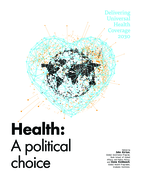
At least half of the world’s population does not have full coverage of essential health services. Health expenses push more than 100 million people into extreme poverty each and every year, forcing them into terrible choices that no one should ever have to make: Buy medicine or food? Education or
...
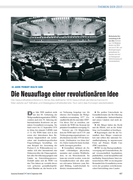
Die Gesundheitskonferenz in Alma-Ata definierte 1978 Gesundheit als Menschenrecht. Man setzte auf Teilhabe und Basisgesundheitsdienste. Nun wird das Konzept wiederbelebt.
