
Filter
689
Text search:
evacuation
Featured
65
208
Language
Document type
445
69
63
51
21
14
12
11
Countries
35
20
17
17
16
15
14
14
12
11
11
10
10
10
9
8
8
7
7
6
6
6
6
6
5
5
5
4
4
4
4
3
3
3
3
3
3
3
3
3
3
3
3
3
3
3
2
2
2
2
2
2
2
2
2
2
2
2
2
1
1
1
1
1
1
1
1
1
1
1
1
1
1
1
1
1
1
1
1
1
1
1
1
1
1
1
1
1
1
Authors & Publishers
Publication Years
Category
197
46
45
43
21
14
5
3
2
Toolboxes
75
72
53
48
36
34
27
27
21
16
15
8
7
5
3
2
2
2
1
1
1
The document introduces a simple classification, minimums standards and a registration form for Foreign Medical Teams (FMTs) that may provide surgical and trauma care arriving within the aftermath of a sudden onset disaster. These can serve as tools to improve the coordination of the foreign medical
...
The English terminology, and its translations into Arabic, Chinese, French, Russian, and Spanish, are available on the UNISDR website at: www.unisdr.org/publications and on PreventionWeb at: www.preventionweb.net
This new publication presents the continuing and emerging challenges to children’s environmental health.
The Minimum Standards for Age and Disability Inclusion in Humanitarian Action inform the design, implementation, monitoring and evaluation of humanitarian programmes across all sectors and phases of response, and in all emergency contexts, ensuring older people and people with disabilities are not e
...
This Training module on malaria elimination has been developed by WHO to support health professionals in planning, managing, monitoring and evaluating malaria elimination programmes.
Supporting exercises: These files are necessary for participants to complete a number of exercises listed in the man
...

Health Workers and Health Facilities under Attack 2015, and Early 2016
Conducting simulations and drills is the most effective way to evaluate and test disaster preparedness plans; these exercises are used widely by organizations and institutions working in development and in disaster response. Drills and simulations are also excellent tools for training, and for asses
...
The purpose of this Guide is to set out a simple, user-friendly, step-by-step approach for conducting table-top exercises for use in countries. These are generic guidelines which may be adapted for use at all levels in a country.

Section One
summarizes UNHCR’s mandate of international protecdtion and the aim and principles of emergency
response;
Section Two
deals with emergency management;
Section Three
covers the vital sectors and problem areas in refugee emergencies, including health, food, sanitation
and water, a
...

Series on Disability-Inclusive Development. This publication introduces the key concepts for disability-inclusive development and highlights practical examples by CBM, to contribute to the dialogue on disability-inclusive development
How do local authorities and humanitarian agencies collaborate when refugees are in transit? An IIED-supported research project is looking at the transit refugee response in Croatia.
Humanitarian NGOs have made increased use of Private Security Providers (PSPs) over the last decade. There is a gap between the ways that NGOs actually use PSPs and the regulation of this engagement. These guidelines aim to assist humanitarian NGOs in reaching an informed decision about when, how an
...
Abduction of aid workers has risen sharply in particular contexts in the past decade. Abduction is a “unique form of critical incident”, characterised by its ongoing, “live” nature, often extended duration, the pressure of decision-making and uncertainty. This EISF Briefing Paper explores
...
This EISF Briefing Paper seeks to outline the requirements of crisis management structures, providing a general guideline of crisis management planning, Crisis Management Teams (CMTs) and post-crisis follow-up. It is followed by the May 2010 EISF Briefing Paper, Abduction Management, that will focu
...
This EISF report provides an analysis of the issues surrounding the relationship between NGO’s and their local partners. It includes a section on the topic and its background, responsabilities towards the partner organisation and particularly in terms of security, how to enable and help the partne
...
The Cost of Security Risk Management for NGOs explores the costs related to safety and security management for aid programmes. It aims to assist all aid practitioners to determine their risk management expenditure more accurately, and demonstrate an evidence-based approach when presenting this infor
...
Insecurity Insight Report 13-1.

The Global Early Warning – Early Action (EWEA) report on food security and agriculture is developed by the Food and Agriculture Organization of the United Nations (FAO). The report is part of FAO’s EWEA system, which aims to translate forecasts and early warnings into anticipatory action.
Services, Identified needs and recommendations following the April and May 2015 Earthquakes in Nepal
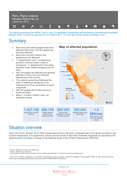
This report is produced by the UNDAC Team in Lima. It is developed in collaboration with the partners of the National Humanitarian Network (RHN). It covers the period from 27 to 30 March 2017. The next report will be issued around April 3, 2017
Operational guidance for managing programme quality.
These guidelines are about implementing the programme-quality standards of the Core Humanitarian Standard in limited access humanitarian response. They have been developed using approaches and tools tested by Oxfam, other INGOs and the UN in Afgh
...
Managing stress in humanitarian workers
recommended
Guidelines for good practice. 3rd edition
The Guidelines for Good Practice are intended to help organizations define their own needs in relation to stress management and develop their own staff care system. The process will be different for each organization. National and international agencies, bi
...
"Achieving, maintaining and improving accuracy, timeliness and reliability are major challenges for health laboratories. Countries worldwide committed themselves to build national capacities for the detection of, and response to, public health events of international concern when they decided to eng
...

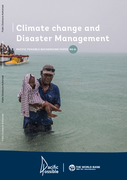
- Pacific Possible Background Paper No.6
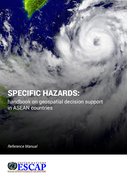
This reference manual provides in-depth knowledge on the techniques, methodologies and best practices for using geospatial information in support of decision making for disaster risk management for specific hazards
The Policy Guidelines and Service Standards for National Sexual and Reproductive Health Programme document outlines the steps on how to offer and deliver services. Improving quality of care is critical to improving clients' health status as well as increasing access to, and utilization of Sexual and
...
The EHSP in Botswana seeks to attain universal coverage of high-quality package of essential health services. The EHSP is an integrated collection of cost-effective interventions, promotive, preventive, curative, and rehabilitative, that address the main diseases, injuries and risk factors that affe
...

The intent of these guidelines is to develop a holistic, coordinated, proactive and technology driven strategy for management of biological disasters through a culture of prevention, mitigation and preparedness to generate a prompt and effective response in the event of an emergency. Th
...
Collection of country-level good practices
WHO/CDS/TB/99.272
Migration Health Division Information Sheet Series
Migration Health Assistance for Crisis-Affected Populations
HIV/AIDS, TB, Malaria, Cholera, Re/Emerging Diseases and Mobility
Transforming Health: Accelerating attainment of Health Goals | THE SECOND MEDIUM TERM PLAN FOR HEALTH
Action on behalf of unaccompanied and separated children should be guided by principles enshrined in international standards. The validity of these principles has been confirmed by experience and lessons learnt from conflicts and natural disasters in recent years. The objective of the present public
...
Climate change (CC) impacts on health outcomes, both direct and indirect, are sufficient to jeopardize achieving the World Bank Group’s visions and agendas in poverty reduction, population resilience, and health, nutrition and population (HNP). In the last 5 years, the number of voices calling for
...

Good practices from South & South-East Asia in disability inclusive disaster risk management
Technical Guidance
VADEMECUM | This Vademecum is intended to provide a benchmark for aid workers—whether working in the field or at a strategic level—in particular concerning the formulation and implementation of programmes of prevention or response to humanitarian crises. It is not solely a theoretical document b
...
A twin-track approach of mainstreaming and disability-specific actions | Gender, Equality and Diversity Branch
The Agency for Toxic Substances and Disease Registry (ATSDR) has produced a three-volume series entitled Managing Hazardous Material Incidents. The series is designed to help emergency response and health care professionals plan for and respond to hazardous material emergencies.
- Volume I Emergenc
...
This Guide contains information, guidelines, diagrams and other materials addressed to medical practitioners who are engaged in the treatment of casualties of chemical weapons. It is made available to the public for information purposes, but is not intended to be used by the public. All decisions re
...
"Patient decontamination principles are set forth here from a strategic perspective, rather than a tactical
one. The principles are meant to guide, but not specify, operational practices. The guidance is evidencebased
to the extent possible and the supporting evidence is documented and briefly dis
...

Accessed online March 2018
Testimonies from Humanitarian Workers with Disabilities.
By reading the first-hand accounts, we hear how persons with disabilities, not through any particular talent or skill but from unique knowledge gained through life experience, are ideally placed to provide insights, ideas and leadership, to s
...
Key Recommendations for an Inclusive Urban Agenda
This consultative version of the guideline is the product of literature reviews, discussions and contributions from diverse stakeholders, as well as UNISDR-nominated experts appointed specifically for the development of the Words into Action guideline for Build back better in recovery, rehabilitatio
...
These guidelines provide a recommendation on iodine thyroid blocking (ITB), via oral administration of stable iodine, as an urgent protective action in responding to a nuclear accident. This recommendation aims to support emergency planners, policy makers, public health specialists, clinicians and o
...
The aim of this publication is to provide practical guidance for public information officers on the preparation for and response to a nuclear or radiological emergency, and to fulfil in part functions assigned to the IAEA in the Convention on Assistance in the Case of a
...
The aim of this publication is to provide practical guidance for the first responders who will respond during the first few hours to a radiological emergency and for the national officials who would support this early response. This publication provides guidance in the form of action guides, instruc
...
This guide is intended for shelter operators, planners, and staff, as well as emergency managers, public health professionals, and radiation protection professionals who participate in shelter planning and could be called upon to support shelter operations. This guide provides information on the inc
...
In northern Myanmar, nearly 100,000 people continue to live in displacement camps in Kachin and northern Shan States. Most were first displaced by fighting between the Myanmar military and the Kachin Independence Army in 2011, and many have been displaced multiple times, including in recent months.
...
Guidance | Preparedness - Response and early recovery - Recovery and reconstruction
A fact sheet from the National Academies and the U.S. Department of Homeland Security
Effective risk communication requires the alignment of complex factors including trust between the communicator and the audience(s), audience involvement, and emotional responses to risk. Risk communication is especially challenging now as new media changes the landscape for both
communicators and
...
"The handbook is intended for use by the first responders
of the emergency services from the moment they
receive an alarm up to the first 30 minutes on scene at
an incident.
The handbook is envisaged to function as a checklist
and decision-support for personnel with existing knowledge
of emerg
...
The purpose of this interim guidance is to provide information and insight to assist public policy and
health system leaders in preparing for and responding to an MCE caused by terrorist use of explosives
(TUE). This document provides practical information to promote comprehensive mass casualty ca
...
Specific Objectives
• To increase the knowledge and awareness of personnel on chemical management.
• To educate the personnel on the potential adverse health effects of chemical exposure.
• To educate the personnel on the existing laws pertaining to handling of hazardous
chemicals.
• To
...
"National Disaster Management Guidelines: Management
of Chemical (Terrorism) Disasters (are intended to
focus on all aspects of the disaster management
cycle, including prevention measures such as
surveillance and intelligence, mitigation of direct
and indirect risks, preparedness in terms of
...
The roundtable provided a forum that allowed communicators across a number of Federal agencies to share information, strategies, and challenges in developing and providing communication messages and materials to the public in preparation for, and in response to, a radiation
...
For biological agents, the publication covers 11 bacteria,
fungi and viruses listed by states parties to the Biological
Weapons Convention in declarations of past offensive
research and development programmes, or considered of
special concern for possible use in terrorism. All of these
agents c
...
The purpose of the WHO Manual for the Public Health Management of Chemical Incidents is to provide a comprehensive overview of the principles and roles of public health in the management of chemical incidents and emergencies. While this information is provided for each phase of the emergency cycle,
...
