
Filter
2198
Text search:
drug
users
Featured
194
630
Language
Document type
1482
253
247
100
51
23
23
10
4
4
1
Countries
131
64
60
55
54
53
52
52
43
39
36
33
32
32
31
31
31
28
25
25
24
24
21
20
17
16
16
14
13
12
11
11
11
11
9
8
7
7
7
6
6
6
5
5
5
5
4
4
4
4
4
3
3
3
3
3
3
3
3
3
3
3
3
3
2
2
2
2
2
2
2
2
2
2
2
2
2
2
1
1
1
1
1
1
1
1
1
1
1
1
1
1
1
1
1
1
1
1
1
1
1
1
1
1
Authors & Publishers
Publication Years
Category
843
171
114
78
61
30
28
1
1
Toolboxes
364
260
202
74
73
60
40
31
31
30
25
23
20
19
19
14
11
9
8
7
6
3
1
1
Third Edition: Revised October 2012

Всемирная организация здравоохранения (ВОЗ) описывает наркотическую зависимость как сильное желание потреблять психоактивные вещества, трудно контролируемое по
...
Accessed April 10, 2019
Dans cette perspective, nous espérons que notre expérience pratique dans ces domaines constituera un apport aux prochaines éditions de ce guide. Et si le renforcement des systèmes de santé peut ne pas être une science exacte et que l’approche universelle n’existe pas, cette publication dé
...
Preferred product characteristics” (PPCs) are key tools to incentivize and guide the development of urgently needed health products. The PPC published here describes the characteristics of new types of insecticide-treated nets (ITNs) to control malaria transmission in areas with insecticide-resist
...
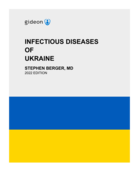
Infectious Diseases in Ukraine
recommended
Data on Infectious Diseases in Ukraine Now Available as a Free eBook to Help Medics and Relief Efforts During the War.
• Data on the 215+ infectious diseases endemic to Ukraine
• All published data on infections imported into Ukraine
To download the book, please click the button below and use
...
In 2018 and early 2019, the WHO Regional Office for Europe’s cultural contexts of health and well-being project worked alongside the University of Exeter’s WHO Collaborating Centre on Culture and Health, the Minsk Regional Centre for Psychiatry and Addiction, and the Institute of Mental Health o
...

2014-2020, Draft March 2014
This publication is an updated version of the Management of Tuberculosis and HIV Coinfection clinical protocol released in 2007 by the WHO Regional Office for Europe. It is intended for all health care workers involved in preventing, diagnosing, treating and caring for people living with TB and HIV
...
Advocacy report March 2011
303100 03/2011 E 1,000

Chapter 8, Prison and Health, published

Key population brief.
Краткое руководство.

Reporting Period 2010-2011
Policy Brief, Updated in March 2017
Policy Brief, Updated in March 2017
The WHO Global Burden of Disease (GBD) study measures the burden of
disease using the disability-adjusted life year metric (DALY). The DALY metric
was developed to assess the burden of disease consistently across diseases,
risk factors and regions. A consistent and comparative description of the
...
ATLAS on substance use (2010) — Resources for the prevention and treatment of substance use disorders
Accessed: 14.03.2019
В этом дискуссионном документе излагаются факты, касающиеся передозировки опиоидов, мер, которые могут быть приняты в целях предупреждения и лечения (коррекции) пÐ
...

This block contains a wide variety of disorders that differ in severity (from uncomplicated intoxication and harmful use to obvious psychotic disorders and dementia), but that are all attributable to the use of one or more psychoactive substances (which may or may not have been medically prescribed)
...
Поэтому уже давно возникала мысль о том,что подробный комментарий по вопросам научных знаний и практическогоопыта, лежащих в основе политики ВОЗ по борьбе
...
Reporting period: January 2008-December 2010
Accessed: 29.09.2019
Evaluation report
January 2014
Original Article
SAGE Open Medicine Volume 5: 1–7 © The Author(s) 2017 Reprints and permissions: sagepub.co.uk/journalsPermissions.nav httpDs:O//dIo: i1.o0r.g1/107.171/2770/52035013212171773311977 journals.sagepub.com/home/smo
Chapter · January 2009 DOI: 10.1007/978-0-387-72711-0_25
D.D. Celentano and C. Beyrer (eds.), Public Health Aspects of HIV/AIDS in Low and Middle Income Countries, DOI: 10.1007/978-0-387-72711-0 25, c Springer Science+Business Media, LLC 2008
Evaluation report
April 2013
Evaluation report
This report is part of the overall Ukrainian National AIDS programme evaluation conducted
in September 2012
PLOS ONE | www.plosone.org
May 2013 | Volume 8 | Issue 5 | e63476
Accessed: 07.11.2019

Investigación original / Original research
Rev Panam Salud Publica 35(1), 2014
Report
A Project of the Joep Lange Institute July, 2018
La lutte contre la tuberculose est une des priorités du ministère de la santé. C’est ainsi que le Plan Stratégique National de lutte contre la Tuberculose 2013-2017 du Sénégal a inscrit dans son programme d’actions la préoccupation de mieux d’améliorer la prise en charge des personnes
...
La prise en charge de la tuberculose représente un véritable défi en milieu carcéral et l’organisation de la continuité des soins à la sortie un enjeu majeur. Comme tout être humain, les détenus ont le droit de jouir du meilleur état de santé physique et mental possible. Ce droit est gar
...
La prise en charge de la tuberculose représente un véritable défi en milieu carcéral et l’organisation de la continuité des soins à la sortie un enjeu majeur. Comme tout être humain, les détenus ont le droit de jouir du meilleur état de santé physique et mental possible. Ce droit est gar
...
Supplement Article
WHO Guidelines for HIV PEP • CID 2015:60 (Suppl 3), S161 - S164
Advance Copy
Accessed: 08.03.2020
Antimicrobial resistance (AMR) has emerged as a major public health problem all over the world. Infections caused by resistant microbes fail to respond to treatment, resulting in prolonged illness and greater risk of death. This document focuses on the mechanism to develop a practically applicable h
...
The revised guidelines present two major changes to existing guidelines: (A) there are now just 2 categories of pneumonia instead of 3 (“pneumonia” which is treated at home with oral amoxicillin and “severe pneumonia” which requires injectable antibiotics) and (B) oral amoxicillin replaces o
...
The manual contains basic principles of prescribing followed by chapters on medicines used in psychotic disorders; depressive disorders; bipolar disorders; generalised anxiety and sleep disorders; obsessive-compulsive disorders and panic attacks; and alcohol and opioid dependence
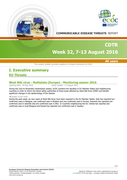
The ECDC Communicable Disease Threats Report (CDTR) is a weekly bulletin for epidemiolgists and health professionals on active public health threats. This issue covers the period 7-13 August 2016 and includes updates on Zika virus, yellow fever in Angola, polio, MERS CoV and West Nile virus.
Infection Control Assessment Tool
recommended
Strengthening Parmaceutical Systems. 2nd edition
Ethiopian Medicines Formulary
recommended
2nd edition

NEMLIST | Sixth Edition | February 2016
National Tuberculosis and Leprosy Control Program
National Tuberculosis and Leprosy Conrol Programme
The Zimbabwe National Pharmacovigilance Policy Handbook, 2nd Edition updates the November 2013 version to indicate the Zimbabwe National Pharmacovigilance (PV) Centre’s compliance with the WHO Pharmacovigilance Indicators Handbook 2015.
Ensuring Access to Simple, Safe and Effective First-Line Medicines for Tuberculosis.
Accessed in November 2017.
For Children and their Families
October 2015
For the Fiscal Year 2015-2016, the Health Sector continued to implement actions meant to improve the availability, and access to quality healthcare. The following report highlights achievements registered by the health sector for the fiscal 2015-2016 in different health programs, as well as in the a
...
SCOPING QUESTION:Which psychosocial interventions are effective in the treatment of psychostimulant dependence for adults and young people?
Other disorders
Chapter H.6
Предложенный вашему вниманию проект документа для дискуссии, озаглавленный "Отпринуждения к единству действий: преодоление наркозависимости путем лечения, а не н
...

Q2: In individuals with psychotic disorders (including schizophrenia), is the use of two or more antipsychotic medications concurrently more effective and safer than the use of one antipsychotic only?
Q4: In individuals with long term and/or recurrent psychotic disorders (including schizophrenia), should individuals be maintained on pharmacotherapy indefinitely or withdrawn from treatment in order to allow for the best outcomes?

Nguyen HH et al. Journal of the International AIDS Society 2018, 21:e25151 http://onlinelibrary.wiley.com/doi/10.1002/jia2.25151/full | https://doi.org/10.1002/jia2.25151
2018
9th Edition
Offering information on HIV/AIDS treatment, prevention, and research

Antimicrobial agents play an indispensable role in animal health and welfare management. At the same time, the need for prudent use is obvious to ensure good food safety outcomes and to manage the potential risk of antimicrobial resistance. The emergence of multi-resistant bacteria is posing challen
...
Scientific Brief, 30 June 2020
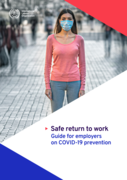
This guide contains recommendations for health and safety practices and approaches to COVID-19 prevention, based on materials developed by many organisations.

The purpose of this document is to provide relevant information and guidelines on
coronavirus outbreaks – and in particular the novel coronavirus SARS-CoV-2 and the
diseases it produces, COVID-19 – for pharmacists and the pharmacy workforce, both in a
primary care context (i.e. community phar
...
Road safety is an issue that does not receive anywhere near the attention it deserves – and it really is one
of our great opportunities to save lives around the world
