Filter
2118
Text search:
births
Featured
105
833
Language
Document type
1543
267
114
48
47
46
16
13
10
6
3
2
2
Countries
114
110
94
86
83
77
76
70
68
67
66
65
57
53
45
41
37
37
35
34
31
29
25
25
24
22
22
21
20
19
17
15
15
14
14
14
13
12
10
10
9
8
8
8
8
7
7
6
6
6
6
6
6
5
5
5
4
4
4
4
4
4
4
3
3
3
3
3
3
3
2
2
2
2
2
2
2
2
2
1
1
1
1
1
1
1
1
1
1
1
1
1
1
1
1
1
1
1
1
1
1
1
1
Authors & Publishers
Publication Years
Category
1418
205
99
72
42
39
6
Toolboxes
107
51
50
42
41
41
41
28
27
27
20
19
15
14
12
7
7
7
6
2
2
2
1
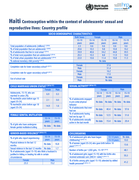
Country profile: Haiti
Country profile: India
Country profile: Indonesia
Country profile: Kenya
Country profile: Liberia
Country profile: Mozambique
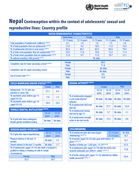
Country profile: Nepal
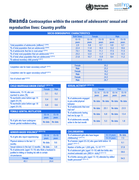
Country profile: Rwanda
Country profile: Senegal
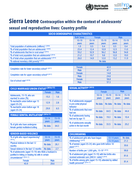
Country profile: Sierra Leone
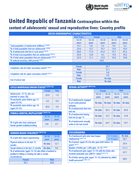
Country profile: Tanzania
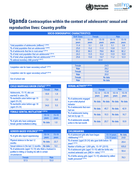
Country profile: Uganda
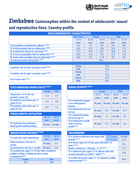
Country profile: Zimbabwe
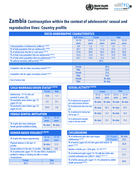
Country profile: Zambia

The indicators and questions in this document are designed for use by national AIDS programmes and partners to assess the state of a country’s HIV and AIDS response, and to measure progress towards achieving national HIV targets. Countries are encouraged to integrate these indicators and questions
...
Over the past decade, the reduction of maternal mortality in Latin America and the Caribbean has shown signs of a marked slowdown and in some cases a reversal, jeopardizing commitments made at the global and regional levels and by the Member States themselves, including those established in the Sust
...
The Community-based Health System Model Series briefs identify and discuss critical health system inputs and processes that have contributed to the implementation and expansion of community-based service delivery in different countries.
Countries were selected for their geographic diversity, type o
...
Despite recent global declines, under-five mortality remains high in many of the poorest countries. Barriers to timely
quality care, including user fees, distance to facilities and the availability of trained health workers and medical supplies,
hinder progress in further reducing morbidity and m
...
Including Therapeutic Food, Dietary Vitamin and Mineral Supplementation - 2nd edition
Handbook; EmOC indicators
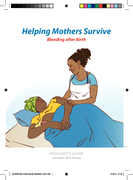
BAB training in prevention and management of postpartum hemorrhage increased knowledge and confidence among skilled and semiskilled birth attendants. Further studies are needed to determine the impact of this training on skills retention and clinical outcomes following postpartum hemorrhage, after b
...
Training On The Misp For Sexual And Reproductive Health In Crisis Part 2
This flipbook, released in Nov. 2011, contains key messages that pregnant women and their families need in order to plan care of an infant at home right after birth. It focuses on essential actions families can take both to prevent newborn death and illness and to promote healthy newborn development
...
The Global Action Report on Preterm Birth. Presentation
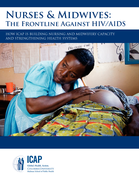
HOW ICAP IS BUILDING NURSING AND MIDWIFERY CAPACITY AND STRENGTHENING HEALTH SYSTEMS
Volume I, 2005-06
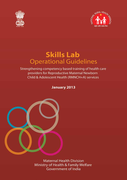
Strengthening competency based training of health care providers for Reproductive Maternal Newborn Child & Adolescenct Health (RMNCH + A) services
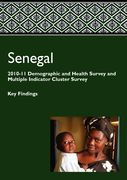
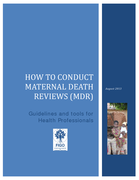
Guidelines and tools for Health Professionals
This guide supports the low-dose, high-frequency practice of scenerios needed to maintain competency in prevention and management of postpartum hemorrhage. The document is learner centered and is directly linked to service delivery standards. It is part of the Helping Mothers Survive Bleeding After
...
Cards for Facilitators (including birth preparedness, complication readiness and recognition of danger signs) are also available
The interventions summarized in this guide are intended to lower the risk of delivery and post-partum complications for both the mother and the newborn, particularly the risk of postpartum haemorrhage and infections, and improve the immediate care of premature babies. The recommendations are also in
...
MICS surveys measure key indicators that allow countries to generate data for use in
policies and programmes, and to monitor progress towards the Millennium Development Goals (MDGs) and
other internationally agreed upon commitments.

Global Nutrition Report
IDS Practice Paper in Brief 23
This special issue on Newborn Health in Global Health Action is being launched to share the experience of how to scale up a cost-effective package of newborn care that involves families, community health workers and health facilities. The results of this community randomized trial, the Uganda Newbor
...
Ghana is attracting global attention for efforts to provide health insurance to all citizens through the National Health Insurance Scheme (NHIS). With the program’s strong emphasis on maternal and child health, an expectation of the program is that members will have increased use of relevant servi
...
Malawi Health Sector Strategic Plan 2011 - 2016
recommended
Moving towards equity and quality
Following an overview of maternal and neonatal child health in Nepal and in the districts covered by the project, the briefing outlines the background to the Strengthening Approaches for Maximizing Maternal, Neonatal and Reproductive Health (SAMMAN) project. It then describes the key aspects of the
...
Challenges in achieving the MDG for maternal mortality. In-depth analysis of the EDHS 2000-2011
This is one of seven Medical Peace Work courses.
This implementation guide has been developed to help birth attendants and health-care leaders successfully launch and sustain use of the WHO Safe Childbirth Checklist. Development, use and implementation of the Checklist are described in this guide.
It covers how to introduce and ensure continuous
...
Early Essential Newborn Care (EENC) Module 2.
The Health Equity Assessment Toolkit (HEAT) is a software application for use on desktop or laptop computers and mobile devices (minimum screen size of 7.9 inches recommended). It was developed to facilitate the assessment of within-country health inequalities. The Built-in Database Edition, Version
...
The new five-year agenda of WHO in Africa, The Africa Health Transformation Programme, 2015–2020: a vision for universal health coverage, is the strategic framework that will guide WHO’s contribution to the emerging sustainable development platform in Africa. It articulates a vision for health a
...
Bulletin of the World Health Organization, http://dx.doi.org/10.2471/BLT.16.178608
The approach is in line with two of the five objectives outlined in the Every Newborn Action Plan (ENAP): Strategic Objective 2 – Improve the quality of maternal and newborn care; and Strategic Objective 5 – Count every newborn through measurement, programme-tracking and accountability to genera
...
This Rapid Advice Guideline updates the Interim Guidance on the “Assessment of infants with microcephaly in the context of Zika virus” published in February 2016 (WHO/ZIKV/MOC/16.3). The recommendations provides guidance on the screening, clinical assessment, neuroimaging, laboratory investigati
...
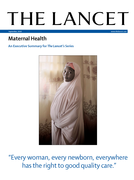
Each year, about 210 million women become pregnant and about 140 million newborn babies are delivered. The sheer scale of maternal health issues makes maternal well being and survival vital concerns. A decade after The Lancet published a Series on maternal survival, a new Series of six papers brings
...
The standards of care cover the routine care and management of complications occurring for women and their babies during labour, childbirth and the early postnatal period, including those of small babies during the first week of life. They define priorities for improving the quality of maternal and
...
An Advocate’s Guide: Strategic Indicators for Universal Access to Sexual and Reproductive Health and Rights
recommended
This guide was prepared to enable advocates to use data
when advocating for universal access to SRHR at the national,
regional and global levels. It is a direct outcome of the Strategic
SRHR Indicators workshop held in Kuala Lumpur, Malaysia on
21-22 August for the project “Strengthening the N
...