Filter
82
Text search:
acaps
Featured
Recommendations
9
New Publications
47
Language
Document type
No document type
48
Studies & Reports
15
Guidelines
6
Manuals
3
Situation Updates
3
Strategic & Response Plan
2
Fact sheets
2
Training Material
1
Resource Platforms
1
Infographics
1
Countries / Regions
Sierra Leone
12
Liberia
6
Western and Central Europe
5
Bangladesh
4
Guinea
3
Congo, Democratic Republic of
3
Syria
3
Myanmar / Burma
3
Yemen
3
South Sudan
2
Ukraine
2
Global
2
Zimbabwe
1
Haiti
1
Philippines
1
Nepal
1
Pakistan
1
Iraq
1
Afghanistan
1
Kenya
1
Rwanda
1
Indonesia
1
Mozambique
1
Central African Republic
1
Croatia
1
Middle East and North Africa
1
Asia
1
Venezuela
1
Eastern Europe
1
Authors & Publishers
Publication Years
Category
Countries
21
Key Resources
12
Capacity Building
2
Public Health
2
General Guidelines
2
Toolboxes
Ebola
16
COVID-19
10
Natural Hazards
9
Rapid Response
6
Refugee
6
Conflict
5
Disability
1
Cholera
1
Zika
1
Specific Hazards
1
Planetary Health
1
Pharmacy
1
This brief guidance note seeks to provide advice on protecting and supporting the mental health and psychosocial wellbeing of refugees, asylum-seekers and migrants in Europe. It describes key principles and appropriate interventions to guide all those who are designing and organizing emergency servi
...
In this review, the editors will investigate the impact of eight WASH interventions in preventing (reducing the risk of) and controlling outbreaks in LMIC, with particular focus on three diseases of current concern to the response community – cholera, Ebola, and Hepatitis E. Additionally, we will
...


The paper sets out the specific communication challenge posed by Ebola and why it was so difficult to get to grips with this in the early months of the outbreak. It thendocuments when the health communication response became more useful and explores what that tells us about effective media and commu
...
How do local authorities and humanitarian agencies collaborate when refugees are in transit? An IIED-supported research project is looking at the transit refugee response in Croatia.
The Facilitator’s Guide for the basic-needs based Response Options Analysis and Planning (ROAP) is a step-by-step guide comprising tools and templates to carry out a multi-sectoral response analysis and planning of response options, in a sudden-onset or chronic crisis.
Being that so, the Guide i
...

March - December 2018
The Government of Bangladesh has kept its borders open to Rohingya refugees and leads the humanitarian response. The people of Bangladesh continue to show tremendous generosity and hospitality in the face of a massive influx. In keeping with its policies, the Government of Ban
...
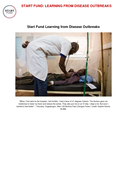
This learning report attempts to understand the drivers for, and barriers to, effective implementation as well as review the experiences of Start Fund members in responding to these outbreaks to support evidence-based decision-making within the Start Network at project, crisis, and system level. Spe
...

OECD Development Policy Tools
Recognising that donor policies and responses constantly evolve, this guidance recommends that donors operating in situations of forced displacement prioritise three broad areas of work, where they can best contribute to existing capacities at the national, regiona ...
Recognising that donor policies and responses constantly evolve, this guidance recommends that donors operating in situations of forced displacement prioritise three broad areas of work, where they can best contribute to existing capacities at the national, regiona ...
WHO guidance for contingency planning
recommended
In this contingency planning guidance, a set of actions to prepare for emergencies from all hazards and to help minimize their impact, is proposed. These actions include the development, implementation, simulation, monitoring and regular update of risks-based contingency plans.
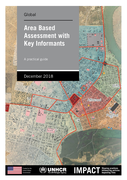
Much remains unknown about displaced communities in out-of-camp areas as identification constraints hinder knowledge on the overall situation and preeminent needs of an area. When compared to regularly monitored in-camp populations, less is known about the health, sanitation, livelihoods, food secur
...
The Facilitator's Guide has been piloted in Borno (Nigeria) and in Fafan zone (Somali region, Ethiopia) and improved iteratively after each test.
What does the ROAP have that you won't find in other methodologies?
It is based on holistic, people-centred approaches that span across sectors an
...
A brief guide for those using social media in humanitarian organizations
The Internews Humanitarian Information Services Learning Collection communicates key lessons, best practices, and programmatic methodologies used by Internews’ humanitarian teams around the world.
Each module within the Learning Collection includes three parts: Context, Case Studies, and a How-To
...
With about 24 million of Yemen’s 30 million people in need of some form of assistance, the United Nations calls Yemen the world’s worst humanitarian crisis. Cholera and other disease outbreaks are common, malnutrition is widespread, water is scarce, and the healthcare system is crumbling, with o
...