
Filter
927
Text search:
Strengthening
Pharmaceutical
Systems
Featured
69
277
Language
Document type
497
196
109
60
32
14
11
4
2
1
1
Countries
45
44
40
31
25
25
24
23
23
22
22
18
17
16
15
14
13
12
12
12
11
11
10
9
9
9
7
7
6
6
6
6
5
5
5
5
4
4
4
4
4
3
3
3
3
3
3
3
3
2
2
2
2
2
2
2
2
2
2
2
1
1
1
1
1
1
1
1
1
1
1
1
1
1
1
1
1
1
1
1
1
1
1
1
1
1
1
Authors & Publishers
Publication Years
Category
419
54
41
27
16
13
5
Toolboxes
113
67
57
47
45
35
27
23
21
21
20
19
18
17
12
6
5
5
5
4
2
1
1
1
Maldives has made significant strides in the area of infectious disease prevention and control. This is exemplified by elimination of malaria from Maldives in 2015 and successes in TB control. In addition, Maldives is a front runner in infectious disease prevention through successful water, sanitati
...
This survey is part of a series of eight country surveys conducted in the context of the People that Deliver Initiative (peoplethatdeliver.org). This global initiative, which brings together the world’s largest organizations, aims to improve health services performance through the professionalizat
...
The Ghanaian Cabinet approved the antimicrobial resistance (AMR)Policy and Implementation plan(hereafter referred to as the national action plan or NAP)in December 2017, whilst the country case study was in progress. This has set in motion the implementation phase for Ghana, which is a long awaited
...
Nepal has only recently started its journey on the path to an integrated response to the challenge of antimicrobial resistance (AMR). Despite this, it is notable that the Nepal Health Sector Strategy Plan (HSSP)-2 mentions growing antibiotic resistanceas a public health challenge.

The escalating antimicrobial resistance (AMR) pandemic is a global public health threat with extensive health, economic and societal implications. Resistance emerges because of selection pressure from rational and indiscriminate antimicrobial use in human health as well as in the veterinary, agricul
...
Myanmar, as a country going through rapid socio-political transition and institutional development also suffers with a high burden of infectious disease. An ongoing challenge has been to effectively reach its 51 million population, most of whom battle tuberculosis, acute respiratory infections, diar
...

The “United Nations Framework for the immediate socio-economic response to COVID-19: Shared responsibility, global solidarity and urgent action for people in need” calls for protecting jobs, businesses and livelihoods to set in motion a safe recovery of societies and economies as soon as possibl
...
he pandemic has produced an unprecedented economic and social crisis, and it could generate a food, humanitarian, and political crisis if urgent measures are not taken. The policy options for addressing the pandemic entail consolidating national plans and achieving intersectoral consensus. The respo
...
Tuberculosis cases, TB deaths
It estimates that there have been 228,000 additional deaths of children under five in these six countries [Afghanistan, Nepal, Bangladesh, India, Pakistan and Sri Lanka] due to crucial services, ranging from nutrition benefits to immunisation, being halted.
It says the number of children being tr
...
Interim Framework for the South-East Asia Region 28 October 2020
Bulletin of the World Health Organization; Type: Perspectives
Article ID: BLT.19.24843
Expanding access to quality health services through task sharing
A global call to action to protect the mental health of health and care workers
Accessed November, 2017
The Zimbabwe National Pharmacovigilance Policy Handbook, 2nd Edition updates the November 2013 version to indicate the Zimbabwe National Pharmacovigilance (PV) Centre’s compliance with the WHO Pharmacovigilance Indicators Handbook 2015.
WHO recently conducted a survey to assess the availability and cost of a national tracer list of essential medicines in the outpatient sector in Ukraine using a new collection tool – the WHO Essential Medicines and Health Products Price and Availability Monitoring Mobile Application. This tool fac
...
The document is a policy brief by the NCD Alliance for the 2023 United Nations High-Level Meeting on Universal Health Coverage (UHC). It highlights the importance of integrating non-communicable diseases (NCDs) into UHC efforts, with the goal of ensuring equitable health access worldwide.
Second Generation, WHO Country Cooperation Strategy, 2010–2015, Namibia

This report outlines the Ministry of Health’s National Health Research Agenda in which it identifies research priorities in health. It will be implemented in the same time frame as the Health Sector Strategic Plain 2012-2018. The Ministry of Health being the implementing agency of this document, i
...
These Guidelines comprise a General Guidelines document that provides the basic parameters of DG ECHO humanitarian health assistance, complemented by specific Technical Guidance in annex.
Fourth Edition

This guidance aims to assist leaders in the development or revision of humanitarian-sector contributions to district-level pandemic preparedness and response planning. It is directly linked to H2P guidance for national-level planning.

Consultancy to take forward the International Health Partnership
Supplement to the Healthcare Waste Management Toolkit for Global Fund
Practitioners and Policy Makers
Healthcare Waste Management Toolkit for Global Fund Practitioners and Policy Makers: Part A
Healthcare Waste Management Toolkit for Global Fund Practitioners and Policy Makers. Part B
The purpose of this Guide is to set out a simple, user-friendly, step-by-step approach for conducting table-top exercises for use in countries. These are generic guidelines which may be adapted for use at all levels in a country.

Transforming the Quality of Health Care in Ethiopia
The ICAT is a simple and practical approach for assessing the adequacy of existing infection prevention and control practices and provides specific recommendations for improving practices and monitoring their effectiveness over time



Examination of the business behaviour of Boehringer Ingelheim, Bayer and Baxter in Uganda
Celebrating ten years of success 2004-2014
The use of the World Health Organization Health System Performance Assessment Framework

Lessons from the STEP-TB Project.
Accessed November 2017.

17–24 November 2015

Introduction, preparations to submit, submission procedure, requirements, main narrative of the protocol, definition of terms. | For Research and ethics clearance in Lesotho
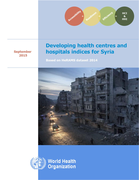
This research paper uses the Health Resources and services Availability Mapping System (HeRAMS) database to develop two composite indices – one for health centres and one for hospitals – in order to analyse and assess the health facilities’ performance across time and to evaluate the di
...
This working paper was conceived to offer practical tips and suggestions on how to establish and sustain the multisectoral coordination needed to develop and implement National Action Plans on AMR (NAPs). It is intended for anyone with responsibility for addressing AMR at country level. Drawing on b
...
The aim of the Annual Inspection Report is to present findings of public sector health establishments inspected by the OHSC to monitor compliance with the National Core Standards (NCS) during the 2016/2017 financial year in South Africa.
The NCS define fundamentals for quality of care based on six
...
This report highlights key achievements registered by the Ministry of Health, affiliated institutions, implementing agencies both at central and decentralized levels in 2013-2014. Generally, the Health Sector accomplishments and programs routine data for 2013-2014 confirm that Rwanda maintains its p
...
The guidelines presented in this document are designed to provide a useful resource for healthcare professionals involved in clinical case management. They were developed taking into consideration services provided at different levels within the health system and resources available. These guideline
...
This CPD Policy relates to all health professionals in the four Health Professional Councils in Rwanda namely; RMDC, NCNM, RAHPC, and RPC. The policy requires all health professionals to participate in the CPD Programs. The purpose of this CPD Policy is to support the professionals in the respective
...

Review of International, Regional and National Policies and Legal Frameworks that Promote Migrants and Mobile Populations' Access to Health and Malaria Services in the Greater Mekong Subregion (Cambodia, Lao People's Democratic Republic, Myanmar, Thailand and Viet Nam)
Migrants and mobile popul ...
Migrants and mobile popul ...


The National Health Plan (NHP) aims to strengthen the country’s health system and pave the way towards Universal Health Coverage (UHC),choosing a path that is explicitly pro-poor. The main goal of NHP 2017-2021 is to extend access to a Basic Essential Package of Health Services (EPHS) to the entir
...
Sixth Meeting of the mhGAP Forum Hosted by WHO in Geneva on 4-5 September 2014 Summary Report
