
Filter
2130
Text search:
Refugees
International
Featured
215
566
Language
Document type
1094
467
184
122
109
53
45
34
12
6
3
1
Countries
113
94
79
71
70
61
60
55
47
46
45
34
32
30
30
27
27
25
22
21
21
21
20
20
18
17
16
16
15
14
14
13
13
12
12
11
11
11
11
11
10
10
9
9
9
9
8
8
8
7
7
7
7
7
6
6
6
6
6
6
5
5
5
4
4
4
4
4
4
4
4
4
4
3
3
3
3
3
3
3
3
3
3
2
2
2
2
2
2
2
2
2
2
2
2
2
2
2
2
2
2
1
1
1
1
1
1
1
1
1
1
1
1
1
1
1
1
1
1
1
1
1
1
1
1
1
Authors & Publishers
Publication Years
Category
620
120
119
75
70
42
4
4
2
1
Toolboxes
296
276
270
215
108
90
70
68
49
42
41
39
29
18
18
18
15
13
8
8
7
4
3
2
1


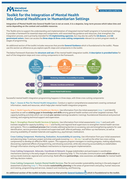
This Toolkit aims to support the understanding and implementation of integrated mental health programs in humanitarian settings. It provides a framework for essential steps and components, with associated key guidance and resources, that strengthen the integration process, and is primarily intended
...
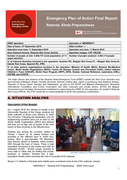
Rwanda: Ebola Preparedness Emergency Plan of Action (EPoA) Final Report - DREF Operation n° MDRRW017
Eleven (11) districts in Rwanda were initially were considered most at risk of the outbreak, namely:
• Rusizi, Nyamasheke, Karongi, Rutsiro, Rubavu (bordering DRC)
• Musanze, Burera, Gicumbi and Nyagatare (bordering Uganda)
• Kigali city (comprised of 3 localities) due to the presence of Ki
...
The synthesis looked across the evaluations and reviews as mentioned above to draw lessons and conclusions across the different contexts. The synthesis aims to identify:
recurrent issues, patterns and trends, and promising initiatives and lessons learned from existing programming including main
...
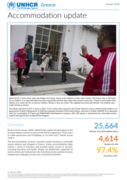
By the end of January 2020, UNHCR had created 25,664 places in the accommodation scheme as part of the ESTIA programme. These were in 4,606 apartments and 8 buildings, in 14 cities and 7 islands across Greece.
The Accommodation Scheme provides rented housing to vulnerable asylum-seekers and
...
This strategy, produced by IFRC, UNICEF and WHO, provides an overview of RCCE coordination approach and priorities across the different phases of the COVID-19 preparedness and response
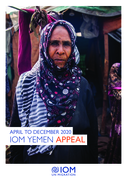
The humanitarian crisis in Yemen is the worst in the world, with over 80 per cent of the population estimated to be in need of humanitarian assistance. The protracted crisis has displaced millions of Yemenis, placing pressure on host communities with limited capacity to support displaced populations
...
As of 21 May 2020, 4.8 million confirmed cases of Coronavirus disease 2019 (COVID-19) have been reported globally. In South America, COVID-19 was first detected on 26 February 2020, when Brazil confirmed a case in São Paulo.
COVID-19 emergency response: Risk communication and community engagement in the Americas
recommended
Since March, the COVID-19 pandemic has impacted operations and required a different approach to communication with communities.
UNHCR communication channels have been rapidly enhanced and enlarged to ensure the continued provision of vital health and protection information.
How to respond to Covid19 pandemic in West and Central Africa
This brief document compiles existing material related to mental health and psychosocial support (MHPSS) for the COVID-19 crisis, as well as other resources that can be applicable to the context. Documents are divided into different sections, based on the ‘’spaces of new vulnerability” inheren
...

Experiences and recommendations from the International Red Cross and Red Crescent Movement.
Measures imposed by governments to prevent the spread of the disease, including lockdown restrictions, quarantines, physical distancing, and their economic
...
Intra-African migration remains a dominant trend in contemporary African migration. The Strategy frames the Organization’s new orientation with Africa at policy and strategic levels. It is consistent with the goals and objectives of the Global Compact for Safe, Orderly and Regular Migration (GCM)
...
English Analysis on World about Disaster Management and Protection and Human Rights; published on 12 Jan 2021 by IFRC
Developing countries face disastrous healthcare setbacks, hunger and huge international debt as covid-19’s ‘final wave’
The regional Migrant Response Plan (MRP) for the Horn of Africa and Yemen includes urgent life-saving humanitarian and protection interventions to improve safe and dignified access to basic services for migrants and host communities while ensuring medium- to long-term actions aimed at addressing the
...
This rapid review report has identified the wastewater treatment plant (WWTP) options used in emergency settings, with decentralised wastewater treatment systems (DEWATS) and mobile wastewater treatment units performing most effectively and with minimal costs. Examples are taken from refugee camps a
...
The Planetary Health Report Card is a student-driven, metric-based initiative to inspire planetary health and sustainable healthcare education engagement in medical schools. In addition to inspiring expansion of medical school curricula, we hope to inspire medical schools to expand research efforts,
...
Key messages
● Pre-crisis Infant and Young Child Feeding (IYCF) Practices:
The Code has not been adequately implemented and enforced in Ukraine.
Multiple Indicator Cluster Survey (MCIS) data from 2012: Child ever breastfed (95.4%); early initiation of breastfeeding (EIBF) within 1
...
This article provides an overview of the current and projected climate change risks and impacts to mental health and provides recommendations for priority actions to address the mental health consequences of climate change.
To its credit, Chile has implemented a highly successful vaccine program and taken a number of other important public health measures to improve the well-being of its inhabitants. Nevertheless, these measures have proved insufficient to curb the spread of the virus and ensure full compliance wit
...
As the war in Ukraine pushes food, fuel and fertilizer prices toward record levels putting food security in many of the world’s poorest countries at risk, the UN’s International Fund for Agricultural Development (IFAD) today launched a Crisis Re
...
Loss and damage is an urgent concern, driven by the increasingly harmful effects of climate change. Communities are experiencing new types and forms of climate impact, of higher frequency and intensity, which they are not equipped to handle. These impacts compel vulnerable communities to migrate to
...
Travailler avec les dirigeants communautaires pour lutter contre la VBG est une très bonne et prometteuse approche, car les dirigeants communautaires sont les gardiens de toutes nos croyances et coutumes. Étant donné que la VBG est enracinée dans les croyances et les coutumes, essayer de sâ€
...

Conflicts and disasters, including pandemics, affect women and men in all their diversity differently, and women and girls often suffer the most. Crisis-related hardships combine and compound pre-existing disadvantages, for example, they often cause women’s working conditions to worsen while incre
...
The domestic regulation of public health emergencies (PHEs) is inextricably linked to the regulation of other types of disaster. PHEs are usually governed at least partly by general disaster and emergency laws. Moreover, there is significant overlap in the legal mechanisms used to respond to PHEs an
...
The PS Centre has released three publications addressing the need for MHPSS tools and guidance in Ukraine and surrounding countries.
The Introduction to Psychological First Aid, presents a training module on basic psychological first aid skills for people affected by the
...
The Advancing Climate-Resilient Education Technical Guidance builds on the USAID 2022–2030 Climate Strategy and the 2018 USAID Education Policy to support USAID Missions and partners who seek to integrate climate action and awareness into education programs and are committed to achieving climate-r
...
To provide information on trends on official development assistance (ODA) disbursement patterns for
reproductive health activities in 18 conflict-affected countries

Mental health problems are common and cause great suffering to individuals and communities around the world. They have a significant impact not only on the physical and mental health of those affected but also on their families and the communities they live in. At the same time, all communities have
...
For practitioners in humanitarian and development contexts
UNHCR, the UN Refuge Agency, and NGO partners are launching an appeal for US$2.7 billion to address the live-saving humanitarian needs of South Sudanese refugees in 2019 and 2020.
Five years on since the onset of a brutal civil war, over 2.2 millio
...
Disabled people in developing countries are the poorest of the poor: if we are serious about tackling extreme poverty, our development work has to target them. The post-2015 development framework offers hope that disabled people will finally get the prominence they deserve on the global development
...
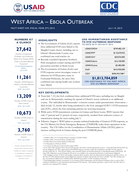
The Government of Liberia (GoL) reports three additional EVD cases linked to the Margibi County cluster, including one in Liberia’s Montserrado County; new confirmed case total reaches six
Recently extended Operation Northern Push strengthens contact tracing and EVD prevention activities
...
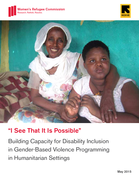
Women and girls with mental and intellectual disabilities were perceived to be most at risk of sexual violence, and family and service providers may only become aware of sexual violence against them when they become pregnant.
Discrimination by GBV service providers, family and community members was
...
The funding requested in this supplementary appeal will enable UNHCR to enhance preventive, preparedness and response measures against EVD, participate in the regional and country inter-agency response and ensure continuity of operations, including preparations for the resumption of the voluntary re
...
The Healthy Living Toolkit is developed to educate refugees, immigrants, resettlement agencies, clinics, community based organizations, and other service providers on refugee health issues. The toolkit presents material in a culturally appropriate m
...
Handbuch für PädagogInnen
January — December 2018
As the Burundi refugee crisis enters its fourth year, some 430,000 Burundian refugees are being hosted across the region by the governments and people of Tanzania, Rwanda, the Democratic Republic of the Congo, and Uganda. Although the spectre of mas
...
After almost 50 years of military dictatorship, and following the 2010 general elections which were rigged in favour of the military Union Solidarity and Development Party (USDP), Myanmar underwent a series of political reforms from 2011 onwards. In November 2015, the first free general elections si
...
VADEMECUM | This Vademecum is intended to provide a benchmark for aid workers—whether working in the field or at a strategic level—in particular concerning the formulation and implementation of programmes of prevention or response to humanitarian crises. It is not solely a theoretical document b
...
Testimonies from Humanitarian Workers with Disabilities.
By reading the first-hand accounts, we hear how persons with disabilities, not through any particular talent or skill but from unique knowledge gained through life experience, are ideally placed to provide insights, ideas and leadership, to s
...
These country reports provide information on the legal situation for displaced populations, namely asylum seekers, refugees, and returnees, where relevant, regarding access to mobile services, in each country covered
In the post-colonial history of the Central African Republic, violence has often been the shortest way to presidential power. President Bozizé presented little deviation from this narrative after coming to power after a coup d’état in 2003. Whilst he faced armed opposition and a conflict-affecte
...
Syria Regional Crisis Emergency Appeal 2020
recommended
In 2020, UNRWA will continue to support Palestine refugees affected by the protracted crisis through providing relief assistance and ensuring access to essential education and health services. Drawing on its existing structures, supply chains and ca
...
As part of the new strategy preparation, USAID/Senegal requested assistance with a gender assessment. This study was conducted from March 20 to April 11, 2010. It was supported jointly by the Women in Development Indefinite Quantity Contract (WID IQC) Task Order 1 ShortTerm Technical Assistance and
...
This document presents a brief overview of how UNHCR adapts its activities for mental health and psychosocial support (MHPSS) to the changing context of the pandemic. Staff of UNHCR and partners, in country offices in all regions of the world, have developed innovative field practices to continue pr
...
This brief provides a snapshot of child protection interventions by UNHCR and its partners during the pandemic, covering community engagement, case management, alternative care and capacity building. In addition to working with children and communities, UNHCR also engages with authorities through po
...
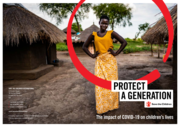
An estimated 99% of children worldwide – or more than 2.3 billion children – live in one of the 186 countries that have implemented some form of restrictions due to COVID-191. Although children are not at a high risk of direct harm from the virus, they are disproportionately affected by its hid
...
Sudan has a long history of hosting refugees and asylum seekers with 991,787 individuals, 51 per cent female and 53 per cent children, expected to live in Sudan by the end of 2020.
The Democratic Republic of the Congo (DRC) is one of the most complex and long-standing humanitarian crises in Africa. By the end of 2020, some 940,421 Congolese refugees and asylum seekers were hosted across the African continent. Ongoing conflicts
...
A technical and environmental comparative overview of common shelter typologies found in settlements across UNHCR operations
UNHCR’s Public Health Strategy 2021-2025 is based on the lessons learnt, and builds on the achievements, of the Global Strategy for Public Health 2014-2018.
Progress was made on policies favouring inclusion and integration into national systems3 with 92% of 48 operations surveyed reporting
...
Pakistan, one of the countries that is most vulnerable to climate change, received more than three times its usual rainfall in August 2022. Torrential rains and flash-flooding began in early July 2022, severely damaging living areas, schools and other communal buildings in refugee villages and host
...
This document provides guidance to host States on the vetting and registration of volunteers and volunteer organisations. It also provides guidance to UN, NGO and other civil society actors on how they can support and complement State efforts through operational activities.
UNHCR invested significantly in risk mitigation, prevention and response to sexual exploitation and abuse (SEA) in the Europe region in 2022-2023, in particular in connection with the Ukraine emergency, where the risks were considered high due to the unprecedented scale and speed of displacement, mo
...
2nd edition. Essential guideline for humanitarian assistance
Лечение психических и неврологических расстройств
и расстройств, связанных с употреблением наркотиков
и других веществ, в чрезвычайных гуманитарных ситуациях
...
Building Capacity for Disability Inclusion in Gender-Based Violence Programming in Humanitarian Settings, Tool. 7
Globally, it is estimated that 128.6 million people are currently in need of humanitarian assistance. Of these individuals, approximately one-fourth are women and girls of reproductive age. Although family planning is one of the most life-saving, empowering, and cost-effective interventions for wome
...
This factsheet provides base level information to practitioners for awareness raising, training, advocacy, project design and proposal writing. The information may be used and sent out widely, with reference to the Kenya Red Cross, The Association of the Physically Disabled of Kenya, CBM and Handica
...
This study looks at commitments made at the World Humanitarian Summit (WHS) under the Grand Bargain and provides an overview of good practices on localisation approaches, provides a number of case studies from the regional response and makes recommendations on how to further strengthen leadership an
...
Report on ILGA-Europe/COC fact-finding mission
While the full effects of COVID-19 remain unknown, the pandemic continues to profoundly impact regional migration and mobility dynamics, with deep health, social and economic consequences for the most vulnerable, including migrants, displaced populations and their host communities, and returnees.
2 March 2021
Protracted displacement, socio-economic crises aggravated by the COVID-19 pandemic, dire humanitarian needs and protection threats continue to affect the Palestine refugees in Syria, Lebanon and Jordan.
In Syria, the protracted confli
...
Given that the emergency has exceeded the worst-case scenario, this revised supplementary appeal for the Ukraine situation outlines UNHCR’s additional requirements of $1.246 billion for March to December 2022.
Joint EUAA, IOM and OECD report provides new insights on displacement from and within Ukraine
The European Union Agency for Asylum (EUAA), the International Organization for Migration (IOM) and the Organisation for Economic Co-operation and Develop
...
Around the world, more than 2 billion people lack access to safely managed water, sanitation and hygiene services, with conflicts and climate change exacerbating the issue.
Unsafe and insufficient WASH facilities, especially in rural and remote areas, can lead to increased health complications fo
...
The new guide provides practical, first-line management recommendations for mental, neurological and substance use conditions. Contents include modules on assessing and managing conditions such as acute stress, grief, moderate-severe depressive disorder, post-traumatic stress disorder, epilepsy, and
...
The report offers an analysis of the broader challenges to securing humanitarian action and recommends areas for improvement. This study will contribute to improving the way humanitarians ‘do business’ in complex
security environments. Document also available in French, Arabic and Spanish.
The Border Consortium (TBC) developed a comprehensive Training of Trainers Nutrition Curriculum which includes 12 Modules (6 Basic and 6 Advanced topics). The Manual provides trainers with standardized methods and content to deliver nutrition training.
Original file: 25 MB
Original file: 25 MB
Global concerns: Implications for the future
Child Mental Health Atlas
Accessed: 26.09.2019
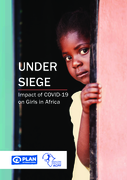
The COVID-19 pandemic has exacerbated and added yet another layer of vulnerability to an already dire web of vulnerabilities of girls in the African continent, which constitute about 49% of the total child population. Critically, gender equality and girls’ multidimensional vulnerability have been
...
39 examples of field practices, and learnings from 20 countries, for all phases of humanitarian response. The report shows that deliberate and proactive action is required to ensure that persons with disabilities from all constituencies are systematically included and meaningfully participate in DRR
...
Each humanitarian setting provides distinct opportunities and challenges for actors to coordinate and collaborate at strategic and operational levels. The Health and Protection Joint Operational Framework has been developed to ensure that the health and protection response during humanitarian emerge
...
Prise en charge clinique des troubles mentaux,
neurologiques et liés à l'utilisation de substances
psychoactives dans les situations d'urgence humanitaire
لإسعافات الأولية النفسية: دليل العاملين في الميدان
This guide covers psychological first aid which involves humane, supportive and practical help to fellow human beings suffering serious crisis events. It is written for people in a position to help other
...
