
Filter
106
Text search:
Ministry
of
Health,
Kingdom
of
Swaziland
Featured
Recommendations
1
New Publications
19
Language
Document type
No document type
81
Studies & Reports
11
Guidelines
10
Manuals
1
Situation Updates
1
Strategic & Response Plan
1
Fact sheets
1
Countries / Regions
Eswatini/ Swaziland
33
Lesotho
9
Global
5
Malawi
3
South Africa
2
Mozambique
2
Namibia
2
Africa
2
Sierra Leone
1
Zimbabwe
1
Nepal
1
Cambodia
1
Rwanda
1
Ecuador
1
Botswana
1
Authors & Publishers
Publication Years
Category
Countries
48
Clinical Guidelines
7
Women & Child Health
7
Public Health
5
Key Resources
1
Toolboxes
HIV
16
Mental Health
8
Disability
4
TB
4
Global Health Education
3
AMR
3
Planetary Health
3
Pharmacy
3
Natural Hazards
2
Ebola
1
Polio
1
Conflict
1
Rapid Response
1
NTDs
1
Health Financing Toolbox
1
Global AIDS Update 2017
FOLLOW-UP TO THE 2011 POLITICAL DECLARATION ON HIV/AIDS: INTENSIFYING EFFORTS TO ELIMINATE HIV/AIDS | Reporting Period: January – December 2014
Rabies remains an under-reported neglected zoonosis with a case-fatality rate of almost 100% in humans and animals. Dog-mediated human rabies causes tens of thousands
...

A review of proactive risk assessment and risk management practices to ensure the safety of drinking-water
Based on information gathered from 118 countries representing every region ...
Based on information gathered from 118 countries representing every region ...
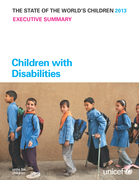
The State of the World’s Children 2013: Children with Disabilities examines the barriers – from inaccessible buildings to dismissive attitudes, from invisibility in official statistics to vicious discrimination – that deprive children with dis
...
Accessed November 2017.
Review
Drake AL et al. Journal of the International AIDS Society 2019, 22:e25271 http://onlinelibrary.wiley.com/doi/10.1002/jia2.25271/full | https://doi.org/10.1002/jia2.25271
The Mapping Antimicrobial Resistance and Antimicrobial Use Partnership (MAAP) project has conducted a multi-year, multi-country study that provides stark insights on the under-reported depth of the antimicrobial resistance (AMR) crisis across Africa
...
This first edition of our national neonatal care clinical guidelines is an initiative that aims to ensure that all the neonates in the Kingdom of E
...
In the last quarter of 2019 Southern African Regional Interagency Standing Committee Africa (RIASCO) reported that more than 11 million people were experiencing crisis or emergency levels of food in
...
The evidence base for differentiated care for stable patients has grown in recent years. There has been less attention, however, to developing differentiated models of care for patients with advanced or unstable HIV disease. Current clinical guideli
...

Globally, in low-income countries, the average newborn mortality rate is 27 deaths per 1,000 births, the report says. In high-income countries, that rate is 3 deaths per 1,000. Newborns from the riskiest places to give birth are up to 50 times more likely to die than those from the safest places.
...
...
Accessed 15th of October 2015
