
Filter
102
Text search:
Ministry
of
Health,
Kingdom
of
Lesotho
Featured
Recommendations
5
New Publications
26
Language
Document type
No document type
74
Studies & Reports
16
Guidelines
6
Situation Updates
3
Manuals
2
Training Material
1
Countries / Regions
Lesotho
34
Eswatini/ Swaziland
4
Global
4
Nigeria
2
Malawi
2
Africa
2
Congo, Democratic Republic of
1
Togo
1
Zimbabwe
1
Chad
1
Namibia
1
Ukraine
1
Botswana
1
Russia
1
Authors & Publishers
Publication Years
Category
Countries
47
Clinical Guidelines
7
Public Health
5
Women & Child Health
3
Key Resources
2
Capacity Building
1
Pharmacy & Technologies
1
Toolboxes
HIV
20
Disability
8
TB
5
Mental Health
4
Planetary Health
3
Conflict
2
Rapid Response
2
Refugee
2
Global Health Education
2
AMR
2
Caregiver
2
Pharmacy
2
Ebola
1
Natural Hazards
1
Health Financing Toolbox
1
This document is part of the process for improving the quality of care in family planning. Medical eligibility criteria for contraceptive use (MEC), the first edition
...
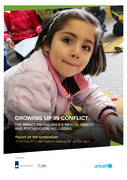
Report on the symposium 26–28 May 2015, New Babylon Meeting Center, The Hague

The goal of this Global Action Plan is to articulate synergistic actions that will be required to prevent HIVDR from undermining efforts to achieve global targets on health and HIV, and to provide t
...
These guidelines provide new and updated recommendations on the use of point-of-care testing in children under 18 months of age and point-
...
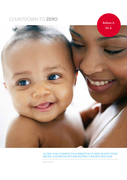
Countdown to zero
2011- 2015
The report summarizes the estimates of the burden of disease attributable to unsafe drinking water, sanitation, and hygiene for the year 2019 for four hea
...
Global tuberculosis report 2022
recommended
The WHO Global Tuberculosis Report 2022 provides a comprehensive and up-to-date assessment of the TB epidemic, and of progress in prevention, diagnosis and treatment
...
Supplement
HIV testing services
December 2016
From policy to practice: how the TB-HIV response is working
“The HIV community must place much more focus on TB co-infection than
it has done to date. TB takes the lives of over 1000 people living with HIV
every day, a number which is absolut
...
9 June 2021
Since its launch, GLASS has expanded in scope and coverage and as of May 2021, 109 countries and territories worldwide have enrolled in GLASS. A key new component in GLASS is the inclusion of
...
Global AIDS Update 2017
1 July 2021; Report shows big COVID-19-related HIV prevention programme service disruptions, but highlights that HIV service innovations and adaptations are possible.
A synthesis report on programme disruptions and adaptations during the COVID-19 pandemic in 2020
The African Regional Convening of the Global Initiative to Support Parents (GISP) stimulated the interest or engagement of almost 1500 individuals from 742 unique organizations in the fields
...
you can find all 14 Technical Booklets on Inclusive Education, produced by UNICEF, in ENGLISH. Other versions can be found on the website https://www.ded4inclusion.com/inclusive-education-resources-free/unicef-inclusive-education-booklets-and-webinars-english-version. Each Technical Booklet (and com
...
Five years after a global commitment to Fast-Track the HIV response and end AIDS by 2030, the world is off track. A promise to build on the momentum created in the first decade of the twenty-first century by front-loading investment and accelerating
...
