
Filter
9335
Text search:
Health
Workers
Featured
943
2406
Language
8815
304
223
176
124
109
51
49
21
17
17
16
13
12
12
12
12
12
11
11
10
9
7
7
7
6
6
6
6
6
6
6
6
5
5
5
5
5
5
5
5
5
5
4
4
4
4
4
4
4
4
4
3
3
3
3
3
3
3
2
2
2
2
2
1
1
1
1
1
1
1
1
1
1
1
1
1
1
1
1
1
1
1
Document type
5234
1333
1173
470
301
261
187
137
73
58
38
36
26
3
Countries
355
321
285
257
233
221
208
206
205
186
161
148
147
137
134
132
128
126
121
113
108
107
101
81
80
76
71
65
64
64
63
62
58
56
56
56
56
55
54
53
51
50
45
45
43
41
35
33
32
30
29
29
26
25
24
22
22
22
22
22
21
21
20
19
17
17
16
15
15
13
13
12
12
11
11
11
11
11
10
10
10
9
9
9
8
7
7
7
7
7
6
6
6
6
6
6
6
6
5
5
5
5
5
5
4
4
4
4
4
4
4
4
4
4
4
4
3
3
3
3
3
3
3
3
2
2
2
2
2
2
2
2
2
1
1
1
1
1
1
1
1
1
1
1
1
1
1
1
1
1
1
1
Authors & Publishers
1244
489
399
304
216
210
196
173
164
85
65
58
56
55
54
52
49
46
40
40
40
40
37
36
34
33
32
31
31
31
30
30
30
29
29
28
27
27
27
27
26
26
25
24
24
24
24
23
22
22
22
21
21
21
20
20
20
20
19
19
19
19
18
18
18
18
18
17
17
16
16
16
16
16
16
16
15
15
15
15
14
14
14
14
14
14
14
14
14
13
13
13
13
13
13
13
13
12
12
12
12
12
12
12
12
12
12
12
12
12
11
11
11
11
11
11
10
10
10
10
10
10
10
10
10
10
10
10
10
10
9
9
9
9
9
9
9
9
9
9
9
9
9
9
9
8
8
8
8
8
8
8
8
8
8
8
8
8
8
8
8
8
8
8
8
8
8
8
8
7
7
7
7
7
7
7
7
7
7
7
7
7
7
7
7
7
7
7
7
7
7
7
7
7
7
7
7
7
7
7
7
7
7
7
7
7
6
6
6
6
6
6
6
6
6
6
6
6
6
6
6
6
6
6
6
6
6
6
6
6
6
6
6
6
6
6
6
6
6
6
6
6
6
6
6
6
6
6
6
6
6
6
5
5
5
5
5
5
5
5
5
5
5
5
5
5
5
5
5
5
5
5
5
5
5
5
5
5
5
5
5
5
5
5
5
5
5
5
5
5
5
5
5
5
5
5
5
5
5
5
5
5
5
5
5
5
5
5
5
5
5
5
4
4
4
4
4
4
4
4
4
4
4
4
4
4
4
4
4
4
4
4
4
4
4
4
4
4
4
4
4
4
4
4
4
4
4
4
4
4
4
4
4
4
4
4
4
4
4
4
4
4
4
4
4
4
4
4
4
4
4
4
4
4
4
4
4
4
4
4
4
4
4
4
4
4
4
4
4
4
4
4
4
4
4
4
4
4
4
4
4
4
4
4
4
4
4
3
3
3
3
3
3
3
3
3
3
3
3
3
3
3
3
3
3
3
3
3
3
3
3
3
3
3
3
3
3
3
3
3
3
3
3
3
3
3
3
3
3
3
3
3
3
3
3
3
3
3
3
3
3
3
3
3
3
3
3
3
3
3
3
3
3
3
3
3
3
3
3
3
3
3
3
3
3
3
3
3
3
3
3
3
3
3
3
3
3
3
3
3
3
3
3
3
3
3
3
3
3
3
3
3
3
3
3
3
3
3
3
3
3
3
3
3
3
3
3
3
3
3
3
3
3
3
3
3
3
3
3
3
3
3
3
3
3
3
3
3
3
3
3
3
3
3
3
3
3
3
3
3
3
3
3
3
3
3
3
3
3
3
3
3
3
3
3
3
3
3
3
3
3
3
3
3
3
3
3
3
3
3
3
3
3
2
2
2
2
2
2
2
2
2
2
2
2
2
2
2
2
2
2
2
2
2
2
2
2
2
2
2
2
2
2
2
2
2
2
2
2
2
2
2
2
2
2
2
2
2
2
2
2
2
2
2
2
2
2
2
2
2
2
2
2
2
2
2
2
2
2
2
2
2
2
2
2
2
2
2
2
2
2
2
2
2
2
2
2
2
2
2
2
2
2
2
2
2
2
2
2
2
2
2
2
2
2
2
2
2
2
2
2
2
2
2
2
2
2
2
2
2
2
2
2
2
2
2
2
2
2
2
2
2
2
2
2
2
2
2
2
2
2
2
2
2
2
2
2
2
2
2
2
2
2
2
2
2
2
2
2
2
2
2
2
2
2
2
2
2
2
2
2
2
2
2
2
2
2
2
2
2
2
2
2
2
2
2
2
2
2
2
2
2
2
2
2
2
2
2
2
2
2
2
2
2
2
2
2
2
2
2
2
2
2
2
2
2
2
2
2
2
2
2
2
2
2
2
2
2
2
2
2
2
2
2
2
2
2
2
2
2
2
2
2
2
2
2
2
2
2
2
2
2
2
2
2
2
2
2
2
2
2
2
2
2
2
2
2
2
2
2
2
2
2
2
2
2
2
2
2
2
2
2
2
2
2
2
2
2
2
2
2
2
2
2
2
2
2
2
2
2
2
2
2
2
2
2
2
2
2
2
2
2
2
2
2
2
2
2
2
2
2
2
2
2
2
2
2
2
2
2
2
2
2
2
2
2
2
2
2
2
2
2
2
2
2
2
2
2
2
2
2
2
2
2
2
2
2
2
2
2
2
2
2
2
2
2
2
2
2
2
2
2
2
2
2
2
2
2
2
2
2
2
2
2
2
2
2
2
2
2
2
2
2
2
2
2
2
2
2
2
2
2
2
2
2
2
2
2
2
2
2
2
2
2
2
2
2
2
2
2
2
2
2
2
2
2
2
2
2
2
2
2
2
2
2
2
2
2
2
2
2
2
2
2
2
2
2
2
2
2
2
2
2
2
2
2
2
2
2
2
2
2
2
2
2
2
2
2
2
2
2
2
2
2
2
2
2
2
2
2
2
2
2
2
2
2
2
2
2
2
2
2
2
1
1
1
1
1
1
1
1
1
1
1
1
1
1
1
1
1
1
1
1
1
1
1
1
1
1
1
1
1
1
1
1
1
1
1
1
1
1
1
1
1
1
1
1
1
1
1
1
1
1
1
1
1
1
1
1
1
1
1
1
1
1
1
1
1
1
1
1
1
1
1
1
1
1
1
1
1
1
1
1
1
1
1
1
1
1
1
1
1
1
1
1
1
1
1
1
1
1
1
1
1
1
1
1
1
1
1
1
1
1
1
1
1
1
1
1
1
1
1
1
1
1
1
1
1
1
1
1
1
1
1
1
1
1
1
1
1
1
1
1
1
1
1
1
1
1
1
1
1
1
1
1
1
1
1
1
1
1
1
1
1
1
1
1
1
1
1
1
1
1
1
1
1
1
1
1
1
1
1
1
1
1
1
1
1
1
1
1
1
1
1
1
1
1
1
1
1
1
1
1
1
1
1
1
1
1
1
1
1
1
1
1
1
1
1
1
1
1
1
1
1
1
1
1
1
1
1
1
1
1
1
1
1
1
1
1
1
1
1
1
1
1
1
1
1
1
1
1
1
1
1
1
1
1
1
1
1
1
1
1
1
1
1
1
1
1
1
1
1
1
1
1
1
1
1
1
1
1
1
1
1
1
1
1
1
1
1
1
1
1
1
1
1
1
1
1
1
1
1
1
1
1
1
1
1
1
1
1
1
1
1
1
1
1
1
1
1
1
1
1
1
1
1
1
1
1
1
1
1
1
1
1
1
1
1
1
1
1
1
1
1
1
1
1
1
1
1
1
1
1
1
1
1
1
1
1
1
1
1
1
1
1
1
1
1
1
1
1
1
1
1
1
1
1
1
1
1
1
1
1
1
1
1
1
1
1
1
1
1
1
1
1
1
1
1
1
1
1
1
1
1
1
1
1
1
1
1
1
1
1
1
1
1
1
1
1
1
1
1
1
1
1
1
1
1
1
1
1
1
1
1
1
1
1
1
1
1
1
1
1
1
1
1
1
1
1
1
1
1
1
1
1
1
1
1
1
1
1
1
1
1
1
1
1
1
1
1
1
1
1
1
1
1
1
1
1
1
1
1
1
1
1
1
1
1
1
1
1
1
1
1
1
1
1
1
1
1
1
1
1
1
1
1
1
1
1
1
1
1
1
1
1
1
1
1
1
1
1
1
1
1
1
1
1
1
1
1
1
1
1
1
1
1
1
1
1
1
1
1
1
1
1
1
1
1
1
1
1
1
1
1
1
1
1
1
1
1
1
1
1
1
1
1
1
1
1
1
1
1
1
1
1
1
1
1
1
1
1
1
1
1
1
1
1
1
1
1
1
1
1
1
1
1
1
1
1
1
1
1
1
1
1
1
1
1
1
1
1
1
1
1
1
1
1
1
1
1
1
1
1
1
1
1
1
1
1
1
1
1
1
1
1
1
1
1
1
1
1
1
1
1
1
1
1
1
1
1
1
1
1
1
1
1
1
1
1
1
1
1
1
1
1
1
1
1
1
1
1
1
1
1
1
1
1
1
1
1
1
1
1
1
1
1
1
1
1
1
1
1
1
1
1
1
1
1
1
1
1
1
1
1
1
1
1
1
1
1
1
1
1
1
1
1
1
1
1
1
1
1
1
1
1
1
1
1
1
1
1
1
1
1
1
1
1
1
1
1
1
1
1
1
1
1
1
1
1
1
1
1
1
1
1
1
1
1
1
1
1
1
1
1
1
1
1
1
1
1
1
1
1
1
1
1
1
1
1
1
1
1
1
1
1
1
1
1
1
1
1
1
1
1
1
1
1
1
1
1
1
1
1
1
1
1
1
1
1
1
1
1
1
1
1
1
1
1
1
1
1
1
1
1
1
1
1
1
1
1
1
1
1
1
1
1
1
1
1
1
1
1
1
1
1
1
1
1
1
1
1
1
1
1
1
1
1
1
1
1
1
1
1
1
1
1
1
1
1
1
1
1
1
1
1
1
1
1
1
1
1
1
1
1
1
1
1
1
1
1
1
1
1
1
1
1
1
1
1
1
1
1
1
1
1
1
1
1
1
1
1
1
1
1
1
1
1
1
1
1
1
1
1
1
1
1
1
1
1
1
1
1
1
1
1
1
1
1
1
1
1
1
1
1
1
1
1
1
1
1
1
1
1
1
1
1
1
1
1
1
1
1
1
1
1
1
1
1
1
1
1
1
1
1
1
1
1
1
1
1
1
1
1
1
1
1
1
1
1
1
1
1
1
1
1
1
1
1
1
1
1
1
1
1
1
1
1
1
1
1
1
1
1
1
1
1
1
1
1
1
1
1
1
1
1
1
1
1
1
1
1
1
1
1
1
1
1
1
1
1
1
1
1
1
1
1
1
1
1
1
1
1
1
1
1
1
1
1
1
1
1
1
1
1
1
1
1
1
1
1
1
1
1
1
1
1
1
1
1
1
1
1
1
1
1
1
1
1
1
1
1
1
1
1
1
1
1
1
1
1
1
1
1
1
1
1
1
1
1
1
1
1
1
1
1
1
1
1
1
1
1
1
1
1
1
1
1
1
1
1
1
1
1
1
1
1
1
1
1
1
1
1
1
1
1
1
1
1
1
1
1
1
1
1
1
1
1
1
1
1
1
1
1
1
1
1
1
1
1
1
1
1
1
1
1
1
1
1
1
1
1
1
1
1
1
1
1
1
1
1
1
1
1
1
1
1
1
1
1
1
1
1
1
1
1
1
1
1
1
1
1
1
1
1
1
1
1
1
1
1
1
1
1
1
1
1
1
1
1
1
1
1
1
1
1
1
1
1
1
1
1
1
1
1
1
1
1
1
1
1
1
1
1
1
1
1
1
1
1
1
1
1
1
1
1
1
1
1
1
1
1
1
1
1
1
1
1
1
1
1
1
1
1
1
1
1
1
1
1
1
1
1
1
1
1
1
1
1
1
1
1
1
1
1
1
1
1
1
1
1
1
1
1
1
1
1
1
1
1
1
1
1
1
1
1
1
1
1
1
1
1
1
1
1
1
1
1
1
1
1
1
1
1
1
1
1
1
1
1
1
1
1
1
1
1
1
1
1
1
1
1
1
1
1
1
1
1
1
1
1
1
1
1
1
1
1
1
1
1
1
1
1
1
1
1
1
1
1
1
1
1
1
1
1
1
1
1
1
1
1
1
1
1
1
1
1
1
1
1
1
1
1
1
1
1
1
1
1
1
1
1
1
1
1
1
1
1
1
1
1
1
1
1
1
1
1
1
1
1
1
1
1
1
1
1
1
1
1
1
1
1
1
1
1
1
1
1
1
1
1
1
1
1
1
1
1
1
1
1
1
1
1
1
1
1
1
1
1
1
1
1
1
1
1
1
1
1
1
1
1
1
1
1
1
1
1
1
1
1
1
1
1
1
1
1
1
1
1
1
1
1
1
1
1
1
1
1
1
1
1
1
1
1
1
1
1
1
1
1
1
1
1
1
1
1
1
1
1
1
1
1
1
1
1
1
1
1
1
1
1
1
1
1
1
1
1
1
1
1
1
1
1
1
1
1
1
1
1
1
1
1
1
1
1
1
1
1
1
1
1
1
1
1
1
1
1
1
1
1
1
1
1
1
1
1
1
1
1
1
1
1
1
1
1
1
1
1
1
1
1
1
1
1
1
1
1
1
1
1
1
1
1
1
1
1
1
1
1
1
1
1
1
1
1
1
1
1
1
1
1
1
1
1
1
1
1
1
1
1
1
1
1
1
1
1
1
1
1
1
1
1
1
1
1
1
1
1
1
1
1
1
1
1
1
1
1
1
1
1
1
1
1
1
1
1
1
1
1
1
1
1
1
1
1
1
1
1
1
1
1
1
1
1
1
1
1
1
1
1
1
1
1
1
1
1
1
1
1
1
1
1
1
1
1
1
1
1
1
1
1
1
1
1
1
1
1
1
1
1
1
1
1
1
1
1
1
1
1
1
1
1
1
1
1
1
1
1
1
1
1
1
1
1
1
1
1
1
1
1
1
1
1
1
1
1
1
1
1
1
1
1
1
1
1
1
1
1
1
1
1
1
1
1
1
1
1
1
1
1
1
1
1
1
1
1
1
1
1
1
1
1
1
1
1
1
1
1
1
1
1
1
1
1
1
1
1
1
1
1
1
1
1
1
1
1
1
1
1
1
1
1
1
1
1
1
1
1
1
1
1
1
1
1
1
1
1
1
1
1
1
1
1
1
1
1
1
1
1
1
1
1
1
1
1
1
1
1
1
1
1
1
1
1
1
1
1
1
1
1
1
1
1
1
1
1
1
1
1
1
1
1
1
1
1
1
1
1
1
1
1
1
1
1
1
1
1
1
1
1
1
1
1
1
1
1
1
1
1
1
1
1
1
1
1
1
1
1
1
1
1
1
1
1
1
1
1
1
1
1
1
1
1
1
1
1
1
1
1
1
1
1
1
1
1
1
1
1
1
1
1
1
1
1
1
1
1
1
1
1
1
1
1
1
1
1
1
1
1
1
1
1
1
1
1
1
1
1
1
1
1
1
1
1
1
1
1
1
1
1
1
1
1
1
1
1
1
1
1
1
1
1
1
1
1
1
1
1
1
1
1
1
1
1
1
1
1
1
1
1
1
1
1
1
1
1
1
1
1
1
1
1
1
1
1
1
1
1
1
1
1
1
1
1
1
1
1
1
1
1
1
1
1
1
1
1
1
1
1
1
1
1
1
1
1
1
1
1
1
1
1
1
1
1
1
1
1
1
1
1
1
1
1
1
1
1
1
1
1
1
1
1
1
1
1
1
1
1
1
1
1
1
1
1
1
1
1
1
1
1
1
1
1
1
1
1
1
1
1
1
1
1
1
1
1
1
1
1
1
1
1
1
1
1
1
1
1
1
1
1
1
1
1
1
1
1
1
1
1
1
1
1
1
1
1
1
1
1
1
1
1
1
1
1
1
1
1
1
1
1
1
1
1
1
1
1
1
1
1
1
1
1
1
1
1
1
1
1
1
1
1
1
1
1
1
1
1
1
1
1
1
1
1
1
1
1
1
1
1
1
1
1
1
1
1
1
1
1
1
1
1
1
1
1
1
1
1
1
1
1
1
1
1
1
1
1
1
1
1
1
1
1
1
1
1
1
1
1
1
1
1
1
1
1
1
1
1
1
1
1
1
1
1
1
1
1
1
1
1
1
1
1
1
1
1
1
1
1
1
1
1
1
1
1
1
1
1
1
1
1
1
1
1
1
1
1
1
1
1
1
1
1
1
1
1
1
1
1
1
1
1
1
1
1
1
1
1
1
1
1
1
1
1
1
1
1
1
1
1
1
1
1
1
1
1
1
1
1
1
1
1
1
1
1
1
1
1
1
1
1
1
1
1
1
1
1
1
1
1
1
1
1
1
1
1
1
1
1
1
1
1
1
1
1
1
1
1
1
1
1
1
1
1
1
1
1
1
1
1
1
1
1
1
1
1
1
1
1
1
1
1
1
1
1
1
1
1
1
1
1
1
1
1
1
1
1
1
1
1
1
1
1
1
1
1
1
1
1
1
1
1
1
1
1
1
1
1
1
1
1
1
1
1
1
1
1
1
1
1
1
1
1
1
1
1
1
1
1
1
1
1
1
1
1
1
1
1
1
1
1
1
1
1
1
1
1
1
1
1
1
1
1
1
1
1
1
1
1
1
1
1
1
1
1
1
1
1
1
1
1
1
1
1
1
1
1
1
1
1
1
1
1
1
1
1
1
1
1
1
1
1
1
1
1
1
1
1
1
1
1
1
1
1
1
1
1
1
1
1
1
1
1
1
1
1
1
1
1
1
1
1
1
1
1
1
1
1
1
1
1
1
1
1
1
1
1
1
1
1
1
1
1
1
1
1
1
1
1
1
1
1
1
1
1
1
1
1
1
1
1
1
1
1
1
1
1
1
1
1
1
1
1
1
1
1
1
1
1
1
1
1
1
1
1
1
1
1
1
1
1
1
1
1
1
1
1
1
1
1
1
1
1
1
1
1
1
1
1
1
1
1
1
1
1
1
1
1
1
1
1
1
1
1
1
1
1
1
1
1
1
1
1
1
1
1
1
1
1
1
1
1
1
1
1
1
1
1
1
1
1
1
1
1
1
1
1
1
1
1
1
1
1
1
1
1
1
1
1
1
1
1
1
1
1
1
1
1
1
1
1
1
1
1
1
1
1
1
1
1
1
1
1
1
1
1
1
1
1
1
1
1
1
1
1
1
1
1
1
1
1
1
1
1
1
1
1
1
1
1
1
1
1
1
1
1
1
1
1
1
1
1
1
1
1
1
1
1
1
1
1
1
1
1
1
1
1
1
1
1
1
1
1
1
1
1
1
1
1
1
1
1
1
1
1
1
1
1
1
1
1
1
1
1
1
1
1
1
1
1
1
1
1
1
1
1
1
1
1
1
1
1
1
1
1
1
1
1
1
1
1
1
1
1
1
1
1
1
1
1
1
1
1
1
1
1
1
1
1
1
1
1
1
1
1
1
1
1
1
1
1
1
1
1
1
1
1
1
1
1
1
1
1
1
1
1
1
1
1
1
1
1
1
1
1
1
1
1
1
1
1
1
1
1
1
1
1
1
1
1
1
1
1
1
1
1
1
1
1
1
1
1
1
1
1
1
1
1
1
1
1
1
1
1
1
1
1
1
1
1
1
1
1
1
1
1
1
1
1
1
1
1
1
1
1
1
1
1
1
1
1
1
1
1
1
1
1
1
1
1
1
1
1
1
1
1
1
1
1
1
1
1
1
1
1
1
1
1
1
1
1
1
1
1
1
1
1
1
1
1
1
1
1
1
1
1
1
1
1
1
1
1
1
1
1
1
1
1
1
1
1
1
1
1
1
1
1
1
1
1
1
1
1
1
1
1
1
1
1
1
1
1
1
1
1
1
1
1
1
1
1
1
1
1
1
1
1
1
1
1
1
1
1
1
1
1
1
1
1
1
1
1
1
1
1
1
1
1
1
1
1
1
1
1
1
1
1
1
1
1
1
1
1
1
1
1
1
1
1
1
1
1
1
1
1
1
1
1
1
1
1
1
1
1
1
1
1
1
1
1
1
1
1
1
1
1
1
1
1
1
1
1
1
1
1
1
1
1
1
1
1
1
1
1
1
1
1
1
1
1
1
1
1
1
1
1
1
1
1
1
1
1
1
1
1
1
1
1
1
1
1
1
1
1
1
1
1
1
1
1
1
1
1
1
1
1
1
1
1
1
1
1
1
1
1
1
1
1
1
1
1
1
1
1
1
1
1
1
1
1
1
1
1
1
1
1
1
1
1
1
1
1
1
1
1
1
1
1
1
1
1
1
1
1
1
1
1
1
1
1
1
1
1
1
1
1
1
1
1
1
1
1
1
1
1
1
1
1
1
1
1
1
1
1
1
1
1
1
1
1
1
1
1
1
1
1
1
1
1
1
1
1
1
1
1
1
1
1
1
1
1
1
1
1
1
1
1
1
1
1
1
1
1
1
1
1
1
1
1
1
1
1
1
1
1
1
1
1
1
1
1
1
1
1
1
1
1
1
1
1
1
1
1
1
1
1
1
1
1
1
1
1
1
1
1
1
1
1
1
1
1
1
1
1
1
1
1
1
1
1
1
1
1
1
1
1
1
1
1
1
1
1
1
1
1
1
1
1
1
1
1
1
1
1
1
1
1
1
1
1
1
1
1
1
1
1
1
1
1
1
1
1
1
1
1
1
1
1
1
1
1
1
1
1
1
1
1
1
1
1
1
1
1
1
1
1
1
1
1
1
1
1
1
1
1
1
1
1
1
1
1
1
1
1
1
1
1
1
1
1
1
1
1
1
1
1
1
1
1
1
1
1
1
1
1
1
1
1
1
1
1
1
1
1
1
1
1
1
1
1
1
1
1
1
1
1
1
1
1
1
1
1
1
1
1
1
1
1
1
1
1
1
1
1
1
1
1
1
1
1
1
1
1
1
1
1
1
1
1
1
1
1
1
1
1
1
1
1
1
1
1
1
1
1
1
1
1
1
1
1
1
1
1
1
1
1
1
1
1
1
1
1
1
1
1
1
1
1
1
1
1
1
1
1
1
1
1
1
1
1
1
1
1
1
1
1
1
1
1
1
1
1
1
1
1
1
1
1
1
1
1
1
1
1
1
1
1
1
1
1
1
1
1
1
1
1
1
1
1
1
1
1
1
1
1
1
1
1
1
1
1
1
1
1
1
1
1
1
1
1
1
1
1
1
1
1
1
1
1
1
1
1
1
1
1
1
1
1
1
1
1
1
1
1
1
1
1
1
1
1
1
1
1
1
1
1
1
1
1
1
1
1
1
1
1
1
1
1
1
1
1
1
1
1
1
1
1
1
1
1
1
1
1
1
1
1
1
1
1
1
1
1
1
1
1
1
1
1
1
1
1
1
1
1
1
1
1
1
1
1
1
1
1
1
1
1
1
1
1
1
1
1
1
1
1
1
1
1
1
1
1
1
1
1
1
1
1
1
1
1
1
1
1
1
1
1
1
1
1
1
1
1
1
1
1
1
1
1
1
1
1
1
1
1
1
1
1
1
1
1
1
1
1
1
1
1
1
1
1
1
1
1
1
1
1
1
1
1
1
1
1
1
1
1
1
1
1
1
1
1
1
1
1
1
1
1
1
1
1
1
1
1
1
1
1
1
1
1
1
1
1
1
1
1
1
1
1
1
1
1
1
1
1
1
1
1
1
1
1
1
1
1
1
1
1
1
1
1
1
1
1
1
1
1
1
1
1
1
1
1
1
1
1
1
1
1
1
1
1
1
1
1
1
1
1
1
1
1
1
1
1
1
1
1
1
1
1
1
1
1
1
1
1
1
1
1
1
1
1
1
1
1
1
1
1
1
1
1
1
1
1
1
1
1
1
1
1
1
1
1
1
1
1
1
1
1
1
1
1
1
1
1
1
1
1
1
1
1
1
1
1
1
1
1
1
1
1
1
1
1
1
1
1
1
1
1
1
1
1
1
1
1
1
1
1
1
1
1
1
1
1
1
1
1
1
1
1
1
1
1
1
1
1
1
1
1
1
1
1
1
1
1
1
1
1
1
1
1
1
1
1
1
1
1
1
1
1
1
1
1
1
1
1
1
1
1
1
1
1
1
1
1
1
1
1
1
1
1
1
1
1
1
1
1
1
1
1
1
1
1
1
1
1
1
1
1
1
1
1
1
1
1
1
1
1
1
1
1
1
1
1
1
1
1
1
1
1
1
1
1
1
1
1
1
1
1
1
1
1
1
1
1
1
1
1
1
1
1
1
1
1
1
1
1
1
1
1
1
1
1
1
1
1
1
1
1
1
1
1
1
1
1
1
1
1
1
1
1
1
1
1
1
1
1
1
1
1
1
1
1
1
1
1
1
1
1
1
1
1
1
1
1
1
1
1
1
1
1
1
1
1
1
1
1
1
1
1
1
1
1
1
1
1
1
1
1
1
1
1
1
1
1
1
1
1
1
1
1
1
1
1
1
1
1
1
1
1
1
1
1
1
1
1
1
1
1
1
1
1
1
1
1
1
1
1
1
1
1
1
1
1
1
1
1
1
1
1
1
1
1
1
1
1
1
1
1
1
1
1
1
1
1
1
1
1
1
1
1
1
1
1
1
1
1
1
1
1
1
1
1
1
1
1
1
1
1
1
1
1
1
1
1
1
1
1
1
1
1
1
1
1
1
1
1
1
1
1
1
1
1
1
1
1
1
1
1
1
1
1
1
1
1
1
1
1
1
1
1
1
1
1
1
1
1
1
1
1
1
1
1
1
1
1
1
1
1
1
1
1
1
1
1
1
1
1
1
1
1
1
1
1
1
1
1
1
1
1
1
1
1
1
1
1
1
1
1
1
1
1
1
1
1
1
1
1
1
1
1
1
1
1
1
1
1
1
1
1
1
1
1
1
1
1
1
1
1
1
1
1
1
1
1
1
1
1
1
1
1
1
1
1
1
1
1
1
1
1
1
1
1
1
1
1
1
1
1
1
1
1
1
1
1
1
1
1
1
1
1
1
1
1
1
1
1
1
1
1
1
1
1
1
1
1
1
1
1
1
1
1
1
1
1
1
1
1
1
1
1
1
1
1
1
1
1
1
1
1
1
1
1
1
1
1
1
1
1
1
1
1
1
1
1
1
1
1
1
1
1
1
1
1
1
1
1
1
1
1
1
1
1
1
1
1
1
1
1
1
1
1
1
1
1
1
1
1
1
1
1
1
1
1
1
1
1
1
1
1
1
1
1
1
1
1
1
1
1
1
1
1
1
1
1
1
1
1
1
1
1
1
1
1
1
1
1
1
1
1
1
1
1
1
1
1
1
1
1
1
1
1
1
1
1
1
1
1
1
1
1
1
1
1
1
1
1
1
1
1
1
1
1
1
1
1
1
1
1
1
1
1
1
1
1
1
1
1
1
1
1
1
1
1
1
1
1
1
1
1
1
1
1
1
1
1
1
1
1
1
1
1
1
1
1
1
1
1
1
1
1
1
1
1
1
1
1
1
1
1
1
1
1
1
1
1
1
1
1
1
1
1
1
1
1
1
1
1
1
1
1
1
1
1
1
1
1
1
1
1
1
1
1
1
1
1
1
1
1
1
1
1
1
1
1
1
1
1
1
1
1
1
1
1
1
1
1
1
1
1
1
1
1
1
1
1
1
1
1
1
1
1
1
1
1
1
1
1
1
1
1
1
1
1
1
1
1
1
1
1
1
1
1
1
1
1
1
1
1
1
1
1
1
1
1
1
1
1
1
1
1
1
1
1
1
1
1
1
1
1
1
1
1
1
1
1
1
1
1
1
1
1
1
1
1
1
1
1
1
1
1
1
1
1
1
1
1
1
1
1
1
1
1
1
1
1
1
1
1
1
1
1
1
1
1
1
1
1
1
1
1
1
1
1
1
1
1
1
1
1
1
1
1
1
1
1
1
1
1
1
1
1
1
1
1
1
1
1
1
1
1
1
1
1
1
1
1
1
1
1
1
1
1
1
1
1
1
1
1
1
1
1
1
1
1
1
1
1
1
1
1
1
1
1
1
1
1
1
1
1
1
1
1
1
1
1
1
1
1
1
1
1
1
1
1
1
1
1
1
1
1
1
1
1
1
1
1
1
1
1
1
1
1
1
1
1
1
1
1
1
1
1
1
1
1
1
1
1
1
1
1
1
1
1
1
1
1
1
1
1
1
1
1
1
1
1
1
1
1
1
1
1
1
1
1
1
1
1
1
1
1
1
1
1
1
1
1
1
1
1
1
1
1
1
1
1
1
1
1
1
1
1
1
1
1
1
1
1
1
1
1
1
1
1
1
1
1
1
1
1
1
1
1
1
1
1
1
1
1
1
1
1
1
1
1
1
1
1
1
1
1
1
1
1
1
1
1
1
1
1
1
1
1
1
1
1
1
1
1
1
1
1
1
1
1
1
1
1
1
1
1
1
1
1
1
1
1
1
1
1
1
1
1
1
1
1
1
1
1
1
1
1
1
1
1
1
1
1
1
1
1
1
1
1
1
1
1
1
1
1
1
1
1
1
1
1
1
1
1
1
1
1
1
1
1
1
1
1
1
1
1
1
1
1
1
1
1
1
1
1
1
1
1
1
1
1
1
1
1
1
1
1
1
1
1
1
1
1
1
1
1
1
1
1
1
1
1
1
1
1
1
1
1
1
1
1
1
1
1
1
1
1
1
1
1
1
1
1
1
1
1
1
1
1
1
1
1
1
1
1
1
1
1
1
1
1
1
1
1
1
1
1
1
1
1
1
1
1
1
1
1
1
1
1
1
1
1
1
1
1
1
1
1
1
1
1
1
1
1
1
1
1
1
1
1
1
1
1
1
1
1
1
1
1
1
1
1
1
1
1
1
1
1
1
1
1
1
1
1
1
1
1
1
1
1
1
1
1
1
1
1
1
1
1
1
1
1
1
1
1
1
1
1
1
1
1
1
1
1
1
1
1
1
1
1
1
1
1
1
1
1
1
1
1
1
1
1
1
1
1
1
1
1
1
1
1
1
1
1
1
1
1
1
1
1
1
1
1
1
1
1
1
1
1
1
1
1
1
1
1
1
1
1
1
1
1
1
1
1
1
1
1
1
1
1
1
1
1
1
1
1
1
1
1
1
1
1
1
1
1
1
1
1
1
1
1
1
1
1
1
1
1
1
1
1
1
1
1
1
1
1
1
1
1
1
1
1
1
1
1
1
1
1
1
1
1
1
1
1
1
1
1
1
1
1
1
1
1
1
1
1
1
1
1
1
1
1
1
1
1
1
1
1
1
1
1
1
1
1
1
1
1
1
1
1
1
1
1
1
1
1
1
1
1
1
1
1
1
1
1
1
1
1
1
1
1
1
1
1
1
1
1
1
1
1
1
1
1
1
1
1
1
1
1
1
1
1
1
1
1
1
1
1
1
1
1
1
1
1
1
1
1
1
1
1
1
1
1
1
1
1
1
1
1
1
1
1
1
1
1
1
1
1
1
1
1
1
1
1
1
1
1
1
1
1
1
1
1
1
1
1
1
1
1
1
1
1
1
1
1
1
1
1
1
1
1
1
1
1
1
1
1
1
1
1
1
1
1
1
1
1
1
1
1
1
1
1
1
1
1
1
1
1
1
1
1
1
1
1
1
1
1
1
1
1
1
1
1
1
1
1
1
1
1
1
1
1
1
1
1
1
1
1
1
1
1
1
1
1
1
1
1
1
1
1
1
1
1
1
1
1
1
1
1
1
1
1
1
1
1
1
1
1
1
1
1
1
1
1
1
1
1
1
1
1
1
1
1
1
1
1
1
1
1
1
1
1
1
1
1
1
1
1
1
1
1
1
1
1
1
1
1
1
1
1
1
1
1
1
1
1
1
1
1
1
1
1
1
1
1
1
1
1
1
1
1
1
1
1
1
Publication Years
1
2756
5668
840
63
5
1
1
Category
3564
629
522
473
364
276
79
5
4
3
Toolboxes
1208
742
596
449
426
374
325
307
276
211
179
177
164
130
129
123
117
70
59
57
54
53
47
2
1
1
Role of Frontline Workers in Prevention and Management of Coronavirus (Hindi)
Ministry of Health & Family Welfare; Government of India; National Health Mission
Ministry of Health & Family Welfare; Government of India; National Health Mission
(2020)
C2
Accessed: 08.04.2020
This manual is designed to orient helpers to offer psychologicalfirst aid (PFA) to people following a serious crisis event. PFA involves humane, supportive and practical assistance for people who are distressed, in ways that respect their dignity, culture and abilities. PFA is an approach that can b
...
e learned by both professionals and non-professionals who are in a position to help people impacted by very distressing events
more
Prevention and Treatment of HIV and other sexually transmitted infections for sex workers in low- and middle-income countries
World Health Organization; UNFPA; UNAIDS; etc al.d
(2012)
C_WHO
HIV/AIDS Programme
Policy Brief
Female Genital Schistosomiasis (FGS) is a gynaecological disease caused by Schistosoma haematobium, a parasitic worm that is acquired by skin contact with freshwater contaminated by schistosome cerceriae. Communities in which the infection is most endemic have limited access to clean water and healt
...
hcare services. Up to 150 million adolescent girls and women are estimated to be at risk of FGS and about 16–56 milion womens are living with FGS, with the majority of these in sub-Saharan Africa. The variability of these estimates points to the fact that this neglected tropical disease is not well studied and frequently not prioritized by local, regional, and global health policy makers.
more

Promoting the Development of Infants and Young Children with Spina Bifida and Hydrocephalus: a Guide for Mid-level Rehabilitation Workers
World Health Organization
(1996)
This guide is designed to support mid-level rehabilitation workers on work with infants, children and young adults with spina bifida and hydrocephalus and their families. The manual includes information on the types, signs and causes of spina bifida
...
and hydrocephalus, assessment of the level of development of those affected, and suggestions to promote normal development, mobility and self-care
more

This guide is designed to support mid-level rehabilitation workers on work with children with cerebral palsy and their families. The manual includes information on early detection and assessment of the level of development of the child, equipment to
...
support their needs and suggestions to promote mobility and improved communication. You can download this guide in Arabic and Italian, too
more

Toolkit for monitoring and evaluation of interventions for sex workers
World Health Organization (South East Asia Region; Western Pacific Region)
(2009)
C_WHO
Video on Covid-19 awareness for community level workers
Ministry of Health & Family Welfare; Government of India
Ministry of Health & Family Welfare; Government of India
(2020)
C2
Video on Covid-19 awareness for community level workers
‘Virus Carriers’ and HIV testing: navigating Ukraine’s HIV policies and programming for female sex workers
A. Tokar; J. Osborne; K. Slobodianiuk; et al.
BMC Public Health (BioMed Central); Health Research Policy and Systems
(2019)
CC
Tokar et al. Health Research Policy and Systems (2019) 17:23 https://doi.org/10.1186/s12961-019-0415-4
In line with the National Mental Health Strategy for Lebanon (2015-2020), this guide answers the objective of the Mental Health and Psychosocial Support task force: “Development and provision of s
...
taff care interventions for persons working in the MHPSS and Protection sectors”. It aims at preventing burnout, improving the wellbeing of staff, and managing difficult situations resulting from work conditions.
more

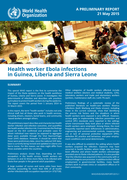
This preliminary report summarizes the impact of the Ebola epidemic on the health workforce of Guinea, Liberia and Sierra Leone. It investigates the determinants of infection and describes safe practices put in place to protect
...
health workers during the epidemic. The report covers the period from 1 January 2014 to 31 March 2015 and is presents findings from the 815 confirmed and probable cases for whom individual case reports were available.
more
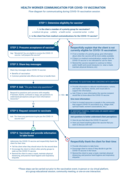
13 May 2021 The diagram supports health workers by outlining key steps and messages to communicate during a COVID-19 vaccination session.
The Community Health Academy works to train and grow the community health workforce. While we prioritize the health
...
workers in the five countries where Last Mile Health works, we also share many of our products and services globally to support the health workforce.
The Academy’s scope is two-fold:
Partner with governments to design, digitize, and deliver training for community and frontline health workers.
Partner with governments to train health leaders to effectively manage community health systems.
more
Empowering Health Workers to Improve Service Delivery. This training program is designed to build the capacity of program managers and health provi
...
ders in quality management, and improve the provision of high-quality health services.
Please download the chapters directly from the website: https://www.usaidassist.org/resources/kenya-quality-model-health-training-course-health-sector
more
Health systems the world over have embraced the value of community health workers (CHWs) in extending essential services to the community level, im
...
proving health equity and progressing toward universal health coverage. Governments now have an opportunity to institutionalize CHW programs and professionalize this essential cadre of the health workforce. What will it take to ensure CHW programs, at scale, can achieve their full potential?
Fortunately, policymakers, funders, NGOs, and other partners seeking to design, revamp, or strengthen CHW programs have a suite of tools at their disposal. One of the longest-standing and most rigorously field-tested of these tools is the Community Health Worker Assessment and Improvement Matrix (CHW AIM), an assessment tool which can be used to design, evaluate and strengthen CHW programs.
You can find this assessment tool on this page here. The matrix is also downloaded on MEDBOX, but if you want, you can register for free and get the matrix. After that follow the points underneath.
accessed 23.07.2021
also available in [Français] [Español]
more
South Africa has a long history of community health workers (CHWs). It has been a journey that has required balancing constrained resources and competing priorities. CHWs form a bridge between commu
...
nities and healthcare service provision within health facilities and act as the cornerstone of South Africa’s Ward-Based Primary Healthcare Outreach Teams. This study aimed to document the CHW policy implementation landscape across six provinces in South Africa and explore the reasons for local adaptation of CHW models and to identify potential barriers and facilitators to implementation of the revised framework to help guide and inform future planning.
more

This manual is a guide to psychosocial interventions to help people cope with the emotional effects of disasters. Some are direct responses to the trauma of disasters, while others are longer-term responses. Even more than the physical effects of disasters, the emotional effects cause long-lasting s
...
uffering, disability and loss of income
more
CHWs are trained public health workers who serve as a bridge between communities, health care systems, and state
...
health departments.
Resources on this page include:
Online courses, lessons learned, and best practices to help state health departments train and further build capacity for CHWs in their communities.
Training and education materials for CHWs to use within their communities.
accessed 23.07.2021
more
Community health workers (CHWs) play a vital role in health service delivery, especially in countries with less resilient
...
health systems. During any outbreak CHWs are relied on to help control the spread. However, they are often the last in line to receive necessary health products and protective equipment, which affects their ability to safely serve their communities.
more

Access to health workers who are fit for purpose, motivated and protected is a fundamental force of health service delivery and the achievement of
...
universal health coverage and the health and health-related Sustainable Development Goals. Data and knowledge of the distribution, skill mix and future development needs of the health workforce can mean the difference between enabling or impeding health systems performance, inclusive economic growth and global health security preparedness and response
more
Community Health Worker Training Curriculum - Facilitator's Guide
Baylor Tingathe Community Outreach Programme
Baylor College of Medicine Children’s Foundation Malawi
(2016)
CC
This curriculum was designed to train newly recruited health care workers (HCW) in the basic knowledge and skills needed to improve different HIV services within the
...
health facility including identification, linkage, retention and support. In addition to HIV basics, the training has supplementary units focused on PMTCT, psychosocial support, opportunistic infections, tuberculosis and HIV, nutrition and family planning in order to give a more well-rounded and comprehensive training of related topics.
more
The Current State of CHW Training Programs in Sub-Saharan Africa and South Asia
Cindil Redick& annah Sarah Faich Dini
One Million Community Health Workers Campaign | mPowering Frontline Health Workers
(2014)
C2
What We Know, What We Don’t Know, and What We Need to Do
Global Health Media Project Videos
recommended
Creating Videos to train health workers and serve communities.
Global Health Media Project designs and develops videos that are tailored to the ne
...
eds of health workers and populations in low-resource settings. Internet and mobile technology give us the power to reach large numbers, cost-effectively and across vast distances, resulting in significant impact at minimal cost per patient.
more
Training Manual for Community Health Workers
Shortages of healthcare workers is detrimental to the health of communities, especially children. This paper describes the process of capacity building Community
...
Health Volunteers (CHVs) to deliver integrated preventive and curative package of care of services to manage common childhood illness in hard-to-reach communities in Bondo Subcounty, Kenya
more
All health and care workers require the knowledge and skills to prevent the transmission of Ebola virus or Marburg virus when providing care for patients. This course provides an overview of the mod
...
e of transmission of these viruses, the personal protective equipment required by health and care workers and measures to take for rapid identification and isolation as well as managing the environment.
more

A practical and instructive guide to the ways that effective supervision can be used to promote continuing improvements in the performance of health workers. Noting that most supervisors are assigne
...
d responsibility without sufficient training, the book attempts to give the concept of supervision a precise meaning set out in a series of tasks, priorities, timetables, checklists, and instruments for assessment. Throughout, emphasis is placed on the crucial distinction between spot inspections and the kind of well-planned supervision that encourages health professionals to take pride in their work and strive to improve
more
Joint WHO/ILO Briefing Note for Workers and Employers updated 5 September 2014
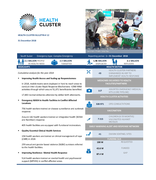
Emergency WASH in Health Facilities in Conflict Affected Locations 756 health workers trained on disease surveillance and outbreak response.
Aroun
...
d 142 health workers trained on integrated health (WASH and Nutrition) response. 405 health facilities are equipped with functional incinerators.
Quality Essential Clinical Health Services 194 health workers are trained on clinical management of rape (CMR) in 2018. 259 sexual and gender based violence (SGBV) survivors referred to the health facilities.
Improving Resilience- Mental Health Response 514 health workers trained on mental health and psychosocial support (MPHSS) in conflict affected areas.
more
This guide is available in English, French, Spanish, Russian, Arabic and Chinese
This guide consolidates COVID-19 guidance for human resources for health managers and policy-makers at national, subnational and facility levels to design, manage and
...
preserve the workforce necessary to manage the COVID-19 pandemic and maintain essential health services.
The guide identifies recommendations to protect, support and empower health workers at individual, management, organizational and system levels.
more
This report describes the “Building health workers capacity on air pollution and health” pilot workshop held in Ghana in 2022 which aimed at te
...
sting the training material of the first WHO Air Pollution and Health Training toolkit (APHT) targeting health professionals. APHT aims at strengthening the knowledge of health workers on air pollution and health and to enable them to effectively communicate with patients and communities on how to reduce their risk, to advocate for population level interventions as well as to train other peers and colleagues using a train-the-trainer approach. This workshop report serves as a tool and example of a training that can be replicated and adapted to other contexts and settings based on country and regional priorities and needs.
more

Introduction Community health workers (CHWs) are increasingly being tasked to prevent and manage cardiovascular disease (CVD) and its risk factors in underserved populations in low-income and middle
...
-income countries (LMICs); however, little is known about the required training necessary for them to accomplish their role. This review aimed to evaluate the training of CHWs for the prevention and management of CVD and its risk factors in LMICs.
Methods A search strategy was developed in line with Preferred Reporting Items for Systematic Reviews and Meta-Analyses guidelines, and five electronic databases (Medline, Global Health, ERIC, EMBASE and CINAHL) were searched to identify peer-reviewed studies published until December 2016 on the training of CHWs for prevention or control of CVD and its risk factors in LMICs. Study characteristics were extracted using a Microsoft Excel spreadsheet and quality assessed using Effective Public Health Practice Project’s Quality Assessment Tool. The search, data extraction and quality assessment were performed independently by two researchers.
Results The search generated 928 articles of which 8 were included in the review. One study was a randomised controlled trial, while the remaining were before–after intervention studies. The training methods included classroom lectures, interactive lessons, e-learning and online support and group discussions or a mix of two or more. All the studies showed improved knowledge level post-training, and two studies demonstrated knowledge retention 6 months after the intervention.
Conclusion The results of the eight included studies suggest that CHWs can be trained effectively for CVD prevention and management. However, the effectiveness of CHW trainings would likely vary depending on context given the differences between studies (eg, CHW demographics, settings and training programmes) and the weak quality of six of the eight studies. Well-conducted mixed-methods studies are needed to provide reliable evidence about the effectiveness and cost-effectiveness of training programmes for CHWs.
more

Promoting independence following a stroke: a guide for therapists and professionals working in primary health care
World Health Organization
(1999)
This guide is intended for mid-level rehabilitation workers on work with people who have suffered a stroke and their families. The guide contains advice on how to plan and conduct rehabilitation activities for those who have had a stroke to promote
...
their independence in all aspects of daily life
more
Sexual and Reproductive Health of Women and Adolescent Girls Living With HIV
EngenderHealt;; UNFPA
(2008)
guidance for health managers, health workers, and activists
GHWA Task Force on Scaling Up Education and Training for Health Workers
Who wants to work in a rural health post? The role of intrinsic motivation, rural background and faith-based institutions in Ethiopia and Rwanda
Serneels, P., Montalvo, J.G., Pettersson, G., et al.
Bulletin of the World Health Organization
(2010)
C_WHO
This paper examines the extent to which health workers differ in their willingness to work in rural areas and the reasons for these differences, based on the data collected in Rwanda analysed indivi
...
dually and in combination with data from Ethiopia.
more
The purpose of this manual is to train health workers to use G6PD rapid diagnostic tests (RDTs) safely and effectively, so as to inform appropriate decision making for P. vivax radical cure. This ma
...
nual should be used with the accompanying job aid. The job aid is a set of step-by-step instructions about how to use a G6PD RDT. It contains both words and pictures.
more
The toolkit's purpose is to:
improve the primary health care response for older persons.
sensitize and educate primary health care workers
...
about the specific needs of their older clients.
provide primary care health workers with a set of tools/instruments to assess older people's health.
raise awareness among primary care health workers of the accumulation of minor/major disabilities experienced by older people.
provide guidance on how to make primary health care management procedures more responsive to the needs of older people's needs.
offer direction on how to do environmental audits to test primary health care centres for their age-friendliness.
The toolkit comprises a number of instruments (evaluation forms, slides, figures, graphs, diagrams, scale tables, country guidelines, exam sheets, screening tools, cards, checklists, etc.) that can be used by primary health care workers to assess and address older persons' health. These resources are meant to supplement and not to replace local and national materials and guidelines
more
Many low-resource settings have a shortage of physicians and health workers. (1) In order to provide patient-centred continuous care more effectively, primary care systems can include team-based car
...
e strategies in their clinic workflows and protocols. Team-based care uses multidisciplinary teams (which may involve new staff, or the shifting of tasks among existing staff). Teams can include patients themselves, primary care physicians, and other allied health professionals, such as nurses, pharmacists, counsellors, social workers, nutritionists, community health workers, or others. Teams reduce the burden on physicians by utilizing the skills of trained health workers. Strong evidence shows that team-based care is effective in improving hypertension control among patients in a cost-effective way. (2) Some amount of task shifting/team-based care is already taking place in many settings; this module provides further guidance on how to maximize this approach for greater impact.
more
A Review of Community Health Worker (CHW) knowledge, attitudes and practices relating to the sexual health of MSM, including existing training materials and manuals in Europe & neighbouring countries
C. Folch; P. Fernández-Dávila; J. Palacio-Vieira; et al.
European Commission; Centre d'Estudis Epidemiològics sobre les Infeccions de Transmissió Sexual i Sida de Catalunya (CEEISCAT); European AIDS Treatment Group
(2020)
C2
Accessed: 07.03.2020
A Review of Community Health Worker (CHW) knowledge, attitudes and practices relating to the sexual health of MSM, including existing training materials and manuals in Europ
...
e and neighbouring countries (D5.1)
Contract 2015 71 01 A behavioural survey for HIV/AIDS and associated infections and a survey and tailored training for community based health workers to facilitate access and improve the quality of prevention, diagnosis of HIV/AIDS, STI and viral hepatitis and health care services for men who have sex with men (MSM).
Pubic Health
more
No health system can claim to be free of avoidable infections. These avoidable infections, acquired through health care practices, affect patients, their families and
...
health workers, in many different ways.
more
WHO Guideline on self-care interventions for health and well-being, 2022 revision: executive summary
recommended
A global shortage of an estimated 18 million health workers is anticipated by 2030, a record 130 million people are in need of humanitarian assistance, and there is the global threat of pandemics su
...
ch as COVID-19. At least 400 million people worldwide lack access to the most essential health services, and every year 100 million people are plunged into poverty because they have to pay for healthcare out of their own pockets. There is, therefore, an urgent need to find innovative strategies that go beyond the conventional health-sector response.
more
During this short video, essential workers from around the world from the health, emergency and humanitarian sectors share their personal stories about mental
...
health and work.
more
Refugee Health
recommended
An approach to emergency situations. Relief workers face rapidly changing and complex environments, new disease patterns, enormous humanitarian needs and relatively limited resources. The authors of this book use their experience in the area to prod
...
uce an operational manual of the issues involved in refugee health programs. This book is aimed at professionals involved in public health assistance to refugees and displaced persons. It deals with a variety of specific refugee health issues at the decisional level, and discusses the priorities of intervention during the different phases of a refugee crisis, from emergency to repatriation.
more
Practical Guide to Mental Health Problems
recommended
This 88 page book is designed to help primary care workers understand mental health problems and how they can be treated. Mental health problems fr
...
om childhood to old age are examined. The book focuses primarily on the Afghan culture but is also relevant to a wider community
more
This book is a practical manual of mental health care for community health workers, primary care nurses, social
...
workers and primary care doctors, particularly in developing countries.Helpful features include: over 50 illustrations and case studies, jargon-free explanations and descriptions, flow-charts on common clinical problems, and a practical guide to the use of psychiatric medicines and simple psychological treatments.
Chapters 1, 9 and 10 can be found on the e-TALC CD-ROM number 2 (April 2003). See www.talcuk.org for details Links to Chapters 2 and 3 above. Printed copies of this book can also be obtained from the Royal College of Psychiatrists www.rcpsych.ac.uk/wnitp
more

The Safer COVID-19 Response checklist has been produced for managers of health-care services, individual practitioners and health policymakers worried about the impact of violence against
...
health-care workers, facilities and patients during the COVID-19 response. It provides a practical, actionable summary of important measures for preventing, reducing and mitigating the effects of violence against health-care workers and patients during the COVID-19 response. It also contains a series of online references to help understand and implement these measures.
more
This report is documenting the global incidence of attacks and threats against health workers, facilities, and transport around the world. The report cites 806 incidents of violence against or obstr
...
uction of health care in 43 countries and territories in ongoing wars and violent conflicts in 2020, ranging from the bombing of hospitals in Yemen to the abduction of doctors in Nigeria. Attacks -- including killings, kidnappings, and sexual assaults, as well as destruction and damage of health facilities and transports -- compounded the threats to health in every country as health systems struggled to prepare for and respond to the outbreak of the COVID-19 pandemic.
more
Hand hygiene in health care in the context of Filovirus disease outbreak response. Rapid advice guideline
recommended
World Health Organization
(2014)
This document provides a summary of the recommendations for hand hygiene best practices to be performed by health workers providing care and/or support to patients with filovirus infection (Ebol
...
a and Marburg viruses).
more

Annex. This document is an update of a guidance published on 12 July 2021, after the review of new scientific evidence on transmission of SARS-CoV-2 variants of concern (VOC). It contains updated recommendations on the use of masks and respirators for hea
...
lth workers providing care to suspected or confirmed COVID-19.
more
Operational considerations for case management of COVID-19 in health facility and community
recommended
This document is intended to guide the care of COVID-19 patients as the response capacity of health systems is challenged; to ensure that COVID-19 patients can access life-saving treatment, without compromising public
...
health objectives and safety of health workers.
It promotes two key messages:
1. Key public health interventions regardless of transmission scenario; and
2. Key action steps to be taken by transmission scenario to enable timely surge of clinical operations.
more
For IST to be effective there is need for utilization of multiple techniques that will lead to transfer of competences (Bluestone et al. 2013). Learning settings should be selected to support relevant and realistic practice so as to increase the efficiency of IST. Alternatives to hotels such as trai
...
ning institutions and hospitals are viable options for reducing costs of IST as well as being appropriate venues (MOH 2012). There is documented evidence of involvement of academic institutions in providing health leadership capacity building through IST in other countries; for example, in Uganda, IST in leadership for doctors and nurses was done through a blended approach that included didactic and online sessions (Nakanjako et al. 2015). Adapting these concepts, FUNZOKenya piloted eight regional hubs, each serving a cluster of counties, which would train health workers for five years (2012-2016) on priority service delivery topics
more
The harmonized training package for Point-of-use-fortification using micronutrient powders has been developed to guide in training frontline health workers. The micronutrient powders will be distrib
...
uted at the health facilities where instructions on use will be provided by Health Care Providers. Community Health Volunteers will educate, counsel, and mobilize caregivers at the community level to visit health facilities for nutrition assessment and provision of the micronutrient powders.
more
Occupational hazards in the health sector
recommended
This e-tool is intended for use by people in charge of occupational health and safety for health workers at the national, subnational and facility
...
levels and for health workers who want to know what WHO and ILO recommend for the protection of their health and safety
more
22 April 2022, This document provides updated interim recommendations on the use of masks by health workers providing care to patients with suspected or confirmed COVID-19. This update is prompted b
...
y new evidence around mask use and COVID-19 transmission, as well as the emergence of variants of concern including Omicron. Masks continue to be a critical tool to prevent the spread of COVID-19. These interim guidelines supersede the recommendations provided in the WHO recommendations on mask use by health workers, in light of the Omicron variant of concern published on 22 December 2022.
WHO continually evaluates the emerging evidence and will review these interim recommendations within two months and issue new guidance as needed.
more
First Global Patient Safety Challenge Clean Care is Safer Care
The WHO Guidelines on Hand Hygiene in Health Care provide health-care workers (HCWs
...
), hospital administrators and health authorities with a thorough review of evidence on hand hygiene in health care and specific recommendations to improve practices and reduce transmission of pathogenic microorganisms to patients and HCWs. The present Guidelines are intended to be implemented in any situation in which health care is delivered either to a patient or to a specific group in a population. Therefore, this concept applies to all settings where health care is permanently or occasionally performed, such as home care by birth attendants.
more
This toolkit has been developed by the ZAZI campaign for use by peer educators, community outreach workers, faith-based organisations, and traditional health practitioners to help facilitate partici
...
patory discussions on sexual and reproductive health with women aged between 20 and 49 years of age. The toolkit is divided in 10 content sections
more
Occupational exposures to respirable crystalline silica occur in a variety of
industries and occupations because of its extremely common natural occurrence and the wide uses of materials and products that contain it. At least 1.7 million U.S. workers
...
are potentially exposed to respirable crystalline silica [NIOSH 1991], and many are exposed to concentrations that exceed limits defined by current regulations and standards.
more
Introduction to men’s reproductive health services— Revised edition: Trainer’s resource book - Section 1
EngenderHealth
(2008)
Section 1, Introduction to Men's Reproductive Health Services, Revised Edition, is designed to help sites and health care workers address organizat
...
ional and attitudinal barriers that may exist when initiating, providing, or expanding a men's reproductive health services program. It also provides basic information on a variety of reproductive health issues relevant to reproductive health services for men, including sexuality, gender, anatomy and physiology, contraception, and sexually transmitted infections.
more
You can download the handbook, worksheets and quick reference cards from the website!
The HHEAT is an ethical analysis tool designed to help humanitarian healthcare workers make ethical decisions. It consists of 3 components: (1) a summary card hig
...
hlighting key questions, (2) a handbook providing an overview of the tool, and (3) a worksheet for recording the decision-making process. The tool was inspired by research examining ethical challenges and moral distress experienced by humanitarian workers. The HHEAT has been tested and validated by humanitarian workers and experts from the fields of humanitarian medicine and nursing, as well as applied ethics.
more
This learning paper describes Malaria Consortium’s experience with Integrated Community Case Management (ICCM) in malaria prevention and treatment in Mozambique and Uganda. ICCM is an approach where community-based health
...
workers are trained to identify, treat, and refer complex cases malaria (and other diseases) in children
more
This special issue on Newborn Health in Global Health Action is being launched to share the experience of how to scale up a cost-effective package of newborn care that involves families, community
...
health workers and health facilities. The results of this community randomized trial, the Uganda Newborn Study (UNEST), show that home visits in pregnancy and soon after delivery resulted in improved breastfeeding practices, skin-to-skin care immediately after birth, delaying a baby’s first bath, and hygienic care of the baby’s umbilical cord among the poorest households with lowest access to care.
more
With hundreds of illustrations and clear instructions, A Community Guide to Environmental Health helps health promoters, development workers, envir
...
onmental activists, and community leaders take charge of their environmental health in villages and cities alike. Also available in Arabic, Spanish, Chinese, Portuguese, Turkish, Dari, Malayan, Mongolian and Russian.
more
Updates for the integrated management of childhood illness (IMCI) - Guideline.
As part of its response to the global epidemic of obesity, WHO has issued guidelines to support primary healthcare workers identify and manage children who are overweigh
...
t or obese. Specifically, all infants and children aged less than 5 years presenting to primary health-care facilities should have both weight and height measured in order to determine their weight-for-height and their nutritional status according to WHO child growth standards. Comparing a child's weight with norms for its length/height is an effective way to assess for both wasting and overweight
more
This document is to guide policy makers, managers, districts, health workers, communities, NGOs and all other stakeholders on how to implement newborn hea
...
lth services.
more

WHO guideline on health policy and system support to optimize community health worker programmes
recommended
The guideline uses state-of-the-art evidence to identify effective policy options to strengthen community health worker (CHW) programme performance through their proper integration in health systems
...
and communities.
Successful delivery of services through CHWs requires evidence-based models for education, deployment and management of these health workers. The guideline is intended as a tool for national policy makers and planners and their international partners to use in the design, implementation, performance and evaluation of effective community health worker programmes. It contains pragmatic recommendations on selection, training and certification; management and supervision: and integration into health systems and community engagement.
more
WAHA International’s mHealth programme addresses several barriers to maternal and neonatal care, including: a lack of information at the community level about locally available services; a large distance from services and a lack of affordable transport for patients; and ineffective communication b
...
etween community-based and facility-based health workers.
more
Supporting the continuity of health and nutrition services in the context of COVID-19 in refugee settings
recommended
The 2014–2015 Ebola outbreak was catastrophic in West Africa but the indirect impact of increasing the mortality rates of other conditions was also substantial. The increased number of deaths caused by malaria, HIV/AIDS, and tuberculosis attributable to
...
health system failures exceeded deaths from Ebola.
With a relatively limited COVID-19 caseload, health systems may have the capacity to maintain routine service delivery in addition to managing COVID-19 cases. When caseloads are high, and/or health workers are directly affected, strategic adaptations are required to ensure that increasingly limited resources provide maximum benefit for the refugees and surrounding host population. The following are key considerations for UNHCR operations on prioritized health care services in the event of a COVID-19 outbreak. These are based on WHO Guidance for Maintaining Essential Health Services and UNHCR guidance for operations and where relevant operation or site level outbreak preparedness and response plans.
more
Medical Aid Films uses innovative media to enable everyone to enjoy healthy lives .We bring together health experts with film makers to create engaging, accessible films – empowering health
...
workers and communities with vital knowledge and skills about women’s and child health.
Available in different languages
more
As the global community aims to fulfill its commitments to the UN Sustainable Development Goals, and the achievement of universal health coverage, dozens of countries have committed to the expansion of community
...
health workers (CHWs) as the front line of their healthcare systems [1, 2]. Robust research demonstrates CHWs improve access to care, reduce maternal, newborn, and child mortality, improve clinical outcomes for chronic diseases, and prevent disease outbreaks [3].
To support the operationalization of quality CHW program design and implementation, USAID, UNICEF, the Community Health Impact Coalition, and Initiatives Inc. have updated and adapted the Community Health Worker Assessment and Improvement Matrix (CHW AIM) Program Functionality Matrix [12]. This tool can be used to identify design and implementation gaps in both small- and national-scale CHW programs, and close gaps in policy and practice.
more
The Community Health Systems (CHS) Catalog is a resource that provides information on community health program workers, and interventions for the
...
25 countries deemed priority by USAID’s Of of Population and Reproductive Health. It comprises a compilation of 25 country profiles developed from a desk review of community health policies, strategies, a related documentation.
This document summarizes country trends drawn from the CHS Catalog and highlights interesting and relevant findings
about the global community health policy landscape.
more
Strengthening mental health responses to COVID-19 in the Americas: A health policy analysis and recommendations
A. Tausch; Oliveira e Souza, R.; Martinez Viciana, C.; et al.
Pan American Health Organization
(2021)
CC
The COVID-19 pandemic is having a major impact on the mental health of populations in the Americas. Studies
show high rates of depression and anxiety, among other psychological symptoms, particularly among women, young
people, those with pre-exist
...
ing mental health conditions, health workers, and persons living in vulnerable condi-
tions. Mental health systems and services have also been severely disrupted. A lack of financial and human resource
investments in mental health services, limited implementation of the decentralized community-based care approach
and policies to address the mental health gap prior to the pandemic, have all contributed to the current crisis. Coun-
tries must urgently strengthen their mental health responses to COVID-19 by taking actions to scale up mental
health and psychosocial support services for all, reach marginalized and at-risk populations, and build back better
mental health systems and services for the future.
more
Guidelines for the Prevention of Tuberculosis in Health Care Facilities in Resource-limited Settings
These guidelines are designed for settings with limited resources to provide inexpensive and effective control strategies for prevention of TB transmission in health care workers (HCW).
This document provides guidance to African Union Member States on key mental health and psychosocial support (MHPSS) considerations in relation to the coronavirus disease 2019 (COVID-19) pandemic. It contains useful guidance on MHPSS for the communi
...
ty, healthcare workers, caregivers of vulnerable populations and people in quarantine, isolation or treatment centers(1)
(2). This guidance aims to provide practical steps to reduce stress, anxiety, stigma and psychological disorders associated with COVID-19 and improve overall mental health and well being. This guidance can be used for planning purposes by policy makers and Ministries of
health and institutions coordinating emergency response to COVID-19 response by Member States. It can also be disseminated to stakeholders.
more

This handbook is intended primarily for front-line health care providers who are likely to see children (among other clients) in their day-to-day practice. These may include general practitioners, nurses, midwives, gynaecologists,
paediatricians, m
...
ental health professionals, first responders and staff in emergency care.
Other professionals who may find it useful include social workers, those working in social welfare institutions, providers of psychosocial support, and those working in child care facilities and the education system.
Further, the content will benefit the work of policy-makers and managers to enable and support provision of clinical care to children experiencing, or who have experienced, child maltreatment.
more
22nd edition
Each of the 20 chapters deals with aspects of the UHC journey, dedicated towards an equitable and inclusive national health system that leaves no-one behind. While some authors describe the fundamental changes and practical considerati
...
ons required to reconfigure the country's health system, others have reflected on specific programmatic areas and have made recommendations from a National Health Insurance (NHI)/UHC lens.
In addition, we are pleased to announce that this year's edition includes two innovations. First is the provision of concise summaries of the chapters in the form of 'chapters at a glance'. These are positioned together at the start of the publication for ease of reference and to give a quick overview. The second innovation is the introduction of our Healthcare Workers' Writing Programme (HCWWP), which provides support to first-time authors wanting to publish in the Review.
more
Around the world, millions of refugees and migrants in vulnerable situations, such as low-skilled migrant workers, face poorer health outcomes than their host communities, especially where living an
...
d working conditions are sub-standard, according to the first WHO World report on the health of refugees and migrants. This has dire consequences for the probability that the world will not achieve the health-related Sustainable Development Goals for these populations.
more
There is growing international consensus that food systems transformation is important to address the challenges of malnutrition in all its forms, the burden of noncommunicable diseases (NCDs), environmental sustainability, increasing inequality and ensuring the welfare of
...
workers and animals. In light of the urgency of these challenges, there are questions about the role of red and processed meat in healthy and sustainable food systems. Globally, production and consumption of all types of meat has increased substantially in the last 50 years, and – although red meat consumption is now plateauing in high-income countries (HICs) – is predicted to increase by a further 50% by 2050. Meat consumption remains highly unequal both between and within countries, and animal-source food intakes, including red meat, are lowest among those at most risk of undernutrition
more
UNAIDS is calling on governments to ensure that the right to health is realized by all by prioritizing public investments in health. At least half of the world’s population cannot access essential
...
health services. Every two minutes a woman dies while giving birth. Among the people being left behind are women, adolescents, people living with HIV, gay men and other men who have sex with men, sex workers, people who inject drugs, transgender people, migrants, refugees and poor people.
more
Getting Contraceptives To Health Facilities: 10 Questions For Community-Based Groups To Consider
recommended
This Guide helps all the health care providers in the non- public sector to explore alternative means of access to contraceptives and skills to determine quantities required and management of stock. Health
...
care providers include community health workers, nurses and midwives, clinical officers and medical doctors.
more
Second Global Forum on Human Resources for Health 25 - 29 January 2011 | Bangkok, Thailand | Empower health workers for
...
health outcomes | Reviewing progress, renewing commitments to health workers towards MDGs and beyond
more
This policy will serve as a cornerstone from which to address the accessibility of Community Health (CH) services and to encourage its integration with services for HIV/AIDS, maternal and child health
...
, and other development initiatives. This policy has been developed at an opportune moment, as Rwanda is embarking on the introduction of community-based provision of family planning and non-communicable disease (NCD) services through Community Health Workers (CHWs). These efforts are anticipated to trigger a paradigm change in the way community health services are provided and accessed in order to contribute towards a healthy and productive Rwanda for all.
more
Identifying characteristics associated with performing recommended practices in maternal and newborn care among health facilities in Rwanda: a cross-sectional study
Sipsma, H.L., Curry, L.A., Kakoma, J.P., Linnander, E.L., & Bradley, E.H.
Human Resources for Health
(2012)
CC
This study examined the quality of facility-based maternal and newborn health care by describing the implementation of recommended practices for maternal and newborn care among health care facilitie
...
s to determine whether increased training, supervision, and incentives for health workers were associated with implementing these recommended practices.
more
The Current State of CHW Training Programs in Sub-Saharan Africa and South Asia: What We Know, What We Don’t Know, and What We Need to Do
C. Redick; H. S. Faich Dini; L.-A. Long
One Million Community Worker Campaign; mPowering Frontline Health Workers
(2014)
C2
July 2014
This report was made possible through support provided by the One Million Community Health Workers Campaign, mPowering Frontline Health
...
Workers, Intel, and USAID. This report was authored by Cindil Redick for mPowering Frontline Health Workers under the terms of Contract No. GHS-A-00-08-00002-00. The opinions expressed herein are those of the authors and do not necessarily reflect the views of USAID.
more
Measures to strengthen primary health-care systems in low- and middle-income countries
Etienne V Langlois, Andrew Mc Kenzie, Helen Schneider & Jeffrey W Mecaskey
World Health Organization
(2020)
C_WHO
Primary health care offers a cost–effective route to achieving universal health coverage (UHC). However, primary health-care syst
...
ems are weak in many low- and middle-income countries and often fail to provide comprehensive, people-centred, integrated care. We analysed the primary health-care systems in 20 low- and middle-income countries using a semi-grounded approach. Options for strengthening primary health-care systems were identified by thematic content analysis. We found that: (i)despite the growing burden of noncommunicable disease, many low- and middle-income countries lacked funds for preventive services; (ii)community health workers were often under-resourced, poorly supported and lacked training; (iii)out-of-pocket expenditure exceeded 40% of total health expenditure in half the countries studied, which affected equity; and (iv)health insurance schemes were hampered by the fragmentation of public and private systems, underfunding, corruption and poor engagement of informal workers. In 14 countries, the private sector was largely unregulated. Moreover, community engagement in primary health care was weak in countries where services were largely privatized. In some countries, decentralization led to the fragmentation of primary health care. Performance improved when financial incentives were linked to regulation and quality improvement, and community involvement was strong. Policy-making should be supported by adequate resources for primary health-care implementation and government spending on primary health care should be increased by at least 1% of gross domestic product. Devising equity-enhancing financing schemes and improving the accountability of primary health-care management is also needed. Support from primary health-care systems is critical for progress towards UHC in the decade to 2030.
more
For the primary health worker in a low/middle-income country (LMIC) setting, delivering quality primary care is challenging. This is often complicated by clinical guidance that is out of date, inconsistent and informed by evidence from high-income c
...
ountries that ignores LMIC resource constraints and burden of disease. The Knowledge Translation Unit (KTU) of the University of Cape Town Lung Institute has developed, implemented and evaluated a health systems intervention in South Africa, and localised it to Botswana, Nigeria, Ethiopia and Brazil, that simplifies and standardises the care delivered by primary health workers while strengthening the system in which they work. At the core of this intervention, called Practical Approach to Care Kit (PACK), is a clinical decision support tool, the PACK guide. This paper describes the development of the guide over an 18-year period and explains the design features that have addressed what the patient, the clinician and the health system need from clinical guidance, and have made it, in the words of a South African primary care nurse, ‘A tool for every day for every patient’. It describes the lessons learnt during the development process that the KTU now applies to further development, maintenance and in-country localisation of the guide: develop clinical decision support in context first, involve local stakeholders in all stages, leverage others’ evidence databases to remain up to date and ensure content development, updating and localisation articulate with implementation.
more
Community health nurses have the potential to make significant contributions to meet the health care needs of various population groups in a variety of community settings. In order to assess the ext
...
ent to which CHNs are achieving this potential, WHO conducted a study between 2010 and 2014 that examined the status of community health nursing in 22 countries, 13 of which were experiencing a critical shortage of health care workers. The study revealed that the countries surveyed had the basic and operational framework for optimizing CHN in their health systems as evidenced by the availability of PHC structures to guide interventions. However, challenges were identified related to the education, practice and management of CHNs in these countries. The major challenges identified were: Limited availability of career opportunities; poor worker retention; low recognition for CHNs; inadequate and unsupportive working conditions and environments; absence of educational standards; varying educational entry-level requirements for CHN programmes; and a lack of consensus on the scope of practice for CHNs.
more
WHO is launching a “Revised edition, 2021” for the Caring for women subjected to violence: A WHO training curriculum for health-care providers today. The revised edition includes 4 new modules three of which are for
...
health managers to assess and strengthen health facility readiness and one module, which is for managers and providers to support prevention of violence against women. The earlier content published in 2019 remains unchanged. The 2021 edition is aimed at creating an enabling health systems environment for health workers to provide quality care to women subjected to violence.
more
The WHO Global strategy on human resources for health: workforce 2030 encourages development partners and global health initiatives to leverage their support to
...
health systems in countries to sustainably strengthen the health workforce. To assess the impact of these investments, a methodology was developed and pilot tested by WHO.
The impact assessment tool (consisting of an MS Excel calculator with two subsets) supports users to:
• assess and quantify the health impact of HRH investments made in the context of HIV, tuberculosis (TB) and malaria programmes through their modelled effect on health service coverage of these three diseases; and
• provide aggregate indicative estimates of the range of health workers required to attain high coverage of selected health services.
more
Today, patient harm due to unsafe care is a large and growing global public health challenge and is one of the
leading causes of death and disability worldwide. Most of this patient harm is avoidable. As countries strive to
achieve universal
...
health coverage and the Sustainable Development Goals, the beneficial effects of improved
access to health services can be undermined by unsafe care. Patient safety incidents can cause death and
disability, and suffering for victims and their families. The financial and economic costs of safety lapses are high.
There is often reduced public confidence and trust in local health systems when such incidents are publicized.
Health workers involved in serious incidents involving death or serious harm to a patient can also suffer lasting
psychological harm and deep-seated feelings of guilt and self-criticism.
more

Background: Investing in the health workforce is key to achieving the health-related Sustainable Development Goals. However, achieving these Goals requires addressing a projected global shortage of
...
18 million health workers (mostly in low- and middle-income countries). Within that context, in 2016, the World Health Assembly adopted the WHO Global Strategy on Human Resources for Health: Workforce 2030. In the Strategy, the role of official development assistance to support the health workforce is an area of interest. The objective of this study is to examine progress on implementing the Global Strategy by updating previous analyses that estimated and examined official development assistance targeted towards human resources for health. Methods: We leveraged data from IHME’s Development Assistance for Health database, COVID development assistance database and the OECD’s Creditor Reporting System online database. We utilized an updated keyword list to identify the relevant human resources for health-related activities from the project databases. When possible, we also estimated the fraction of human resources for health projects that considered and/or focused on gender as a key factor. We described trends, examined changes in the availability of human resources for health-related development assistance since the adoption of the Global Strategy and compared disease burden and availability of donor resources.
more
The mhGAP guideline supports countries to strengthen capacity to deal with the growing burden of mental, neurological and substance use (MNS) conditions and narrow the treatment gap. This new edition includes 30 updated and 18 new recommendations, alongside 90 pre-existing recommendations. This is t
...
he third iteration of the guideline and reflects 15 years of investment in the mhGAP programme. The revised recommendations ensure that mhGAP continues to offer high-quality, timely, transparent, and evidence-based guidance to support non-specialist health workers in low-income and middle-income countries in providing treatment and care to individuals with MNS conditions.
more
The risk factors for CVD include behavioural factors, such as tobacco use, an unhealthy diet, harmful use of alcohol and inadequate physical activity, and physiological (metabolic) factors, including high blood pressure (hypertension), high blood cholesterol and high blood sugar or glucose. Both kin
...
ds of factor are linked to underlying social determinants and drivers. This module focuses on the behavioural risk factors and provides information on: • tobacco use, unhealthy diet, insufficient physical activity and harmful use of alcohol as important contributors to CVDs • behavioural change, brief interventions for counselling and key points for motivational interviewing • the theory of the 5As for brief interventions, as well as sample brief interventions for each risk factor, using the 5As. Target users of this module This module is intended for trainers of primary health care workers, including physicians, nurses, and other health workers. Primary care workers should be trained on the risk factors and counselling approaches, adapting to local customs, culture and context. NCD programme managers may also use it for planning purposes.
more
Strategic communication is at the heart of public health and more important than ever in the digital age. Using communication strategically requires expertise, skills and resources to plan, implement and evaluate interventions that encourage governm
...
ents to implement policies that improve people’s lives and well-being, that empower health workers to deliver the best care possible, and that encourage people to take actions that protect and improve their health and that of their family and community. This Regional Action Framework on Communication for Health (C4H) aims to support Member States in implementing the C4H approach. It outlines steps to be taken by WHO and Member States to use C4H to achieve shared public health goals in the Western Pacific.
more
The "WHO Package of Essential Noncommunicable (PEN) Disease Interventions for Primary Health Care" provides a set of cost-effective, evidence-based interventions to address noncommunicable diseases (NCDs) such as cardiovascular diseases, diabetes, c
...
hronic respiratory diseases, and cancers. Designed for implementation in primary healthcare settings, especially in low-resource environments, the package includes protocols for screening, diagnosis, treatment, and management of these diseases. The document emphasizes an integrated approach, supporting universal health coverage by empowering healthcare workers with practical tools to improve NCD care. It aims to reduce premature mortality from NCDs and enhance global health equity.
more
Outbreaks of mpox in newly affected countries have mostly been identified in communities of gay, bisexual and other men who have sex with men who have had recent sexual contact with a new partner or partners. Communities of trans and gender diverse people linked to the same sexual networks have also
...
been affected.
This document (updated in March 2023) is intended for use by individuals, community leaders, influencers, health workers and others affected by or working on the mpox outbreak. It contains information to help people reduce their risk of mpox and to help slow the spread of the virus. This is the third version of this publication – it has been updated based on current public health advice.
more
