
Filter
333
Text search:
Bildung
Featured
20
65
Language
Document type
120
85
33
26
21
14
8
7
6
6
4
1
1
1
Countries
153
19
7
5
5
4
4
3
3
2
2
1
1
1
1
1
1
1
1
1
1
1
1
1
1
1
1
1
1
1
1
Authors & Publishers
Publication Years
Category
27
25
9
3
1
1
Toolboxes
158
49
42
24
18
14
12
4
4
3
3
3
1
1
1
1
Informationen über Kinderrechte und Kinderschutz in Unterkünften für geflüchtete Menschen in Niedersachsen.
Im Rahmen des vom BMFSFJ geförderten Projektes "Kinder schützen - Strukturen stärken! Kinderschutzstandards in Unterkünften für geflüchtete Menschen" von Save the Children in Koop
...

Nachsynodales Apostolisches Schreiben uber die liebe in der familie (2016)
Ein Positionspapier des bundesweiten Netzwerks Flucht, Migration und Behinderung
Die aktuellen Leitlinien stellen detailliert und umfassend die gesamte wissen-
schaftliche Basis und die daraus abgeleiteten Therapieempfehlungen in elf Einzel-
kapiteln dar. Darunter befinden sich auch allgemeingültige Empfehlungen wie
zum Beispiel zur Ausbildung und zu ethischen Fragestellunge
...
The early prevention project “Strong together!” supports refugee parents and their young children (0–4 years) in Berlin, Germany. It aims to mitigate the transmission of trauma to the generation born in exile. For refugee families who have only recently arrived in Germany, the COVID‐19 pande
...
Die elektronische Gesundheitskarte für Asylsuchende - Zusammenfassung der wissenschaftlichen Evidenz
Dieser Policy Brief fasst den bis Juni 2021 verfügbaren Wissensstand zu Auswirkungen der Einführung der
elektronischen Gesundheitskarte (eGK) für Asylsuchende zusammen. Es werden empirische Erkentnisse zu
den Auswirkungen auf die Inanspruchnahme von Gesundheitsleistungen, auf Gesundheitsoutcome
...

Studien der Sachverständigengruppe „Weltwirtschaft und Sozialethik“ Nr. 22
Eine interdisziplinäre Studie im Rahmen des Dialogprojektes zum weltkirchlichen Beitrag der katholischen Kirche für eine sozial-ökologische Transformation im Lichte von Laudato si'.

Studien der Sachverständigengruppe „Weltwirtschaft und Sozialethik“ Nr. 21
Eine sozialethische Analyse und Bewertung von Postwachstumsstrategien
Das UFOPLAN-Vorhaben ‚Planetare Grenzen – Anforderungen an
die Wissenschaft, Zivilgesellschaft und Politik‘ (FKZ 3714 100 0) setzt an dieser Herausforderung an
und untersucht die Stärken, Schwächen sowie Chancen und Risisken des Konzeptes. Ziel war es, die
Anforderungen, die das Konzept a
...
Viele der derzeit in Deutschland lebenden Älteren mit Migrationsgeschichte sind im Zielland ihrer Migration unter spezifischen Bedingungen, die mit dem Migrations- und Integrationsprozess einhergehen können, älter geworden. Allerdings ist bislang wenig über diese Gruppe bekannt. Wie wirkt sich d
...
Deutschland ist in den letzten Jahrzehnten religiös und kulturell vielfältiger geworden. Gemäß der Studie Muslimisches Leben in Deutschland 2020, in Auftrag gegeben vom Bundesamt für Migration und Flüchtlinge, leben zwischen 5,3 und 5,6 Millionen Muslim_innen in Deutschland. Das entspricht cir
...
Ein Leitfaden für die Zusammenarbeit mit Dolmetscher_innen in Frauenhäusern und mit Fachberatungsstellen
Die Pandemie bestimmt weiterhin unser alltägliches Leben und macht das Thema Gesundheit zu einem der wichtigsten unserer Zeit. Doch wie sieht die Lebenswelt beim Thema Gesundheit für Asylsuchende aus? Sowohl der Zugang als auch der Umfang von Gesundheitsleistungen hängt in einem starken Maße von
...
Geflüchtete Menschen sind vielfältigen psychosozialen Belastungen ausgesetzt. Um Versorgungs- und Präventionsbedarfe dieser Bevölkerungsgruppe niedrigschwellig und diversitätssensibel zu decken, werden vermehrt Peer-Ansätze verfolgt. Der vorliegende Beitrag informiert den Diskurs über die (We
...
Die vorliegende Studie HLS-MIG liefert erstmals für Deutschland detaillierte Daten zur Gesundheitskompetenz von Menschen mit Migrationshintergrund. Sie konzentriert sich auf die beiden großen Einwanderungsgruppen: Menschen mit ex-sowjetischem und türkischem Migrationshintergrund. Die Studie schli
...
Informationen zu gesundheitlichen Auswirkungen sommerlicher Hitze und Hitzewellen und Tipps zum vorbeugenden Gesundheitsschutz
Die Versorgung von schutzbedürftigen Geflüchteten ist eine moralische Verpflichtung, der Deutschland nicht gerecht wird.
Wie groß die Bereitschaft in Deutschland ist, Geflüchtete aufzunehmen, hat die Reaktion der Bevölkerung auf die humanitäre Krise, ausgelöst durch den Angriffskrieg
Russla
...
Verschiedene Sprachen gehören zum Alltag der Frauenhäuser, Schutzwohnungen und Fachberatungsstellen . In manchen Situationen muss ohne gemeinsame Sprache kommuniziert werden, in anderen ist eine Dolmetscher_in dabei und übernimmt die Übertragung des Gesagten in die jeweils andere Sprache. Diese
...
Frauenhäuser, Schutzwohnungen und Fachberatungsstellen bieten Frauen, die Gewalt in ihrem privaten Umfeld, im Berufsleben oder in der Öffentlichkeit erlebt haben, Schutz vor weiterer Gewalt. Gewalt bedeutet in diesem Arbeitsfeld nicht zwangsläufig körperliche Gewalt. Damit sind alle Verhaltenswe
...
Hintergründe und Hilfestellung für professionell Pflegende
Leitfaden für pädagogische Fachkräfte
FGM = Female Genital Mutilation
Dieser Lagebericht ist eine Premiere und ich möchte als Integrationsbeauftragte und zugleich Antirassismusbeauftragte der Bundesregierung damit in bewegten, aufgewühlten Zeiten erklären und einordnen, mehr Verständigung und Verständnis schaffen. Erstmals liegt mit meinem
Bericht ein Dokument d
...
Verstädterung, Flächennutzung, globaler Handel und Industrialisierung haben auf der ganzen Welt tiefgreifende negative Folgen für Natur, Biodiversität und Ökosysteme. Der fortwährende Abbau natürlicher Ressourcen wirkt sich nicht nur auf den Zustand der Umwelt aus, sondern hat auch enorme Aus
...
Der Krieg der Russischen Föderation gegen die Ukraine hat Leid und Verwüstung in einem in der Europäischen Region der WHO seit Jahrzehnten nicht gekannten Ausmaß verursacht. In der Ukraine spielt sich eine sich rasch entwickelnde humanitäre und Flüchtlingskrise ab, deren geopolitische und wirt
...
Dieser Leitfaden wurde im Rahmen des Projekts BeSAFE - Besondere Schutzbedarfe bei der Aufnahme von Geflüchteten erkennen
- entwickelt. In diesem vom Bundesministerium für Familie, Senioren, Frauen und Jugend geförderten Pilotprojekt entwickelte die Bundesweite Arbeitsgemeinschaft der Psychosozi
...
Es fasst in kompakter und praxistauglicher Art und Weise die Erfahrungen und Impulse aus dem ersten Projektjahr zusammen. Sie gibt wertvolle Handlungsempfehlungen für die Praxis der Sprachmittlung im Bereich der sexuellen und reproduktiven Gesundheit und Rechte. Sie richtet sich als Leitfaden direk
...
Dieser Bericht enthält eine neue Strategie für Investitionen in die Gesundheit als Beitrag zur Wirtschaftsentwicklung, vor allem in den ärmsten Ländern der Welt, auf der Grundlage einer neuen globalen Partnerschaft zwischen sich entwickelnden und entwickelten Ländern. Zügiges und mutiges Hande
...
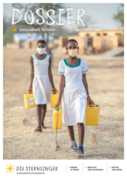
Im Hinblick auf die Finanzierung von Gesundheit im Allgemeinen und von Kindergesundheit im Speziellen ist zunächst zu berücksichtigen, ob die Gelder aus öffentlichen oder privaten Quellen stammen. Denn daraus ergeben sich grundsätzliche Unterschiede. Da private Krankenversicherungen gewinnorient
...
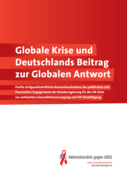
Fünfte zivilgesellschaftliche Bestandsaufnahme des politischen und
finanziellen Engagements der Bundesregierung für die UN-Ziele
zur weltweiten Gesundheitsversorgung und HIV-Bewältigung
Diskriminierungssensibler Umgang mit Patient*innen ermöglicht allen Menschen gesundheitliche Hilfe aufzusuchen. Im Gesundheitssystem gibt es Menschen, die weniger sichtbar sind als andere. Damit sich Ärzt*innen, Therapeut*innen, Pflegende und andere im Gesundheitssystem
Tätige stärker mit indiv
...
This guide aims to inform about these illnesses - so-called ‘trauma-induced disorders’ - in general and ‘post-traumatic stress disorder’ (PTSD) in particular. It is also designed to offer support in finding treatment and counselling options.
