
Filter
383
Text search:
Artemisinin
Featured
29
189
Language
Document type
276
48
33
9
7
6
2
1
Countries
21
21
19
18
14
13
13
13
13
12
12
10
10
9
9
8
7
7
7
7
7
6
6
6
4
4
4
4
3
3
2
2
2
2
2
2
2
1
1
1
1
1
1
1
1
1
1
1
1
1
1
1
1
Authors & Publishers
Publication Years
Category
262
41
25
9
7
6
2
Toolboxes
17
17
5
5
4
4
4
4
3
2
2
2
1
1
1
Submitted to the US Agency for International Development by the
Systems for Improved Access to Pharmaceuticals and Services (SIAPS) Program.
This manual provides a framework to identify problems and design interventions to improve access to and use of medicines for children. It is a resource for
...
Women and Health Initiative Working Paper No. 1. Women and Health Initiative
Improving maternal health in the context of the sub-Saharan African HIV epidemic requires greater understanding of the relationships between HIV disease and maternal morbidity and mortality, integrated and effective resp ...
Improving maternal health in the context of the sub-Saharan African HIV epidemic requires greater understanding of the relationships between HIV disease and maternal morbidity and mortality, integrated and effective resp ...

WHO recommendations on child health: Guidelines approved by the WHO Guidelines Review Committee
recommended
Updated May 2017
This document is meant to respond to the questions:
■ What health interventions should the child receive and when should s/he receive it?
■ What health behaviours should a mother/caregiver practise (or not practise)?
This document is meant to respond to the questions:
■ What health interventions should the child receive and when should s/he receive it?
■ What health behaviours should a mother/caregiver practise (or not practise)?

WHO recommendations on adolescent health: guidelines approved by the WHO Guidelines Review Committee
This document is meant to respond to the questions:
■ What health interventions should the adolescent receive and when should s/he receive it?
■ What health behaviours should the adolescent practise (or not practise)?
■ What health interventions should the adolescent receive and when should s/he receive it?
■ What health behaviours should the adolescent practise (or not practise)?

The National Strategic Plan is based on the following guiding principles:
1) Life-course approach: adolescence is a key decade in the course of life that influences the health outcomes later in life.
2) Comprehensive approach: It recognizes the cross cutting health and development needs o ...
1) Life-course approach: adolescence is a key decade in the course of life that influences the health outcomes later in life.
2) Comprehensive approach: It recognizes the cross cutting health and development needs o ...
The current guidelines on Integrated Management of Acute Malnutrition (IMAM), addresses the issue of improved management of severe acute malnutrition (SAM), particularly in children under 5 years of age. In the absence of standard protocols, mortality in children admitted to hospital with SAM can ra
...
The main objective of the malaria prevention and control programme in Somalia is to prevent mortality and reduce morbidity due to malaria. The groups most vulnerable to the disease, children aged under 5 years and pregnant women, are especially targeted. Effective case management - early diagnosis a
...

The main goal of the National Health Plan (NHP) 2017-2021 is to extend access to a basic Essential Package of Health Services (EPHS) to the entire population while increasing financial protection. In order to extend service delivery to all communities, the NHP calls for all health workers (whether c
...
Moving from accelerated burden reduction to malaria elimination in Zambia
This report, published in conjunction with a summary overview of results of rounds 1–8, is the eighth and final report in a series of laboratory-based evaluations of rapid diagnostic tests (RDTs) for malaria. It provides a comparative measure of their performance in a standardized way to distingu
...
WASH Training for Hygiene Promotion Staff.
This manual has been designed to train NRC hygiene promotion incentive staff on ... concept and importance of hygiene, diseases that are present or a risk in Kakuma Refugee. Camp and how to prevent them; monitoring WASH activities and prevention, managemen
...
Barriers to the prompt and effective diagnosis and treatment of malaria exist at both the community and health facility level. Household surveys measure malaria case management at the population level with standard indicators that assess treatment-seeking behavior, access to diagnostic testing, and
...
Diese Broschüre möchte dazu beitragen, dass möglichst viele Menschen die Ergebnisse öffentlich finanzierter Forschung nutzen können.
Universal health coverage ensures everyone has access to the health services they need without suffering financial hardship as a result. In December 2012, a UN resolution was passed encouraging governments to move towards providing universal access to affordable and quality health care services. As
...
This 10th edition of the Institute for Health Metrics and Evaluation’s annual Financing Global Health report provides the most up-to-date estimates of development assistance for health, domestic spending on health, health spending on two key infectious diseases – malaria and HIV/AIDS – and fut
...
Plan Benin used the Integrated Management for Child Illnesses (IMCI) framework in creating the project "Collaborative Approach to Community based Malaria Prevention.” The project targeted 20 pilot villages in the communes of Aplahoué and Djakotomey, with the goal of reducing maternal and infant m
...
This Community Health Systems (CHS) Catalog country profile is the 2016 update of a landscape
assessment that was originally conducted by the Advancing Partners & Communities (APC) project
in 2014. The CHS Catalog focuses on 25 countries deemed priority by the United States Agency for
Internation
...
The DHS report itself explains the purpose was, “to obtain and provide information on basic indicators of social progress including fertility, childhood mortality, reproductive and child health, nutritional status of children, and awareness of HIV/AIDS and other health-related issues” in PNG. Th
...
Le paludisme, appelé également malaria, ou « Mal‘aria », ce qui signifie « mauvais air
», est une maladie qui menace 3 milliards de personnes dans 99 pays dans le monde.1
Les personnes les plus vulnérables sont les jeunes enfants et les femmes enceintes,
car c’est parmi cette populatio
...
Technical Note on Antimicrobial Resistance
This document reflects UNICEF’s response to the growing global threat of AMR to child survival, growth and development. It identifies UNICEF’s AMR-specific and AMR-sensitive actions in reducing infections, promoting access to and optimal use of antimic
...
Clinical Guidance across the continuum of care
Chapter 8_ARV Guidelines
This is the first national Policy to combat AMR in Cambodia. It was developed based on conclusions and recommendations of a country situaytion analysis.

Accessed Febr. 6, 2020
Public Health is the science field dedicated to promoting health and well-being, and preventing disease within the human population to ultimately increase the quality of our livelihood and life span. Public Health does not focus on individual patients or diseases, but rather a given population and
...
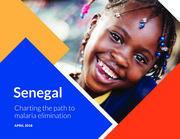
Senegal’s substantial and sustained progress against malaria is an inspiring public health success story, and a source of potential lessons for other countries on the path to elimination. This case study describes three major success factors—(1) outstanding leadership and partner engagement, (2)
...
SHOPS and HIA finalized a scope of work with USAID Senegal in April 2015, and a team of five private sector experts conducted the onsite assessments between May and June 2015. The Private Sector Assessment (PSA) team worked closely with Senegalese key stakeholders throughout the process. The PSA tea
...
USAID Senegal and Health in Africa (HIA) initiative of the World Bank Group engaged the Strengthening Health Outcomes through the Private Sector (SHOPS) project to conduct an assessment of the private health sector in Senegal. The assessment’s primary focus is family planning, and its secondary fo
...

Évaluation du programme burkinabé dans les districts de Kaya et de Zorgho
Objectif. L’objectif central de cette thèse est d’évaluer, dans des conditions réelles d’implantation, les effets du programme burkinabé de prise en charge communautaire du paludisme sur le recours aux soins de
...
The current trend in AMR in Uganda and globally is rising and calls for immediate action. The 71st UN General Assembly (UNGA), the 68th World Health Assembly, and organizations including the World Health Organization (WHO), the Food and Agriculture Organization (FAO), and the World Organization for
...
Le projet de prise en charge à domicile du paludisme par les ASC avec les ACT a été
implémenté au Burkina Faso dans trois districts pilotes en 2009. Il s’agissait des districts sanitaires de Kaya, Nouna et de Saponé.
Alors que nous sommes à la fin du projet, il a été jugé utile de fa
...
Antimicrobial resistance (AMR) is a serious public health concern with economic, social and political implications that are global in scope, and cross all environmental and ethnic boundaries. As a global threat, AMR risks the achievements of modern medicine, and has the po
...
The Ghanaian Cabinet approved the antimicrobial resistance (AMR)Policy and Implementation plan(hereafter referred to as the national action plan or NAP)in December 2017, whilst the country case study was in progress. This has set in motion the implementation phase for Ghana, which is a long awaited
...
L’Assemblée mondiale de la Santé, tenue en mai 2015, a adopté un Plan d’action mondial pour combattre la résistance aux antimicrobiens, qui définit 5 objectifs:
mieux faire connaître et comprendre le problème de la résistance aux antimicrobiens grâce à une communication, une éduc
...
Since the World Health Organization (WHO) launched the Global Antimicrobial Resistance Surveillance System (GLASS) in 2015, there has been rapidly growing awareness among many African countries that they need to be doing more to combat antimicrobial resistance (AMR). The Africa Centres fo
...
Spread of resistance to antimicrobial agents (AMR) does not know national borders and has reached dimensions, which require immediate actions at the national, regional and global levels.
Antibiotic resistance is a natural biological response to improper use of antimicrobial agents (AMA); increasing
...
Because malaria cases are seen relatively rarely in North America, misdiagnosis by clinicians and laboratorians has been a commonly documented problem in published reports. However, malaria may be a common illness in areas where it is transmitted and therefore the diagnosis of malaria should routine
...
RAPID CORE CRF Completion Guidance
recommended
DESIGN OF THIS CASE REPORT FORM (CRF)This CRF has 3 modules:Module 1to be completed on the first day of admission to the health centre.Module 2 to be completed daily during hospital stay for as many days as resources allow. Continue to follow-up patients who transfer between wards. Module 3 to be co
...
This document provides an overview of the 7 main messages contained in the World malaria report 2021
14 January 2021
This practical guide can be used to help countries monitor and analyse the impact of COVID-19 on essential health services to inform planning and decision-making. It provides practical recommendations on how to use key performance indicators to analyse changes in access to and deliv
...
A Global Analysis of Antimicrobial Resistance and Its Drivers.
Since the first State of the World’s Antibiotics report in 2015, antimicrobial resistance has leveled off in some high-income countries but continues to rise in many low- and middle-income countries (LMICs), where access to antibiotic
...
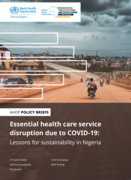
The brief concludes that sustaining the continuity of EHS requires policies that ensure a whole-society and systems strengthening approach. This involves increased health care investment, community engagement, disease control regulations, and multisector approaches to improve resilience, EHS quality
...
Technology landscape
Kenya Quality Model for Health - Level 2 Facilities
Kenya Quality Model for Health - Health Facilities
Malaria vaccine: WHO position paper - March 2022
recommended
Weekly Epidemiological Record No 9, 2022, 97, 61–80
This position paper supersedes the 2016 publication, “Malaria vaccine: WHO position paper-2016.”1 It includes the updated WHO recommendations on the wider use of the RTS,S/AS01 vaccine for the reduction of malaria morbidity and mortality in
...
dades infecciosas. Los antimicrobianos eficaces son imprescindibles para las medidas preventivas y curativas, para proteger a los pacientes frente a enfermedades potencialmente mortales y para garantizar que se puedan llevar a cabo procedimientos complejos, como la cirugía y la quimioterapia, con e
...
There is a broad consensus nowadays that the Earth is warming up as a result of greenhouse gas emissions caused by anthropogenic activities. It is also clear that current trends in the fields of energy, development and population growth will lead to continuous and ever more dramatic climate change.
...
Expanding access to quality health services through task sharing
Antimicrobial resistance (AMR) is described as a situation when bacteria, viruses, fungi and parasites
change over time and no longer respond to medicines, making infections harder or impossible to treat,
and increasing the risk of disease spread, severe illness and death.1 AMR in recent years has
...
The 2018 NDHS is a national sample survey that provides up-to-date information on demographic and health indicators. The sample was selected using a stratified, two-stage cluster design, with enumeration areas (EAs) as the sampling units for the first stage. The second stage was a complete listing o
...
On 15–16 December 2020, WHO and the Medicines for Malaria Venture co-convened a technical consultation to consider the preferred product characteristics (PPCs) for drugs used in malaria chemoprevention. The main goal of the technical consultation was to agree on the most important PPCs for drugs t
...

Sector Environmental Guidelines, Full technical Update
PLoS Neglected Tropical diseases August 16, 2021 https://doi.org/10.1371/journal.pntd.0009697
Chagas disease, also known as American trypanosomiasis, is a neglected tropical disease transmitted by triatomine insects, first identified in 1909. Chagas disease affects approximately 6–7 million peop
...
Front Chem. 2021; 9: 622286.
Published online 2021 Mar 12. doi: 10.3389/fchem.2021.622286
PLoS Negl Trop Dis 15(8): e0009697. Chagas disease (CD), caused by the parasite Trypanosoma cruzi, affects ~6–7 million people worldwide. Significant limitations still exist in our understanding of CD. Harnessing individual participant data (IPD) from studies could support more in-depth analyses t
...
The publication of the of the Antimicrobial Treatment Guidelines represents the
culmination of the efforts of the Antimicrobial Stewardship Program of ICMR to publish treatment guidelines for common syndromes in India. These guidelines are targeted for the health care settings. It aims to rationali
...
Financing Global Health 2016: Development Assistance, Public and Private Health Spending for the Pursuit of Universal Health Coverage presents a complete analysis of the resources available for health in 184 countries, with a particular focus on development assistance for health (DAH). DAH was estim
...

I examine the effectiveness of donors in targeting the highest burden of malaria in the Democratic Republic of Congo when health information structure is fragmented. I exploit local variations in the burden of malaria induced by mining activities as well as financial and epidemiological data from he
...

Ending the epidemics of HIV, tuberculosis and malaria by 2030 is within reach, but not yet fully in our grasp.
With only 11 years left, we have no time to waste. We must step up the fight now.
Strengthening resource tracking and monitorig health expanditure
Financing Global Health 2015 is the seventh edition of IHME’s annual series on global health financing. This report captures trends in development assistance for health (DAH) and government health expenditure as source (GHE-S) in low- and middle-income countries. Annually updated GHE-S and DAH est
...
While there has been real progress in addressing the burden of disease in the WHO African region, the COVID-19 pandemic has highlighted the link between health, economics and security, as the region saw decades of progress threatened, including positive trends in decreasing inequality. In the Africa
...
Significant progress has been made in the eradication of three priority diseases in the African Region, as a result of extensive collaboration between the Regional Office, WHO country offices and countries. For example, in August 2020, the region was certified free of wild poliovirus. In the area of
...
Prompt, effective antimalarial treatment, and supportive care can substantially reduce the rate of mortality from severe malaria. However, many children in malaria-endemic countries do not have access to health facilities or a qualified health care provider and do not receive the necessary care in a
...
In 2019, the Global Fund’s 6th Replenishment raised more than $USD14 billion to fight HIV, Tuberculosis and Malaria. Just two years later, the world has changed significantly. Put simply: COVID-19 devastated prevention and treatment programs. For the first time since the Global Fund’s founding,
...
Ahead of World Malaria Day, the WHO Global Malaria Programme published a new operational strategy outlining its priorities and key activities up to 2030 to help change the trajectory of malaria trends, with a view to achieving the global malaria targets. The strategy outlines 4 strategic objectives
...
This report is one of the first major products of the newly established Precision Public Health Metrics unit of the UCN cluster of the WHO Regional Office for Africa. The report presents national trends in communicable and non-communicable disease burden and control in the WHO African region. It tra
...
Despite recent global declines, under-five mortality remains high in many of the poorest countries. Barriers to timely
quality care, including user fees, distance to facilities and the availability of trained health workers and medical supplies,
hinder progress in further reducing morbidity and m
...
