
Filter
1219
Text search:
prévention
des
infections
Featured
133
312
Language
Document type
632
208
138
79
52
39
35
8
8
7
6
4
3
Countries
54
48
45
43
40
27
27
25
24
18
18
18
16
16
16
16
16
15
14
14
14
14
12
12
11
10
10
9
9
8
8
7
7
6
6
5
5
5
5
5
5
4
4
4
4
4
3
3
3
3
3
3
3
2
2
2
2
2
2
2
2
2
2
2
2
2
2
2
2
2
1
1
1
1
1
1
1
1
1
1
1
1
1
1
1
1
1
Authors & Publishers
Publication Years
Category
433
183
155
103
93
68
16
Toolboxes
138
85
82
77
70
66
51
29
27
24
24
18
15
14
11
10
9
8
5
5
3
2
1
This updated implementation guidance is intended for all those who set policy for, or offer care to, pregnant women, families and infants: governments; national managers of maternal and child health programmes in general, and of breastfeeding- and BFHI-related programmes in particular; and health-f
...
Updates for the integrated management of childhood illness (IMCI) - Guideline.
As part of its response to the global epidemic of obesity, WHO has issued guidelines to support primary healthcare workers identify and manage children who are overweight or obese. Specifically, all infants and children
...
The Human Resources for Health policy (HRH) will provide guidelines and the direction toward strengthening the planning, management, utilization and monitoring of health sector human resources; not forgetting responses to the contemporary challenges and developments in the sector including the mobil
...

Advances have been made through expanded interventions delivered through five public health approaches: innovative and intensified disease management; preventive chemotherapy; vector ecology and management; veterinary public health services; and the provision of safe water, sanitation and hygiene. I
...

Lesotho’s predominantly rural population faces significant health challenges within a setting of inadequate human resources for health. It is essential that nurses and nurse-midwives, who together make up the largest health workforce in the country, be adequately prepared to address Lesotho’s He
...
Myanmar has made significant progress in its disaster management policies, plans, and procedures since 2008, when Cyclone Nargis impacted the country leaving devastation in its aftermath. The Government of Myanmar (GoM) has modified the government structure and created new authorities and plans to i
...
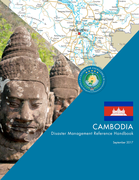
Cambodia drafted and adopted the National Action Plan for Disaster Risk Reduction 2014-2018 in 2014. This plan finalized the required policies and legal processes to strengthen DRM in Cambodia. It also focused on capacity building at national and sub-national levels and provided dedicated resources
...

Climate change is a growing concern for Bangladesh because 90 percent of the country is approximately 10 feet above sea level. An evaluation was completed which discovered that high tides in Bangladesh were increasing 10 times more rapidly than the global average. This predicted rapid increase in se
...
The Hand Hygiene Self-Assessment Framework is a systematic tool with which to obtain a situation analysis of hand hygiene promotion and practices within an individual health-care facility.

Manual of Operations
First Edition 2016
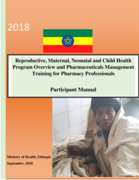
The Federal Ministry of Health (FMOH) has been coordinating sector wide reforms that aim to improve equity and quality of maternal and child health services. As part of these efforts, the ministry is also exerting concerted efforts to improve availability and use of quality
...
28 Dec 2020. The main objective of these guidelines is to provide tools for staff working in the field of immunization to support effective communication between health personnel and the general population, with the aim of strengthening, maintaining or recovering trust in vaccines and the immunizati
...
The community-BFCI (c-BFCI) manual has been developed to facilitate training of CHVs and stakeholders providing nutrition sensitive services at community level. The manual covers a wide range of topics: basic nutrition, exclusive breastfeeding, complementary feeding, Breast Milk Substitutes Act, gro
...
Ghana's attempt to regulate health care waste management started in 2002 with the development of guidelines on health care waste manage-ment by the Environmental Protection Agency (EPA). In 2006, the Ghana Health Service (GHS) also developed the Health Care Waste Management Policy and Guidelines as
...
Training Modules for climate change and Health - WHO
The community-BFCI (c-BFCI) manual has been developed to facilitate training of CHVs and stakeholders providing nutrition sensitive services at community level. The manual covers a wide range of topics: basic nutrition, exclusive breastfeeding, complementary feeding, Breast Milk Substitutes Act, gro
...
The Ideal Clinic manual has been developed to assist managers at various levels of healthcare service provision to correctly interpret and understand the requirement for achieving the elements as depicted in the Ideal Clinic framework/dashboard. It can therefore be regarded as a reference document w
...
Human activities are driving fundamental changes to the biosphere and disrupting many of our planet’s natural systems. There is increasing scientific evidence that the unfolding climate crisis, global pollution, unprecedented levels of biodiversity loss, and pervasive changes in land use and cover
...
