
Filter
1129
Text search:
medicines
quality
assurance
Featured
135
408
Language
Document type
671
157
130
66
65
15
9
8
4
1
Countries
60
54
48
42
33
33
31
29
29
28
27
26
25
25
24
23
20
18
15
12
12
10
10
10
9
8
8
7
7
7
6
6
5
5
5
5
5
4
4
4
4
3
3
3
3
3
3
3
3
3
2
2
2
2
2
2
2
2
2
2
1
1
1
1
1
1
1
1
1
1
1
1
1
1
1
1
1
1
1
1
1
1
1
1
1
Authors & Publishers
Publication Years
Category
585
103
57
43
33
29
16
2
1
1
Toolboxes
95
87
86
75
33
29
23
20
16
13
13
12
11
10
10
5
5
4
4
2
1
1
1

Accessed Febr. 6, 2020
The global tripartite self-assessment survey of country progress in addressing antimicrobial resistance (AMR) is a component of a broader approach for monitoring and evaluation of the global action plan on AMR. This report analyses the results of the second tripartite self-assessment survey
Antibiotics use with care

This document provides additional guidance for the responsible and prudent use of antimicrobials in food-producing animals, and should be read in conjunction with the Recommended International Code of Practice for Control of the Use of Veterinary Drugs CAC/RCP 38-1993. Its objectives are to minimize
...
Antibiotic resistant bacteria are spreading at an alarming rate and some bacterial infections may once again be untreatable. Antibiotic resistance (ABR), conservatively calculated, causes more than 500 000 deaths every year. This number is projected to rise dramatically if radical actions are not ta
...
Antimicrobial resistance (AMR) is an important public health concern shared by developed and developing countries. In developing countries the burden of infectious diseases is greater and exacerbated by limited access to, and availability and affordability of, antimicrobials required to treat infect
...
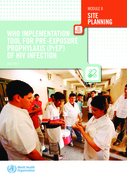
Module 8
Site Planning
July 2017
Module 8: Site planning. This module is for people involved in organizing PrEP services at specific sites. It outlines the steps to be taken in planning a PrEP service and gives suggestions for personnel, infrastructure and commodities that could be considered
...
Eaton JW et al. Journal of the International AIDS Society 2019, 22(S1):e25237 http://onlinelibrary.wiley.com/doi/10.1002/jia2.25237/full | https://doi.org/10.1002/jia2.25237
The global tripartite self-assessment survey of country progress in addressing antimicrobial resistance (AMR) is a component of a broader approach for monitoring and evaluation of the global action plan on AMR. This report analyses the results of the second tripartite self-assessment survey. It has
...
The current trend in AMR in Uganda and globally is rising and calls for immediate action. The 71st UN General Assembly (UNGA), the 68th World Health Assembly, and organizations including the World Health Organization (WHO), the Food and Agriculture Organization (FAO), and the World Organization for
...

This document provides additional guidance for the responsible and prudent use of antimicrobials in food-producing animals, and should be read in conjunction with the Recommended International Code of Practice for Control of the Use of Veterinary Drugs CAC/RCP 38-1993. Its obj
...
Antimicrobial resistance (AMR) is a serious public health concern with economic, social and political implications that are global in scope, and cross all environmental and ethnic boundaries. As a global threat, AMR risks the achievements of modern medicine, and has the po
...
The most significant finding of the case study for integrating antimicrobial resistance (AMR)into existing programs and mobilising resources for funding in Nigeria, is that most of the AMR activities within the Nigerian National Action Plan (NAP)canalready be incorporated within exi
...
South Africa has faced many challenges over the past two decades, accomplishing profound positive changes in the social structure and government of the nation. This has not yet fully translated into better health for the population, however, particularly the poorest segment. In fact, the p
...
WHO operational handbook on tuberculosis: module 4: treatment: tuberculosis care and support
recommended
The consolidated guidelines are complemented by an operational handbook which is designed to assist with implementation of the WHO recommendations by Member States, technical partners and others who are involved in the management of patients with DR-TB. The WHO Operational Handbook on Tuberculosis,
...
Prevention, early diagnosis, and effective treatment are essential for the control and elimination of Neisseria gonorrhoeae as a public health problem. Currently, in Latin America and the Caribbean, treatment for gonorrhea infection is largely empiric and based on clinical diagnosis. In the Americas
...
Clinical care for severe acute respiratory infection: toolkit: COVID-19 adaptation
Clinical care for severe acute respiratory infection: toolkit: COVID-19 adaptation
