
Filter
910
Text search:
World
Health
Organization
WHO,
Western
Pacific
Region
Featured
Recommendations
94
New Publications
224
Language
Document type
No document type
432
Studies & Reports
239
Guidelines
116
Manuals
44
Strategic & Response Plan
35
Fact sheets
10
Training Material
9
Situation Updates
9
Resource Platforms
9
Infographics
6
Online Courses
1
Countries / Regions
Global
78
Philippines
32
Western Pacific Region
28
South–East Asia Region
25
India
17
Myanmar / Burma
17
Western and Central Europe
17
Asia
17
Africa
17
Cambodia
16
Nepal
15
Bangladesh
10
Latin America and the Carribbean
10
Kenya
9
Liberia
7
Nigeria
7
Ethiopia
6
Afghanistan
6
Syria
6
China
6
Indonesia
6
Russia
6
Thailand
5
South Africa
5
Eastern Europe
5
Somalia
4
Pakistan
4
Papua New Guinea
4
Ukraine
4
Yemen
4
West and Central Africa
4
Sierra Leone
3
Congo, Democratic Republic of
3
Ghana
3
South Sudan
3
Tanzania
3
Rwanda
3
East and Southern Africa
3
Middle East and North Africa
3
Eastern Europe and Central Asia
3
Guinea
2
Uganda
2
Zimbabwe
2
Zambia
2
Malawi
2
Mozambique
2
Madagascar
2
Sri Lanka
2
Fiji
2
Venezuela
2
Mongolia
2
Vietnam
2
Burkina Faso
1
Senegal
1
USA
1
Cameroon
1
Haiti
1
Iraq
1
Jordan
1
Egypt
1
Sudan
1
Benin
1
Central African Republic
1
Vanuatu
1
Namibia
1
Eswatini/ Swaziland
1
Serbia
1
Colombia
1
Ecuador
1
Botswana
1
Mexico
1
Solomon Islands
1
Bhutan
1
Palestine
1
North Korea
1
Laos
1
Timor Leste/ East Timor
1
Iran
1
North America
1
Japan
1
Authors & Publishers
Publication Years
Category
Countries
170
Clinical Guidelines
118
Public Health
77
Women & Child Health
59
Key Resources
27
Capacity Building
15
Pharmacy & Technologies
15
General Guidelines
1
Toolboxes
HIV
102
Mental Health
84
COVID-19
64
Planetary Health
54
Rapid Response
50
TB
43
Global Health Education
39
NTDs
37
AMR
35
Disability
32
Caregiver
28
NCDs
22
Pharmacy
21
Natural Hazards
17
Refugee
15
Zika
13
Conflict
12
Polio
9
Ebola
8
Health Financing Toolbox
6
Cholera
3
Typhoon
2
Specific Hazards
2
Social Ethics
1

J Glob Health Sci. 2020 Jun;2(1):e3. A group of enzootic and zoonotic protozoan infections, the leishmaniases constitute among the most severely neglected tropical diseases (NTDs) and are found in all continents except Oceania. Representing the most
...
Overcoming HIV-related stigma and discrimination in health- care settings and beyond
UNAIDS 2017 | REFERENCE

Front. Public Health, 30 April 2021 | https://doi.org/10.3389/fpubh.2021.628744
3 June 2021. After 40 years of AIDS, charting a course to end the pandemic.
The report shows that countries with progressive laws and policies and strong and inclusive health systems have had the best outcomes against HIV. In those countries, peopl
...
This document is a practical guide to the management of burn injuries for healthcare professionals everyhwere who are non-burn specialistsi
Buruli ulcer caused by Mycobacterium ulcerans is a neglected tropical disease characterized by extensive ulceration involving predominantly the upper and lower limbs of patients. The disease is common in rural tropical communities in West and Central Africa, where access to proper
...
Thirty years ago, the United Nations General Assembly adopted the Convention on the Rights of the Child at a moment of rapid global change marked by the end of apartheid, the fall of the Berlin Wall and the birth of the World Wide Web. These develop
...
Global and Regional Data 1 December 2021; The 90–90–90 targets were missed, but not by much. At the end of 2020, 84% of people living with HIV knew their HIV status, 87% of people living with HIV who knew their HIV status were accessing antiretr
...

This report makes clear that there is a path to end AIDS. Taking that path will help ensure preparedness to address other pandemic challenges, and advance progress across the Sustainable Development Goals. The data and real-world examples in the rep
...
UNAIDS report on the global AIDS epidemic shows that 2020 targets will not be met because of deeply unequal success; COVID-19 risks blowing HIV progress way off course. Missed targets have resulted in 3.5 million more HIV infections and 820 000 more AIDS-related deaths since 2015 than if the
...
According to the Report, cascading and interlinked crises are putting the 2030 Agenda for Sustainable Development in grave danger, along with humanity’s very own survival. The Report highlights the severity and magnitude of the challenges before us. The confluence of crises, dominated by COVID-19,
...

Urogenital schistosomiasis is a common neglected tropical disease in many rural communities in African countries, with patches of infection in the Eastern Mediterranean Region. Globally, an estimated 239 million people are currently infected, with b
...

Sectors in which Priority Adaptation Projects should be implemented first include:
- 1) Agriculture, Early Warning Systems and Forest (First Priority Level Sectors). This is followed by:
- 2) Public Health and Water Resources (Second Pri ...
- 1) Agriculture, Early Warning Systems and Forest (First Priority Level Sectors). This is followed by:
- 2) Public Health and Water Resources (Second Pri ...
More than three months since the start of the war in Ukraine, people globally are facing a cost-of-living crisis not seen in more than a generation, with escalating price shocks in the global food, energy and fertilizer markets - in a world already
...
The article "Time to Align: Development Cooperation for the Prevention and Control of Non-Communicable Diseases" argues for greater international cooperation and investment in addressing non-communicable diseases (NCDs), especially in low- and middle-income countries. Traditionally, global
...

Indicators for monitoring the 2016 United Nations Political Declaration on Ending AIDS
UNAIDS supports countries to collect information on their national HIV responses through the Global AIDS Monitoring (GAM) framework—an annual collection of 72 indicators on the response to HIV in a country. ...
UNAIDS supports countries to collect information on their national HIV responses through the Global AIDS Monitoring (GAM) framework—an annual collection of 72 indicators on the response to HIV in a country. ...

Trypanosoma cruzi is the etiological agent of Chagas disease (CD), considered one of the most important parasitic infections in Latin America. Between 25 and 90 million humans are at infection risk via at least one of multiple infection mechanisms. Under natural conditions, the principal transmissio
...
Antimicrobial resistance (AMR) has emerged as a major public health concern, around which the international leadership has come together to form strategic partnerships and action plans. The main driving force behind the emergence of AMR is selection
...
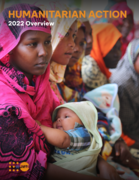
This Fiji contextualized manual was initially drafted for CANDO partners as a result of the work done by the humanitarian arms of the various Christian denominations. However as the work progressed it became evidently clear that the training was needed for all responders, and not only Christian resp
...
