
Filter
825
Text search:
World
Health
Organization
(Regional
Office
for
South-East-Asia)
Featured
Recommendations
101
New Publications
232
Language
Document type
No document type
417
Studies & Reports
163
Guidelines
130
Manuals
40
Strategic & Response Plan
33
Training Material
12
Resource Platforms
8
Situation Updates
7
Fact sheets
6
Infographics
5
Brochures
2
Online Courses
2
Countries / Regions
South–East Asia Region
66
Global
54
India
42
Asia
35
Myanmar / Burma
26
Nepal
23
Bangladesh
17
Philippines
12
Indonesia
11
Western Pacific Region
11
Africa
10
Thailand
9
Western and Central Europe
9
Cambodia
8
Afghanistan
5
Pakistan
4
South Africa
4
Sri Lanka
4
Eastern Europe
4
Russia
4
Nigeria
3
Ethiopia
3
Ghana
3
Uganda
3
Syria
3
Kenya
3
China
3
East and Southern Africa
3
West and Central Africa
3
Middle East and North Africa
3
Venezuela
3
Laos
3
Vietnam
3
Burkina Faso
2
Congo, Democratic Republic of
2
Haiti
2
Rwanda
2
Mozambique
2
Sudan
2
Yemen
2
Timor Leste/ East Timor
2
Sierra Leone
1
Liberia
1
Senegal
1
Morocco
1
USA
1
Saudi Arabia
1
Cameroon
1
South Sudan
1
Iraq
1
Jordan
1
Lebanon
1
Zambia
1
Tanzania
1
Papua New Guinea
1
Eswatini/ Swaziland
1
Brazil
1
Ukraine
1
Ecuador
1
Greece
1
Mexico
1
Latin America and the Carribbean
1
Eastern Europe and Central Asia
1
Other region
1
Paraguay
1
Bhutan
1
Palestine
1
North Korea
1
Albania
1
Mongolia
1
Tajikistan
1
Iran
1
Kazakhstan
1
Georgia
1
Tunisia
1
Bosnia and Herzegovina
1
Authors & Publishers
Publication Years
Category
Countries
177
Clinical Guidelines
125
Public Health
73
Women & Child Health
67
Key Resources
27
Capacity Building
21
Pharmacy & Technologies
15
General Guidelines
2
Toolboxes
HIV
79
Mental Health
72
COVID-19
58
TB
56
Rapid Response
40
Planetary Health
40
NTDs
40
AMR
36
Caregiver
30
Global Health Education
29
NCDs
20
Disability
19
Pharmacy
16
Zika
11
Refugee
9
Natural Hazards
7
Ebola
6
Conflict
6
Specific Hazards
6
Health Financing Toolbox
6
Polio
5
Cholera
3
Typhoon
1
Health Financing
1
Accessed: 28.03.2019
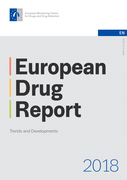
Table of contents:
- Preface
- Introductory note and acknowledgements
- Commentary
- Chapter 1: Drug supply and the market
- Chapter 2: Drug use prevalence and trends
- Chapter 3: Drug-related harms and responses
- Annex: National data tables
Available in 24 languages on:
http://www.emcdd
...

The report highlights key trends and developments in laws affecting people living with HIV and key populations in Asia and the Pacific over the five-year period 2014–2019. It updates the legal and policy review conducted in 2016 for UNAIDS, UNDP a
...
Revised National Tuberculosis Control Programme
Asia is home to more than half of the world’s 1.1 billion girls. Gender inequality in many parts of the region means that girls are often systematically disadvantaged and oppressed by poverty, violence, exclusion and discrimination. Girls’ devel
...

Report on Main Findings
The review encompasses three complementary components: 1) a review of published literature 2000-2015 on NCDs and their risk factors; 2) qualitative interviews with key actors engaged in NCD research in Myanmar; and 3) additional reviews of Myanmar ethical committee inqui ...
The review encompasses three complementary components: 1) a review of published literature 2000-2015 on NCDs and their risk factors; 2) qualitative interviews with key actors engaged in NCD research in Myanmar; and 3) additional reviews of Myanmar ethical committee inqui ...
The use of explosive weapons, such as bombs, rockets, and mortar and
artillery shells, in cities, towns and villages and in other populated areas
has devastating humanitarian consequences. Explosive weapons act mainly
through the projection of blast and fragmentation wi
...

National Tuberculosis Control Program; Mycobacterial Disease Control National AIDS/STD Program
Access to medical personal protective equipment (PPE) is essential for routine healthcare delivery, and a critical tool for containing outbreaks, as well as preventing and responding to pandemics. I
...
Public Health Action
vol 5 no 3 published 21 september 2015

J Glob Health Sci. 2020 Jun;2(1):e3. A group of enzootic and zoonotic protozoan infections, the leishmaniases constitute among the most severely neglected tropical diseases (NTDs) and are found in all continents except Oceania. Representing the most
...
Program Report for Collaborative Agreement: DFD-A-00-08-00309-00 September 30, 2008 -December 31, 2015
Leptospirosis, a spirochaetal zoonosis, occurs in diverse epidemiological settings and affects vulnerable populations, such as rural subsistence farmers and urban slum dwellers. Although leptospirosis is a life-threatening disease and recognized as an important cause of pulmonary haemorrhage syndrom
...
Indian markets caused a stir across the country.1
According to the Centre for Science and the Environment (CSE), a respected New Delhi-based NGO, most honey brands
sold in India contained varying amounts of antibiotics. Their consumption over time
...
For practitioners in humanitarian and development contexts
This course describes the health effects of war, weapons and strategies of violent conflict. Beginning with weapons of mass destruction it then moves on to other weapons and strategies of war such as the use of landmines and mass rape. The course co
...
