
Filter
1743
Text search:
resilience
plan
Featured
157
481
Language
Document type
813
407
168
150
116
30
26
25
5
3
Countries
110
72
62
48
41
36
35
34
33
30
28
28
27
25
25
23
22
21
20
18
16
16
15
15
14
13
12
12
12
12
12
11
11
11
11
10
10
9
9
9
9
8
8
8
7
7
7
7
7
7
7
6
6
6
5
5
5
5
5
5
4
4
4
4
4
4
3
3
3
3
3
3
3
3
3
2
2
2
2
2
2
2
2
2
2
2
2
1
1
1
1
1
1
1
1
1
1
1
1
1
1
1
1
1
1
1
1
Authors & Publishers
Publication Years
Category
544
103
84
74
31
25
7
3
3
Toolboxes
223
190
188
144
81
70
68
67
67
66
52
37
21
21
15
12
12
7
6
6
5
4
4
3
1

The report provides an overview of the disaster risk reduction and management in Nepal, a country under threat of multiple natural hazards: earthquakes, floods, landslides, fires, storms, the epidemics, and others. It presents background information on the country, its disaster profile, its legal an
...
The report provides a global knowledge base on suicide and suicide attempts as well as actionable steps for countries based on their current resources and context to move forward in suicide prevention.

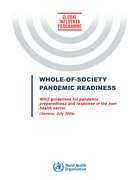
WHO guidelines for pandemic preparedness and response in the nonhealth sector
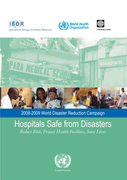
Reduce Risk, Protect Health Facilities, Save Lives
A process for improving community awareness and preparedness for technological hazards and environmental emergencies
Independent Monitoring Board of the Global Polio Eradication Initiative (Twelfth Report: October 2015)
This provisional Facilitator's Kit provides a complete framework for a 3-day training on Community Preparedness for Reproductive Health and Gender. The goal is to build community capacity to prepare and respond to risks and inequities faced by women and girls during emergencies.
The CHS is a voluntary and measurable standard, which means its application can be objectively assessed. The CHS Verification Scheme allows organisations to measure the extent to which they have successfully applied the CHS requirements, and allows them, to demonstrate that they have done so. The Sc
...
From Individual to Collective healing: A trainer’s manual
