
Filter
2783
Text search:
humanitarian
situation
Featured
285
892
Language
2544
207
65
50
28
22
19
13
12
8
6
5
5
5
4
4
4
4
4
4
4
3
3
3
3
3
3
3
3
2
2
2
2
2
2
2
2
1
1
1
1
1
1
1
1
1
1
1
1
1
1
1
1
Document type
1497
468
241
174
142
131
60
31
29
3
3
2
1
1
Countries
154
117
115
109
90
79
78
69
69
60
60
59
58
45
45
44
43
43
38
37
37
29
28
24
24
23
22
21
20
20
19
19
19
18
18
17
17
17
16
16
16
15
14
14
13
13
12
12
11
11
11
10
10
10
9
9
9
9
9
9
8
8
7
7
6
6
6
5
5
5
5
5
5
5
4
4
4
4
4
4
4
3
3
3
3
3
3
2
2
2
2
2
2
2
2
2
2
2
2
2
2
2
2
2
1
1
1
1
1
1
1
1
1
1
1
1
1
1
1
1
1
1
1
1
1
1
1
1
1
1
1
1
1
1
1
1
1
1
1
1
Authors & Publishers
255
91
75
70
60
56
55
53
50
44
40
40
40
33
31
29
27
27
26
25
23
21
17
17
17
17
16
15
14
13
12
12
11
11
11
11
10
10
9
9
9
9
9
9
9
8
8
8
7
7
7
7
7
7
7
7
7
7
7
7
6
6
6
6
6
6
6
6
6
6
6
6
6
6
6
6
6
6
5
5
5
5
5
5
5
5
5
5
5
5
5
5
5
5
5
5
5
5
5
5
5
4
4
4
4
4
4
4
4
4
4
4
4
4
4
4
4
4
4
4
4
4
4
4
4
3
3
3
3
3
3
3
3
3
3
3
3
3
3
3
3
3
3
3
3
3
3
3
3
3
3
3
3
3
3
3
3
3
3
3
3
3
3
3
3
3
3
3
3
3
3
2
2
2
2
2
2
2
2
2
2
2
2
2
2
2
2
2
2
2
2
2
2
2
2
2
2
2
2
2
2
2
2
2
2
2
2
2
2
2
2
2
2
2
2
2
2
2
2
2
2
2
2
2
2
2
2
2
2
2
2
2
2
2
2
2
2
2
2
2
2
2
2
2
2
2
2
2
2
2
2
2
2
2
2
2
2
2
2
2
2
2
2
2
2
2
2
2
2
2
2
2
2
2
2
2
2
2
2
2
2
2
2
2
2
2
2
2
2
2
2
2
2
2
2
2
2
2
2
2
2
2
2
2
2
2
2
2
2
2
2
2
2
2
2
2
1
1
1
1
1
1
1
1
1
1
1
1
1
1
1
1
1
1
1
1
1
1
1
1
1
1
1
1
1
1
1
1
1
1
1
1
1
1
1
1
1
1
1
1
1
1
1
1
1
1
1
1
1
1
1
1
1
1
1
1
1
1
1
1
1
1
1
1
1
1
1
1
1
1
1
1
1
1
1
1
1
1
1
1
1
1
1
1
1
1
1
1
1
1
1
1
1
1
1
1
1
1
1
1
1
1
1
1
1
1
1
1
1
1
1
1
1
1
1
1
1
1
1
1
1
1
1
1
1
1
1
1
1
1
1
1
1
1
1
1
1
1
1
1
1
1
1
1
1
1
1
1
1
1
1
1
1
1
1
1
1
1
1
1
1
1
1
1
1
1
1
1
1
1
1
1
1
1
1
1
1
1
1
1
1
1
1
1
1
1
1
1
1
1
1
1
1
1
1
1
1
1
1
1
1
1
1
1
1
1
1
1
1
1
1
1
1
1
1
1
1
1
1
1
1
1
1
1
1
1
1
1
1
1
1
1
1
1
1
1
1
1
1
1
1
1
1
1
1
1
1
1
1
1
1
1
1
1
1
1
1
1
1
1
1
1
1
1
1
1
1
1
1
1
1
1
1
1
1
1
1
1
1
1
1
1
1
1
1
1
1
1
1
1
1
1
1
1
1
1
1
1
1
1
1
1
1
1
1
1
1
1
1
1
1
1
1
1
1
1
1
1
1
1
1
1
1
1
1
1
1
1
1
1
1
1
1
1
1
1
1
1
1
1
1
1
1
1
1
1
1
1
1
1
1
1
1
1
1
1
1
1
1
1
1
1
1
1
1
1
1
1
1
1
1
1
1
1
1
1
1
1
1
1
1
1
1
1
1
1
1
1
1
1
1
1
1
1
1
1
1
1
1
1
1
1
1
1
1
1
1
1
1
1
1
1
1
1
1
1
1
1
1
1
1
1
1
1
1
1
1
1
1
1
1
1
1
1
1
1
1
1
1
1
1
1
1
1
1
1
1
1
1
1
1
1
1
1
1
1
1
1
1
1
1
1
1
1
1
1
1
1
1
1
1
1
1
1
1
1
1
1
1
1
1
1
1
1
1
1
1
1
1
1
1
1
1
1
1
1
1
1
1
1
1
1
1
1
1
1
1
1
1
1
1
1
1
1
1
1
1
1
1
1
1
1
1
1
1
1
1
1
1
1
1
1
1
1
1
1
1
1
1
1
1
1
1
1
1
1
1
1
1
1
1
1
1
1
1
1
1
1
1
1
1
1
1
1
1
1
1
1
1
1
1
1
1
1
1
1
1
1
1
1
1
1
1
1
1
1
1
1
1
1
1
1
1
1
1
1
1
1
1
1
1
1
1
1
1
1
1
1
1
1
1
1
1
1
1
1
1
1
1
1
1
1
1
1
1
1
1
1
1
1
1
1
1
1
1
1
1
1
1
1
1
1
1
1
1
1
1
1
1
1
1
1
1
1
1
1
1
1
1
1
1
1
1
1
1
1
1
1
1
1
1
1
1
1
1
1
1
1
1
1
1
1
1
1
1
1
1
1
1
1
1
1
1
1
1
1
1
1
1
1
1
1
1
1
1
1
1
1
1
1
1
1
1
1
1
1
1
1
1
1
1
1
1
1
1
1
1
1
1
1
1
1
1
1
1
1
1
1
1
1
1
1
1
1
1
1
1
1
1
1
1
1
1
1
1
1
1
1
1
1
1
1
1
1
1
1
1
1
1
1
1
1
1
1
1
1
1
1
1
1
1
1
1
1
1
1
1
1
1
1
1
1
1
1
1
1
1
1
1
1
1
1
1
1
1
1
1
1
1
1
1
1
1
1
1
1
1
1
1
1
1
1
1
1
1
1
1
1
1
1
1
1
1
1
1
1
1
1
1
1
1
1
1
1
1
1
1
1
1
1
1
1
1
1
1
1
1
1
1
1
1
1
1
1
1
1
1
1
1
1
1
1
1
1
1
1
1
1
1
1
1
1
1
1
1
1
1
1
1
1
1
1
1
1
1
1
1
1
1
1
1
1
1
1
1
1
1
1
1
1
1
1
1
1
1
1
1
1
1
1
1
1
1
1
1
1
1
1
1
1
1
1
1
1
1
1
1
1
1
1
1
1
1
1
1
1
1
1
1
1
1
1
1
1
1
1
1
1
1
1
1
1
1
1
1
1
1
1
1
1
1
1
1
1
1
1
1
1
1
1
1
1
1
1
1
1
1
1
1
1
1
1
1
1
1
1
1
1
1
1
1
1
1
1
1
1
1
1
1
1
1
1
1
1
1
1
1
1
1
1
1
1
1
1
1
1
1
1
1
1
1
1
1
1
1
1
1
1
1
1
1
1
1
1
1
1
1
1
1
1
1
1
1
1
1
1
1
1
1
1
1
1
1
1
1
1
1
1
1
1
1
1
1
1
1
1
1
1
1
1
1
1
1
1
1
1
1
1
1
1
1
1
1
1
1
1
1
1
1
1
1
1
1
1
1
1
1
1
1
1
1
1
1
1
1
1
1
1
1
1
1
1
1
1
1
1
1
1
1
1
1
1
1
1
1
1
1
1
1
1
1
1
1
1
1
1
1
1
1
1
1
1
1
1
1
1
1
1
1
1
1
1
1
1
1
1
1
1
1
1
1
1
1
1
1
1
1
1
1
1
1
1
1
1
1
1
1
1
1
1
1
1
1
1
1
1
1
1
1
1
1
1
1
1
1
1
1
1
1
1
1
1
1
1
1
1
1
1
1
1
1
1
1
1
1
1
1
1
1
1
1
1
1
1
1
1
1
1
1
1
1
1
1
1
1
1
1
1
1
1
1
1
1
1
1
1
1
1
1
1
1
1
1
1
1
1
1
1
1
1
1
1
1
1
1
1
1
1
1
1
1
1
1
1
1
1
1
1
1
1
1
1
1
1
1
1
1
1
1
1
1
1
1
1
1
1
1
1
1
1
1
1
1
1
1
1
1
1
1
1
1
1
1
1
1
1
1
1
1
1
1
1
1
1
1
1
1
1
1
1
1
1
1
1
1
1
1
1
1
1
1
1
1
1
1
1
1
1
1
1
1
1
1
1
1
1
1
1
1
1
1
1
1
1
1
1
1
1
1
1
1
1
1
1
1
1
1
1
1
1
1
1
1
1
1
1
1
1
1
1
1
1
1
1
1
1
1
1
1
1
1
1
1
1
1
1
1
1
1
1
1
1
1
1
1
1
1
1
1
1
1
1
1
1
1
1
1
1
1
1
1
1
1
1
1
1
1
1
1
1
1
1
1
1
1
1
1
1
1
1
1
1
1
1
1
1
1
1
1
1
1
1
1
1
1
1
1
1
1
1
1
1
1
1
1
1
1
1
1
1
1
1
1
1
1
1
1
1
1
1
1
1
1
1
1
1
1
1
1
1
1
1
1
1
1
1
1
1
1
1
1
1
1
1
1
1
1
1
1
1
1
1
1
1
1
1
1
1
1
1
1
1
1
1
1
1
1
1
1
1
1
1
1
1
1
1
1
1
1
1
1
1
1
1
1
1
1
1
1
1
1
1
1
1
1
1
1
1
1
1
1
1
1
1
1
1
1
1
1
1
1
1
1
1
1
Publication Years
1
985
1592
186
17
1
1
Category
1005
189
167
110
99
48
8
7
3
2
Toolboxes
385
366
186
163
162
145
130
101
67
60
39
37
29
25
24
22
21
17
14
12
10
7
6
4
2
2
In view of the ongoing political, peace and reconciliation, administrative and economic reforms as well as plans to establish the United Nations Development Assistance Framework (UNDAF) in 2018, WFP extended the current Protracted Relief and Recovery Operation (PRRO 200299), launched in January 2
...
013, by two years to include 2016 and 2017, with approved budget USD 343 million. To echo this extension and provide a more appropriate response to the country's rapid and multi-pronged transition, WFP adopted a transition strategy with gradually reduced emphasis on humanitarian assistance and greater focus on early recovery and development interventions. WFP's strategic engagement in-country was driven by the overarching goal to assist Myanmar to achieve the national Zero Hunger Challenge by 2025, and was guided by three priorities: emergency preparedness and response; nutrition; and provision of social safety nets.
more
The report covers possible developments in Indonesia over the next 10 months (to end 2016). Four scenarios are outlined:
Delayed Second Crop Harvest
Delayed and Reduced Second Crop Harvest
La Niña disrupts main rural sources of income
Soaring rice prices
The scenarios wer
...
e developed during a two-day workshop in Jakarta, Indonesia involving 21 organisations. Scenarios are a description of situations that could occur; a set of informed assumptions about a development that may require humanitarian action to support strategic planning, create awareness, provide early warning and promote preparedness activities for those responding to the crisis.
more
With about 24 million of Yemen’s 30 million people in need of some form of assistance, the United Nations calls Yemen the world’s worst humanitarian crisis. Cholera and other disease outbreaks are common, malnutrition is widespread, water is sca
...
rce, and the healthcare system is crumbling, with only half of the country’s 5,000 or so health facilities fully operational and with massive medical supply and staff shortages. In August 2020, the UN warned the country was again on the brink of full-scale famine.
more
A practical handbook. This Health Cluster Guide (2nd edition, 2020) provides practical advice on how WHO, Health Cluster Coordinators and partners can work together during a humanitarian crisis to achieve the aims of reducing avoidable mortality, mo
...
rbidity and disability, and restoring the delivery of and equitable access to preventive and curative health care.
It highlights key principles of humanitarian health action and how coordination and joint efforts among health and other sector actors can increase the effectiveness and efficiency of health interventions and promote better health outcomes. It draws on Inter-Agency Standing Committee and other expert guidance and includes lessons from field experience in acute and protracted crises.
The coordination principles and practice presented in Health Cluster Guide are equally valid for coordinators and members of health sector groups that seek to achieve effective health action in countries where the cluster approach has not been formally adopted.
more
Management of Dead Bodies After Disasters: A Field Manual For First Responders. Second Edition
recommended
Proper and dignified management of the dead in disasters is one of the three key pillars of humanitarian response and a fundamental factor in facilitating identification of the deceased and helping families discover the fate of their loved ones. Thi
...
s second and updated edition of this hugely successful manual provides practical and easy-to-follow guidelines on the recovery, documentation and storage of the remains of individuals who have died in disasters, helping first responders ensure that the dead are treated with respect and that information crucial for their subsequent identification is recorded. This revised edition incorporates experience gained in recent catastrophes, such as the 2013 Typhoon Haiyan in the Philippines, the 2014/15 Ebola epidemic in West Africa and the 2015 earthquake in Nepal.
more
This toolkit is intended to support GBV staff to build disability inclusion into their work, and to strengthen the capacity of GBV practitioners to use a survivor-centered approach when providing services to survivors with disabilities.
The tools are designed to complement existing guidelines, prot
...
ocols and tools for GBV prevention and response, and should not be used in isolation from these. GBV practitioners are encouraged to adapt the tools to their individual programs and contexts, and to integrate pieces into standard GBV tools and resources.
You can download from English, French and Arabic Version
http://www.womensrefugeecommission.org/research-resources/building-capacity-for-disability-inclusion-in-gender-based-violence-gbv-programming-in-humanitarian-settings-overview/
more
Landmine Monitor 2017
International Campaign to Ban Landmines – Cluster Munition Coalition (ICBL-CMC)
(2017)
C3
This is the 19th annual Landmine Monitor report. It is the sister publication to the Cluster Munition Monitor report, first published in November 2010.
Landmine Monitor 2016 provides a global overview of the landmine situation. Chapters on develop
...
ments in specific countries and other areas are available in online Country Profiles at www.the-monitor.org/cp.
Landmine Monitor covers mine ban policy, use, production, trade, and stockpiling, and also includes information on contamination, clearance, casualties, victim assistance, and support for mine action. The report focuses on calendar year 2015, with information included up to November 2016 when possible.
more
This guide has been produced by the International
Network on Explosive Weapons (INEW) to introduce the
humanitarian advocacy agenda on the use of explosive
weapons in populated areas and to provide ideas for actions
at the national level. It
...
is aimed primarily at NGOs and
campaigners working on humanitarian issues and issues
related to weapons and protection of civilians.
more
A guidance document in simple language for health personnel, setting out their rights and responsibilities in conflict and other situations of violence. It explains how responsibilities and rights for health personnel can be derived from international huma
...
nitarian law, human rights law and medical ethics.The document gives practical guidance on:
- The protection of health personnel, the sick and the wounded; - Standards of practice; - The health needs of particularly vulnerable people; - Health records and transmission of medical records; - "Imported" health care (including military health care);
- Data gathering and health personnel as witnesses to violations of international law; - Working with the media
more
STUDY REPORT | This study of the impact of the Nepal earthquake of 25 April, 2015, aims to understand the impact factors leading to the exclusion of older people and persons with disabilities from humanitarian action, barriers to their inclusion, an
...
d the extent to which their skills and knowledge were utilised to promote inclusive humanitarian action and, using this understanding, to formulate a set of recommendations for promoting inclusion. These recommendations will be used to sensitise the broader humanitarian community to the need for inclusive disaster risk management practices in future emergency responses which pay attention to factors such as gender, age, disability and ethnicity, and build upon the capacities of older people and persons with disabilities.
more
“Because we struggle to survive” Child Labour among Refugees of the Syrian Conflict | This study provides pertinent first-hand information on the reality facing Syrian children who are working either in their homeland, the neighbouring countries or elsewhere in Europe. Syria's civil war is the w
...
orst humanitarian crisis of our time. Hundreds of thousands of people - adults and children alike - have been killed. Two thirds of all Syrians have lost their homes and their livelihoods. Millions of Syrians have been uprooted from their home communities and forced to flee within their country or to neighbouring countries. The consistent spill-over has drawn global attention not just to the humanitarian crisis facing both local communities and national governments but also to the economic and social strain. The bloodshed wreaked by the different parties continues. The suffering deepens. Approximately half of the Syrian refugees and displaced persons are children and young people who suffer from a double-vulnerability: as children and as migrants or refugees.
more
UNHCR, the UN Refuge Agency, and NGO partners are launching an appeal for US$2.7 billion to address the live-saving humanitarian needs of South Sudanese refugees in 2019 and 2020.
Five years on since the onset of a brutal civil war, over 2.2 millio
...
n South Sudanese refugees have sought safety in six neighboring countries Uganda, Sudan, Ethiopia, Kenya, the Democratic Republic of the Congo (DRC) and Central African Republic (CAR). Another 1.9 million remain internally displaced inside South Sudan
more

This document is designed to provide UNICEF staff and UNICEF partner staff with principles and concepts that can assist them to respond to the psychosocial needs of children in natural disasters and social emergencies such as armed conflict and other forms of violence. It aims to introduce
...
humanitarian workers to psychosocial principles and UNICEF’s position on these principles. It also provides a number of examples from field work of how these principles have been turned into concrete actions. These psychosocial principles and concepts inform both emergency responses and subsequent programmatic responses post-emergency.
more
Listening to what children in crisis have to say is not only a moral and ethical responsibility for donor and humanitarian actors, it is also a humanitarian obligation. Children’s right to partici
...
pation is recognised in the United Nations Convention on the Rights of the
Child (UNCRC), which provides rights for children to express their views and ‘be heard and taken seriously’.
more
This report provides a synthesis of some of the most recent, high-quality literature on the security and political processes in Central African Republic produced up to the end of January 2016. It was prepared for the European Union’s Instrument Contributing to Stability and Peace, © European Unio
...
n 2016. The views expressed in this report are those of the author, and do not necessarily reflect the opinions of GSDRC, its partner agencies or the European Commission. This is the second review published by GSDRC on the situation in the Central African Republic. The first review of literature was published in June 2013 and provides a country analysis covering the period 2003-2013. It is available at: http://www.gsdrc.org/docs/open/car_gsdrc2013.pdf.
more
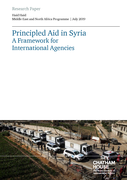
Research Paper.
As the fighting in Syria winds down, international humanitarian organisations (IHOs) operating from Damascus are hopeful that the Syrian government’s interference in their work will decrease. However, the government is attempting
...
to formalise its influence over humanitarian operations.
Throughout the Syrian conflict, the government has imposed multiple administrative processes on humanitarian organisations to limit their ability to operate independently. This includes restricting the operational environment; undermining organisational independence; imposing local partners; influencing procurement procedures; and preventing direct monitoring and evaluation.
While some level of coordination with the government might be a pragmatic necessity to ensure the safety of operations in regime-controlled areas, this cooperation should not enable the government to use aid for military or political purposes. Consequently, international humanitarian organisations have an ethical dilemma in how they provide aid in these areas without undermining their principles of humanity, independence, impartiality and neutrality.
more
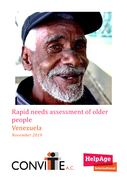
HelpAge International is a global network of organisations promoting the right of all older people to lead dignified, healthy and secure lives. Convite is a humanitarian, independent, nonprofit, non-governmental organisation that works to guarantee
...
and promote social, economic and cultural rights across Venezuela and is a new member of the HelpAge Global Network. Convite provides direct support to older people, as well as assisting the National Committee of the Pensioned and Retired of Venezuela as part of the Latin American Democracy Network. One of the organisation’s main objectives is to the raise the profile of the crisis in the country internationally.
more
The CDAC Network commissioned a practice guide to draw both on their experiences and many others’ in order to document approaches, practices and tools to working with rumors. It is aimed primarily at humanitarian programme managers and field staff
...
to provide them with practical tips on how to work with rumors in their response programs in a way that is achievable amid competing demands.
Part One focuses on some of the theory behind rumors: the definition, nature and importance of rumors, and why we need to work with them.
Part Two explains the key steps and considerations to identifying and addressing rumous: listening, verifying and engaging.
Part Three examines different roles and responsibilities in working with rumous, and how anticipation, coordination and partnerships can enhance what you do.
more
Accessed on 21.05.2020
Considering a hotline? This set of tools will help you assess, set up and manage different types of channels to communicate with communities during humanitarian crises.

The COVID-19 pandemic is having far reaching impacts, well beyond the health crisis and needs, with the most severe impacts experienced in the poorest countries and those most vulnerable to humanitarian crises including natural disasters, such as Ne
...
pal.
more
