
Filter
766
Text search:
M.
Rose
Featured
Recommendations
60
New Publications
168
Language
Document type
No document type
436
Studies & Reports
179
Guidelines
77
Manuals
24
Strategic & Response Plan
18
Fact sheets
17
Situation Updates
8
Training Material
5
Resource Platforms
1
Infographics
1
Countries / Regions
Global
39
Kenya
23
Western and Central Europe
21
India
16
Malawi
15
Ethiopia
14
Africa
13
Haiti
12
Bangladesh
12
Latin America and the Carribbean
12
Sierra Leone
11
Uganda
11
Philippines
11
Nepal
11
Germany
10
Tanzania
10
Rwanda
10
Nigeria
9
South Africa
9
Brazil
8
Russia
8
Liberia
7
Zambia
7
Ukraine
7
Eastern Europe
7
Myanmar / Burma
6
Middle East and North Africa
6
Syria
5
Mozambique
5
Botswana
5
Congo, Democratic Republic of
4
Cameroon
4
South Sudan
4
Cambodia
4
Namibia
4
Asia
4
Senegal
3
Ghana
3
Zimbabwe
3
Central African Republic
3
Argentina
3
Yemen
3
West and Central Africa
3
Guinea
2
Burkina Faso
2
USA
2
Iraq
2
Afghanistan
2
Indonesia
2
Papua New Guinea
2
Madagascar
2
East and Southern Africa
2
Eastern Europe and Central Asia
2
Mongolia
2
Guinea-Bissau
1
Niger
1
Lebanon
1
Turkey
1
Thailand
1
Sudan
1
Benin
1
Peru
1
Eswatini/ Swaziland
1
Ecuador
1
Angola
1
South–East Asia Region
1
Venezuela
1
Albania
1
Armenia
1
Southern Africa
1
Laos
1
Kyrgyzstan
1
Vietnam
1
Authors & Publishers
Publication Years
Category
Countries
243
Clinical Guidelines
52
Public Health
34
Women & Child Health
34
Key Resources
22
Capacity Building
4
Pharmacy & Technologies
3
Protection & Security
1
Toolboxes
Mental Health
96
HIV
78
COVID-19
71
TB
44
Planetary Health
41
Disability
29
Ebola
22
Conflict
19
NTDs
18
NCDs
18
Refugee
17
Global Health Education
17
Caregiver
17
Pharmacy
16
Health Financing Toolbox
16
Rapid Response
15
Natural Hazards
9
AMR
6
Zika
4
Social Ethics
4
Polio
3
Cholera
1
South Sudan
1
Specific Hazards
1
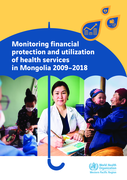
Monitoring financial protection and utilization of health services in Mongolia 2009-2018 is based on national representative household socioeconomic surveys. The study finds that between 2009 and 2018, despite ambitious health reforms, the incidence of catastrophic health spending and impoverishing
...
The document explains why vector control is important in national programmes and describes the preparation of a tailor-made vector control plan for national programmes. It outlines entomological procedures for regular and specific vector control and how data should be analysed for better overall und
...
The report aims to capture lessons from the COVID-19 pandemic and to highlight the opportunity for more ambitious global action: expanding sustainable access to vaccines for all towards
the Immunization Agenda 2030 and pandemic prevention, preparedness and response efforts. The report is organized
...

The world is not on track to end the AIDS pandemic. New infections are rising and AIDS deaths are continuing in too many communities. This report reveals why: inequalities are holding us back. In frank terms, the report calls the world’s attention to the painful reality that dangerous inequalities
...
Atlas of African Health Statistics 2022: Health situation analysis of the WHO African Region
Since 2019, we have been implementing Phase 2 of the regional Transformation Agenda, which informs and aligns with the global WHO Transformation, to ensure WHO is accountable, driven by re- sults and provid
...

WHO needs US$2.54 billion to provide life-saving assistance to millions of people around the world facing health emergencies. WHO’s Health Emergency Appeal is a consolidation of WHO’s priorities and financial requirements for 2023 to carry out health interventions in emergency and humanitarian r
...
This report provides a review and analysis of the research landscape for three diseases – Chagas disease, human African trypanosomiasis and leishmaniasis – that disproportionately afflict poor and remote populations with limited access to health services. It represents the work of the disease re
...

This guideline for the prevention and control of chikungunya fever
(CF) is intended for use by all peripheral health workers in the Region and
is based on the strategy outlined above. This document will focus mainly
on preventing, predicting and detecting outbreaks, and after detection,
investig
...

Schistosomiasis is widely recognized as a disease that is socially determined. An understanding of the social and behavioural factors linked to disease transmission and control should play a vital role in designing policies and strategies for schistosomiasis prevention and control. To this must be a
...
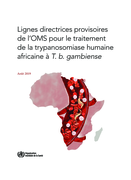
Les progrès remarquables réalisés dans la lutte contre la forme à T. b. gambiense reposent sur le dépistage et le traitement curatif, une stratégie qui interrompt la transmission en réduisant le réservoir de parasites chez l’être humain. Parfois, cette
approche a été combinée avec des
...
Schistosomiasis is widely recognized as a disease that is socially determined. An
understanding of the social and behavioural factors linked to disease transmission and
control should play a vital role in designing policies and strategies for schistosomiasis
prevention and control. To this must b
...
The epidemiology of the disease is mediated by the interaction of the parasite (trypanosome) with the vectors (tsetse flies), as well as with the human and animal hosts within a particular environment. Related to these interactions, the disease is confined in spatially limited areas called “fociâ€
...

The objective of this concept note and the framework it outlines is the elimination of a group of CDs and the negative health effects they generate, which together create a tangible burden on affected individuals, their families and communities, and on health care systems throughout the Region. Thou
...
J Glob Health Sci. 2020 Jun;2(1):e3. A group of enzootic and zoonotic protozoan infections, the leishmaniases constitute among the most severely neglected tropical diseases (NTDs) and are found in all continents except Oceania. Representing the most common infectious diseases, NTDs comprise an open-
...
Global Report on Food Crises 2023
recommended
The Global Report on Food Crises (GRFC) 2023 highlights that the number of people experiencing high levels of acute food insecurity and requiring urgent food and livelihood assistance increased for the fourth consecutive year in 2022. Over a quarter of a billion people were estimated to face acute h
...
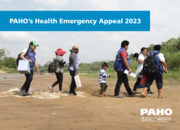
This document outlines PAHO’s regional priorities for the year 2023 to sustain and scale up health emergency and humanitarian assistance in the Americas, with a focus on five priority countries currently facing a prolonged humanitarian crisis and recovering from recent acute emergencies: Colombia,
...
The report aims to capture lessons from the COVID-19 pandemic and to highlight the opportunity for more ambitious global action: expanding sustainable access to vaccines for all towards the Immunization Agenda 2030 and pandemic prevention, preparedness and response efforts. The report is organized i
...
The World health statistics report is the annual compilation of health and health-related indicators which has been published by the World Health Organization (WHO) since 2005. The 2023 edition reviews more than 50 health-related indicators from the Sustainable Development Goals (SDGs) and WHO’s T
...
The ninth WHO report on the global tobacco epidemic tracks the progress made by countries in tobacco control since 2008 and, marks 15 years since the introduction of the MPOWER technical package which is designed to help countries implement the demand-reduction measures of the WHO Framework Conventi
...
In sum, the goal is to understand the need to increase fiscal space for health as a prerequisite, but within the framework of efforts to transform the health system. These changes should foster equitable and efficient expenditures and create or strengthen comprehensive integrated health systems with
...
