
Filter
1040
Text search:
Government
of
Guinea
Featured
Recommendations
79
New Publications
353
Language
Document type
No document type
664
Studies & Reports
233
Guidelines
47
Strategic & Response Plan
38
Manuals
27
Fact sheets
10
Training Material
8
Situation Updates
7
Infographics
4
Resource Platforms
2
Countries / Regions
Sierra Leone
128
Liberia
115
Guinea
81
Global
62
Africa
44
Nigeria
26
Senegal
25
Ghana
25
Ethiopia
21
Uganda
21
Congo, Democratic Republic of
20
Kenya
18
Asia
16
West and Central Africa
15
Cameroon
11
India
11
Rwanda
11
Papua New Guinea
10
Côte d’Ivoire / Ivory Coast
8
South Africa
8
Mozambique
8
Afghanistan
7
Indonesia
7
Mali
6
Tanzania
6
Central African Republic
6
East and Southern Africa
6
South–East Asia Region
6
Guinea-Bissau
5
Zimbabwe
5
Nepal
5
Pakistan
5
Myanmar / Burma
5
Western Pacific Region
5
Togo
4
Somalia
4
South Sudan
4
Germany
4
Syria
4
Bangladesh
4
Malawi
4
Sudan
4
Benin
4
Niger
3
Philippines
3
Zambia
3
Chad
3
Cambodia
3
Namibia
3
Yemen
3
Burkina Faso
2
Haiti
2
Iraq
2
Thailand
2
Gambia
2
Eswatini/ Swaziland
2
Botswana
2
Greece
2
Angola
2
Madagascar
2
Lesotho
2
Middle East and North Africa
2
Western and Central Europe
2
Iran
2
Morocco
1
USA
1
Saudi Arabia
1
Jordan
1
Lebanon
1
Egypt
1
China
1
Mauritania
1
Vanuatu
1
Argentina
1
Peru
1
Brazil
1
Colombia
1
Ecuador
1
Bolivia
1
Libya
1
Sri Lanka
1
Chile
1
Latin America and the Carribbean
1
Solomon Islands
1
Venezuela
1
Eastern Europe
1
Palestine
1
North Korea
1
Djibouti
1
Laos
1
Timor Leste/ East Timor
1
Russia
1
Qatar
1
Lithuania
1
Vietnam
1
Gabon
1
Mauritius
1
Tunisia
1
Authors & Publishers
Publication Years
Category
Countries
291
Clinical Guidelines
67
Public Health
59
Women & Child Health
52
Key Resources
48
Capacity Building
8
Pharmacy & Technologies
7
Toolboxes
Ebola
200
COVID-19
78
HIV
75
Rapid Response
44
Planetary Health
43
Disability
41
Mental Health
41
TB
33
Global Health Education
33
NTDs
29
Health Financing Toolbox
23
Refugee
17
Caregiver
17
Polio
16
Natural Hazards
14
AMR
14
Pharmacy
11
Conflict
10
Specific Hazards
6
NCDs
6
Cholera
5
Zika
2
Social Ethics
1
Health Financing
1
Rabies is entirely preventable, and vaccines, medicines, tools and technologies have long
been available to prevent people from dying of dog-mediated rabies. Nevertheless, rabies still
kills about 60 000 people a year,
...
The key updates include: content update in various sections based on new evidence; design changes for enhanced usability; a streamlined and simplified clinical assessment that includes an algorithm for follow-up; inclusion of two new modules
- Ess
...
This Framework offers a coherent approach for eliminating tuberculosis (TB) in low-incidence countries. It is designed to guide national policy-makers and those responsible for technical aspects of the national TB response in accelerating efforts to
...
This guideline provides global, evidence-informed recommendations on daily iron supplementation in infants and children, as a public-health intervention for the prevention of anaemia and iron deficiency. It includes recommendations for iron suppleme
...
TNew data from the World Health Organization reveal that the COVID-19 pandemic has disrupted malaria services, leading to a marked increase in cases and deaths.
According to WHO’s latest World malaria report, there were an estimated 241 million malaria cases and 627 000 malaria deaths worldwide i
...
This is the 19th annual Landmine Monitor report. It is the sister publication to the Cluster Munition Monitor report, first published in November 2010.
Landmine Monitor 2016 provides a global overview of the landmine situation. Chapters on develop
...
Cholera is a diarrhoeal disease that is usually contracted when drinking water contaminated with Vibrio cholerae bacteria. The fight against this disease requires a multidisciplinary approach that combines a water, hygiene and sanitation (WaSH) response with a monitoring system, improved water suppl
...
This ten year global plan for measles and rubella outlines the strategy that needs to be fully implemented to achieve the measles and rubella goals endorsed by the World Health Assembly. The plan sets out the: vision, goals and targets for the 2011-2020 period, recommended strategies, guiding princi
...

Antibiotics and other antimicrobial agents are invaluable life savers, particularly in resource-limited countries where infectious diseases are abundant. Both uncomplicated and severe infections are potentially curable as long as the aetiological agents are susceptible to the
...

This report reviews the latest evidence on what works to reduce HIV-related stigma and discrimination through key programmes to reduce stigma and discrimination and increase access to justice in the six settings of focus for the Global Partnership.
...
Every year, nearly 250 million people move across borders temporarily or permanently for a job opportunity, studying, to flee a crisis back home, or for other reasons. Another 750 million move for similar reasons within the borders of their countrie
...
The World Health Organization’s comprehensive antenatal care (ANC) guideline WHO recommendations on antenatal care for a positive pregnancy experience was published in 2016 with the objective of improving the quality
...
This companion document to Ending the neglect to attain the Sustainable Development Goals: a road map for neglected tropical diseases 2021-2030 ("the road map") aims to support a range of stakeholders - including countries in which neglected tropica
...
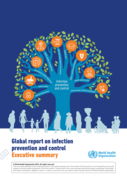
The report reveals that good IPC programmes can reduce health care infections by 70 %. oday, out of every 100 patients in acute-care hospitals, seven patients in high-income countries and 15 patients in low- and middle-income countries will acquire
...
This document sets out, therefore, to explain the socioeconomic value of investing in the fight against NTDs and highlights priorities for global investment attention. Our work was guided by the need not only for
additional funding and funders but
...

This toolkit for integrated vector management (IVM) is designed to help national and regional programme managers coordinate across sectors to design and run large IVM programmes.
The toolkit provides the technical detail required to plan, implement, monitor and evaluate an IVM approach. IVM can ...
The toolkit provides the technical detail required to plan, implement, monitor and evaluate an IVM approach. IVM can ...
WHO published the first COVID-19 Strategic Response and Preparedness Plan (SPRP) on 3 February, 2020. This report highlights the main points of progress that were made up to 30 June 2020 under the three objectives outlined in the SPRP: scaling up in
...
High prices, hard-to-access human insulin, few insulin producers, and weak health systems are just some of the barriers that people with diabetes face a century after insulin was discovered, WHO notes in a new report
The major neglected tropical diseases, Taenia solium taeniosis/cysticercosis and schistosomiasis caused by Schistosoma mansoni or S. haematobium are presumed to be widely distributed in Africa. Taenia solium taeniosis/ cysticercosis has been reported as an emerging disease in different regions
...
Tuberculosis (TB) control in the African Region has evolved since the disease was declared a global emergency by the World Health Organization (WHO) in 1993. Member States have adopted and implemented successive global and regional strategies and resolutions, with demonstrable positive impacts on in
...
