
Filter
1240
Text search:
Global
Nutrition
Cluster
Featured
Recommendations
102
New Publications
434
Language
Document type
No document type
765
Studies & Reports
188
Guidelines
89
Strategic & Response Plan
75
Manuals
62
Situation Updates
30
Fact sheets
19
Training Material
6
Resource Platforms
5
Infographics
1
Countries / Regions
Kenya
40
Global
40
Nepal
38
Nigeria
35
Myanmar / Burma
35
Congo, Democratic Republic of
34
Sierra Leone
33
South Sudan
31
Malawi
31
Bangladesh
30
Syria
28
Ethiopia
27
India
24
Uganda
21
Rwanda
21
Yemen
21
Zambia
20
Ghana
18
Ukraine
18
South Africa
17
Zimbabwe
16
Africa
15
Liberia
14
Mozambique
14
Senegal
13
Tanzania
13
Central African Republic
12
Burkina Faso
11
Haiti
11
Latin America and the Carribbean
11
Philippines
10
Lesotho
10
Madagascar
9
South–East Asia Region
8
Somalia
7
Pakistan
7
Afghanistan
7
Indonesia
7
Sudan
7
Venezuela
7
Mali
6
Namibia
6
East and Southern Africa
6
Cameroon
5
Benin
5
Botswana
5
West and Central Africa
5
Guinea
4
Niger
4
Jordan
4
Chad
4
Moldova
4
Lebanon
3
Papua New Guinea
3
Burundi
3
Colombia
3
Western and Central Europe
3
Laos
3
Russia
3
Vietnam
3
Côte d’Ivoire / Ivory Coast
2
Iraq
2
Germany
2
Turkey
2
Thailand
2
China
2
Peru
2
Eswatini/ Swaziland
2
Brazil
2
Western Pacific Region
2
Asia
2
Eastern Europe
2
Iran
2
Kyrgyzstan
2
Azerbaijan
2
USA
1
Togo
1
Cambodia
1
Gambia
1
Mauritania
1
Argentina
1
Serbia
1
Hungary
1
Croatia
1
Bolivia
1
Libya
1
Sri Lanka
1
Chile
1
Middle East and North Africa
1
Eastern Europe and Central Asia
1
Other region
1
Fiji
1
Poland
1
Palestine
1
Albania
1
Southern Africa
1
Congo-Brazzaville
1
Bulgaria
1
Romania
1
Slovakia
1
Turkmenistan
1
Japan
1
Denmark
1
United Kingdom
1
Portugal
1
Spain
1
Bosnia and Herzegovina
1
Authors & Publishers
Publication Years
Category
Countries
601
Women & Child Health
118
Key Resources
103
Public Health
74
Clinical Guidelines
59
Capacity Building
12
Pharmacy & Technologies
4
General Guidelines
1
Toolboxes
COVID-19
122
Conflict
92
HIV
57
Disability
51
Mental Health
45
Natural Hazards
37
Planetary Health
35
Rapid Response
30
Global Health Education
25
TB
22
Ebola
18
Refugee
17
Caregiver
15
NCDs
14
Cholera
9
AMR
7
Zika
6
NTDs
6
Specific Hazards
5
Polio
4
Health Financing Toolbox
4
Pharmacy
3
Typhoon
2
South Sudan
1
Multi-sectoral Cholera Elimination Plan
New funding requirements: CHF 2.8 billion IFRC-wide of which CHF 670 million is channelled through the IFRC Emergency Appeal in support of National Societies
The humanitarian-development-peace nexus (HDPNX) is a new way of working that offers a framework for coherent joined-up planning and implementation of shared priorities between humanitarian development and peacebuilding actors in emergency settings. To advance the HDPNx in a given country a sh
...
English Analysis on World about Climate Change and Environment, Health and Epidemic; published on 03 Nov 2021 by World Bank
Emergency in Ukraine: external situation report
recommended
Here you can download the latest Situation Reports
Weekly updates on the current situation in Ukraine and refugee-receiving countries, priority public health concerns and WHO’s actions to rapidly respond to the health emergency triggered by the conflict and to minimize disruptions to the delivery
...
The PHC STGs and EML should be used by healthcare workers providing care at clinics, community health centres, and gateway clinics at hospitals.
Pharmaceutical and Therapeutics Committees (PTCs) are responsible for ensuring the availability of medicines listed in the PHC EML at those facilities, as
...
Peru celebrates 200 years of independence in 2021. Over this period of independent life, and despite the turbulent socio-political scenarios, from internal armed conflict to economic crisis to political instability over the last 40 years, Peru has experienced major changes on its epidemiological and
...
SAMS team rose to meet these challenges, delivering world class COVID treatment with four newly established COVID hospitals complete with 100 ICU beds and state of the art equipment like ventilators, monitors, and oxygen generators. By using innovative technologies, SAMS’ physicians were able to s
...

WHO needs US$2.54 billion to provide life-saving assistance to millions of people around the world facing health emergencies. WHO’s Health Emergency Appeal is a consolidation of WHO’s priorities and financial requirements for 2023 to carry out health interventions in emergency and humanitarian r
...
Cholera is a diarrheal disease caused by the bacterium Vibrio cholera. The infection primarily spreads through contaminated water and food. Symptoms include the onset of acute diarrhea and/or vomiting, muscle cramps, and body weakness. If untreated, the infection can result in rapid dehydration and
...
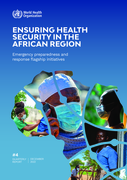
The World Health Organization Regional Office for Africa (WHO AFRO), in accordance with recommendations from various WHO committees, has developed three flagship initiatives to support Member States in the African region to prepare for, detect and respond to public health emergencies. They are the r
...
This bulletin focuses on the situation in Ukraine and several key refugee-receiving countries (Bulgaria, Czechia, Hungary, Poland, Republic of Moldova, Romania, and Slovakia), with the understanding that other countries in the European Region are also receiving Ukrainian refugees and WHO is pr
...
https://doi.org/10.1371/journal.pntd.0002439
South Sudan has a high burden – among the highest in sub-Saharan Africa – of neglected tropical diseases (NTDs). This adversely affects the health and social and economic well-being of people in the country. The prevention, control and eventual elim
...
To provide information on trends on official development assistance (ODA) disbursement patterns for
reproductive health activities in 18 conflict-affected countries
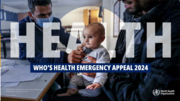
In 2024, we need US$1.5 billion to provide live-saving health care to millions of people in emergencies. An alarming combination of conflict, climate-related threats and increasing economic hardship mean an estimated 166 million people require health assistance.
The "Primary Healthcare Standard Treatment Guidelines and Essential Medicines List" by the South African National Department of Health provides evidence-based guidelines for diagnosing and managing common medical conditions at the primary healthcare level. This document includes treatment protocols
...
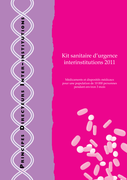
Kit sanitaire d’urgence interinstitutions
recommended
Médicaments et dispositifs médicaux pour une population de
10 000 personnes pendant environ 3 mois
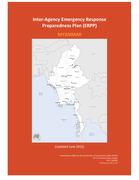
Myanmar is prone to various natural hazards that include earthquakes, floods, cyclones, droughts, fires, tsunamis, some of whichhave the potential to impact large numbers of people. In the event that large numbers of people are affected(such as was the case in 2008 following cyclone Nargis), the gov
...
