
Filter
835
Text search:
IASC
Featured
155
183
Language
Document type
427
123
78
73
58
30
18
17
5
3
1
1
1
Countries
48
42
34
32
20
20
18
18
18
15
14
14
11
10
10
10
9
9
8
8
8
7
7
7
7
6
6
6
6
6
5
5
5
5
4
4
4
4
4
4
3
3
3
3
3
3
3
3
3
3
3
3
3
3
2
2
2
2
2
2
2
2
2
2
2
2
2
2
2
2
2
1
1
1
1
1
1
1
1
1
1
1
1
1
1
1
1
1
1
1
1
1
1
1
1
1
1
1
1
1
1
1
1
1
1
Authors & Publishers
Publication Years
Category
261
76
74
34
19
18
7
1
Toolboxes
161
137
101
42
41
36
23
16
13
9
8
4
4
3
3
2
2
2
2
1
1
Group psychological help for adults impaired by distress in communities exposed to adversity
With this manual, the World Health Organization (WHO) is responding to requests from colleagues around the world for a group version of the manual Problem Management Plus (PM+), which was developed for adul
...
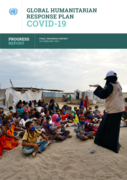
2020 was a year like no other. Amidst on-going humanitarian crises, largely fuelled by conflict and violence but also driven by the effects of climate change – such as the largest locust infestation in a generation – the world had to contend with a global pandemic. In less than one year (March-D
...

En una crisis de salud pública como la actual pandemia de COVID-19, cuando se implementan medidas de “distanciamiento social” para frenar la propagación de la infección, las personas que enfrentan cualquier tipo de violencia basada en género, como violencia de pareja íntima, violencia psico
...
Como respuesta al COVID-19 en la región, los ministerios de educación de 23 países y 12 estados independientes de América Latina y el Caribe (ALC) han cerrado las escuelas de forma progresiva a nivel de la educación preescolar, primaria y secundaria desde marzo de 2020. Como resultado, se estim
...
Ethiopia saw a six-fold increase in confirmed COVID-19 cases between June and August, with 5,689 cases by end June compared to 34,058 cases as of 19 August. Ethiopia also registered more than 13,000 recoveries and more than 600 deaths. As of the last week of August, Ethiopia was leading eastern Afri
...
Results of rapid assessment
The COVID-19 pandemic has disrupted or halted critical mental health services in 93% of countries worldwide while the demand for mental health is increasing, according to a new WHO survey. The survey of 130 countries provides the first global data showing the devastating
...
Supervisión de apoyo durante la COVID-19
recommended
Supervisión de apoyo durante la COVID-19 está dirigido a las Sociedades Nacionales de la Cruz Roja y de la Media Luna Roja con el objeto de proporcionar orientaciones sobre cómo ofrecer supervisión de apoyo al voluntariado durante la COVID-19.
Key Resources Humanitarian Aid
recommended
MEDBOX Issue Brief no. 6
This issue brief gives you an overview of the most important documents on humanitarian aid and the WASH sector in MEDBOX
The EiE Competency Framework builds on the INEE Minimum Standards to articulate a set of required, valued and recognized competencies for the humanitarian and education in the emergencies sectors. It broadly describes expected standards of performance across a number of competencies that can be appl
...
Part 2: Part 2 Beyond the evidence: Implications for innovation and practice
Part 2 of the Gap Analysis presents the insights from individuals working in humanitarian response, disability inclusion and older age inclusion. This report begins by looking at how an agenda for the inclusion of people
...
Children living in humanitarian crises face an increased risk of abuse. While the threats of harm are increasing, the established systems in place to protect them are breaking down. Faced with the COVID-19 pandemic and its impacts, vulnerable families suffer multiple hardships. Schools are closed an
...
This guide is available in English, French, Spanish, Russian, Arabic and Chinese
This guide consolidates COVID-19 guidance for human resources for health managers and policy-makers at national, subnational and facility levels to design, manage and preserve the workforce necessary to manage the COVI
...

In Control. A Practical Handbook for Professionals Working in Health Emergencies Internationally
recommended
In Control imparts knowledge, provokes reflection and triggers curiosity. The first half of the book provides an overview of the organisations, principles, frameworks and themes that every professional deploying to health emergencies should be aware of. The second half of the book provides practical
...
English Analysis on World and 19 other countries about Agriculture, Food and Nutrition and Drought; published on 13 Jan 2021 by FAO
English Analysis on World about Disaster Management and Protection and Human Rights; published on 12 Jan 2021 by IFRC
BMJ Global Health2020;5:e002014. doi:10.1136/bmjgh-2019-002014

Временные рекомендации8 января 2021 г
