Filter
904
Text search:
Emergency
Medicine
Society
of
South
Africa
Featured
Recommendations
82
New Publications
210
Language
Document type
No document type
480
Studies & Reports
200
Guidelines
109
Manuals
53
Strategic & Response Plan
31
Training Material
15
Situation Updates
7
Fact sheets
6
Resource Platforms
2
App
1
Countries / Regions
Global
56
South Africa
42
Africa
32
Nigeria
25
Kenya
24
Sierra Leone
19
Ethiopia
18
Uganda
18
Malawi
16
Liberia
14
India
13
Syria
12
Ghana
11
Lesotho
10
Nepal
9
Tanzania
9
Latin America and the Carribbean
9
Congo, Democratic Republic of
8
South Sudan
8
Mozambique
8
East and Southern Africa
8
West and Central Africa
8
Western and Central Europe
8
Asia
8
Zimbabwe
7
Zambia
7
Ukraine
7
Middle East and North Africa
7
Namibia
6
Guinea
5
Bangladesh
5
Yemen
5
South–East Asia Region
5
Burkina Faso
4
Eswatini/ Swaziland
4
Myanmar / Burma
4
Eastern Europe and Central Asia
4
Southern Africa
4
Russia
4
Rwanda
3
Brazil
3
Vietnam
3
Guinea-Bissau
2
Haiti
2
Philippines
2
Somalia
2
Afghanistan
2
Germany
2
Thailand
2
China
2
Sudan
2
Central African Republic
2
Colombia
2
Eastern Europe
2
Albania
2
Senegal
1
Mali
1
USA
1
Cameroon
1
Pakistan
1
Jordan
1
Turkey
1
Gambia
1
Indonesia
1
Malaysia
1
Benin
1
Burundi
1
Botswana
1
Libya
1
Angola
1
Madagascar
1
Mexico
1
Venezuela
1
Palestine
1
Armenia
1
Tajikistan
1
Qatar
1
Estonia
1
Moldova
1
Iran
1
Gabon
1
Japan
1
France
1
Mauritius
1
United Kingdom
1
Portugal
1
Spain
1
Authors & Publishers
Publication Years
Category
Countries
273
Clinical Guidelines
88
Public Health
65
Women & Child Health
58
Key Resources
28
Capacity Building
12
Pharmacy & Technologies
11
General Guidelines
1
Protection & Security
1
Toolboxes
HIV
135
COVID-19
87
Mental Health
63
TB
45
Rapid Response
40
Planetary Health
36
AMR
34
NCDs
30
Global Health Education
28
Caregiver
28
Ebola
22
Conflict
22
Refugee
16
Disability
14
Pharmacy
13
Zika
11
Health Financing Toolbox
10
Natural Hazards
9
Specific Hazards
5
NTDs
5
Polio
4
Social Ethics
3
Cholera
1
Promoting and protecting health is essential to human welfare and sustained economic and social development. This was recognized more than 30 years ago by the Alma-Ata Declaration signatories, who noted that Health for All would contribute
both to a better quality
...

Vitamin D deficiency is thought to be common among pregnant women, particularly during the winter months, and has been found to be associated with an increased risk of pre-eclampsia, gestational diabetes mellitus, preterm birth, and other tissue-spe
...
Outstanding child and adolescent TB priorities include the need to: find the missing children with active TB and link them to TB care; prevent TB in children who are in contact with infectious TB cases (through implementation of active contact inves
...
This document has been developed to provide training and guidance on how to integrate a human rights approach in mental health and related areas, based on international human rights instruments, in particular the UN Convention on the Rights of Perso
...
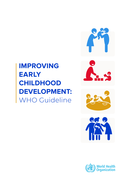
Enabling young children to achieve their full developmental potential is a human right and an essential requisite for sustainable development. Given the critical importance of enabling children to make the best start in life, the health sector, amon
...

The knowledge guide is the second publication in the Self-care competency framework to support health and care workers.
This describes how health and care workers can apply each of the 10 competency standards in their work, detailing the necessar
...
Access to medical personal protective equipment (PPE) is essential for routine healthcare delivery, and a critical tool for containing outbreaks, as well as preventing and responding to pandemics. It is one of our most effective tools against COVID-
...
All young people, including those with special needs and from the most vulnerable groups, have the right to quality health care services. Unfortunately, this right is not a reality, particularly in the case of sexual and reproductive health services
...
Disease Control Priorities, 3rdEdition: Volume 4.
Mental, neurological, and substance use disorders are common, highly disabling, and associated with significant premature mortality. The impact of these disorders on the social and economic well-be
...

To complement the Global Strategy progress reporting, this report provides a detailed look at country leadership and action toward the Every Newborn National Milestones by 2020. Countries have taken the initiative to show the way forward and have demonstrated significant progress. As part
...

Self-care interventions are among the most promising and exciting new approaches to improve health and well-being, both from a health systems perspective and for people who use these interventions. The World Health Organization (WHO) uses the following working definition
...
The document is structured into five sections. The first presents the key experiences and challenges that justify a renewal of the EPHFs. The second section updates the groundwork for the exercise of
...
The Community Health Systems (CHS) Catalog is a resource that provides information on community health program workers, and interventions for the 25 countries deemed priority by USAID’s Of of Pop
...
Known avoidable environmental risks to health cause at least 12.6 million deaths every year, and account for about one quarter of the global burden of disease (2016 data) (1). Air pollution alone ca
...

This fourth WHO report on neglected tropical diseases (NTDs) reviews the progress made towards achieving the Roadmap targets for 2020, noting the remaining challenges, then looks beyond 2020 to evaluate the changing global health and development landscape, considering the implications
...
As the Americas undergo profound demographic change and there are more persons aged 65 years or older than children younger than 5 years, it is crucial to recognize that national immunization programs must be redesigned to ensure comprehensive protection for individuals across the lifespan. By adopt
...