
Filter
814
Text search:
Human
Rights
Watch
Featured
Recommendations
77
New Publications
229
Language
Document type
No document type
498
Studies & Reports
146
Manuals
60
Guidelines
54
Training Material
19
Strategic & Response Plan
18
Fact sheets
8
Situation Updates
4
Resource Platforms
3
Brochures
1
Infographics
1
Online Courses
1
Videos
1
Countries / Regions
Syria
34
India
26
Kenya
22
Global
22
Sierra Leone
20
Liberia
19
Bangladesh
19
Myanmar / Burma
19
Nigeria
17
Nepal
17
Venezuela
15
Congo, Democratic Republic of
14
Yemen
14
South Sudan
13
Zambia
13
Ethiopia
12
Western and Central Europe
12
South Africa
11
Ukraine
11
Central African Republic
10
Asia
10
Africa
10
Uganda
9
Malawi
9
Latin America and the Carribbean
9
Senegal
7
Ghana
7
Afghanistan
7
Indonesia
7
South–East Asia Region
7
Eastern Europe
7
Philippines
6
Lebanon
6
Tanzania
6
Brazil
6
Guinea
5
Cambodia
5
Rwanda
5
Eastern Europe and Central Asia
5
Haiti
4
Somalia
4
Jordan
4
Mozambique
4
Colombia
4
West and Central Africa
4
Russia
4
Vietnam
4
Burkina Faso
3
Iraq
3
Thailand
3
Greece
3
Libya
3
Mexico
3
Iran
3
Mali
2
Cameroon
2
Zimbabwe
2
Germany
2
China
2
Malaysia
2
Namibia
2
Eswatini/ Swaziland
2
East and Southern Africa
2
Middle East and North Africa
2
Western Pacific Region
2
Southern Africa
2
Tajikistan
2
Lithuania
2
Kazakhstan
2
Georgia
2
Guinea-Bissau
1
USA
1
Niger
1
Turkey
1
Chad
1
Gambia
1
Mauritania
1
Singapore
1
Sudan
1
Argentina
1
North Macedonia
1
Serbia
1
Botswana
1
El Salvador
1
Angola
1
Guatemala
1
Madagascar
1
Lesotho
1
Sri Lanka
1
Palestine
1
Italy
1
Albania
1
Armenia
1
Laos
1
Canada
1
Uzbekistan
1
Kyrgyzstan
1
Australia
1
North America
1
Japan
1
Mauritius
1
United Kingdom
1
Spain
1
Authors & Publishers
Publication Years
Category
Countries
264
Women & Child Health
56
Clinical Guidelines
45
Capacity Building
34
Public Health
27
Key Resources
22
Pharmacy & Technologies
2
Toolboxes
Mental Health
103
Disability
80
HIV
61
COVID-19
58
Conflict
55
AMR
41
Refugee
36
TB
32
Caregiver
21
Ebola
19
Global Health Education
17
Planetary Health
15
Pharmacy
12
Rapid Response
10
Specific Hazards
8
Social Ethics
7
NTDs
6
Natural Hazards
5
Zika
5
Cholera
4
Health Financing Toolbox
3
NCDs
3
Polio
2
South Sudan
1
After almost eight bloody years, the war in Syria finally appears to be reaching the endgame. The Assad regime controls some two-thirds of the country. In the northwest, the regime of Syrian President Bashar al-Assad has launched an offensive against opposition-controlled Idlib governorate under the
...
Research Paper.
As the fighting in Syria winds down, international humanitarian organisations (IHOs) operating from Damascus are hopeful that the Syrian government’s interference in their work will decrease. However, the government is attempting to formalise its influence over humanitarian operat
...
J Epidemiol Community Health 2011;65:1166e1170. doi:10.1136/jech.2009.097469
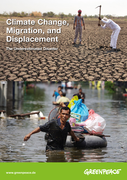
What at first glance appears to be simple causality – climate change leading to more and more migration – has triggered intense academic debate over the past ten years because the circumstances are complex. There is need for a thorough analysis in the ground between denying the problem and asser
...
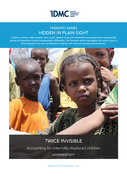
Internally displaced children are twice invisible in global and national data. First, because internally displaced people (IDPs) of all ages are often unaccounted for. Second, because age-disaggregation of any kind of data is limited, and even more so for IDPs.
Planning adequate responses to meet
...
The present report is based on a longitudinal analysis of assessments on mixed migration routes and dynamics, conducted over the course of 2018. It is based on six rapid thematic studies, conducted over the course of 2018, as well as a longitudinal analysis of changes in mixed migration routes and d
...

Novel coronavirus will disproportionately impact world’s 70 million displaced people
Report recommends stopping asylum seeker deportations, prioritising hygiene and refugee camp decongestion, better communication
Displaced people must be included in prevention, mitigation efforts - for s
...
Debido a la actual crisis socio-económica, política y de derechos humanos en Venezuela, cerca de 4.5 millones de personas han salido de su país; convirtiéndose en la segunda peor crisis migratoria del mundo, después de Siria. Se estima que más del 20% de los refugiados y migrantes son niños y
...
This evaluation report of UNICEF’s Psychosocial Support Response for Syrian Children in Jordan was conducted by
Antares Foundation team (Albertien van der Veen, Reem AbuKishk, Shadi Bushnaq, Orso Muneghina, Reem Rawdha
and Tineke van Pietersom) under the supervision of guidance Farhod Kamidov, M
...
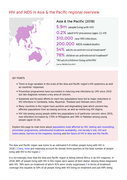
Objectifs 2020 : des avancées disparates. Le rapport de l’ONUSIDA sur l’épidémie mondiale de sida fait état d’un échec accentué par la COVID-19. Depuis 2015, 3,5 millions d’infections au VIH et 820 000 morts supplémentaires liés au sida sont imputables à des objectifs non atteints.
...
7 June 2020 Version 1
Women in Myanmar have traditionally been underrepresented in public decision-making processes, a trend which is continuing in structures established to respond to COVID-19. This means that even as women are disproportionately affected by the crisis, they have less say in how t
...
MEDBOX Issue Brief No. 4
Aligned to the Lancet Migration Global Statementto include migrants and refugees incountries’response toCOVID-192, this brief focuses onGreece’s challenges and opportunities to build an inclusive response. Asylum seekers and refugees in Greece are currently placed by the Greek governments in Rec
...
Applying the evidence of what works from HIV-related stigma and discrimination in six settings to the COVID-19 response
This brief provide evidence-informed guidance to countries on the intersection of stigma related to HIV and COVID-19 in national responses.
This paper reviews the effects of vertical responses to COVID-19 on health systems, services, and people’s access to and use of them in LMICs, where historic and ongoing under-investments heighten vulnerability to a multiplicity of health threats. We use the term ‘vertical response’ to describ
...
The tools are designed to complement existing guidelines, protocols and tools for GBV prevention and response, and should not be used in isolation from these. GBV practitioners are encouraged to adapt the tools to their individual programs and contexts, and to integrate pieces into standard GBV tool
...
