
Filter
904
Text search:
Emergency
Medicine
Society
of
South
Africa
Featured
Recommendations
82
New Publications
210
Language
Document type
No document type
480
Studies & Reports
200
Guidelines
109
Manuals
53
Strategic & Response Plan
31
Training Material
15
Situation Updates
7
Fact sheets
6
Resource Platforms
2
App
1
Countries / Regions
Global
56
South Africa
42
Africa
32
Nigeria
25
Kenya
24
Sierra Leone
19
Ethiopia
18
Uganda
18
Malawi
16
Liberia
14
India
13
Syria
12
Ghana
11
Lesotho
10
Nepal
9
Tanzania
9
Latin America and the Carribbean
9
Congo, Democratic Republic of
8
South Sudan
8
Mozambique
8
East and Southern Africa
8
West and Central Africa
8
Western and Central Europe
8
Asia
8
Zimbabwe
7
Zambia
7
Ukraine
7
Middle East and North Africa
7
Namibia
6
Guinea
5
Bangladesh
5
Yemen
5
South–East Asia Region
5
Burkina Faso
4
Eswatini/ Swaziland
4
Myanmar / Burma
4
Eastern Europe and Central Asia
4
Southern Africa
4
Russia
4
Rwanda
3
Brazil
3
Vietnam
3
Guinea-Bissau
2
Haiti
2
Philippines
2
Somalia
2
Afghanistan
2
Germany
2
Thailand
2
China
2
Sudan
2
Central African Republic
2
Colombia
2
Eastern Europe
2
Albania
2
Senegal
1
Mali
1
USA
1
Cameroon
1
Pakistan
1
Jordan
1
Turkey
1
Gambia
1
Indonesia
1
Malaysia
1
Benin
1
Burundi
1
Botswana
1
Libya
1
Angola
1
Madagascar
1
Mexico
1
Venezuela
1
Palestine
1
Armenia
1
Tajikistan
1
Qatar
1
Estonia
1
Moldova
1
Iran
1
Gabon
1
Japan
1
France
1
Mauritius
1
United Kingdom
1
Portugal
1
Spain
1
Authors & Publishers
Publication Years
Category
Countries
273
Clinical Guidelines
88
Public Health
65
Women & Child Health
58
Key Resources
34
Capacity Building
12
Pharmacy & Technologies
11
Protection & Security
1
Toolboxes
HIV
135
COVID-19
87
Mental Health
63
TB
45
Rapid Response
40
Planetary Health
36
AMR
34
NCDs
30
Global Health Education
28
Caregiver
28
Ebola
22
Conflict
22
Refugee
16
Disability
14
Pharmacy
13
Zika
11
Health Financing Toolbox
10
Natural Hazards
9
Specific Hazards
5
NTDs
5
Polio
4
Social Ethics
3
Cholera
1
Burns are a global public health problem, accounting for close to 200,000 deaths annually. The majority of these occur in low- and middle-income countries, where a number of constraints complicate t
...
These guidelines – an update to the World Health Organization’s 2015 publication Consolidated strategic information guidelines – present a set of essential aggregate indicators and guidance on choosing, collecting and systematically analysing
...

DIAGNOSING PTSD IN CHILDHOOD | The following literature review addresses the developmental and domain-specific consequences of previous and current diagnostic criteria for posttraumatic stress disorder (PTSD) in pre-adolescent children. PTSD was int
...
This paper focuses on the Sustainable Development Goals related to poverty, economic growth, inequality, health, food production and the environment. It presents concrete examples of the underlying and complex aspects
...
WHO Guidelines for malaria
recommended
25 Nov 2022
The WHO Guidelines for malaria bring together the Organization’s most up-to-date recommendations for malaria in one user-friendly and easy-to-navigate online platform.
The WHO Guidelines for malaria supersedes 2 previous WHO publications: the Guidelines for the treatment
...

Poor quality health services are holding back progress on improving health in countries at all income levels.
Today, inaccurate diagnosis, medication errors, inappropriate or unnecessary treatment, inadequate or unsafe clinical facilities or practices, or providers who lack adequate training an ...
Today, inaccurate diagnosis, medication errors, inappropriate or unnecessary treatment, inadequate or unsafe clinical facilities or practices, or providers who lack adequate training an ...
Making the Case for Alcohol as a Public Health Threat in the Region. The purpose of this document is to explain the need for making alcohol a top public health priority in the region and the need for national and regional action. Current evidence-ba
...
Five years after a global commitment to Fast-Track the HIV response and end AIDS by 2030, the world is off track. A promise to build on the momentum created in the first decade of the twenty-first century by front-loading investment and accelerating
...
Five years after a global commitment to Fast-Track the HIV response and end AIDS by 2030, the world is off track. A promise to build on the momentum created in the first decade of the twenty-first century by front-loading investment and accelerating
...

The world is not on track to end the AIDS pandemic. New infections are rising and AIDS deaths are continuing in too many communities. This report reveals why: inequalities are holding us back. In frank terms, the report calls the world’s attention to the painful reality that dangerous inequalities
...
In In recent years, China has increased its international engagement in health. Nonetheless, the lack
of data on contributions has limited efforts to examine contributions from China. Existing estimates that track
development assistance for health
...
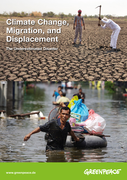
What at first glance appears to be simple causality – climate change leading to more and more migration – has triggered intense academic debate over the past ten years because the circumstances are complex. There is need for a thorough analysis in the ground between denying the problem and asser
...
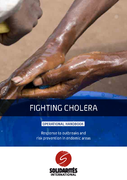
Cholera is a diarrhoeal disease that is usually contracted when drinking water contaminated with Vibrio cholerae bacteria. The fight against this disease requires a multidisciplinary approach that combines a water, hygiene and sanitation (WaSH) response with a monitoring system, improved water suppl
...
The present booklet is about gender-responsive substance abuse treatment services for women. It is part of the United Nations Office on Drugs and Crime (UNODC) project to develop tools to support the development and improvement
...
This FY 2019 Malaria Operational Plan presents a detailed implementation plan for Burkina Faso, based on the strategies of PMI and the National Malaria Control Program (NMCP). It was developed in consultation with the NMCP and with the participation
...

This technical guidance outlines current evidence, knowledge and best practice relating to incidences of violence and injuries among refugees and migrants in the WHO European Region. It highlights key principles, summarizes priority actions and chal
...
WHO published the first COVID-19 Strategic Response and Preparedness Plan (SPRP) on 3 February, 2020. This report highlights the main points of progress that were made up to 30 June 2020 under the three objectives outlined in the SPRP: scaling up in
...
This paper presents lessons learned from previous flood responses in developing countries, based on a structured review of the literature. It is intended for people working in relief and recovery operations who have to decide if, when and how to int
...

Every year, around 830 000 children die from unintentional or "accidental" injuries. The vast majority of these injuries occur in low-income and middle-income countries. However, dozens of preventio
...
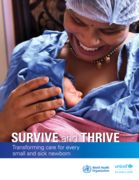
Just about everyone has experienced the joy that a healthy newborn child brings to parents, families and communities. But the arrival of a newborn who is small or sick often results in immediate worry and sadness. When the infant is at high risk
...
