
Filter
1058
Featured
49
484
Language
Document type
772
180
43
25
19
9
6
3
1
Countries
76
56
50
46
45
44
41
39
38
37
34
32
31
31
30
29
22
19
18
18
17
15
14
13
12
11
10
10
10
9
9
8
8
8
7
7
6
5
5
5
5
5
5
4
4
4
3
3
2
2
2
2
2
2
2
2
2
2
2
2
2
2
1
1
1
1
1
1
1
1
1
1
1
1
1
1
1
1
1
1
1
1
1
1
1
1
1
1
1
Authors & Publishers
Publication Years
Category
683
49
48
39
17
4
2
1
Toolboxes
92
52
33
31
27
24
19
17
15
15
14
13
12
11
8
6
3
2
2
1
1
This briefing note summarizes work undertaken by UN Women and WHO to inform the development of a module on violence against women 60 years and older that can be included in dedicated surveys on viol
...
The information provided here can be used to understand the current situation, increase attention to preterm births in Rwanda and to inform dialogue and action among stakeholders. Data can be used t
...

The coronavirus disease 2019 (COVID-19) pandemic has created a global and gendered crisis that is compounding existing inequalities and disproportionately affecting girls
...
In recognition that Female Genital Mutilation (FGM) is not only a harmful practice but a violation of human rights, Kenya has adopted a robust legal framework. The country has ratified several international legal instruments that have become part of the Kenyan law as provided for in Article 2 of the
...
Vitamin A supplementation (VAS) programs targeted at children aged 6–59 months are implemented in many countries. By improving immune function, vitamin A (VA) reduces mortality associated with measles, diarrhea, and other illnesses. There is curre
...
The magnitude of urban disasters, high population densities, and a complex social, political and institutional environment has challenged the manner in which humanitarian agencies are used to workin
...

DHS Working Papers No. 120
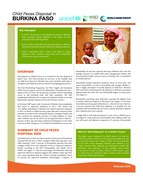
Safe disposal of children’s feces is as essential as the safe disposal of adults’ feces. Th is brief provides an overview of the available data on child feces disposal in Burkina Faso and concludes with ideas to strengthen safe disposal practice
...
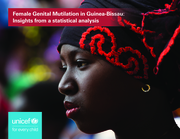
Over 400,000 girls and women in Guinea-Bissau alive today have experienced FGM. Overall, 52 per cent of girls and women aged 15 to 49 years have undergone the practice, varying from 96 per cent in G
...

Health Policy Plan (2017) 32 (5): 603-612; 10 pp. 318 kB
